How to Prepare Dinner Faster Than Ordering Delivery

There are evenings when you don’t have the energy to come up with something complicated, and hunger follows you from every room. Your eyes slide over the phone, your hand reaches for the delivery app. But you know: even if you order now, you’ll have to wait forty minutes or more. There’s something in the fridge, but it seems like cooking is always long and tedious. And often the thought arises: can you cook something faster than the courier arrives?
I remember myself well in such moments. After work, when my head is already not functioning, and the idea of standing by the stove seems like torture. But over time, I learned to look at the kitchen differently. Not as a battlefield, but as a space of possibilities. Dinner can be quick, lively, without unnecessary movements and with minimal stress — if you change your approach. The whole secret is not in magical ingredients or complex techniques, but in the details that give control over time.
There’s no place here for chasing the ideal. The main thing is to understand what hinders, what helps, and how not to waste extra time. I want to show you what a ‘quick dinner’ really looks like — not from a cover, but from real life. No tricks, no pomp. Just a kitchen, a bit of common sense, and a few proven techniques that change everything.
Why Dinner ‘Drags On’: Common Traps and How to Avoid Them
It would seem that cooking is simple: take, cut, throw in the pan. But most of us get lost in the details. It all starts with the search for ‘what to cook’, then — running around the kitchen looking for a knife while the water for pasta is already boiling, and you haven’t even decided what to add to it. And now an hour has passed, and dinner is still not ready.
The first and most common enemy is the lack of a plan. Not a global one, but at least for today: ‘What do I want to eat and what do I have for it?’ The second trap is disorganization: everything is not at hand, products are not prepared, you search for utensils longer than you cut. The third is the fear of ruining: ‘Oh, what if it doesn’t cook through?’, ‘What to do if it burns?’ — and you stand over the pot, not stepping away.
Once, I cooked like that myself — running around the kitchen while the pasta overcooked. After another ‘battle’ with dinner, I realized: cooking quickly is not about speed, but about organization. If you know what and why you are doing, you immediately feel confident. Even if something goes wrong.
Preparation is Your Main Secret: How to Save Time Before Starting
The biggest mistake is thinking that cooking starts when you put the pan on the stove. In fact, it starts even earlier. Open the fridge — and you already have a hint: what is there, what needs to be used. Then — a few minutes for ‘reconnaissance’: briefly imagine what to combine with what, what can be done simultaneously.
From myself — I always advise starting from the end: imagine the final look of the plate. It’s not about a perfect picture, but about structure: ‘Here will be something hot, here — a bit of fresh, here — crunchy.’ Even if it’s hard with imagination, the main thing is to understand what you want to get in the end.
The second step is to prepare everything at hand: knives, boards, bowls. It sounds trivial, but this is where time is lost. I have a habit: before cutting something, I immediately take out everything that might be needed. Even if it seems unnecessary — better let it lie nearby than run with wet hands through the cupboards later.
Microstory: once I was going to make a simple omelet, but while looking for salt, it burned. Since then — everything only at hand.
This is where real speed is born: when you don’t run, but act. Prepared everything — and your kitchen already works for you.
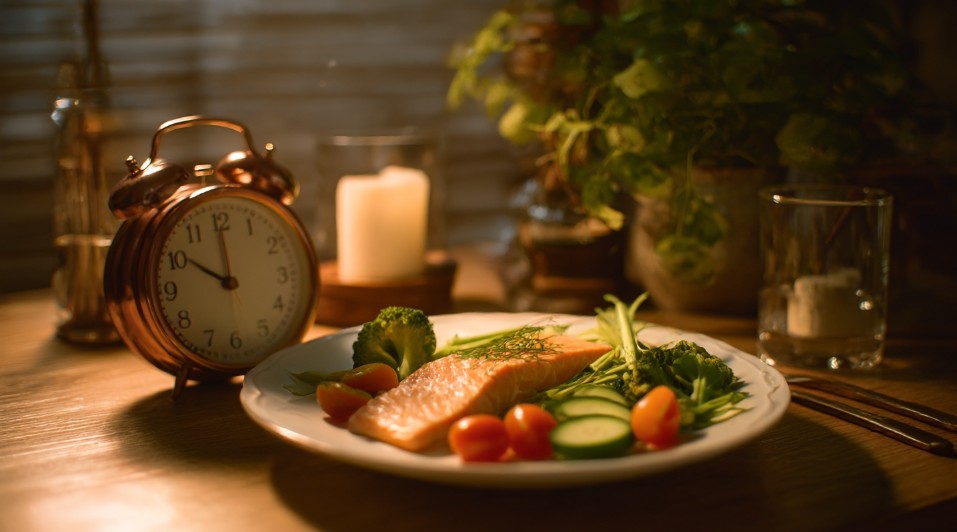
Temperature and Sequence: How Not to Waste Time Waiting
Often we lose precious minutes waiting for something to heat up or cool down. Here a simple rule works: everything that can be preheated/cooled in advance — do it first. For example, before starting to cut, put water on the stove or turn on the oven if you plan to bake something. Heat accumulates more slowly than it seems.
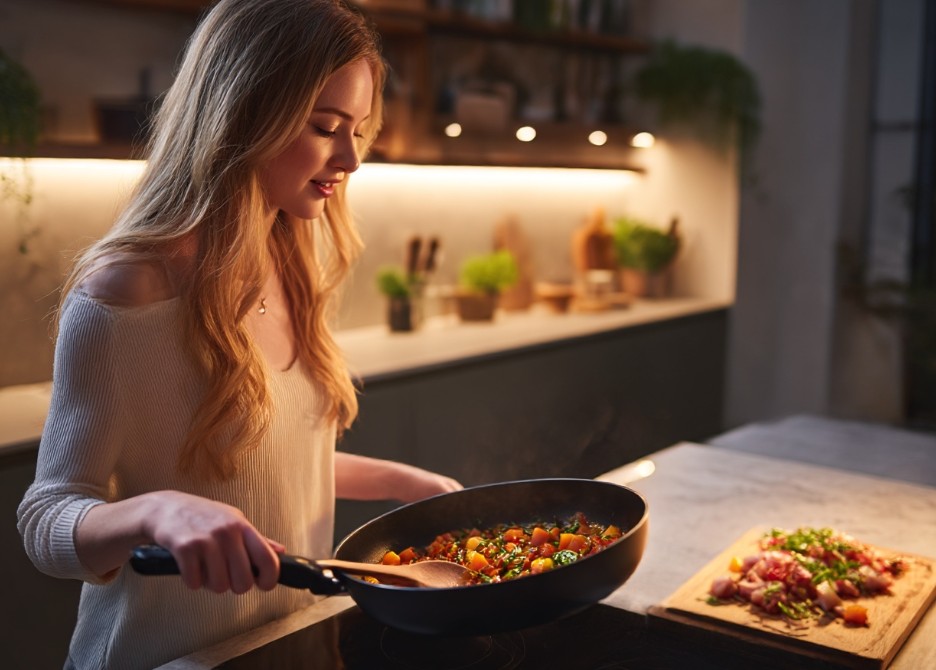
The second thing is the order of actions. While something is cooking, you have time for the next step. No need to wait for the pan to heat up just like that. While it heats up — cut vegetables. While the water boils — prepare the dressing or sauce. It’s like a dance: each move pushes the next.
Most mistakes here are in haste or the opposite situation: when they wait for something to be done and don’t use this time. I’ve seen people stand by the stove for several minutes, wiping their phone or looking at the ceiling, although this time can be used for something else.
Tip: always have two or three simple tasks on ‘standby’ — wash greens, peel garlic, grate cheese.
So you don’t let time slip through your fingers. When you do everything in rhythm — dinner comes out faster than it seems.
How to Choose Products for a Quick Dinner: The Myth of ‘Right’ Ingredients
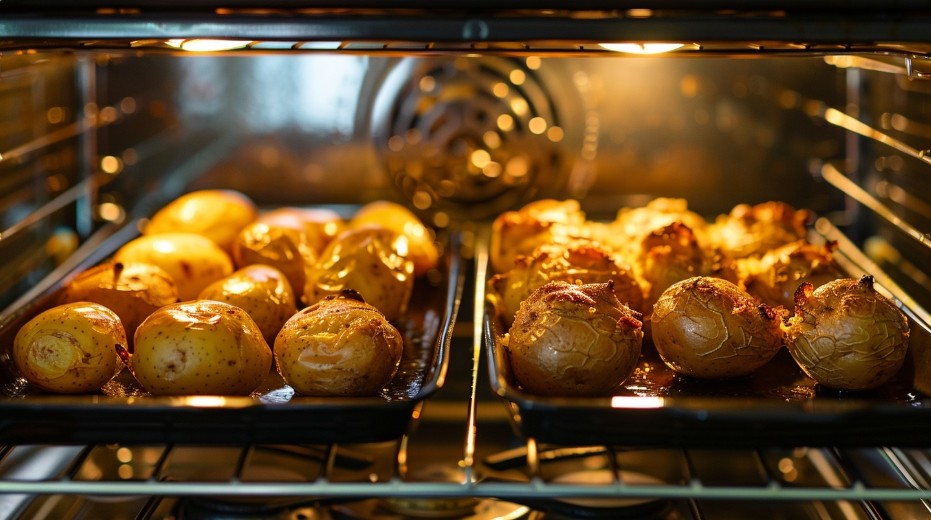
It’s often thought: for quick food, you need some special products. In fact, the main thing is not what, but how you use it. Even ordinary potatoes or eggs can turn into dinner in 15 minutes if you don’t complicate your life.
One of my secrets is to keep the idea of ‘semi-prepared’ products in the fridge. For example, boil a few eggs in the morning, leave boiled grains or a piece of roasted chicken from lunch. Everything that is already ready or semi-ready is your time reserve. It’s not about ‘preparations for the week’, but about small leftovers that often remain after other dishes.
Another tip is to use what cooks quickly. It doesn’t have to be something exotic. Ordinary carrots, salad, cheese, canned goods, a piece of bread — all this can become the basis of dinner if approached creatively.
Lifehack: if there are leftover vegetables from lunch, mix them with something protein (egg, cheese, fish) and add something crunchy — nuts, croutons, or seeds. It will be filling and quick.
Over time, you start to see not ‘limitations’, but opportunities. And dinner becomes not a burden, but a game.
Space Organization: Why the Kitchen Should Work for You
Another thing that takes time is chaos in space. When you don’t know where something is, any little thing becomes an obstacle. I always say: the kitchen is like a workplace. If everything is at hand, even the most complex becomes simpler.
There is a simple rule: things you use most often should be within arm’s reach. Knife, board, oil, salt, favorite spices — all this should not be in a distant cupboard, but right next to the cooking area. An acquaintance inspired me to make a ‘kitchen organizer’ — an ordinary box with compartments for all the small stuff. It turned out to save a lot of time and nerves.
Even more important — not to clutter the work surface. The less unnecessary there is, the faster you work. Even an extra cup or bottle can throw you off rhythm.
Microstory: in my student years, I cooked in a tiny kitchen where there was barely enough space for a plate. I was forced to keep everything unnecessary in cupboards and the necessary things nearby. Now it’s a habit that saves even in a large kitchen.
When the space is tailored to you — cooking stops being a marathon with obstacles.
The Mechanics of Quick Thermal Processing: How to Know When a Dish is Ready
Many get lost here: how to determine that the food is ready and not spoil it in haste? The answer is to observe the signs, not the time. Time is just a guideline. The real indicator is appearance, smell, texture.
For example, a frying pan for sautéing should be hot but not smoking. If you throw a piece of vegetable and hear a slight sizzle — that’s what you need. If nothing happens — wait a little longer. With meat — when a golden crust appears, it’s time to turn. With eggs — the white becomes matte, and the yolk remains runny (if you like, of course). Vegetables — when they become fragrant and slightly soft, but not mushy.
The biggest mistake is ‘overcaution’: keeping it longer than necessary, fearing it’s raw. As a result, it turns out dry, bland, uninteresting. I always rely on smell: if the dish smells delicious — it’s already a signal that it’s almost ready. Also — on texture: vegetables should spring back a little, not be mush.
Tip: don’t be afraid to taste on the go. A small piece — and you already understand how much more is needed.
With practice, it becomes intuition. At first — look, smell, touch. Later — you’ll feel readiness ‘by eye’.
What to Do If Something Goes Wrong: Common Mistakes and How to Fix Them
Even the most experienced have failures. Something burned, something overcooked, something dried out. The main thing is not to panic, but to act.
- The bottom of the pan burned — don’t scrape right away. Remove the food from the top, transfer to a clean dish. Pour water on the bottom, leave for later. The burnt smell can be ‘muted’ with fresh herbs or a drop of lemon.
- Overcooked/overboiled — don’t try to return the former texture, but change the format: make puree, pasta, or soup. Add something crunchy for contrast.
- Too dry — add a little oil, yogurt, or broth. Often even a few spoons of water save the situation.
- Undersalted — it’s always easier to fix than oversalt. You can add salt already on the plate.
One of my favorite stories: once at a friendly dinner, I managed to dry out the chicken. Everyone was already preparing for disappointment, but I quickly cut it smaller, mixed with sauce and fresh vegetables — and got a warm salad that guests later remembered. Mistakes are not the end, but the start for a new idea.
Lifehack: keep 2-3 ‘rescue’ ingredients on hand: lemon, yogurt, fresh herbs. They almost always help.
Micro-organization: How to Reduce Time on Kitchen Routine
There are simple things that seem like trifles, but in total give a huge time saving. The first is to wash and clean immediately while cooking. Don’t wait for the pile of dishes to grow to Mars. While something is frying — quickly rinse the board or knife. It sounds obvious, but this is where half of the evening fatigue disappears.
The second is to use the same dish for different stages. For example, cut vegetables, pour them into the pan — and use the same board for cutting greens or cheese. No need to take out ten bowls for each step.
Another thing is not to complicate your life with unnecessary appliances. Keep your favorite knife always sharp, and most tasks will solve themselves.
Microstory: a friend always had a pile of dishes after dinner, and she hated cooking. I advised her to wash everything little by little, not waiting for the end — and within a week she started cooking more often because she wasn’t afraid of the ‘aftertaste’ in the form of a dirty sink.
Here, small organization is important — not fanaticism, but a healthy rhythm. The best ideas with dinner recipes are collected on this page.
The Psychology of a Quick Dinner: How to Get Rid of Fear and Not Hold Yourself Back
Very often, cooking drags on not because it’s difficult — but because of fear. That it won’t work out, that it will be tasteless, that someone will judge. This is the biggest brake in the kitchen. I’ve seen people constantly overcautious, standing over the pan, afraid to do something wrong. As a result — they lose time and pleasure.
My experience is simple: it’s better to cook imperfectly but calmly than to chase the ideal and be nervous. If something is wrong — you can always fix it or change the dish in the process. The kitchen is not an exam, but a territory for attempts. When you allow yourself to be imperfect, suddenly lightness opens. And with it — speed.
Tip: imagine that you are cooking not for someone, but for yourself now, and this is already a reason for joy.
With this approach, even an ordinary dinner becomes a small victory.
A Few of My Favorite Lifehacks for Dinner in 20 Minutes
- Parallel processes: while something is heating up — prepare the next ingredient. Don’t wait, just do.
- Always have a stock of ‘semi-prepared’: boiled grains, boiled eggs, a piece of ready-made meat or fish — this is the base for a quick dish.
- Use one dish for several tasks: the pan on which you fried vegetables is suitable for heating bread or cheese.
- Simplify: don’t complicate the dish unnecessarily. Better three tasty ingredients than ten ‘for beauty’.
- Don’t be afraid to improvise: if something is missing — replace it, add something of your own. The kitchen tolerates creativity.
Lifehack: set up a small ‘quick shelf’ in the fridge — keep there what cooks the fastest (eggs, cheese, greens, canned goods). This is your rescue kit for evenings when time is short.
The habit of cooking quickly is not about a sprint, but about the ability to see the main thing and not get hung up on the secondary.
And finally: cooking is not a competition with delivery, but your way to take care of yourself here and now. When dinner is ready in 20 minutes, not after an hour of waiting, — it’s not just about food, but also about a sense of control. You control the process, not it you.
I always rejoice when I manage to surprise myself — like, just opened the fridge, and already standing with a plate of ready dinner. If you are familiar with this feeling — share your lifehacks in the comments. And if not yet — try it today, and see how your evening changes.