How to Properly Toss Pasta with Dressing for Pasta Salad

There’s one tiny thing that can ruin your mood faster than an over-salted soup: a pasta salad where the dressing technically exists… but lives a separate life. A little puddle at the bottom of the bowl, dry spirals on top, and in between—random pieces sliding around like they have their own agenda. You stand there with a spoon, mix again, and somehow it looks even worse.
I know this problem from home kitchens and big ones. In restaurants it’s solved with process discipline; at home it’s solved by understanding a few simple “whys.” Because pasta isn’t just a neutral base. It can be warm or cold, porous or smooth, dry or coated in a thin film of starch. And dressing isn’t just “mix and pour,” either. It either clings, slides off, or splits.
Once you feel what it’s like to toss pasta with dressing the right way for pasta salad, everything gets calmer. No guessing. You look at the pasta, smell the dressing, drag a spoon through it—and you know what to do: add a spoonful of water, let it sit for 5 minutes, or do the opposite—cool it down and only then combine. It’s like learning to tie your shoes: after that, your hands just do it.
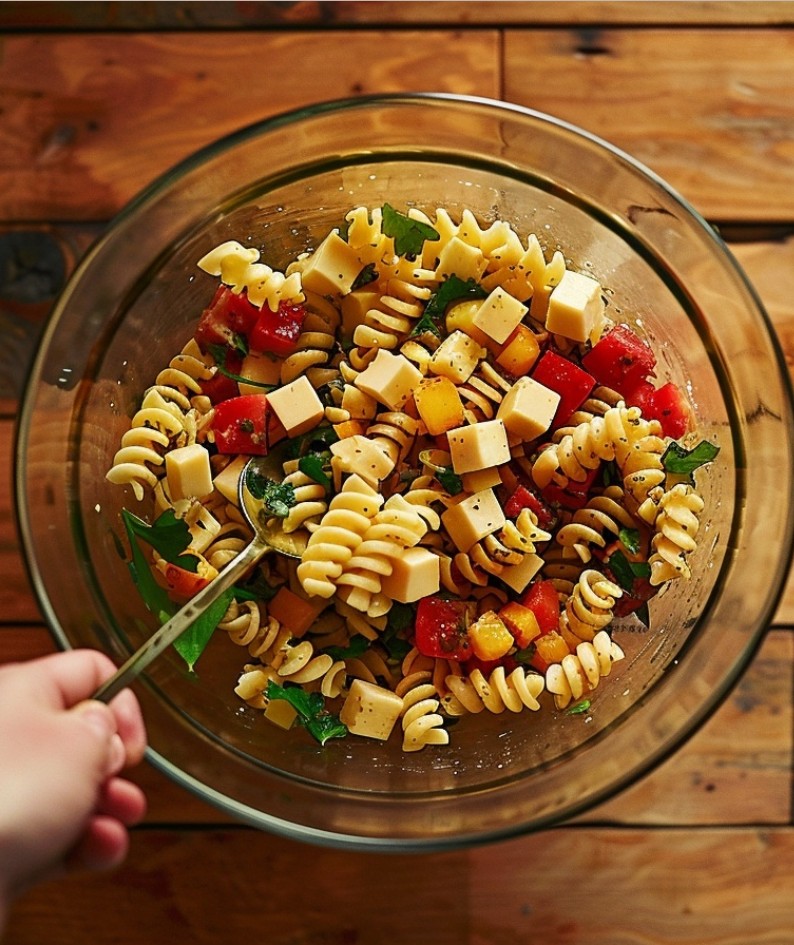
Why the dressing won’t “cling”: surface texture, starch, and fat
First things first: in a salad, we don’t want to “drown” the pasta—we want to coat it in a thin, even layer. That’s a different job than hot pasta finished in a pan. In pasta salad there’s no active heat to help an emulsion hold together. What matters here is surface physics and what’s left on the pasta after boiling.
When pasta is cooked and drained, it’s covered in a starchy film. That film can be your best friend: starch is like a slightly sticky glove that gives dressing something to grab onto. The catch? If you rinse the pasta until it “squeaks,” or you toss it with oil “so it won’t stick,” you’ve basically removed that glove. What’s left is a smooth surface plus fat (either from the dressing or that oil), and everything just slides around.
Temperature is another big one. Warm pasta behaves differently than cold. Warm pasta will “drink” a bit of dressing, and the fat in the dressing is softer and more mobile. Cold pasta is firmer; the dressing thickens, and if there’s cheese, yogurt, or mayo involved, it can turn grainy or loosen and weep.
Third: the water-to-fat balance. Salad dressing often relies on an emulsion—tiny droplets of fat dispersed in a water phase (or the other way around). If that emulsion is weak, it separates: oil floats, water sinks. On pasta, it shows up as shiny oily patches and a wet puddle at the bottom of the bowl.
How it should look vs. what most people do
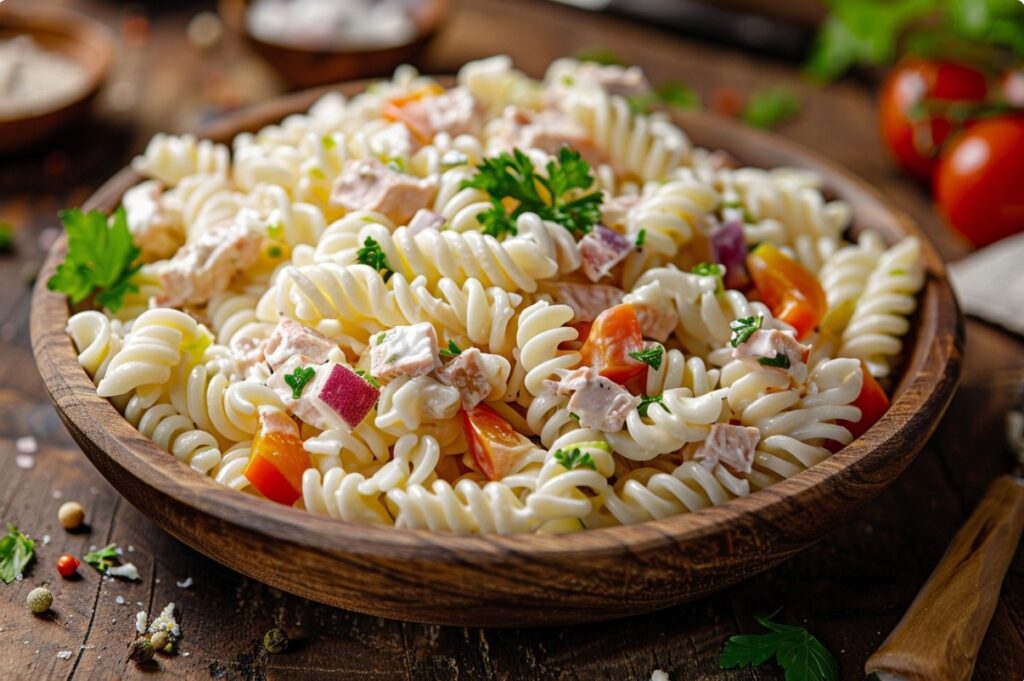
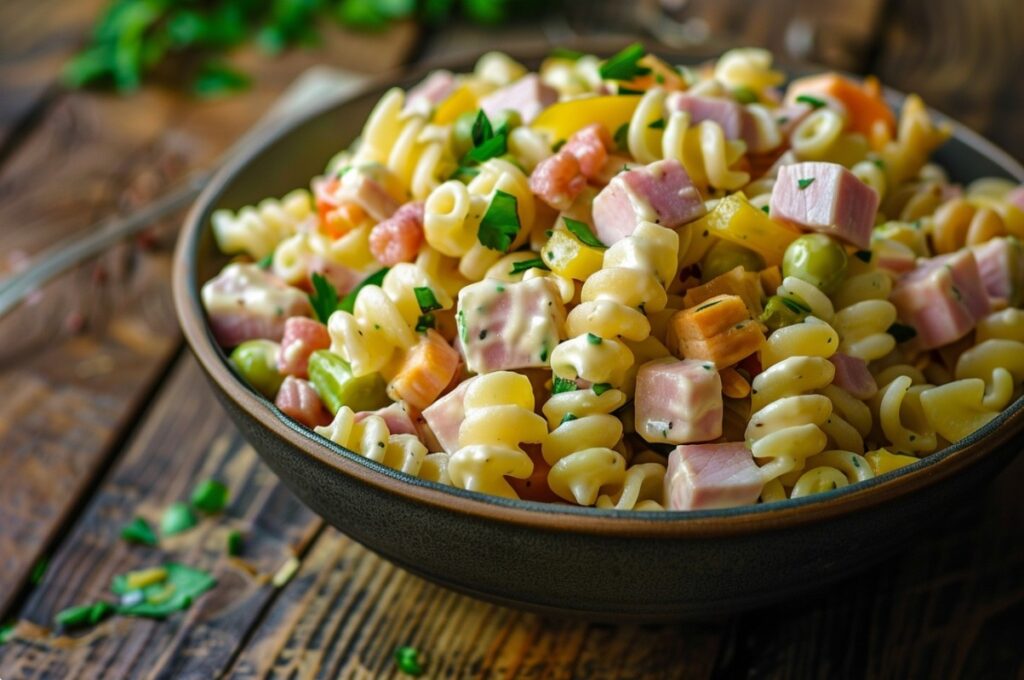
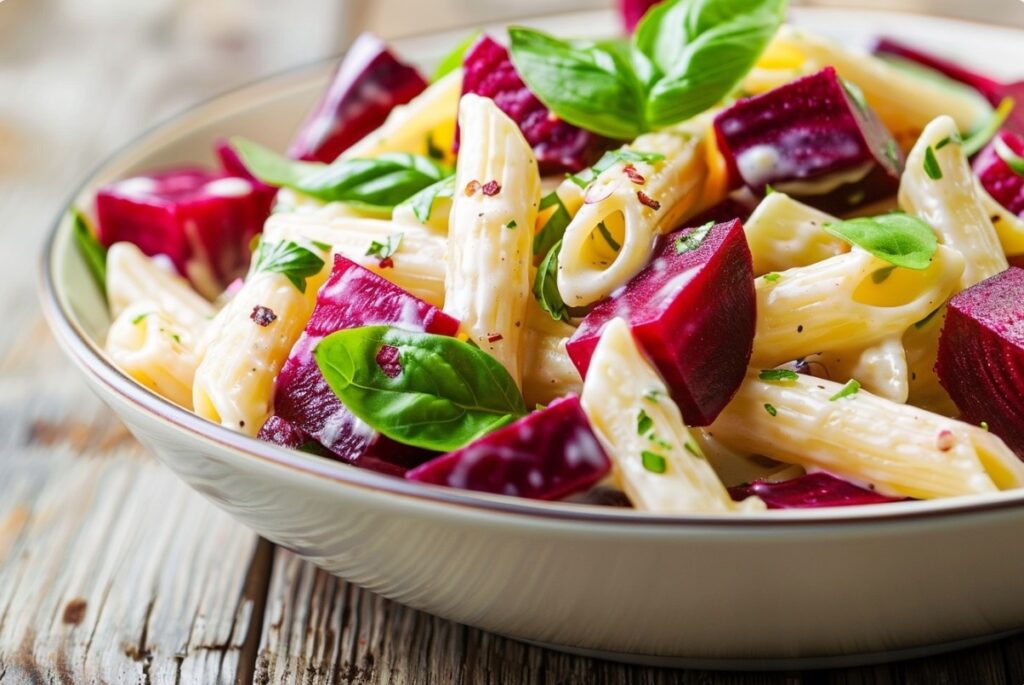
How it should be: the pasta keeps a little starch, the dressing has the right flow (not watery, not cement-thick), and you combine everything in a bowl with room to move. You toss, and you see an even matte (or lightly glossy) coating—no puddles.
What often happens: the pasta gets rinsed, chilled, dried off, then a thick dressing is poured on top and “mashed” in with a spoon. The dressing stays in clumps or slides to the bottom. More dressing gets added… and you end up with a heavy, wet mess.
My rule of thumb: the dressing shouldn’t just sit on the pasta—it should feel like it’s holding on. If after two or three stirs it immediately runs to the bottom, the issue isn’t quantity. It’s structure.
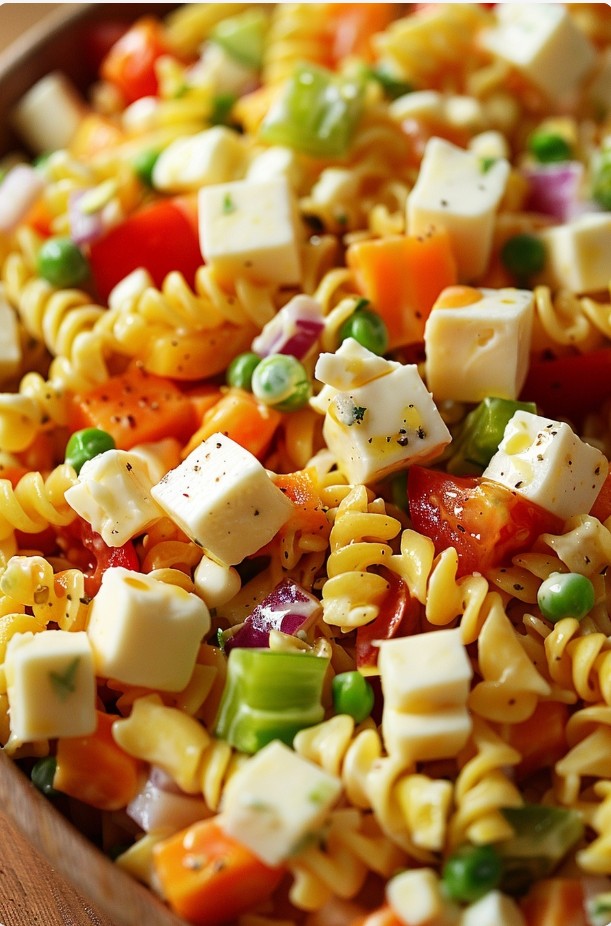
Prepping pasta specifically for salad: doneness, rinsing, cooling
I’m not giving you a recipe here—I’m giving you a logic you can use with penne, fusilli, or tiny shapes. For pasta salad, the pasta needs to be springy, with a clear shape and no collapsing. Overcooked pasta is a sponge: it absorbs the dressing at first, then releases water back into the bowl. That’s how you get diluted flavor and that familiar puddle.
At home it often goes like this: the water boils, pasta goes in, you stir once… and then you wander off. Two minutes later, starch has started sticking to the bottom of the pot and some of the pasta clumps together. Then you break it up by force, the pasta gets roughed up, extra starch clouds the water, and the surface ends up with an uneven film. For salad, that matters: the dressing lands in patches.
Should you rinse pasta or not? An honest answer (no dogma)
I rarely rinse pasta for salads because I want to keep a bit of starch. But rinsing can make sense sometimes: if the pasta is definitely a half-step overcooked and slippery, or if you’re going for a very “clean,” light salad without that starchy feel. In that case, rinse—but don’t rinse until it squeaks, and don’t blast it with ice-cold water at full pressure.
The compromise that works for me at home: a quick rinse with cool water just to stop the cooking, then shake it really well and let it sit in the colander for a couple of minutes. You don’t want water hanging in droplets—that will thin the dressing and break the emulsion.
Cooling: why “cold pasta” isn’t always the move
Pasta salad gets filed in our heads as “a fridge dish.” But you don’t have to mix it with fully cold pasta. There’s a sweet spot: barely warm pasta. It’s no longer steaming and won’t melt delicate dressings, but it’s still receptive enough to take on a thin coating.
A quick story from my kitchen: I used to stubbornly cool pasta “properly”—spread it on a sheet pan, wait until it was cold. Then I’d add an oil-and-acid dressing and end up with a salad that looked dry and tasted sharp. Once I started mixing the dressing into barely warm pasta, the acidity felt softer and the oil distributed more evenly. The texture changed without adding a single extra ingredient.
- Barely warm — great for oil-based dressings, garlic-herb dressings, spice-forward dressings.
- Fully cold — better for mayo/yogurt/sour-cream-based dressings if they’re heat-sensitive.
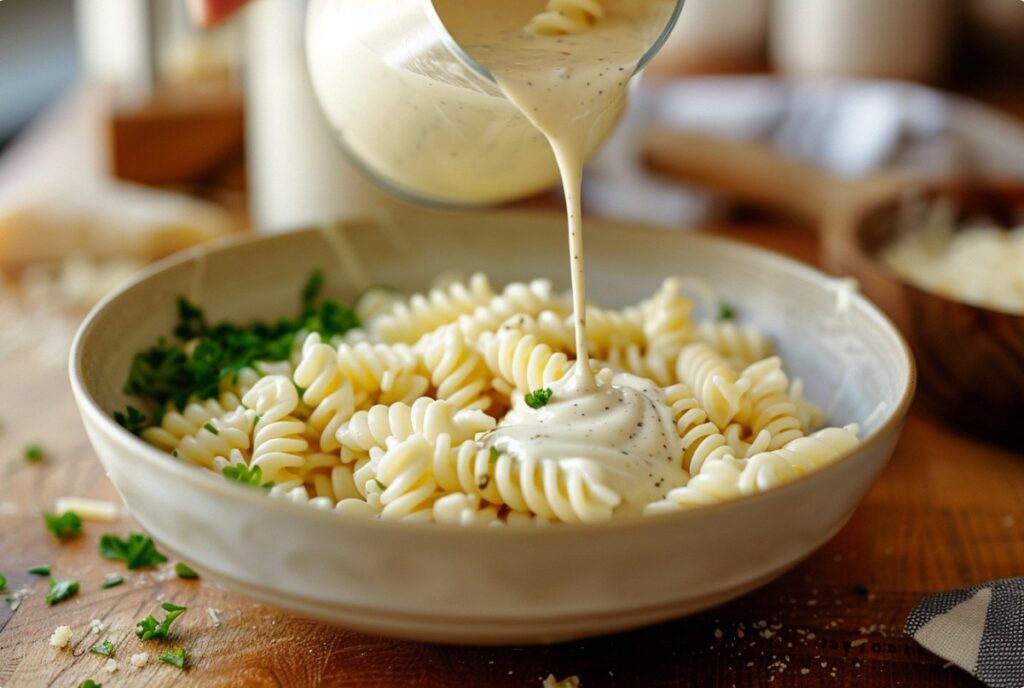
Salad dressing: thickness, emulsion, and the “right flow”
When people say “the dressing won’t stick,” they usually mean one of two things: either the dressing is too thin and runs off, or it’s too thick and clumps. Both problems are fixed not by adding “more stuff,” but by getting the dressing to the right consistency.
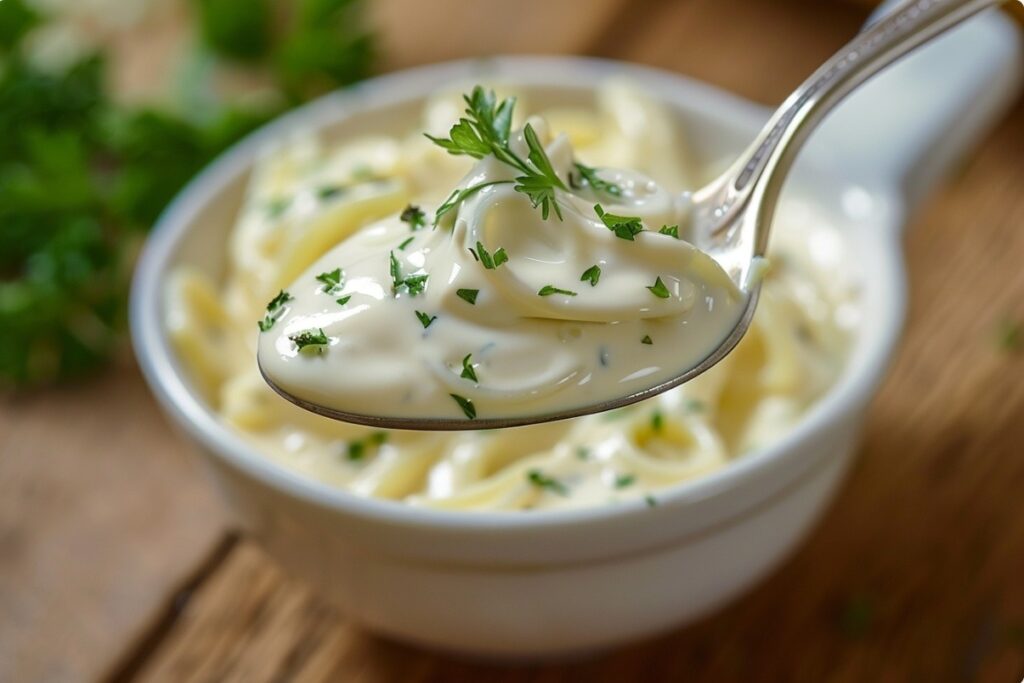
Picture what you want: the dressing clings to the pasta in a thin layer and stays there. For that, it shouldn’t behave like water—and it also shouldn’t drop off the spoon in a blob. The best cue is this: it should slide off a spoon in a slow, continuous ribbon. That’s the point where it spreads easily but doesn’t pool at the bottom.
Emulsion without the scary words: what’s happening in the bowl
If your dressing contains fat and water (which is almost always), they don’t naturally get along. You have to force them to “coexist”—whisk or shake hard so the fat breaks into tiny droplets. Then the dressing looks uniform and glossy, and it clings to pasta much better.
Signs your emulsion is weak: the dressing sits in layers (shiny oil on top, watery part underneath); on pasta it leaves wet patches instead of an even coating.
Tip #1: loosen the dressing with a spoonful of water (or starchy water)
If the dressing is too thick and refuses to spread, I don’t rush to pour in more oil or add something heavy. Often, 1–2 tablespoons of warm water (or pasta cooking water, if you saved it) is enough. Water makes the dressing more fluid and helps the emulsion “open up.” Add it a little at a time, stir, and watch how it behaves.
Tip #2: the dressing should be ready before the pasta hits the bowl
If you start “fixing” the dressing after it’s already in the bowl with pasta, mixing turns into a struggle: pasta breaks, the dressing coats unevenly. Life is easier when the dressing already tastes right and has the right consistency, and the pasta is in the right state. Then combining takes 30–60 seconds—not 10 minutes of frustration.
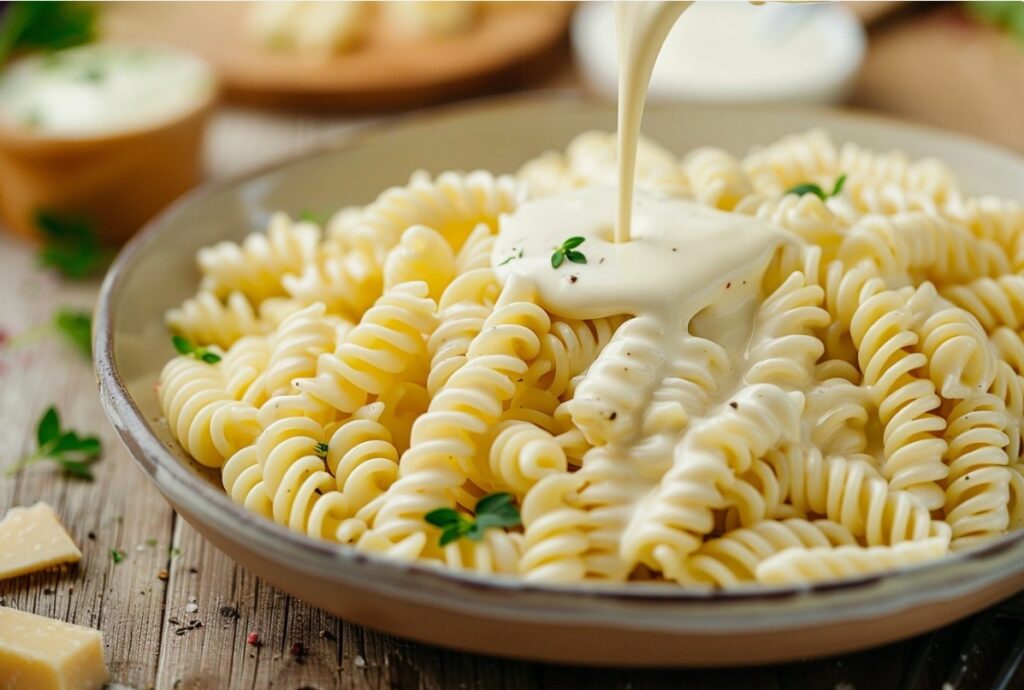
Mixing technique: order, bowl, tools, and timing
This is where the real secret lives: for pasta salad, you don’t “stir.” You coat. That means gentle bottom-to-top motions, enough space in the bowl, and doing it at the right moment.
The bowl: why a cramped bowl makes everything worse
In a small bowl you’re not mixing—you’re pressing. Pasta breaks, dressing collects in one spot, and add-ins (veg, herbs, cheese—whatever you’ve got) get smashed. Grab a bowl one size bigger than you think you need. It sounds silly, but it’s one of the strongest “home kitchen” upgrades.
Tools: spoon, spatula, or tongs?
For pasta salad, I reach for a wide spoon or a silicone spatula. Tongs are great for long pasta, but in a salad they can drag the dressing to one side and crush softer ingredients. A spatula is gentler: scoop, fold, repeat.
Order matters: dressing in the bowl first, then pasta (not the other way around)
I want the pasta’s first contact to be with dressing—not with the dry sides of the bowl. So I do this: dressing on the bottom, then pasta, then a few bottom-to-top folds. The dressing starts distributing thinly and evenly instead of sitting on top like a blanket.
If there are lots of add-ins and they’re delicate, I sometimes do it in two stages: coat the pasta with part of the dressing first, then gently add the rest and fold again. Less chance of turning your salad into mush.
Tip #3: give it “2 minutes of peace” after mixing
After you toss the pasta with dressing, don’t immediately taste and start adding more salt/acid. Let it sit for 2–5 minutes. The pasta absorbs a bit, the dressing redistributes, and the flavor becomes more even. It’s the moment when the kitchen smells like the dressing as a whole—not vinegar over here and garlic over there.
If after 5 minutes the salad looks drier, that’s normal. It’s better to add one or two spoonfuls of dressing at the end than to flood everything “just in case” from the start.
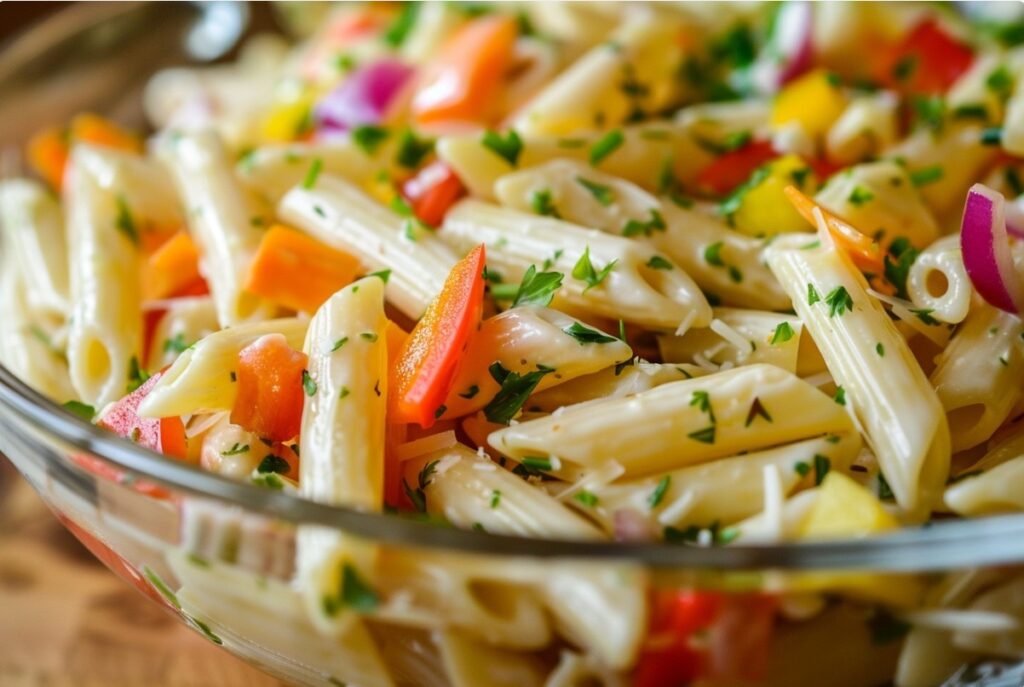
Temperature scenarios: warm pasta, cold dressing—and the other way around
Temperature isn’t just preference—it changes texture. I like to think of it as three scenarios, each with its own risks.
Scenario 1: barely warm pasta + oil-based dressing
This is one of the most reliable combos. Warmth helps herbs and spices bloom, oil flows more easily, and a thin layer coats more evenly. The main risk: if the pasta is hot and the dressing is very acidic, the flavor can read sharper. I let the pasta cool until it’s warm but not so hot it heats the spoon in your hand.
Scenario 2: warm pasta + mayo- or yogurt-based dressing
This is where texture can go sideways fast. Heat can thin the dressing; sometimes it “breaks” and turns watery. If there’s cheese or other proteins, it can go grainy. If you really want to mix right away, cool the pasta to a neutral temperature and keep the dressing cold. Combine quickly—no prolonged mashing.
Scenario 3: cold pasta + cold dressing
The most common home scenario—and the one that most often leads to “the dressing won’t cling.” Cold pasta is drier on the surface, and cold dressing is thicker. They don’t want to meet in the middle. Fix it by letting the pasta sit at room temperature for 10 minutes to take the chill off, or by loosening the dressing slightly (literally a spoonful of water) and mixing in a larger bowl.
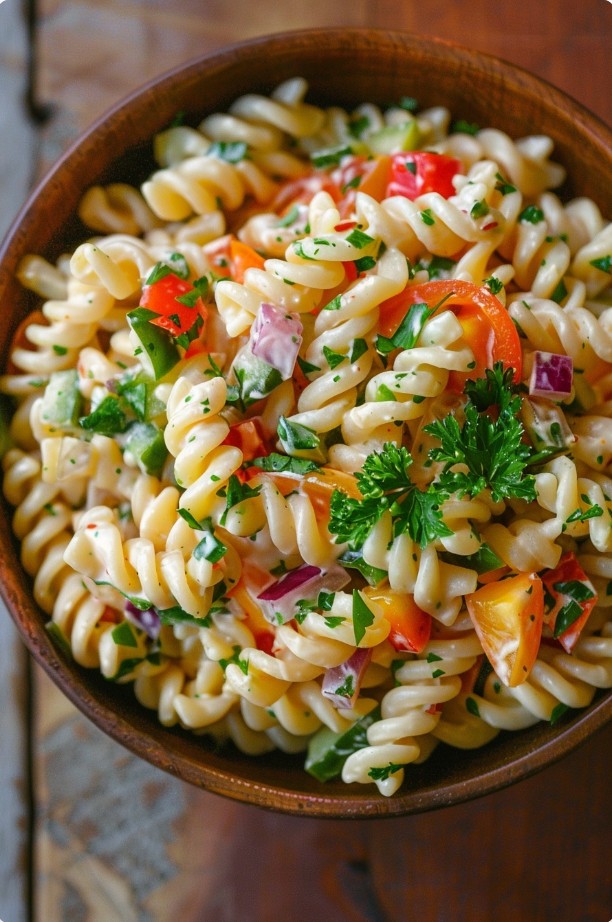
Common mistakes that make pasta salad heavy, dry, or watery
Here’s what I see most often when someone says, “I did everything like I always do, and it still came out wrong.” The good news: almost all of this is fixable without heroics.
- Rinsing pasta until it’s completely slick, then wondering why the dressing slides off. A little starch is glue, not the enemy.
- Tossing pasta with oil “so it won’t stick”. Oil creates a barrier. The dressing has nothing to grab.
- Mixing in a too-small bowl. You end up pressing instead of folding: pasta breaks, dressing clumps.
- Dressing that’s too thick, then trying to “smear” it onto cold pasta. It won’t spread, so you add more—and the salad turns heavy.
- Dressing that’s too thin (or already separated). It runs to the bottom, leaving the top dry.
- Seasoning and adjusting immediately without letting the salad rest. Five minutes later the flavor shifts, and you may end up over-salting or over-acidifying.
- Adding juicy ingredients too early and letting them sit. They release moisture, the dressing gets diluted, and the emulsion weakens.
Quick story: at a casual get-together I once watched someone make pasta salad “for tomorrow.” They dressed it generously, chilled it overnight, then added even more dressing in the morning because it looked dry. The result tasted like two separate dressings—one absorbed into the pasta, one sitting on top. When we flipped the approach—saved some dressing for the finish and added it right before serving—everything tasted more even and lighter.
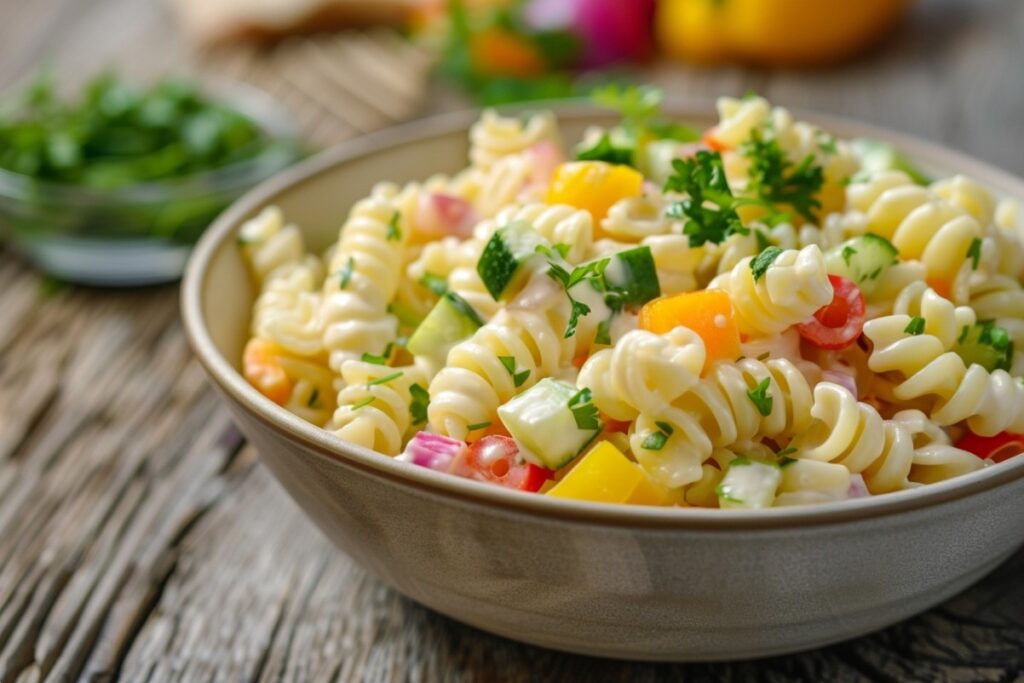
If something goes wrong: 6 quick fixes (no panic required)
Pasta salad is forgiving—you can save it even when it feels too late. The key is diagnosing what’s actually wrong: dry, watery, greasy, clumpy, or just… bland.
1) It’s dry—the dressing “disappeared”
The pasta absorbed the dressing. That’s normal, especially if the pasta was still warm or the salad sat for a while. Fix: add a little more dressing (in small additions) and fold 5–6 times. If you’re low on dressing, sometimes 1–2 tablespoons of water plus a very quick toss will “wake up” what’s already on the pasta.
2) There’s a puddle at the bottom
Either the dressing was too thin, or the salad released a lot of moisture. Fix: transfer the salad to a dry bowl, leaving the liquid behind (no need to heroically pour it back in). Then reassess: you may need a bit of thicker dressing to restore that coating.
3) The dressing split and looks patchy
Try to bring it back together: whisk any extra dressing vigorously (if you have it), or add a small spoonful of a thicker component (something that helps hold structure) and quickly fold it in. If you don’t want to add anything, sometimes a pinch of salt plus 20 seconds of active mixing helps the water phase stabilize a bit. Not magic—but it often works.
4) The dressing is clumpy
This usually comes from temperature (pasta too warm) or from forcing a very thick dressing into the pasta. Fix: add a splash of warm water and fold gently, trying not to break the pasta. If the clumps are big, smear them against the side of the bowl with a spatula instead of chasing them around the whole salad.
5) It’s too greasy and heavy
You don’t “remove fat”—you balance it. Add something that reads fresh: a little acid, or something crisp and bright (depending on what’s already in the salad). If you don’t want to add anything, let it sit for 10 minutes; sometimes the fat settles and the whole thing feels softer. Sounds odd, but it works.
6) The flavor is flat—something’s “off”
Don’t immediately reach for more spices. Often it’s missing salt or acid, but you need to add it in tiny steps. What I do: take a small spoonful, adjust that bite, taste—then repeat for the whole bowl. One careful move beats one big mistake.
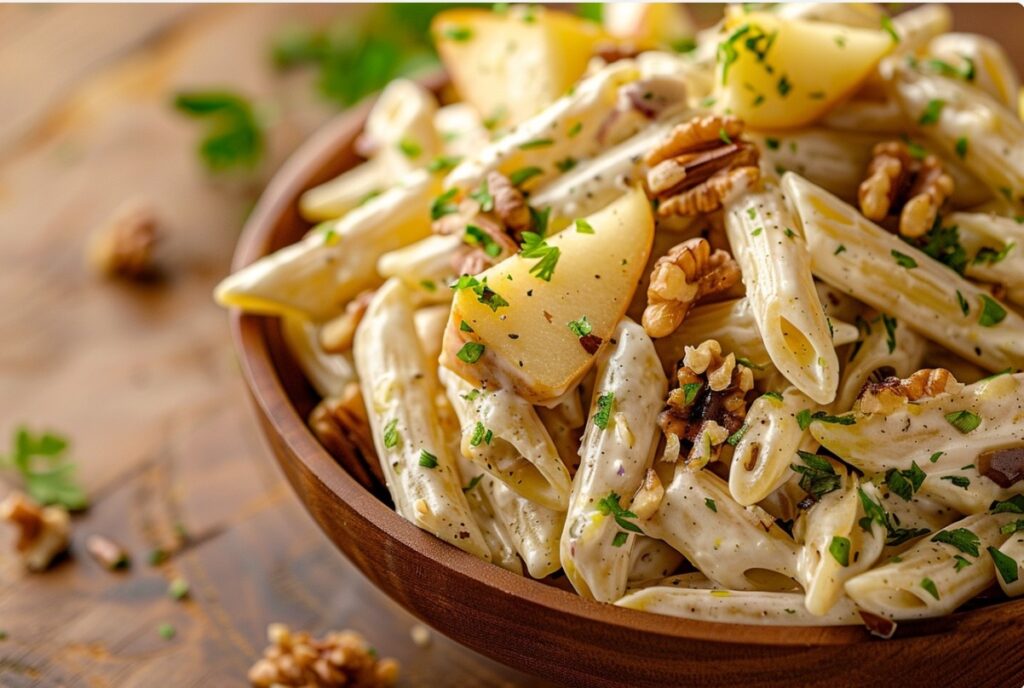
A few quiet little habits that make results consistent
These aren’t “chef secrets.” They’re small habits that remove chaos. I got to them through mistakes—and now I do them automatically.
Tip #4: save a little pasta cooking water
Even for a cold pasta salad, a small splash can rescue a dressing’s consistency. It’s not just water—it contains starch, which helps bind fat and makes the coating more even.
Tip #5: don’t mix everything at once if you have delicate ingredients
If there’s something soft that breaks easily, I do this: toss the pasta with the dressing first, then add the delicate bits and fold just 3–4 times. It keeps the look and texture. Pasta salad should feel lively—not “mixed until uniform.”
Tip #6: taste twice—right away and again after 5 minutes
The first taste tells you the direction. The second taste lets you make a precise adjustment. In those 5 minutes, the pasta and dressing “agree” with each other, and you taste the salad more honestly.
Tip #7: if the pasta clumps, don’t tear it apart
When pasta clumps in the colander, it’s tempting to rip it apart. I do the opposite: add a little dressing (or a drop of water) to the bowl, transfer the clump, and give it a minute. Then I separate it gently with a spatula, folding from the bottom. Fewer broken pieces means a more even coating.
One last mini story: I once made pasta salad for a picnic and worried it would dry out in the container. Instead of drowning it in dressing right away, I did two things: coated the pasta well in a thin layer, and saved a small portion of dressing for the finish. Outdoors, we tossed it quickly right before eating—and it was juicy but not wet. That’s when I fully committed to this approach.
In short: pasta for salad should be springy, the dressing should be smooth and have the right flow, and mixing should be gentle—in a roomy bowl, at the right temperature moment. When those pieces line up, pasta salad stops being a lottery.
What’s your usual issue: dressing pooling at the bottom, pasta drying out after the fridge, or things going wrong right at the mixing stage? Tell me what “wrong” looks like in your bowl, and we’ll troubleshoot it by the signs.
Questions & answers
Do you need to cool pasta before adding dressing?
Yes—let the pasta cool a bit first. Warm (but not hot) pasta absorbs dressing better.
Why does pasta salad sometimes turn out dry?
The pasta can absorb the dressing as it cools, so it often helps to add a little extra dressing right before serving.
How much dressing do you need for pasta salad?
A good starting point is about ½–¾ cup of dressing for 400–500 g of cooked pasta.
Should you rinse pasta with water?
For salads, people often give pasta a quick rinse with cold water to stop the cooking and cool it down.
Which pasta shapes hold dressing best?
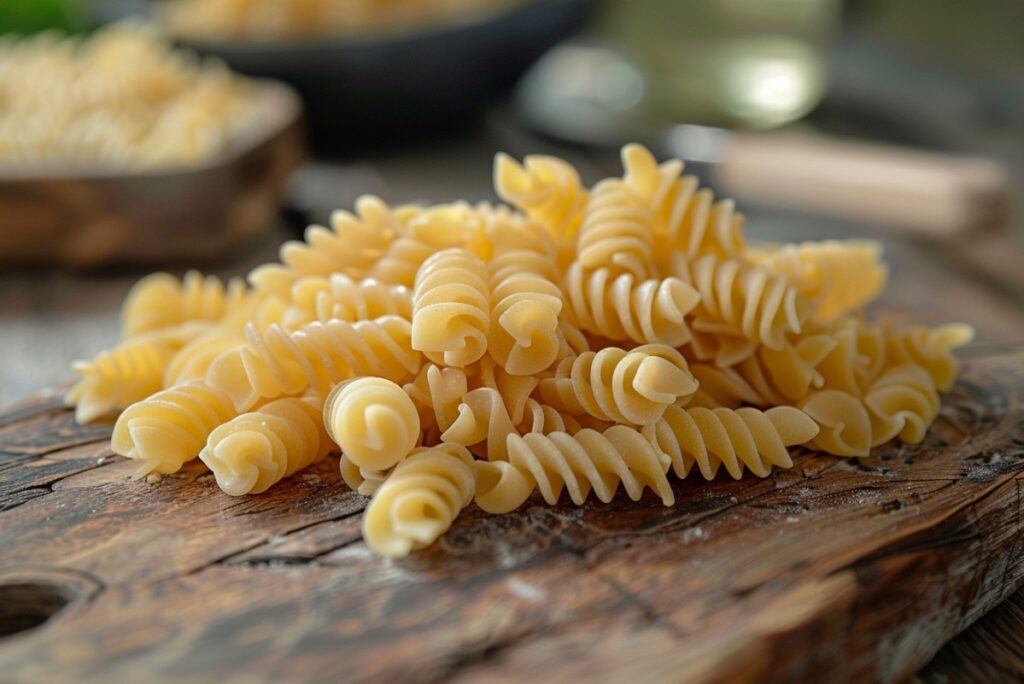
Fusilli, rotini, and penne hold dressing well thanks to their shape.
When should you add vegetables to the salad?
After the pasta has cooled a bit and has been tossed with the dressing.
Can you mix pasta salad ahead of time?
Yes—pasta salads often taste even better after a few hours in the fridge.
Do you need to toss the salad again before serving?
Yes—give it one more gentle toss before serving so the dressing is evenly distributed.