How to Serve Carrot Cake Without Frosting

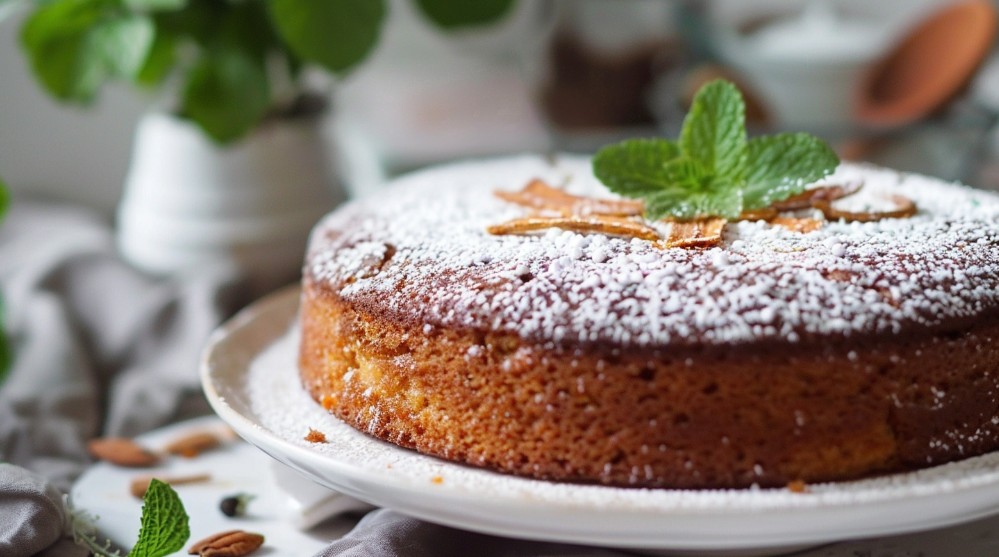
Once, I had an acquaintance who stubbornly refused to eat frostings — he said that anything spread on top ‘masks the taste.’ His favorite cake was carrot cake, but it had to be without any layer of frosting. I remember how, at one dinner, he carefully removed pieces from the edges to avoid even a hint of glaze. And I wondered: if not frosting, then what? How to make the cake presentation interesting without hiding it?
Carrot cake is one of those things that seem strangely simple until the question arises: how to serve it so it’s not boring? Without frosting, it looks bare — just the cake and nothing else. But this is where the space for creativity and personal touch opens up. Sometimes guests look at a piece and ask, ‘Where’s the white layer?’ — and here you want to surprise not with frosting, but with the presentation itself. Because sometimes the essence is not to cover up, but — on the contrary — to highlight.
Very often, the fear of ruining something prevents us from deviating from the standard. You place the cake on a plate, and as you carry it, you think: maybe I should make frosting after all? But if you know a few simple tricks, you can make the cake presentation so lively and appetizing that no one will even remember the frosting. It’s not about the external gloss — it’s about showing that you thought about this dish, you wanted to make it special.
Why Carrot Cake ‘Asks’ for Frosting — and Why It’s Not Necessary
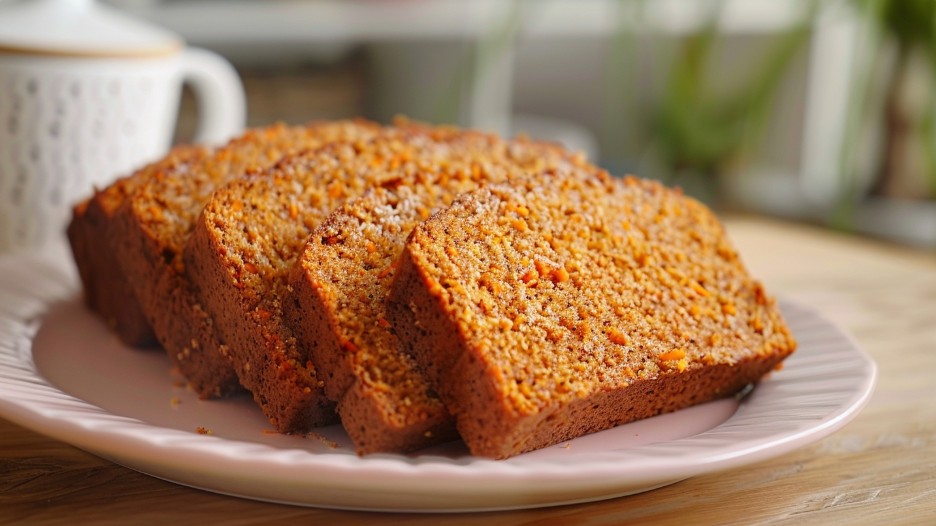
I often observe how people automatically associate carrot cake with frosting, especially cream cheese glaze. As if it’s a standard, otherwise the cake is ‘wrong.’ But historically, frosting didn’t appear immediately — in many countries, carrot cakes were initially dry, more bread-like. Frosting was invented to mask a dried-out or bland cake. That’s why in many homemade versions, where the carrot is juicy and the spices are aromatic, the cake is already delicious on its own.
The problem is that without frosting, the cake looks modest. It doesn’t shine, doesn’t look ‘festive.’ This is where the fear arises: is it good enough for guests? In reality, frosting is a habit, not a necessity. If you pay attention to the texture, color, and aroma of the cake itself, you can see its beauty without an additional layer. The main thing is not to try to ‘make it look,’ but simply to highlight what is already there.
Visual Accents: How to Make the Cake Appealing Without Frosting
The first step is to look at your cake through the eyes of a guest. Without frosting, it may seem ‘naked,’ but that’s only at first glance. In reality, carrot cake has its own vibrant palette: from deep orange to golden crust. It’s worth learning to emphasize this play of colors.
I always pay attention to the surface. If the cake comes out of the oven with a nice crust, don’t hide it. On the contrary — it’s your advantage. Light stripes, cracks, a slight blush — all this looks homely and trustworthy. There’s no need to level the edges with a knife or trim the top. It’s better to serve the cake as it is, just carefully cleaning off any excess crumbs.
Micro-story: Cake with a Crack
Once, my cake cracked in the center. Instead of covering it with frosting, I simply sprinkled a bit of powdered sugar on top and placed a few slices of fresh carrot. Guests thought it was intentional. And, you know, it looked more honest — you could see it was homemade baking.
- Use powdered sugar for a light contrast
- Grated carrot or orange zest adds color
- Nut or seed slices — a texture accent
Tip: Serve the cake on a light plate — it enhances its colors.
How to Serve in Portions: Geometry and Arrangement
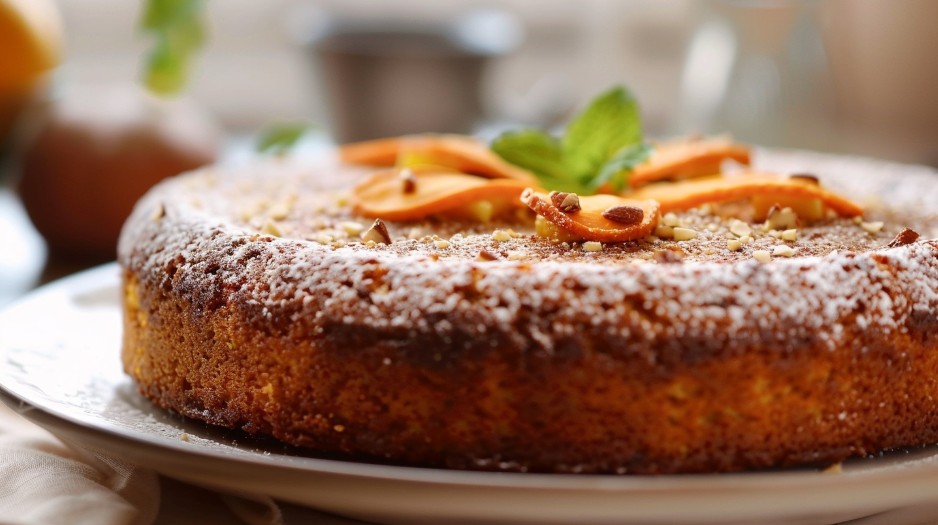
Portion serving is your other weapon. Instead of a whole cake on a large plate, try serving it sliced into neat pieces. It’s important that each piece is even and has a clean cut. For this, I use a sharp knife, sometimes even heating it under hot water — then the edges don’t crumble.
It looks nice when the pieces are arranged in a fan shape or ‘domino’ — slightly overlapping. Another option is to stand each piece upright, supporting it with a slice of apple or carrot, or a small mint leaf. Don’t be afraid of asymmetry: if the arrangement is slightly uneven, it looks cozy.
Micro-story: Slicing at a Wedding
At a family wedding, I helped with the dessert table. The carrot cake was cut into small rectangles, arranged in a circle, and a handful of walnuts was placed in the center. People were taking photos of this centerpiece.
- Sharp knife for even slicing
- Small pieces — easier to grab by hand
- A few pieces together — looks richer
Tip: Add a bit of color to the plate — a few berries, if available, or just an orange slice for contrast.
Texture and Sound: What Makes a Frosting-Free Cake Appealing
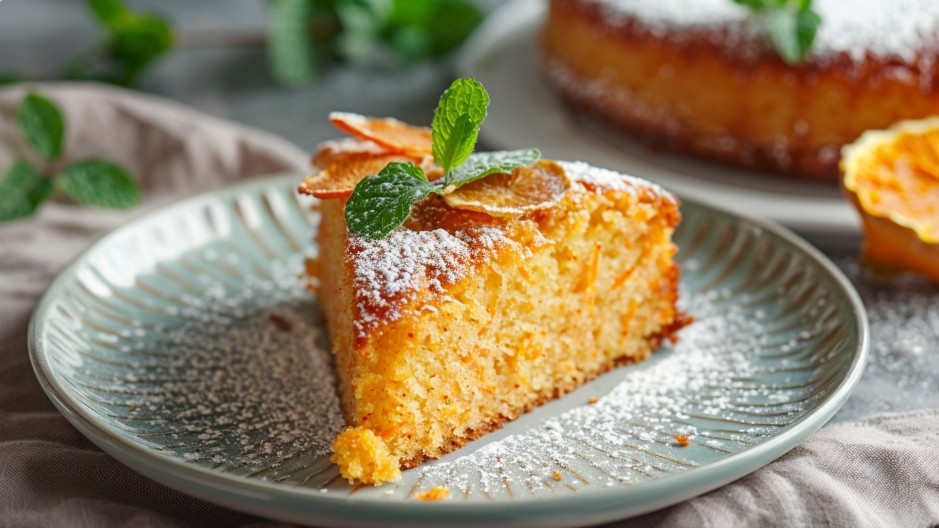
There’s often a fear that without frosting, the cake will be dry or bland. But this is where you can play on texture. If the cake is moist — that’s already your bonus. When you cut it, there should be a slight resistance to the knife, not crumbling. If you hear the crunch of nuts or hear the knife ‘glide’ through the crumb — that also whets the appetite.
The smell of carrot, cinnamon, nutmeg — these are things seen not by the eyes, but by the nose. If the cake is still slightly warm, the aroma is especially strong. I sometimes leave the cake at room temperature for 10–15 minutes before serving — to let it ‘open up.’ Try to serve it so that guests can smell it before the first bite.
- Moist cake doesn’t need a coating
- Nuts and raisins — crunchy and soft details
- A light aroma of spices — the best sauce
Accent: Don’t be afraid if the cake isn’t perfectly even. Homemade baking should look lively.
Decor: Naturally, Without Excess
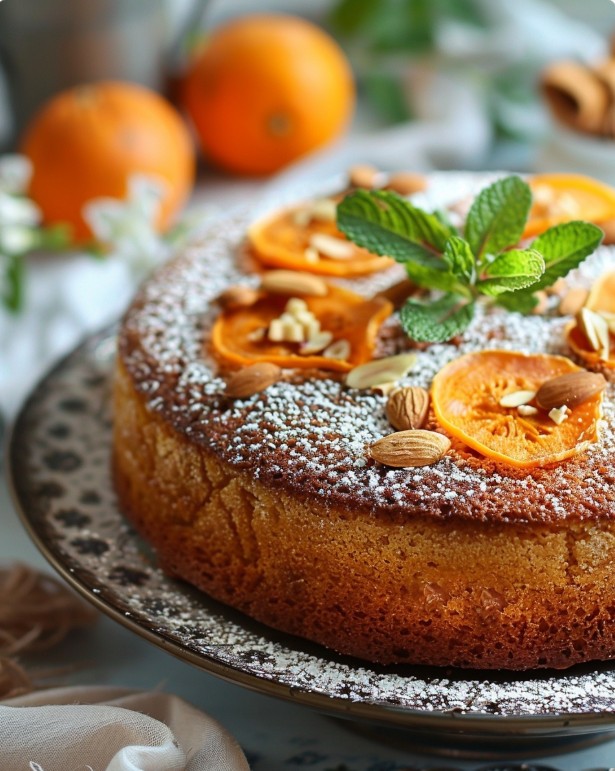
One of the typical mistakes is trying to ‘decorate’ the cake like a cake. But carrot cake looks good in simple decoration. Try using what’s at hand — slices of fresh carrot, orange zest, a handful of nuts, a bit of honey.
I like to give the cake a ‘story’ with decor. If the cake has nuts — sprinkle a few whole ones on top. If it has raisins — place a few on the plate next to it. It’s important not to overload: one or two details, and that’s it. It’s not a ‘final touch,’ but a dialogue with what’s inside the cake.
Examples of Simple Decor
- Thin slices of carrot, slightly dried in the oven
- Almond petals or walnuts
- A pinch of cinnamon or powdered sugar
- Mint or lemon balm leaves
- Grated orange zest
Tip: Don’t ‘paint’ with decor — add only what logically combines with the cake’s flavor.
Accompaniments: Drinks and ‘Little Friends’ for the Cake
Another way to make the presentation interesting is to add something nearby. Without frosting, the cake may seem ‘lonely’ on the plate, but if you place a small glass of compote, coffee, or aromatic tea next to it, everything looks different. In cafes, I’ve noticed how they place a small spoon and a slice of lemon next to the cake — that’s also an element of presentation.
I sometimes add a few slices of fresh apple or pear to the plate, which highlight the sweetness of the carrot. You can place some nuts or raisins next to it. Don’t be afraid to combine: carrot cake goes well with tartness and light, fresh flavors.
- Black tea with cinnamon or cloves
- Apple juice or compote
- Coffee with orange zest
- Thin slices of apple, pear, orange
Accent: Small additions nearby create an impression of care, even if it’s just a few berries or nuts.
Common Mistakes in Serving Without Frosting
Most often, people try to ‘hide’ the cake if it doesn’t look perfect. That’s the first mistake. The second is excessive decor: when the cake looks like a Christmas tree, but it’s unclear what’s in the center. Another common problem is serving the cake on a dark or too bright plate: this loses color and appetizing appearance.
- Don’t cover the cake completely with powder — it masks the color
- Don’t place decor chaotically — better less, but thematic
- Don’t trim the edges if they’re golden — it’s natural beauty
- Don’t forget about the size of the piece: too large looks coarse
What to Do If the Cake Looks Too Simple
Sometimes, the cake comes out gray or pale. Don’t panic. Try a light dusting of powder, a bit of citrus zest — and the look will change. If the top cracked — no problem, just make it a ‘highlight’: place a few nuts or carrot pieces in the crack. If the pieces crumble — serve them in molds or on small plates, it looks cozy.
Tip: If you don’t like the look — serve the cake already sliced, not whole. It distracts from minor defects.
Life Hacks for ‘Lively’ Carrot Cake Presentation
- Serve the cake slightly warm — the aroma is stronger, the look more appetizing
- Combine textures: soft cake, crunchy nuts, juicy fruit pieces
- Use glass or white plates — they highlight the color
- Add small details nearby: a spoon, napkin, cup of coffee
- Don’t be afraid to repeat motifs — if there’s orange in the cake, add a bit of zest to the plate
Micro-story: Cake in the Countryside
Once we were eating carrot cake in the countryside, just in the fresh air. There was no frosting or special decor. But there was a large bowl of apple slices and a jar of honey nearby. The cake disappeared faster than I could slice it, and no one even mentioned the frosting.
Tip: Don’t worry about perfection. Better a lively cake today than a ‘perfect’ one tomorrow that was never served.
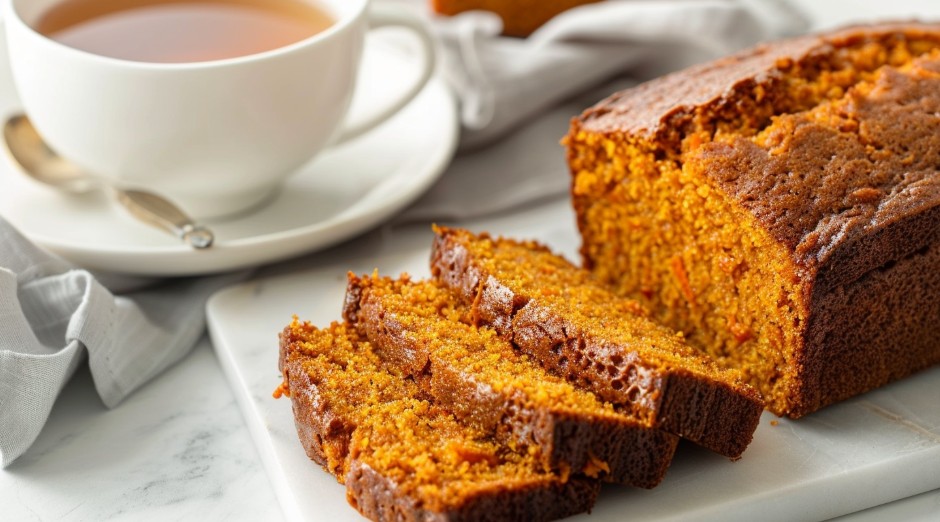
Even without frosting, this carrot cake is quite suitable for serving as a dessert for a birthday tea, I highly recommend adding it to your festive menu. Neat presentation, the right cut, and a few simple accents — nuts, spices, zest, or a cup of aromatic tea nearby — create the feeling of a thought-out dessert, not a ‘compromise’ option. Such a cake looks lighter, doesn’t overload the table, and pairs well with other dishes, remaining festive in mood even without creamy decor.
Mechanics: How to Choose the Right Temperature and Timing for Serving
Often cakes are cut while still hot — then they tear and spread. I always let the carrot cake cool to room temperature, but don’t keep it too long. If served completely cold, it becomes denser, losing some of its aroma.
The optimal moment is when the cake is still slightly warm but holds its shape. This is about 40–60 minutes after the oven (depending on thickness). If the cake has cooled in the fridge, take it out 15–20 minutes before serving, so the aroma and texture ‘open up.’
Why This Works
The moisture inside the cake is still circulating when it’s warm, so each piece seems juicier. The aroma of spices and carrot is more pronounced on warm baked goods. Cold cake is tasty too, but it’s the slight warmth that ‘revives’ its flavor.
Tip: If you want to ‘revive’ the cake, slightly warm individual pieces on steam or in the microwave for 10–15 seconds.
How to Serve Carrot Cake for Kids and Adults
For kids, I always serve smaller pieces and complement them with something bright — for example, a slice of kiwi or apple, a few berries. Sometimes you can make a ‘carrot sandwich’: two thin slices of cake with a slice of apple or banana in between. It looks interesting and sparks curiosity.
For adults, you can play on contrasts: serve the cake with a small cup of espresso, sprinkle a piece with a pinch of cinnamon, serve a slice of dark chocolate alongside. It’s not necessary to add something complex — the gesture itself is important.
- For kids — bright colors, small pieces
- For adults — aromatic additions, contrast of flavors
- For celebrations — serving on a large board, in portions
Accent: Presentation is a game, and you decide how your cake will look.
What to Do If Something Goes Wrong
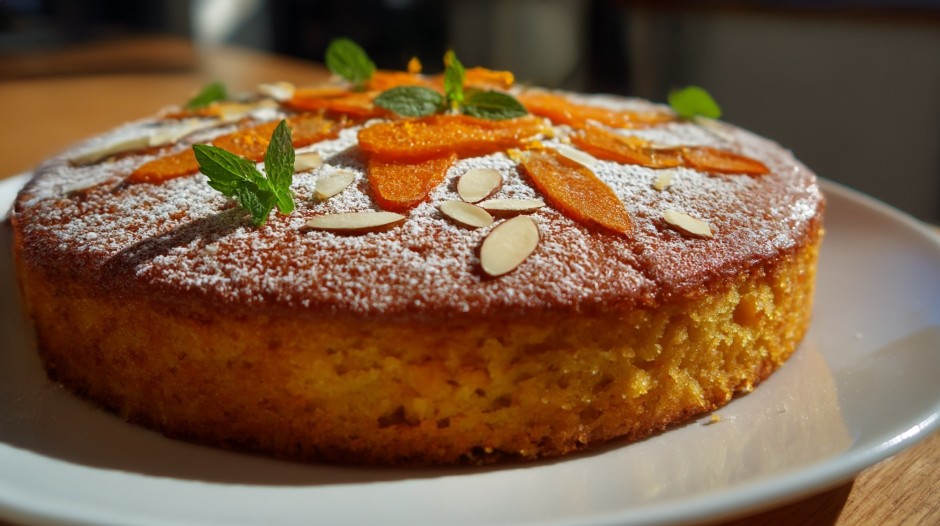
Sometimes the cake falls apart, burns on the bottom, or looks too simple. In such cases, there’s no need to panic. If the pieces don’t hold their shape — serve them in small glasses or bowls, like a dessert. If the bottom is burnt — carefully trim it and serve the pieces upside down. If the cake turned out pale — decorate with zest, nuts, fresh fruit.
Micro-story: Rescue Presentation
Once, my cake fell apart so much that there was no chance of slicing it classically. I placed the crumbs in small glasses, added a bit of apple puree — and it disappeared faster than usual. Guests thought it was intentional.
Tip: If the cake falls apart, don’t try to glue it together — serve it as a dessert in a glass or small bowl.
Sometimes improvisation creates the mood and looks even more interesting than perfect presentation.
In conclusion, carrot cake without frosting is not a ‘poor version,’ but a separate genre. Here, everything depends on your mood, imagination, and love for details. The main thing is not to be afraid to show the cake in its natural form. A few successful accents, a little attention to detail, and your presentation will look like frosting isn’t needed. The only thing you definitely shouldn’t do is hide the cake under a layer of decorations. Let it be itself.
How do you serve carrot cake without frosting? Do you have favorite details or your own secrets? Share in the comments — it’s interesting to hear different approaches.