How to Serve Soup for Kids and Guests

Some dishes genuinely save the day. Soup is one of them: it warms you up, pulls everyone into the kitchen, and gives that comforting “someone took care of me” feeling. But there’s a flip side too—your soup can taste great, yet the serving looks like you just ladled it in a hurry and ran off. Kids make a face, guests politely say nothing, and you feel a little deflated… because you did try.
I’ve made (and watched others make) the same mistake more times than I’d like to admit: thinking “presentation” means restaurant-level fuss. In reality, serving soup well is about comfort, temperature, a clean rim, and one small gesture that says, “I thought about you.” For kids, it’s about not being scary and not being too hot. For guests, it’s about looking tidy and a little special—without trying too hard.
The best part? With soup, tiny details do most of the work. The exact same pot can feel completely different: a regular weekday lunch today, a cozy evening with friends tomorrow. No need for a new dinner set or fancy carving skills—just a few simple “mechanics” and a couple of tricks you can pull out anytime.
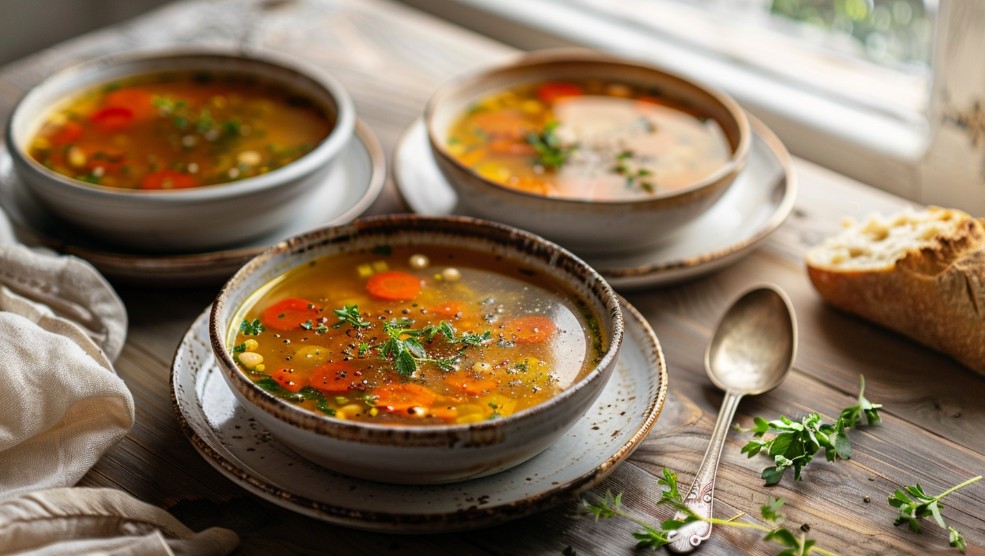
Bowls, plates, and portion size: half the success happens before you even pour
Soup presentation doesn’t start with herbs or a “pretty spoon.” It starts with what you’re pouring it into—and how much. In a home kitchen, the most common scene is: grab the biggest bowl, fill it up “so you don’t have to go back,” and then the soup cools around the edges while the center stays scorching hot. It looks heavy, and it eats heavy.
The rule that saves me every time: soup needs a little “air” in the bowl. When the level is right up to the rim, people tense up before the first spoonful. Adults and kids alike.
Deep plate vs bowl vs mug: what actually feels comfortable
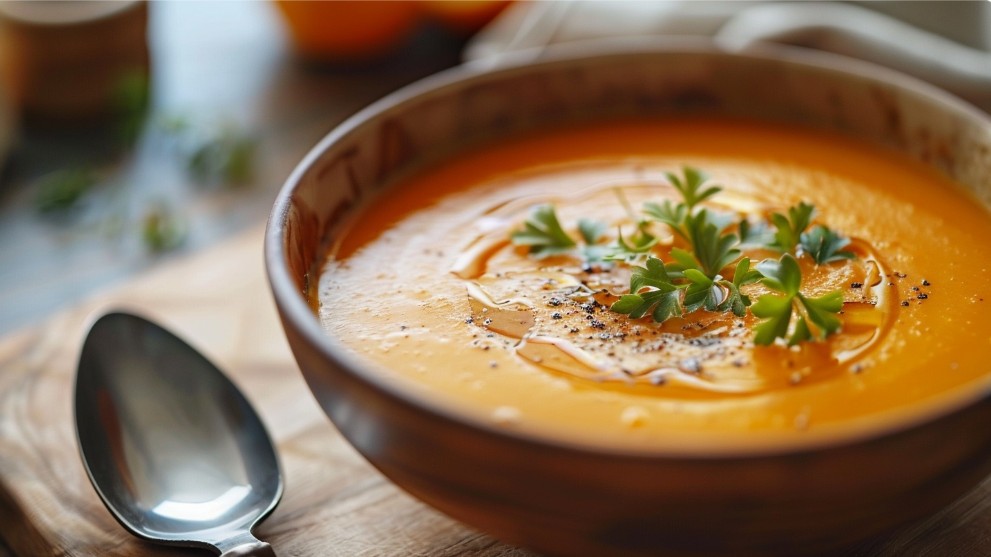
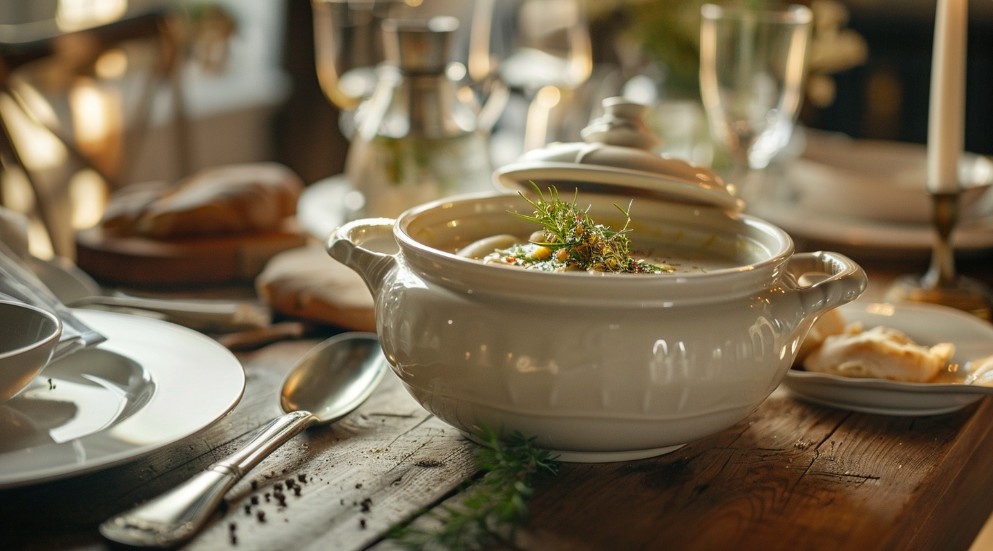
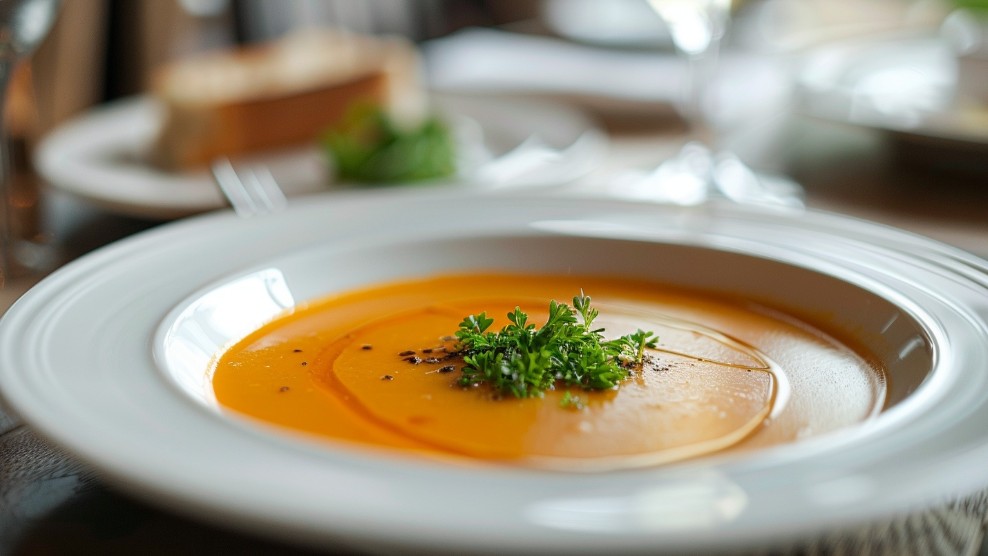
For guests, I love a deep soup plate with a wide rim. That rim acts like a frame: you can see a little drizzle of oil, a sprinkle of herbs, a crouton—everything looks intentional. Plus, it’s easier to hold a hot plate by the rim.
For kids, a small bowl—or even a mug with a handle—often works better. A handle equals control. Little hands feel safer, and there’s less chance of tipping. If the child is very young, a wide, low bowl is great: the soup releases heat faster and doesn’t wobble as much.
When the soup is thick (puréed or creamy), a mug or a small bowl is a really smart choice. It instantly feels a bit “café,” but not in a show-off way.
Portion size: how not to turn it into a “swamp”
My rough guide: for an adult, the portion should look generous, but not packed to the brim—usually about 2/3–3/4 of a deep plate. For kids, smaller is absolutely fine. Psychologically, it’s easier for a child to “win” against a small portion than stare down an ocean of soup.
Tip: if you’re unsure, pour less and offer seconds. A second helping feels like success, not pressure.
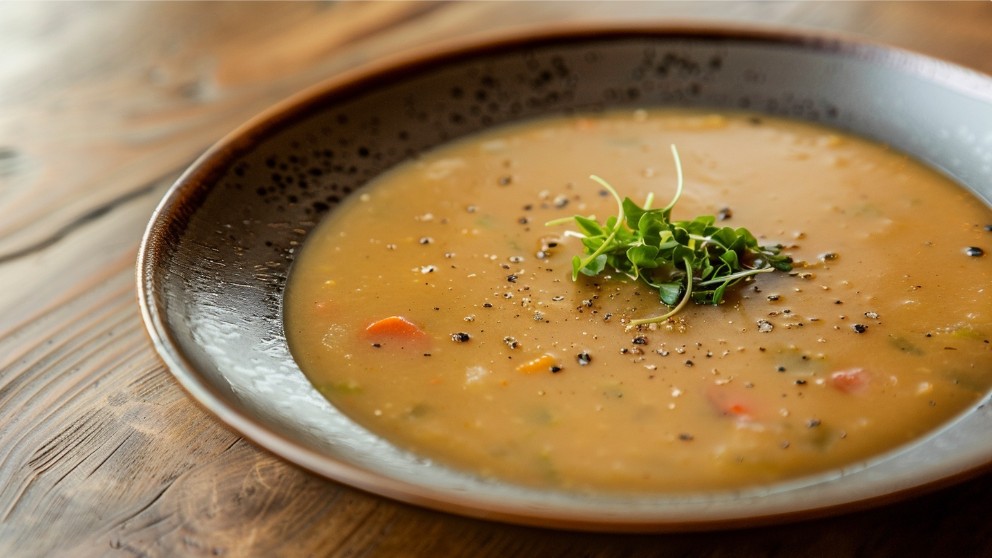
Temperature and safety: why “nice and hot” isn’t always a good thing
Soup is sneaky because of temperature. It can be perfectly cooked, but if it burns your tongue, you won’t taste much of anything. For kids it’s a full stop: one bad burn and suddenly “soup is gross,” even if you make it brilliantly.
Here’s the thing: hot liquid transfers heat faster than hot solid food. A spoonful of soup can burn more than a bite of hot potatoes. So temperature control isn’t being picky—it’s basic care.
How to cool soup down without watering it down (and without panic)
The most common mistake is adding cold water or tossing in an ice cube. The soup turns thin, the flavor falls apart, and you feel like you ruined your work.
Here’s what I do instead:
- For guests, warm the bowls/plates (fill with hot water for 1–2 minutes, then dry). Not to make it hotter—so the soup doesn’t cool unevenly and form that weird “skin” on top.
- For kids, do the opposite: use a room-temperature bowl, sometimes even slightly cool. Pour the soup and let it sit for 2–3 minutes. In that time you’ll slice bread or get the child settled.
- Serve in two smaller portions instead of one big one. Heat dissipates faster, and the second pour will already be at a comfortable temperature.
Signs the temperature is “right”
I don’t use a thermometer—I watch and listen. If the soup is steaming aggressively, it’s almost always too soon for a child. If the steam is light and thin and the surface isn’t bubbling with heat, you’re getting close. For guests, hot is good, but it should be hot in a way that you can start eating right away—not sit there for five minutes holding a spoon.
A quick story from my kitchen: once I served soup in very thick ceramic bowls straight from the cupboard. The soup was hot, but the bowls were cold—within a minute, an unpleasant “skin” formed on top and the edges cooled fast. Since then, I either warm the dishes or choose something thinner.
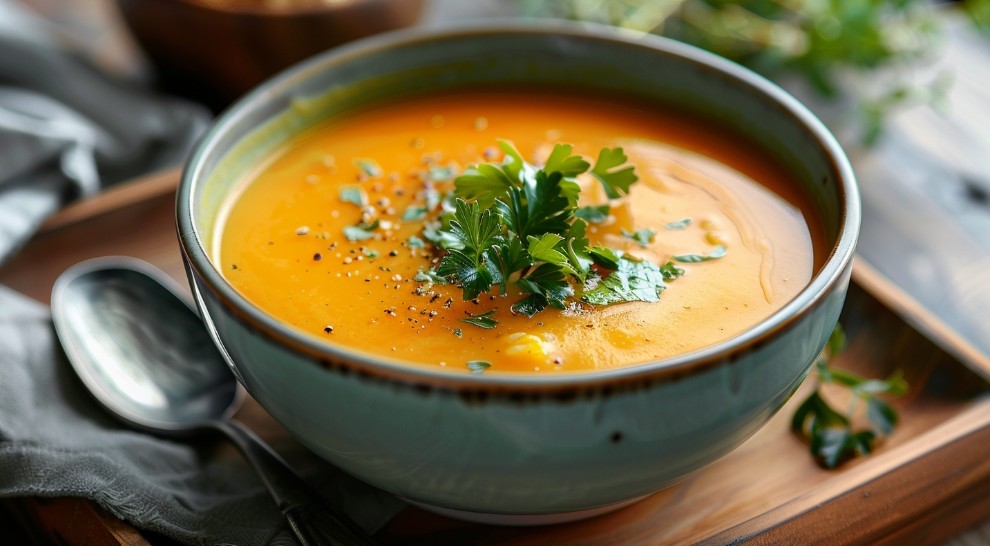
The mechanics of a good-looking bowl: contrast, a focal point, and a clean rim
Good-looking food without the drama comes down to three things: contrast, composition, and cleanliness. Think of it like a crisp shirt—no glitter needed, it just has to sit right.
Contrast: so the soup “reads”
Soups are often one-note in color: yellowish, brown, beige, red. When everything is the same tone, your eye slides right off it and the bowl looks… meh. Contrast can be very everyday:
- light soup + dark bowl (or the other way around)
- smooth surface + something crunchy on top (not a recipe—just the principle)
- one bright touch: herbs, a drizzle of oil, a spoonful of the thicker part
Just don’t turn soup into a salad. One or two accents is plenty.
Composition: the focal point doesn’t have to be dead center
Beginners often sprinkle herbs evenly across the whole surface and it reads like, “I threw dill on it because that’s what you do.” I prefer one gathered accent: a small mound in the center or slightly off to the side. The bowl looks tidy, like you meant it.
If the soup has chunks, I make sure each bowl gets roughly the same amount of the “good stuff.” Nothing is sadder than one guest getting a bowl loaded with everything and another getting mostly broth.
A clean rim: the tiny thing that gets a real “wow”
This is my favorite trick because it works every single time. After you pour, look at the rim. If there are drips or smudges, wipe them with a napkin or a clean towel. It takes 5 seconds and instantly looks restaurant-neat.
Tip: keep a small bowl of warm water and a napkin nearby. One quick touch and the rim is clean—no smearing.
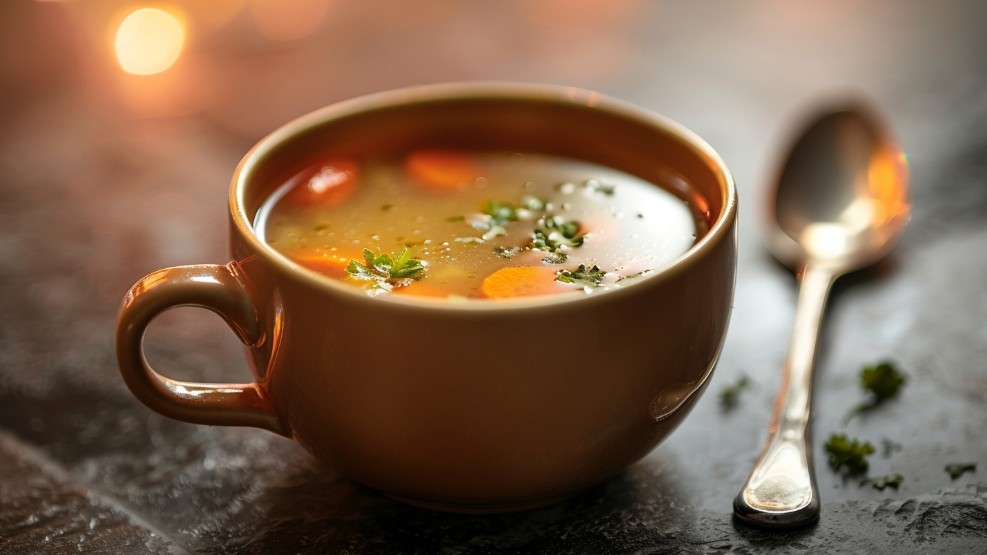
Serving soup to kids: how to make it feel safe (not scary or annoying)
Kids often refuse soup not because of flavor, but because of how it feels. They might hate that things are “floating,” that it’s hot, that the smell is too strong, that the spoon is huge, or that the bowl is slippery. This is where serving really matters.
A tiny story: there was a phase when a child in my family would only eat soup from their “favorite mug.” Same soup in a different bowl—and suddenly it was a hard no. That’s not just being difficult; it’s about safety and control.
Fewer triggers: a smooth surface and recognizable pieces
If there are lots of tiny bits floating around, a child can read it as “dirty” visually. So I either make the surface more uniform (a gentle stir so there aren’t random “islands”), or I do the opposite and add 2–3 clear, recognizable elements the child can spot and scoop up.
The key word is recognizable. Not “something green,” but “here’s a piece of something you know.”
The right spoon and a steady bowl
A kid-sized spoon or a dessert spoon is often better than a big tablespoon. Smaller sips mean less chance of burning and less fear. Also check stability: if the bowl slides, put a damp napkin or a thin towel underneath. It’s a tiny thing, but the child stops “chasing” the dish around the table.
A little game (without turning lunch into a circus)
I’m not into making every meal a performance, but a small ritual helps. For example: “First we smell it,” or “Let’s take one sip to check if it’s too hot.” It gives the child the feeling they’re in charge.
Tip: for kids, serving soup in two small portions can work wonders. The first is “just a taste,” the second comes once they’re warmed up to the idea of eating.
Serving soup to guests: how to make it feel tidy and warm—even when you’re tired
When guests come over, we tend to swing to extremes: either we overdo it (trying to impress), or we get shy and go, “Oh it’s just a little soup.” I like the third option: calm, clean, with one small accent. People feel that kind of care.
One accent, not ten
Pick one garnish/add-on and stick with it. If it’s herbs—let it be herbs. If it’s a drizzle of fragrant oil—great. If it’s something crunchy—then skip the sour cream “patterns.”
When there are too many accents, the bowl looks busy, like you don’t trust the soup to taste good on its own.
What’s around the bowl matters: spoon, napkin, bread
Serving soup isn’t only about the bowl. It’s also what’s next to it. A spoon that feels good in the hand, a napkin within reach, bread or croutons served separately so they don’t go soggy—everything tastes better when the setup is comfortable.
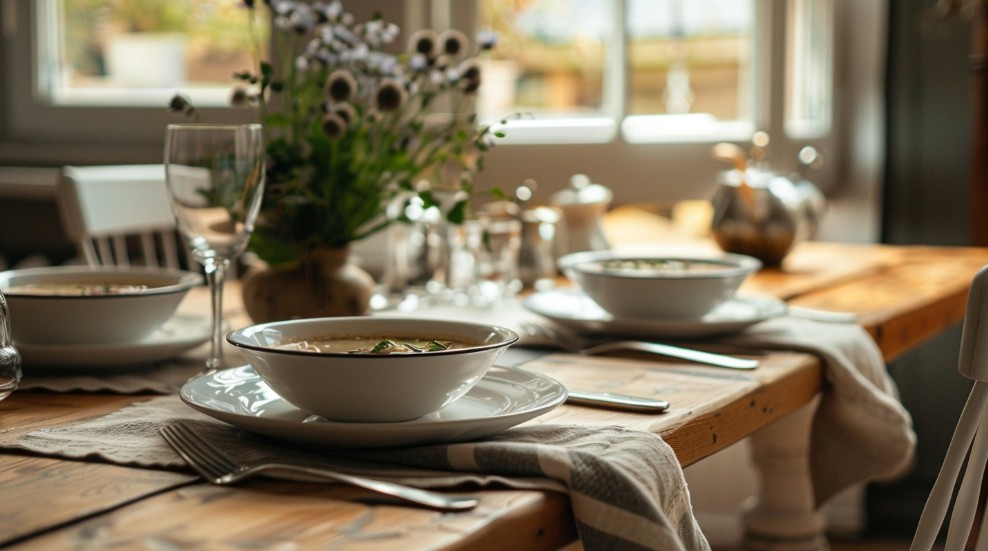
At home I do it like this: soup plate, spoon, napkin, and a small side plate for bread or croutons. Not a mountain of props—just a place where things don’t float in the soup and crumbs don’t end up in the bowl.
Timing: soup hates waiting
Soup isn’t the kind of dish you can pour and leave on the table “until everyone’s ready.” It will cool down, form a film, or lose its aroma. If guests are still taking off coats, keep the soup hot in the pot and ladle it once everyone is seated.
Another quick story: once I poured soup ahead of time so I “wouldn’t fuss.” In the end I fussed more—reheating plates, stirring, trying to bring the aroma back. Now I do the opposite: set the table first, pour at the last minute.
If you want to practice these principles right away on a soup that really brings people together, try authentic bograch. It’s thick, deeply aromatic, and very forgiving when it comes to serving: it looks neat in a deep plate with a wide rim, and for guests you only need one accent (a little greenery or a spoonful of sour cream) to make it feel like you took care of everyone.
Common soup-serving mistakes: what people do vs what works better
I love this section because it usually brings instant relief. Most “bad presentation” isn’t about lacking skill—it’s just a few habits you can swap out quickly.
Mistake 1: filling it to the brim
What people often do: a bowl filled right to the edge—scary to carry, awkward to eat.
What’s better: leave at least 1–2 cm to the rim. It looks tidy, your hands relax, and you can add a small accent on top without turning everything into mush.
Mistake 2: garnish scattered everywhere
What people often do: herbs like “snow,” or sour cream in random spots all over.
What’s better: one gathered accent in one place. Your eye immediately understands the idea.
Mistake 3: adding crunchy toppings too early
What people often do: croutons/toast are already floating, getting soggy and rubbery.
What’s better: serve crunchy bits on the side, or add them at the very last second right before you carry the bowl out.
Mistake 4: uneven “stuff” between portions
What people often do: the first bowl gets all the good bits, the last one is basically clear broth.
What’s better: stir before serving so the thicker part distributes evenly. If there are lots of chunks, it sometimes helps to spoon them into bowls first, then top up with broth. Not a recipe—just fairness.
Mistake 5: messy rims and drips on the outside
What people often do: they’re rushing, a drip runs down, and it stays there.
What’s better: 5 seconds with a napkin and the whole thing looks different—especially for guests.
If something goes wrong: quick fixes that actually help
Not everything goes to plan. The soup can be too hot, look too thin, look a bit “grey,” or you can spill and smear the rim. Totally normal. I’ve rescued these situations dozens of times—almost always without remaking anything.
The soup is too hot
- For kids: pour the portion into another (room-temperature) bowl. The transfer itself removes some heat, and a thinner layer cools faster.
- For guests: next time, warm the bowls; for now, set the spoons out and give it 1–2 minutes to “breathe” on the table, uncovered. No need to pretend it’s intentional—just calmly give it a moment.
The soup looks “empty” or too watery
Texture saves you here. No complicated tricks needed: sometimes a small mound of the thicker part of the same soup (if it has chunks), a drizzle of oil, or a pinch of herbs in one spot is enough. Your eye gets an anchor point, and the soup stops looking like plain liquid.
A film or “skin” on the surface
This happens when soup sits or cools too quickly. I do two things: gently stir before serving and pour so the surface is smooth again. If the film has already formed in the bowl, it’s better to replace that portion (yes, even at home). It’s one of those small things that ruins the first impression.
You overpoured, smeared the rim, dripped on the table
Back to the “clean rim.” Napkin + warm water, and you’re back in business. If it dripped down the outside of the bowl, wipe that too. Guests notice—even if they don’t say a word.
Tip: when carrying soup, hold the bowl from underneath or by the rim with both hands. Less chance the soup will slosh and leave marks.
Small touches that make soup feel “grown-up” without being showy
There are a few things I use again and again. They don’t require special ingredients, and they don’t look like you’re trying to impress anyone. They just read as attentiveness.
A smooth surface: how to make soup look calm
After pouring, let the bowl sit on the table for a second. Don’t carry it off while the liquid is still rippling. Once the surface settles, the soup looks instantly neater. It’s like coffee—when it stops wobbling, it somehow looks more expensive.
Aroma matters: serve it so it smells inviting
Smell is part of presentation. If the soup is very aromatic, don’t seal the bowl tightly and don’t place strong competing smells next to it (like intensely scented sauces). For guests, I love that first “warm” inhale: the steam rises and people are already ready to eat.
One color on the table: a napkin or bowl as an anchor
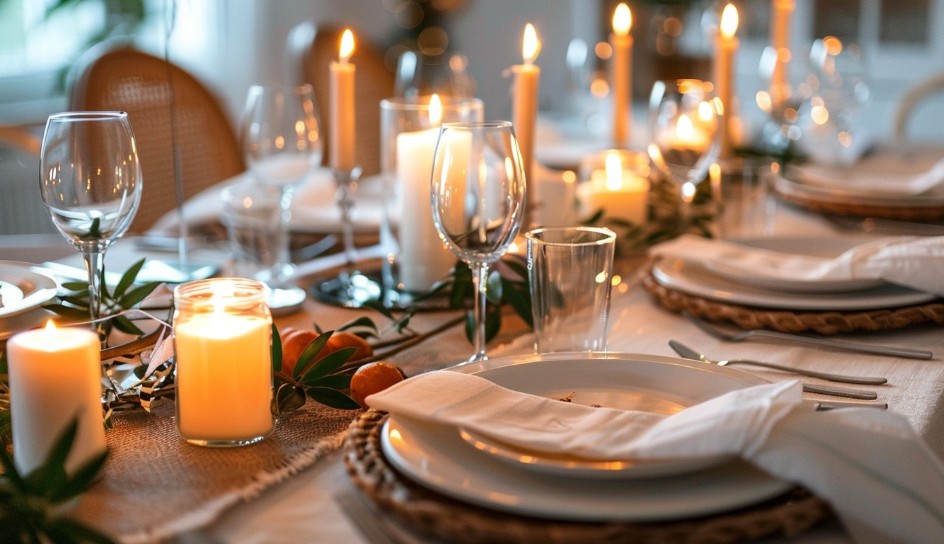
If you want a festive feel without the fuss, use napkins in one color or serve soup in bowls of the same style. It creates a sense of intention even if the soup itself is very simple. It doesn’t have to be expensive—just not a random mix of “whatever we found.”
Two-step serving for a group
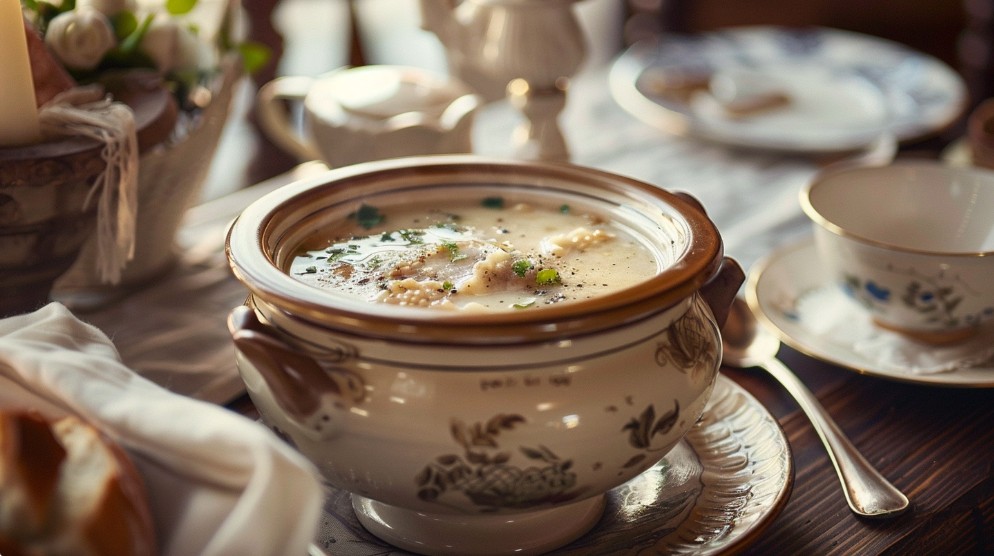
When there are lots of people, I sometimes do this: put the soup tureen/pot on the table on a trivet (so it doesn’t scorch the table), set the bowls next to it, and ladle in front of everyone—or ask someone to help. It adds that cozy, homey warmth and takes the pressure off you to “time everything perfectly.”
One nuance: if you serve this way, have a clean ladle, a napkin underneath it, and a spot to set it down. Otherwise you’ll end up with “soup everywhere.”
Serving soup isn’t about making things complicated. It’s about making it comfortable, safe, and pleasant to look at. Kids need it to feel not scary and not too hot; adults want it to look tidy and for that first spoonful to be exactly what you intended—warm, fragrant, and unhurried.
How is soup served at your place—do the kids prefer a bowl or a mug? And what most often “breaks” the experience: temperature, the chunks, or simply rushing?