How Green Buckwheat Fits Into Modern Cooking

Some ingredients spend years living in the shadow of their “normal” version. Everyone thinks they know buckwheat: that toasty smell, a quick pot of porridge, a side dish next to a cutlet. And then someone walks into your kitchen with a bag of pale, almost light-green kernels—and you freeze for a second. Is that really buckwheat?
Green buckwheat usually shows up at home not because it’s traditional, but because someone got curious. For one person it’s after a chat with a barista who casually mentions a “buckwheat granola mix.” For someone else it’s after a restaurant dish where buckwheat isn’t “porridge” at all, but something crisp and fresh, with a nutty, herby aroma. And then the real question hits: how do you treat it so you don’t ruin it—and don’t end up disappointed? Because if you cook green buckwheat the same way you cook toasted buckwheat, it can pay you back with… a slippery texture and a pretty sad look.
I like thinking of green buckwheat not as a hyped-up superfood, but as an ingredient that simply returned to its original form—and picked up new jobs along the way. In modern cooking it shows up in salads, ferments, crunchy toppings, “fake rice,” and desserts that don’t rely on loads of sugar. Not because it’s trendy, but because it gives cooks different tools: different texture, different aroma, different behavior in water and heat.
If you’ve ever bought green buckwheat and then stared at the bag like, “Okay… now what?”—you’re not alone. I’ve watched it turn into a silky cream and into dense “rubber” in the very same kitchen, just because of tiny decisions: soaked/not soaked, rinsed/not rinsed, overheated/not quite done. Let’s talk about it like normal people—how green buckwheat found its way into modern food, and why it’s more about taste evolving than a one-season trend.
What green buckwheat actually is—and why it behaves differently
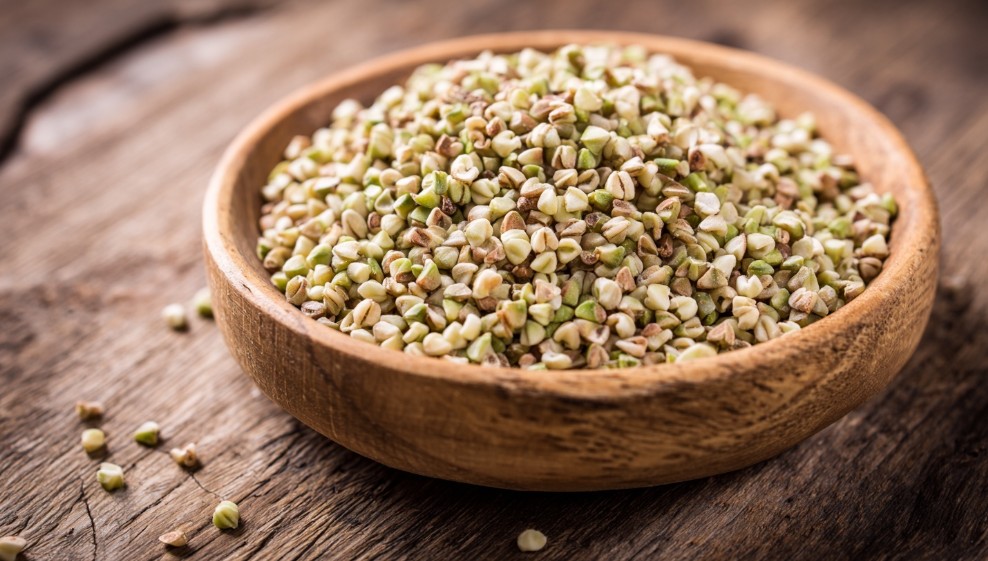
Green buckwheat is buckwheat groats that haven’t been toasted/roasted at high heat. The kernels look light, sometimes with a faint greenish tint. The aroma is softer—more grassy, sometimes lightly nutty. And most importantly: it reacts differently to water and heat.
When buckwheat is toasted, some of its starches set, that familiar “buckwheat” smell appears, and cooking becomes predictable: rinse, add water, simmer—done, fluffy side dish. Green buckwheat is more “alive”: it absorbs water faster, slips into a creamy texture more easily, and releases starch into the liquid more willingly. That’s not good or bad—it’s just different food physics.
I still remember the first time I asked green buckwheat to be a simple side dish. I did everything the way I would with toasted buckwheat: rinsed, added water, cooked until tender. It was edible, sure—but the texture wasn’t what I wanted. More like a delicate, slightly sticky mass that didn’t want to hold its shape. That’s when it clicked: either I change my expectations, or I change my technique.
Flavor and aroma: what to expect
Green buckwheat tastes more delicate. It doesn’t have that toasted profile many of us associate with cozy home cooking. Instead you get a cleaner grain note—sometimes a hint of fresh hay, young nuts, or herbs. In salads, that’s a win: it doesn’t bulldoze the other ingredients, it just holds the background.
Tip: if you want a more familiar buckwheat aroma without fully toasting it, I sometimes warm dry green buckwheat in a dry pan for 2–3 minutes over medium heat. Not until it turns brown—just enough to “wake up” the smell. It’s a fine line: push it too far and you’ll end up with something close to regular toasted buckwheat, and the whole point of the green version disappears.
How green buckwheat became a “city” ingredient: not from fashion, but from need
If you strip away the loud labels, green buckwheat landed in modern kitchens for very practical reasons. City food in recent years has leaned toward lightness, texture control, quick ferments, and breakfasts that don’t knock you out—they keep you going. Green buckwheat fits that brief.
First, it moves easily between textures: from pleasantly chewy to fully creamy. Second, you can sprout it, and that’s a whole different story—crisp, fresh, with that “living food” feel. Third, it plays really well with acidity: cultured dairy, citrus, vinegars, fermented vegetables.
In my experience, restaurants didn’t fall for green buckwheat because they “had to.” They fell for it because it solves problems. Need a gluten-free texture in a dessert? Buckwheat helps. Need a grain base in a salad without heaviness? Same. Need crunch on the plate without croutons? Green buckwheat can be toasted until crisp or dehydrated.
There’s also a very human layer to this. For a lot of us, buckwheat is “survival food”: student years, hospital meals, diets, “because it’s healthy.” Green buckwheat kind of removes that label. It lets you see a familiar ingredient without the emotional baggage. It reminds me of how someone suddenly discovers beets not as vinaigrette salad, but roasted—sweet, a little smoky.
The textures chefs love: from “grain” to cream and back again
Green buckwheat is all about texture. It can be springy, it can be tender, it can be slimy (the version nobody wants), and it can be crunchy. Modern cooking uses it like a construction set.
1) Soaked and lightly cooked: “al dente” for salads
Once soaked, green buckwheat hydrates quickly. After that, you can cook it just until the kernels hold their shape but aren’t hard. In salads it gives a nice bite—not like rice, not like bulgur, but somewhere in between, with a soft outer layer.
Tip: after cooking, I often rinse it with cold water and dry it well. That stops the cooking and removes extra stickiness. Then a drop of oil helps it separate even more.
2) Soaked and blended into a cream: a base for sauces and “no-cook porridge”
If you soak green buckwheat and blitz it in a blender, you get a thick, velvety mixture. It can become a base for savory creams (with herbs, lemon, garlic) or sweet ones (with berries, cocoa, nuts). This isn’t a recipe so much as a direction: the key is understanding that buckwheat is acting as a texture builder—body and structure.
The aroma of that mixture is very “raw,” very grain-forward. Add acidity (yogurt, kefir, lemon) and it becomes cleaner and more pleasant. I once made a quick staff snack: green buckwheat cream, cucumber, herbs, a little salt, and lemon. Sounds basic, but it works—the texture is silky and the flavor feels fresh.
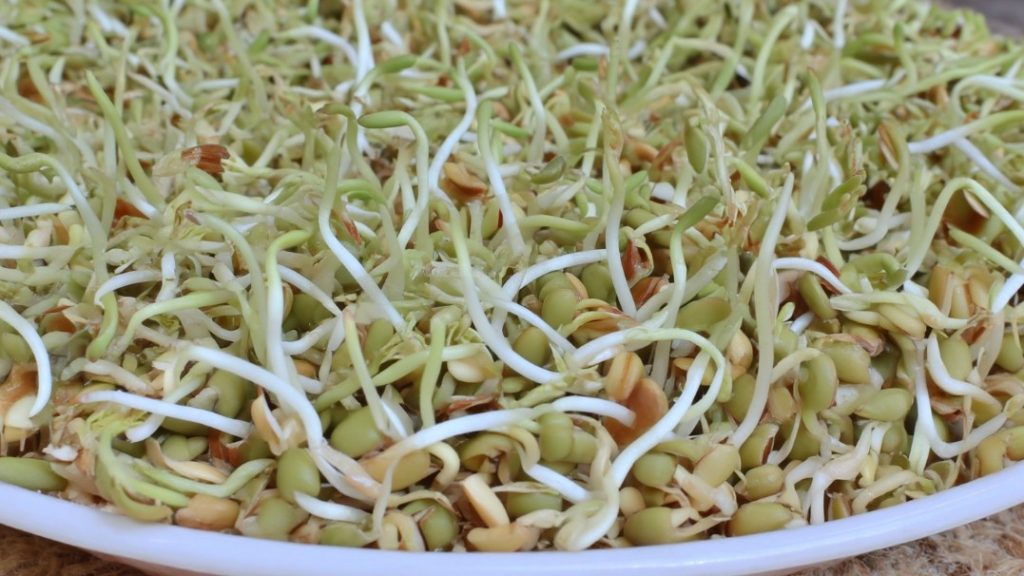
3) Sprouted: crunch and freshness without salad greens
Sprouted green buckwheat is its own little world. The smell changes—greener, more alive. It crunches, but not like a nut; it’s softer and juicier. People add it to bowls and salads, and sometimes use it as a topping for puréed soups.
A tiny catering story: once we forgot part of the greens for salads. The panic lasted exactly a minute, because we had sprouted buckwheat in the fridge. It didn’t replace the greens completely, but it gave the same “fresh bite” effect. Guests even asked what that “weird crunchy rice” was.
4) Dried/toasted until crisp: a topping instead of croutons
When green buckwheat is cooked, then dried and quickly toasted, it turns crunchy. It’s one of those restaurant tricks that migrated into home kitchens: a crisp element makes a dish feel more “finished” and interesting. In a bowl of creamy soup, in a salad, over roasted vegetables—it works as a small, tidy crunch.
Tip: crunchy buckwheat likes salt after toasting, not before. If you salt earlier, the kernels can darken faster and lose that light, crisp feel.
Where it shows up in modern cooking: not just porridge, not just “healthy eating”
One thing matters here: in cities, green buckwheat often gets filed under “clean eating,” but in reality it’s used much more broadly. It’s simply a convenient grain for different formats of food.
Breakfasts: warm, cold, and grab-and-go
In coffee shops and small bistros, green buckwheat often appears at breakfast because it feels filling without being heavy. You can serve it warm, use it as a chilled base with fruit/berries, or turn it into a cream.
There’s a bit of psychology too: oatmeal is familiar, but plenty of people are bored of it. Rice reads like lunch. Green buckwheat feels “new,” even though it’s an old ingredient.
Salads and bowls: a grain base instead of pasta or potatoes
Green buckwheat is great as a neutral base. It’s not as “empty” as some types of rice, and it’s not as dominant as quinoa with its very specific aftertaste. It’s happy with roasted vegetables, mushrooms, tangy dressings, and herbs.
A comparison without judgment: in Mediterranean cooking, the grain base is often couscous or bulgur; for us, it’s buckwheat. Modern cooking just mixes these habits without asking permission—buckwheat can sit next to tahini, yogurt, pomegranate, or miso, and it makes perfect sense.
Desserts: not “diet,” just texture-driven
Green buckwheat in desserts isn’t about “no sugar and no joy.” It’s about body and creaminess. Paired with cocoa, nuts, and fruit, it can taste surprisingly delicate. It also brings an interesting grain note that can hint at bread crust—softly, without bitterness.
A small story: I once served a guest a dessert cream made with green buckwheat (without telling them what it was). They couldn’t figure out where the “nutty” note was coming from, or why the texture was so silky. When they heard the word “buckwheat,” they laughed: “I would never have believed it.” That’s the ingredient evolving—not disguising itself, just taking on a new role.
Drinks and “milk”: niche, but it makes sense
Buckwheat drinks aren’t for everyone, but they exist. Green buckwheat gives a soft grain base that some people use for plant “milk” or smoothies. The key is not expecting it to taste like cow’s milk—it’s a different product. But in coffee or cocoa it can work if you balance it well.
Why restaurants don’t force it—they build with it: menu logic and seasonality
When an ingredient becomes fashionable, people start throwing it into everything—and it gets old fast. Green buckwheat is more interesting: in good places, it’s rarely on the menu “because it should be.” It’s there because it fits.
In autumn, when mushrooms and roasted vegetables are everywhere, green buckwheat makes a grain base that won’t drown out mushroom aroma. In summer, it can be a chilled base for a salad with tomatoes, cucumber, herbs, and acidity. In winter, it works as a warm, creamy texture alongside braises and stews.
Another factor is speed and predictability. In service, you need ingredients you can prep ahead and bring to perfection at the moment of plating. When cooked correctly, green buckwheat holds its shape; you can chill it, then reheat quickly, add dressing—and it won’t collapse into mush, as long as you control water and time.
Tip: if you’re cooking green buckwheat “for service” (a few portions ahead), stop it slightly before it seems fully done. It will finish on residual heat and won’t turn into a soft mass after chilling/reheating.
A kitchen story: we once ran a green buckwheat side for fish. The first week it came out perfect one day and oddly sticky the next. The problem turned out to be ridiculous: different cooks had different ideas of what “rinsed” meant. One did a quick rinse, another rinsed until the water ran clear. That tiny detail changed the starch level—and with it, the texture. After that we agreed on one method. In a professional kitchen, things like this aren’t solved by magic; they’re solved by discipline.
Common mistakes with green buckwheat: why it turns slimy, bitter, or just bland
Green buckwheat isn’t complicated. It just doesn’t love autopilot. Here are the mistakes I see most often—and yes, I made them too.
Mistake 1: not rinsing (or rinsing half-heartedly)
There’s starchy dust on the kernels. Leave it there and the water turns cloudy faster, and the texture gets stickier. Sometimes that’s useful (for creams), but if you want separate grains, rinsing matters.
If you’re making a salad or side dish, rinse until the water is more or less clear. If you’re making a cream, a quick rinse is enough—you’ll keep more “body.”
Mistake 2: overcooking
Green buckwheat crosses the line between “tender” and “mushy” very easily—especially if you boil it hard or leave it sitting in a hot pot for too long. It keeps swelling.
Tip: I like simmering it very gently and taking it off the heat a little earlier than feels right. Then: lid on, 5–10 minutes of rest, and only then do I judge the result.
Mistake 3: expecting it to taste like childhood buckwheat
Green buckwheat is different. If you’re waiting for that toasted aroma, you’ll be disappointed. Its strength is delicacy. It shines with herbs, acidity, good oil, mushrooms, and vegetables—more than with heavy sauces that cover everything up.
Mistake 4: soaking and walking away
Soaking is a great tool, but if you leave it too long, the kernels can get overly soft and the aroma can turn “raw” and sharp—especially in a warm kitchen in summer. No need to panic; just get into the habit of smelling and tasting.
Mistake 5: trying to cram it into everything
Once an ingredient gets interesting, it’s tempting to add it to every dish. But green buckwheat isn’t a universal seasoning. It’s best where you need a gentle grain base, a crunchy element, or sprouted freshness. If a dish already has a very strong personality (very smoky, very spicy, very salty), buckwheat can simply disappear.
How to make it work in everyday cooking: simple approaches, no cult vibes
I don’t love it when people turn an ingredient into a religion. Green buckwheat is just a grain, and it can be wonderfully everyday. A few approaches that help it slide into real life without stress:
- Think in roles, not dishes: it can be a base (like rice), a texture (like a topping), “greens” (as sprouts), or a cream (like a sauce).
- Use contrasts: green buckwheat loves acidity (lemon, vinegar), aromatic oils, and fresh herbs. It pairs beautifully with cucumber, tomato, roasted pepper, mushrooms, and apple.
- Don’t be afraid of serving it cold: its delicate flavor reads better chilled, and the texture firms up.
- Cook one small batch and play: boil a little—some goes into a salad, some gets warmed with vegetables, some gets dried for crunch.
Tip: if your green buckwheat turns out a bit sticky, don’t toss it and don’t get mad. It’s great as a base for patties/fritters or as a thickener for puréed soup. That’s not a “failure,” it’s just a different direction.
A tiny home habit: green buckwheat settled into my kitchen as “a grain for the fridge.” I cook a small portion with no spices, then over the next two days I add it wherever it makes sense—salads, stewed vegetables, a lunch box. It doesn’t get boring because the company changes every time.
Tradition nearby: how families and generations are rethinking buckwheat
I love watching how the same ingredient can mean completely different things to different people. For some, buckwheat is “a pantry must.” For others it’s “I can’t even smell it,” because it was the thing they were fed when they were sick as kids. Green buckwheat sometimes becomes a bridge between those feelings.
I’ve seen older generations look at it suspiciously: “Why is it so pale—did you undercook it?” That reaction makes sense. We get used to color and smell as markers of “proper food.” Then suddenly the product looks different, so it feels “wrong.”
Younger people often come at it from another angle: “Oh, you can sprout this,” “Oh, people make a cream from it.” They don’t have that strong anchor of “buckwheat = porridge.” That’s normal too. Not better or worse—just different starting points.
What’s interesting is how often green buckwheat enters a family through one person—the one who likes trying things. They bring home a bag, cook something simple, offer a taste. At first everyone’s cautious, then someone says, “You know what, with mushrooms this is actually really good.” And the ingredient becomes “ours” not because of a trend, but because of a small, everyday experience.
That’s what living food culture looks like to me: not lectures about grain origins, but the way it slips into rituals. For some it’s Sunday breakfast. For others it’s a work lunch. For someone else it’s “a light dinner after a hard day,” when you want warmth without overeating.
Even though green buckwheat is often used in salads, bowls, or even raw-style desserts, the basic cooking technique is still very simple—you can cook it much like any other grain. The main difference is that green buckwheat has a milder flavor and a more delicate texture once cooked. If you’re just getting to know it, it’s worth mastering the classic method first. We’ve laid out a detailed step-by-step guide in how to cook buckwheat—including water ratios, cooking time, and how to get fluffy, separate grains.
Evolution without the hype: what green buckwheat will still be doing in a few years
Trends come and go, but some ingredients stick around because they’re genuinely useful. Green buckwheat feels like one of those. It won’t become “the new potato”—and it doesn’t need to. But it has already claimed its niche: an ingredient for texture, for lighter dishes, for modern breakfasts and salads, for a kitchen that likes balance.
It also fits the way many of us cook now: not one “final dish forever,” but flexible bases that turn into different meals. Today it’s grains in a salad, tomorrow it’s a crunchy topping, the day after it’s a creamy base. That saves time and reduces food waste—no drama, just convenience.
And one more thing I’ve noticed: green buckwheat teaches attentiveness—home cooks and pros alike. It doesn’t love autopilot. You have to taste, smell, watch the kernels, listen to the simmer. I like that quiet discipline. It brings us back to the kitchen not as a place to quickly fix hunger, but as a place where you can actually take care of yourself.
If you’ve cooked with green buckwheat—successfully or not—tell me where it stuck for you: breakfasts, salads, sprouts, or maybe you just didn’t get it at all? I’m genuinely curious what the turning point was: texture, flavor, or one good combination made from whatever you had on hand.