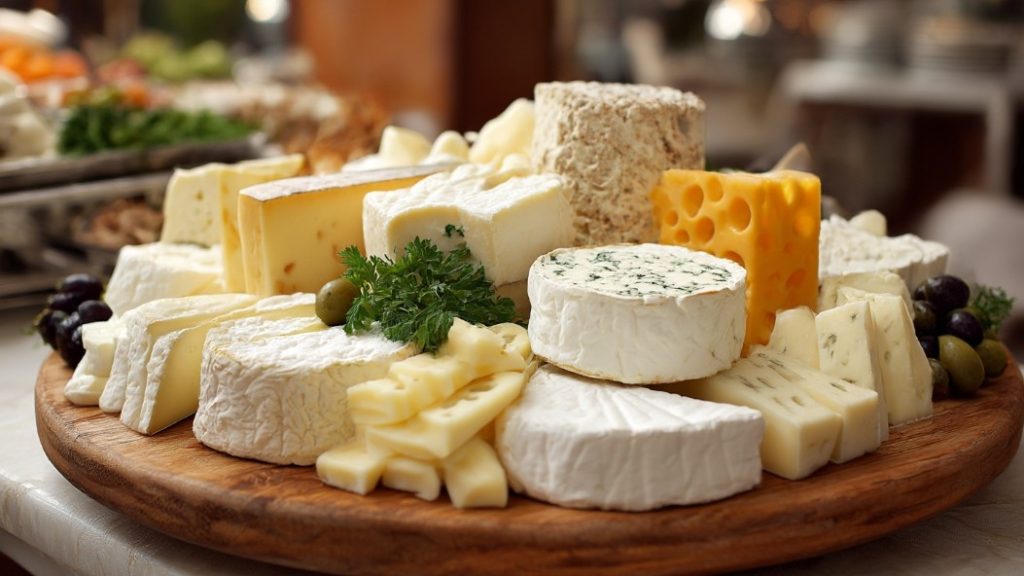
How to Use Leftover Cheese: Ideas for Zero-Waste Cheesecakes

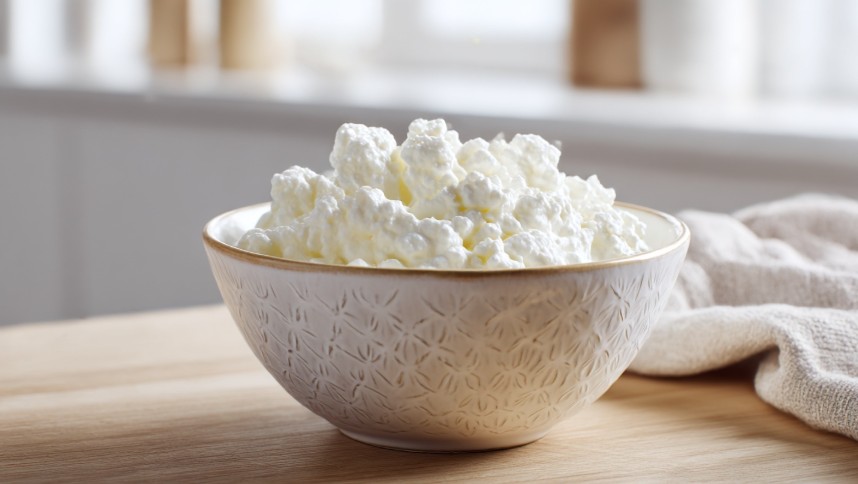
Leftover cheese in the fridge is a familiar feeling for anyone who cooks at home. Yesterday’s porridge, an uneaten piece of bread, and next to it in the container is cheese that you remember when you start to worry: will it spoil? It’s a shame to throw it away, and you don’t want to eat it just like that. I’ve often caught myself putting this off until tomorrow. But over the years, I’ve learned to see it not as a problem, but as an opportunity. Because cheesecakes are not just breakfast, but a way to give a second life to a product that would otherwise go to waste. And it’s not about the perfect Instagram picture: it’s about how we can really waste less without completely changing our lifestyle and without extra effort.
Why Cheese is Left Over: Real Reasons, Not Myths
You can repeat as much as you want that you should buy exactly as much as you will eat. But life is not mathematics. Cheese remains for many reasons: bought in reserve, expired, the hosts were full of other dishes, children changed their minds about eating “this white stuff.” Often leftovers are the result of spontaneous purchases, holidays, or just a change of plans. Sometimes I buy cheese “on sale,” and then catch myself that it’s been sitting for a week and is starting to lose its appearance. Another nuance: homemade cheese dries out quickly, while store-bought can “leak” or acquire a slight sourness. All this is ordinary life, not someone’s fault.
Cheese is a delicate product. It won’t spoil in a day, but it won’t wait for weeks either. And the main thing is that leftovers don’t always look appetizing. And here the temptation is to throw it away and forget. But what if you look at it differently: every piece is not waste, but raw material for a new dish?
Zero-Waste and Ukrainian Cuisine: Myths and Reality
Zero-waste sounds like a trend, but it’s essentially what our grandmothers did. I grew up in a family where everything was eaten, leftovers became the basis for casseroles or filling for dumplings. Ukrainian cuisine historically aimed not to waste: we invented ways to “save” even the smallest things. Today, it just has a fashionable name and a slightly different context — more awareness, less shame for leftovers. I don’t believe in showy zero-waste for praise. If the idea works in everyday life, if it saves things from the trash and doesn’t require heroism from you — it will stay. If it’s just hype — it will be forgotten along with the next fashion.
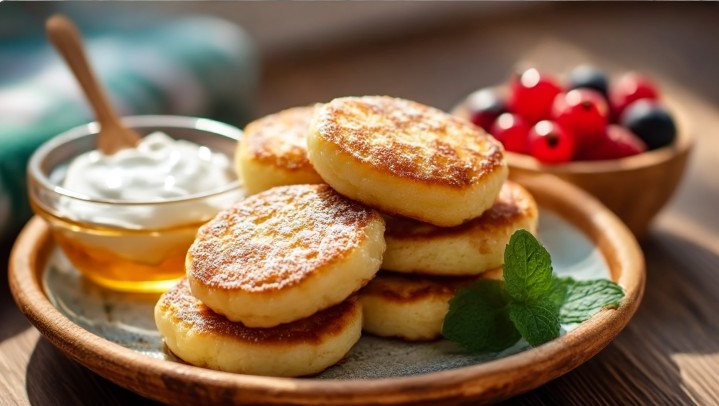
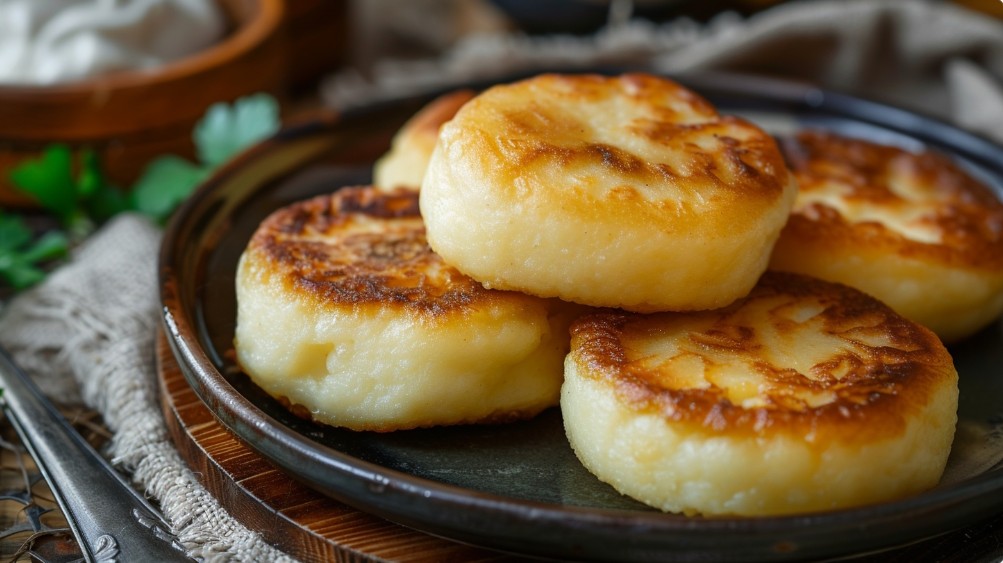
Cheesecakes are an example of a dish that combines household ingenuity and a zero-waste approach. There’s no need to reinvent the wheel here: instead of chasing the perfect texture, it’s better to give yourself room for experimentation. Leftover cheese is not an obstacle, but an opportunity to try a new taste.
How to Choose Cheese for Zero-Waste Cheesecakes
The main question is whether any cheese is suitable? My experience says: yes, if it’s not spoiled. Cheese with a slight sour smell, a bit dried out or, conversely, moist — all this makes cheesecakes different but not worse. It’s important to focus on smell and appearance: if there’s no mold, sharp ammonia aroma, or slime — the cheese is still good. If there’s slight dryness, just grind it more thoroughly. If it’s moist — slightly increase the dry components (semolina, flour, crumbs).
A friend of mine always makes cheesecakes from what she has: sometimes cheese from the market, sometimes leftovers from breakfast. She says that each time the taste is different, and it inspires her. There’s no single formula here: try it once, and you’ll feel the boundary yourself — when the cheese is still “alive,” and when it should be sent to compost.
Common Mistakes When Choosing Cheese
- Using cheese with obvious signs of spoilage (mold, slime, bitter smell).
- Ignoring consistency: too moist cheese will make the mass runny, too dry — crumbly.
- Fearing sourness: a slight sour note is not a minus, but a feature.
Tip: If you’re unsure about the quality — better not risk it. But if the smell or texture has just changed, try making a test batch.
How to Incorporate Cheesecakes into Daily Life
Cheesecakes are not just for weekend breakfasts. I often use them as a snack or even as a “rescue” lunch when time is short, and the leftover cheese is asking to be used. This is especially relevant when there are children at home: you can add some berries, apple pieces, and the cheesecakes become a sweet dish without extra sugar. And if you add greens or spices — you have a snack option.
One of my life hacks: when you leave cheese for later, immediately divide it into portions and freeze it. It’s not necessary to shape cheesecakes in advance — it’s enough that the cheese doesn’t sit in the fridge for weeks. And when needed — just take it out, defrost, and cook. This approach saves not only products but also nerves.
Life Hacks for Everyday Life
- Mix different cheese leftovers: homemade, store-bought, even a bit of ricotta — it’s a new taste.
- Add leftover porridge if you have it — it makes the texture softer and “saves” another product.
- Have a “cheesecake day” once a week: gather all the leftovers and make a small batch.
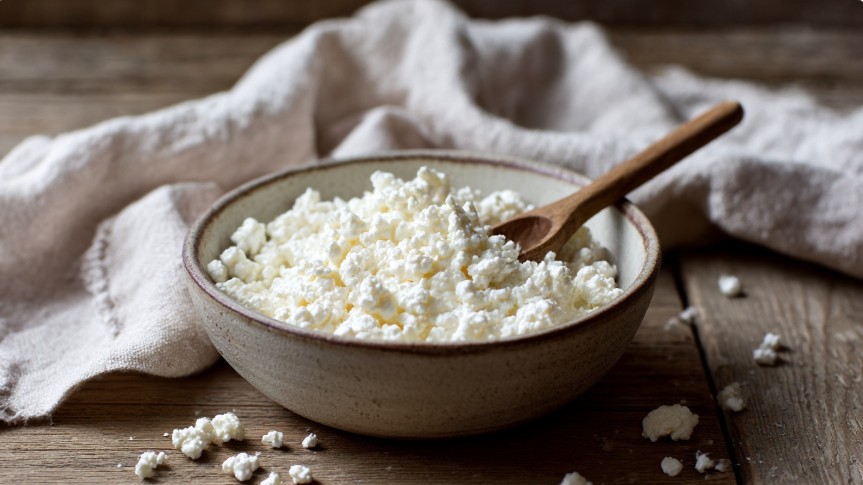
What Else Besides Cheesecakes: Zero-Waste Options
We are used to thinking that cheesecakes are the only answer to leftover cheese. But in fact, this product is versatile. It can be added to casseroles, pie fillings, homemade pastries, or even pureed soups. I once added leftover cheese to a vegetable soup: it resulted in a creamy texture and a slight sourness — the family was initially surprised, but then they asked for more. Another option is to mix with leftover sour cream or yogurt and make a sauce for pancakes. The main thing is not to be afraid of experiments.
When the cheese becomes completely dry, you can grate it and use it for breading cutlets or add it to bread dough. I’ve often found that leftovers are a source of ideas, not a hassle.
Common Mistakes in the Zero-Waste Approach
- Forcing yourself to eat everything at once — this leads to food not bringing joy.
- Trying to save already spoiled product.
- Ignoring seasonality: in summer, cheese leftovers spoil faster and require quicker processing.
Tip: Don’t be afraid to use your imagination. Even a mix of different leftovers often becomes the tastiest dish.
Sorting Out the Hype: What Really Works and What Doesn’t
The zero-waste craze has generated many ideas, but not all of them survive in real life. It’s important to distinguish: an experiment for the sake of experiment and what really makes life easier. For example, storing cheese in beeswax or special packaging sounds nice, but most people just put the container in the fridge. And that’s okay. Not all life hacks from social networks are worth the effort. I’ve checked: sometimes it’s easier to make cheesecakes from what you have than to bother with “proper” storage.
What definitely works is honesty with yourself. You don’t have to chase the perfect zero-waste if it creates extra stress. The main thing is to learn to see resources in leftovers, not garbage. If cheesecakes have become a good habit, they will continue to save products from being thrown away even without trends.
Personal Approach: How Not to Fall into “Food Perfectionism”
I once got carried away with the idea of not throwing anything away. But experience taught me: better less, but regularly. If sometimes something goes to compost — it’s not a failure, but part of the process. Don’t demand perfection from yourself, and zero-waste will become not a burden, but a habit.
Taste and Texture: What Leftover Cheese Changes in Cheesecakes
Cheesecakes made from different leftovers always differ. One time they’re fluffy, another — denser. Moist cheese gives tenderness, dry — a slight crumbliness. The taste also changes: sourness, sweetness, even a slight bitterness sometimes adds character. I like to add a pinch of vanilla or lemon zest — it masks a slight sourness and makes the aroma brighter.
Another interesting detail: if you add a bit of leftover sour cream or yogurt to the mass, the cheesecakes turn out more creamy. And if you slightly dry the cheese in the oven before mixing, they hold their shape better. Sometimes I experiment with adding poppy seeds, raisins, or even leftover walnuts — it’s always a new taste. Visit our page where more information about cheesecakes is gathered, about how to cook and store.
Life Hacks for Texture and Taste
- Add chopped nuts or seeds — they make cheesecakes more nutritious.
- A bit of semolina or breadcrumbs will save a runny mass.
- A pinch of cinnamon or citrus zest helps mask a slight sourness.
The Psychology of Leftovers: How to Move from Shame to Habit
For many, leftovers are something to be ashamed of. Like, “didn’t keep track,” “didn’t finish.” But in fact, it’s part of normal life. When you start to perceive leftovers as a resource, not a problem — the tension disappears. I’ve seen how the approach changes in families: at first, it’s a bit awkward, and then there’s excitement — how to use what’s there. It’s especially visible in children: if they see that adults don’t throw away but turn leftovers into something tasty, it becomes part of everyday life.
One family story: every Sunday we had a “leftovers day” — everything that was left over the week went into a dish. Cheesecakes were a favorite. Over time, it became not just a way to save money, but a small family ritual.
Life Hacks for Forming a Habit
- Don’t hide leftovers for a “rainy day” — plan their use every week.
- Involve children: let them add to the cheesecakes what they like.
- Keep a small list on your phone — what is left and when you plan to use it.
Zero-Waste: Fashion Trend or the Future of Our Kitchen?
Zero-waste in the gastro world is not just about sorting garbage or cotton bags. It’s primarily about respect for the product. For me, this idea is not about heroism, but about a normal attitude towards food. If cheesecakes from leftovers have become a regular dish — it’s already a step towards zero-waste. You don’t have to wait for the whole society to change or for a new trend to appear. It’s enough to start with yourself.
I see that many people try zero-waste and stick with this habit for a long time. And those who chase fashion quickly get tired. It’s important not to forget: zero-waste is not about giving up joy, but about ingenuity and respect for what’s at hand. Cheesecakes are just the beginning.
That’s how leftover cheese can become not a reason for disappointment, but an opportunity to try something new. You don’t have to be perfect, just attentive to yourself and the food. And what zero-waste cheesecake ideas have you tried? Share in the comments — it’s always interesting to read others’ experiences.