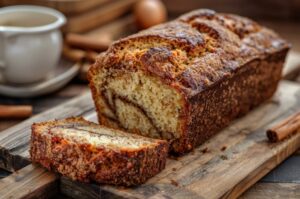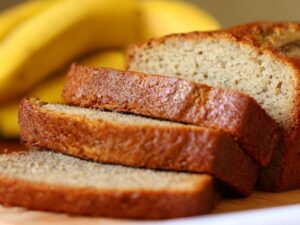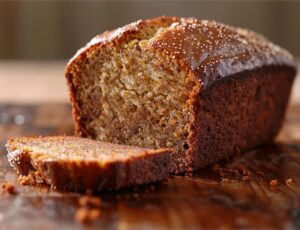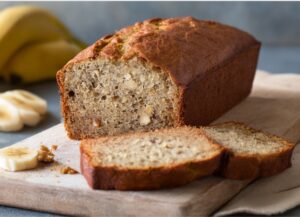
Is Banana Bread Actually Healthy?

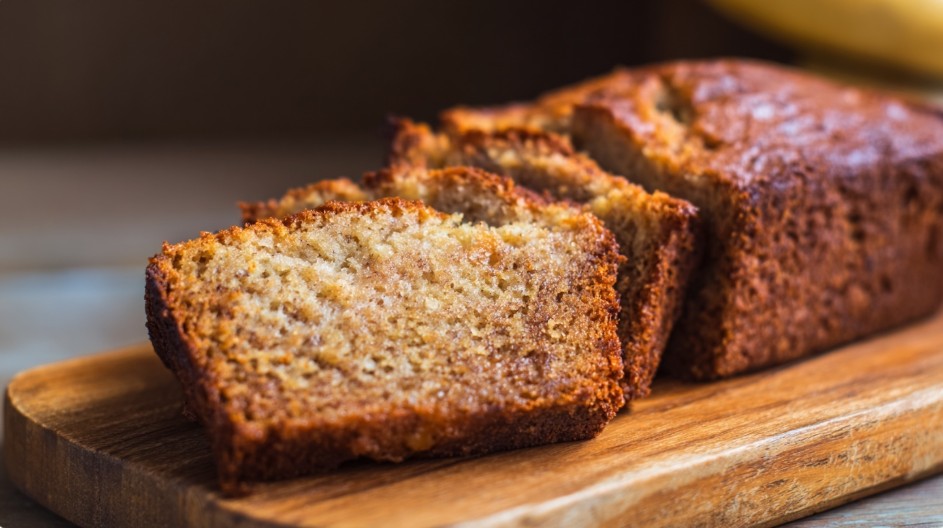
Banana bread usually shows up in the kitchen not because you planned it, but because of a tiny pang of guilt: a few bananas are sitting on the counter, already “too ripe,” and you just can’t bring yourself to toss them. You want something warm and homey—something that makes the apartment smell like baking, not like “I need to figure this out right now.”
And then comes the question I hear all the time: is it actually healthy? On one hand—fruit, so that sounds promising. On the other hand, it’s still bread/cake territory: flour, sugar, fat… People either reassure themselves with “but it’s bananas,” or they slap on the label “sugar bomb” and get nervous about even one slice.
I like to sort things like this out without the drama. No food moralizing, no turning eating into a religion—just the logic: what makes banana bread nourishing or heavy, how technique and small choices in your kitchen change the result, and how not to bake it into something rubbery or raw in the middle.
Once you understand what’s happening, the fear disappears. You’re not baking “hoping for the best” anymore—you’re steering: texture, sweetness, moisture, that exact feeling of “yep, this works for me.”
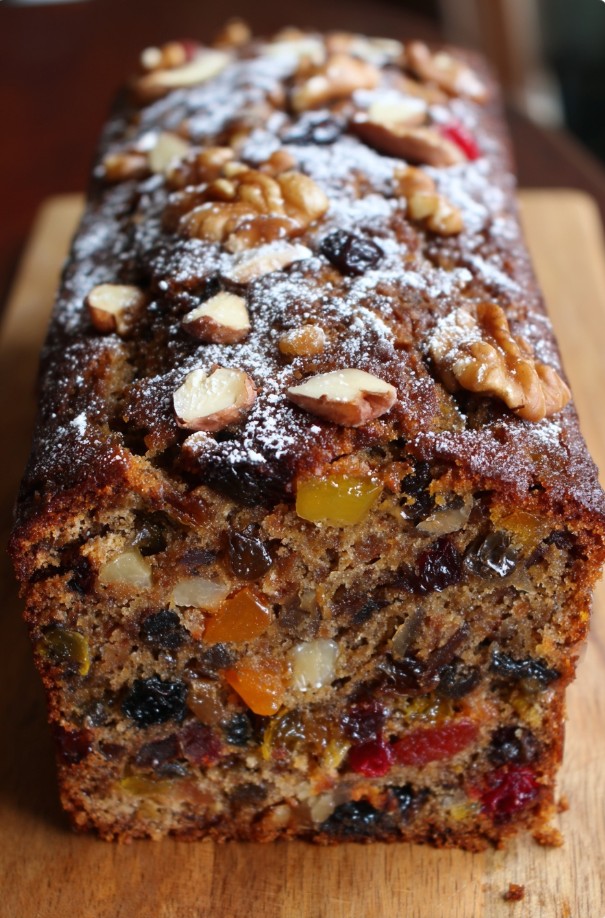
What we really mean by ‘healthy’ when we talk about banana bread
The word “healthy” is sneaky when it comes to food. For one person it means “less sugar,” for someone else it’s “more fiber,” and for another it’s “I feel satisfied and I’m not rummaging for snacks an hour later.” In my kitchen, I like a simple definition: healthy is when a dish gives you energy and pleasure without that feeling that you’ve been tricked. And when you understand what that energy is actually made of.
Banana bread almost always sits somewhere between a loaf and a cake. It’s sweet (even if you don’t add much sugar), moist, and fairly dense. So it’s not a “light little bun”—it’s a substantial slice. That’s already a useful clue: how ‘healthy’ or ‘heavy’ it feels isn’t decided by the name, but by the ingredients and the portion.
What can genuinely be good about it:
- It’s filling. Bananas add body and natural sweetness, and if you add nuts/seeds or use yogurt in the batter, it becomes even more satisfying.
- Less food waste. Not even kidding. Turning overripe fruit into baking is just solid, low-key kitchen common sense.
- You control what goes in. Homemade means you decide how much sugar, which fat, what flour, and whether you want a glaze… or not.
And what makes it less “healthy” than you’d like:
- Too much sugar (and not just added sugar—bananas are sweet on their own).
- The “sugar + lots of fat + white flour” combo—classic cake comfort, and also classic “I ate it and now I want more.”
- Big slices. Banana bread is easy to treat like a casual “tea-time” snack, when in reality it can land closer to dessert.
I once worked in a kitchen where banana bread was put out for staff “so it wouldn’t go to waste.” And you know what happened most often? People grabbed two slices not because they were hungry, but because it was soft and fragrant and your hand just… goes there. So the “healthy” question often comes down to how manageable it is: do you eat a slice and feel satisfied, or do you eat a slice and immediately start looking for another?
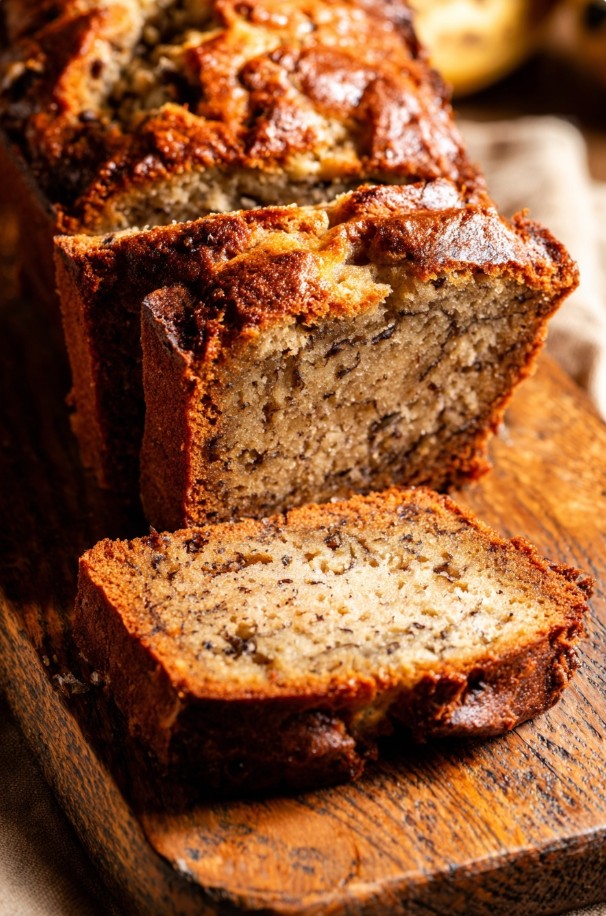
Bananas in baking: why overripe ones work better and what they do to the batter
The first thing I tell beginners: banana in batter isn’t just “banana flavor.” It’s structure. It’s moisture. It’s sweetness. It even affects how the crumb springs back when you press it with your finger.
An overripe banana (speckled, soft, almost custardy) works better not because of magic, but because of basic food science. As bananas ripen, their starches break down into simpler sugars. That means:
- it’s sweeter—so you can cut back on added sugar without losing flavor;
- it’s softer—so it mashes into a smooth purée more easily;
- it’s more aromatic—that unmistakable banana smell hits before you even pull the loaf pan from the oven.
Now, what happens to the batter. Banana purée is basically water + dissolved sugars + fiber. In baking, that translates to a moist crumb that stays soft longer. But there’s a flip side: if there’s too much moisture, or if you mix the batter “until perfectly smooth,” the crumb can turn sticky and heavy.
How home bakers go overboard with bananas
I’ve seen it dozens of times: the bananas are huge, someone throws in 4 “so it’s definitely banana-y,” the batter turns into something close to a smoothie… and then it bakes and bakes and bakes, and the inside is still a wet mess.
Signs you’ve used too much banana:
- the batter pours like thick yogurt instead of falling in heavy ribbons;
- after baking, the top is already dark but the middle sinks;
- when you slice it, the knife comes out with a wet streak like raw batter.
Quick tip: if your bananas are super juicy and watery, I sometimes mash them first and let them sit for 10 minutes. If liquid pools on top, you can pour off a bit—or balance it with a small amount of dry ingredients (oats, nut flour, bran). Don’t try to “save” it by dumping in lots of flour; it’s better to remove excess water.
One more thing: banana isn’t acidic. It doesn’t give you that extra lift you get when baking soda meets kefir or yogurt. So if you’re used to fluffy cupcakes, banana bread can feel dense. That’s normal. But dense ≠ raw.
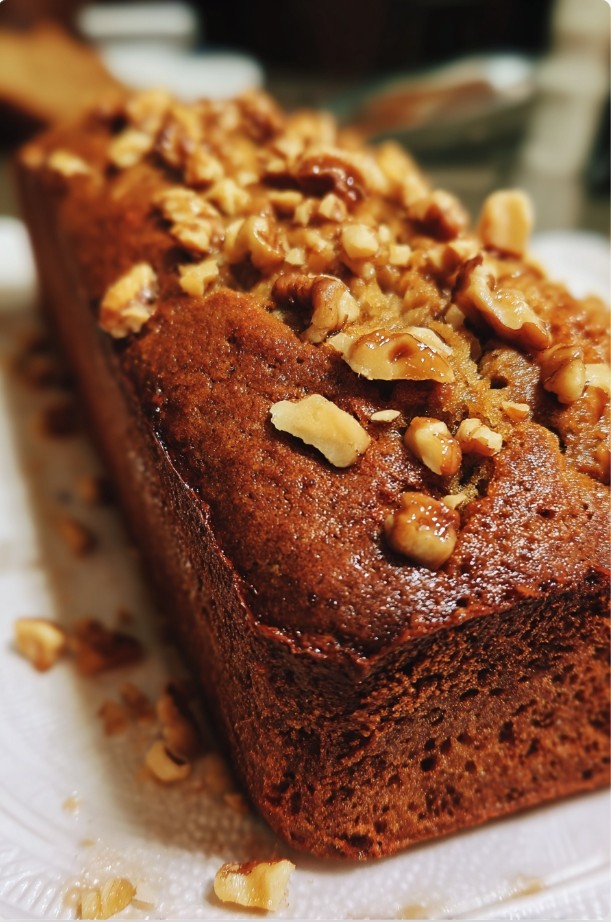
Sweetness and energy: why banana bread is so easy to overeat
There’s this thing I can practically smell before anyone even cuts a slice: banana bread smells like “go on, have another.” Warm banana, vanilla, cinnamon (if you add it), that toasted crust—your brain reads it as comfort and safety. And it’s easy to lose track not because of weak willpower, but because of the combo of flavor and texture.
What triggers the “just one more slice” feeling:
- Softness. Food you don’t have to chew much often gets eaten faster.
- Sweetness without sharp edges. Banana sweetness is rounded, not as punchy as straight sugar—so it feels like there’s less of it than there is.
- Fat (butter/oil/nuts). It makes the crumb tender and richer-tasting, but it also pushes the calorie count up.
It’s not about being scared of the word “calories.” It’s just understanding that banana bread is not a fruit snack. It’s baking. It can be more balanced or less balanced, but it doesn’t turn into a salad just because bananas are involved.
A quick story from my kitchen: once I made an extra-moist banana bread with butter and added chocolate. It was so comforting that my friends and I ate half the loaf while it was still warm on the cutting board. Later everyone was like, “I don’t feel stuffed… but I feel heavy.” That’s the moment when flavor masks fullness.
How to make it satisfying, not a “crash”
I’m not giving a recipe here—I’m giving you the logic. If you want banana bread that feels more “healthy” and easier to manage, think balance:
- More protein: cultured dairy (yogurt/kefir-style), eggs, nuts, seeds. The texture becomes more “loaf-like,” and the satiety lasts longer.
- More fiber: swap part of the flour for whole wheat, add oats or bran. Just be careful—fiber absorbs moisture, so the batter can dry out unless you balance it.
- Less “double sweetness”: if your bananas are very sweet, reduce the sugar. Otherwise you end up with dessert pretending to be “healthy.”
Quick tip: if you’re unsure it’ll be too sweet, smell the batter and taste a tiny bit. Sweetness often reads stronger after baking, when the aroma concentrates. What feels “barely sweet” raw can turn into “perfect” once baked.
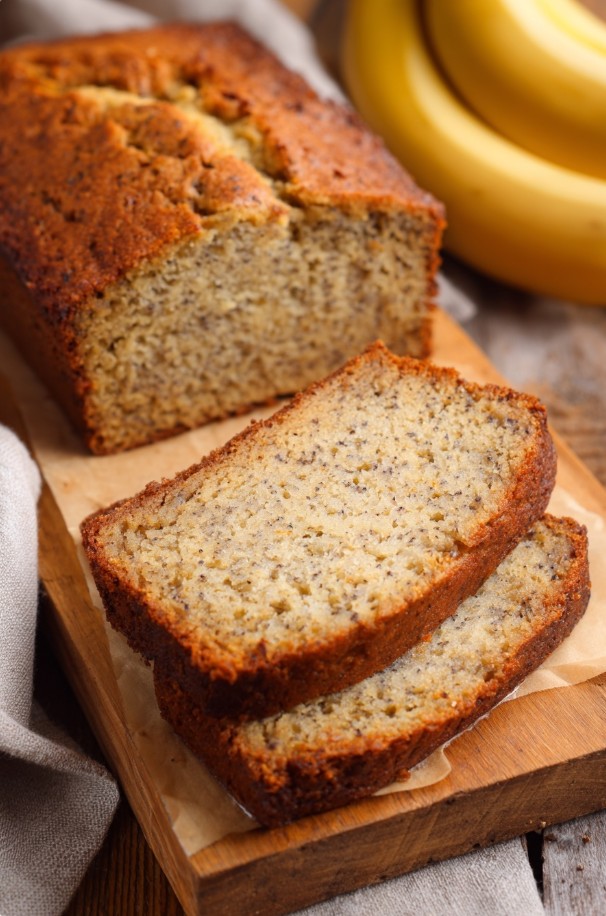
Crumb mechanics: how flour, eggs, and fat decide whether it’s ‘bread’ or ‘cake’
This is my favorite part, because this is where control is born. Banana bread can be tender and even, or it can be crumbly, dry, or rubbery. And most of the time it’s not the oven—it’s how the basic ingredients are combined and mixed.
There are three main levers:
- Flour builds the framework.
- Eggs bind and add some lift, plus structure once baked.
- Fat brings tenderness and that “juicy” mouthfeel, and reduces dryness.
Why mixing matters more than you think
As soon as flour meets moisture, gluten starts to form. In bread, that’s great—you want elasticity and chew. In banana bread, not always. Mix too aggressively and you get a springy, rubbery crumb that almost pulls when you bite it.
What it looks like in real life: someone grabs a mixer and “beats it so there are no lumps.” The lumps are gone, sure—but now the loaf is dense, and it eats heavier than it should.
Quick tip: when I add the dry ingredients to the wet, I stop as soon as I don’t see flour on the surface. Let the batter be a little uneven—the oven will finish the job. It almost always bakes up more tender that way.
How fat changes mouthfeel
Butter gives you that creamy aroma and a more cake-like tenderness. Oil makes the crumb very moist and soft, and it often stays fresh longer. But if there’s a lot of fat and a lot of sugar, you’ve got dessert—no compromises.
A simple test helps me: while the banana bread is still warm, break off a small piece and gently squeeze it. If it:
- springs back—the structure is fine;
- leaves your fingers greasy—there’s too much fat, or it didn’t emulsify well into the batter;
- crumbles into dry bits—it’s lacking moisture/fat, or it’s overbaked.
Not a lab test, but it’s honestly reliable for home baking.
Temperature and time: how to bake it through without a raw center or a burnt top
The most common complaint: “The top is already dark, but the inside is wet.” Banana bread is tricky because it browns faster than it bakes through. Thanks to sugars (from the bananas and any added sugar), the crust caramelizes, the aroma gets amazing, and the center is still slowly coming up to temperature.
In a typical home oven, it often goes like this: the heat is uneven, the pan sits too close to the top element, the surface sets and looks done… and then you slice it and find a sinkhole and a gummy strip down the middle.
Doneness signs that actually work
I don’t love relying on time alone. It’s better to look for a combination of signs:
- Color: evenly golden-brown, no black patches. If the top darkens too fast, that’s a warning sign—not “yay, a great crust.”
- Spring: a light touch in the center should bounce back, not feel sloshy.
- Crack: a natural crack on top is normal. But if it’s wide and you can see wet batter inside, it needs more time.
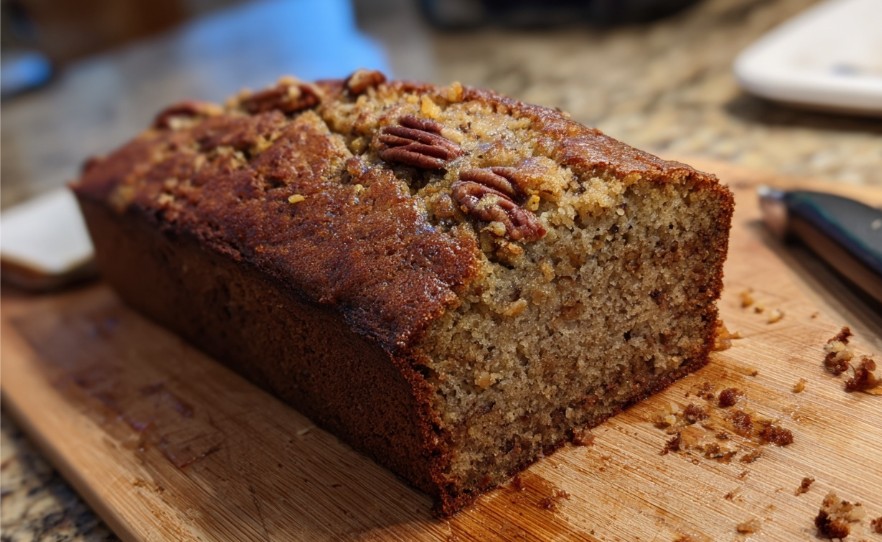
- Skewer/knife: it should come out of the center without raw batter. A few moist crumbs are fine; wet paste is not.
Quick tip: if the top looks perfect but the center isn’t done, cover the loaf loosely with a sheet of foil (like a little “roof”) and keep baking. This has saved more than one bake for me—especially in ovens that love to brown the top fast.
Why “letting it rest” is part of baking
This is the part people underestimate. Banana bread keeps “finishing” after it comes out: the center holds heat for a long time, moisture redistributes, starches set. Slice it immediately and you can get a sticky middle even if it’s baked properly.
I once rushed because I had to shoot content and cut into a hot loaf after 5 minutes. It tasted great, but it looked underbaked. An hour later, the other half sliced perfectly—an even crumb, moist but not wet. So cooling time isn’t a whim; it’s part of the process.
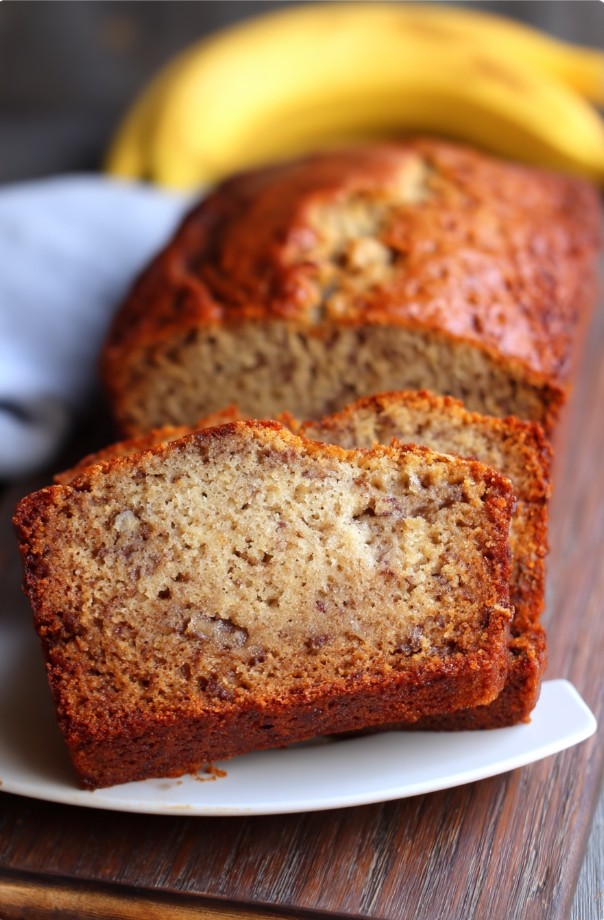
Common beginner mistakes: why it turns rubbery, dry, or ‘smells good but tastes meh’
I actually like mistakes—they’re honest. They show you exactly where the process slipped out of your hands. Here are the most common ones, and almost all of them are fixable without heroics.
1) Mixed the batter until “perfectly smooth”
Result: a dense, springy crumb that feels like a sandwich loaf… but sweet. The flavor is there, but it’s less enjoyable because it takes more chewing and feels heavier.
What you want instead: the batter can be a little uneven. A few small lumps are better than a rubbery texture.
2) Too many bananas or purée that’s too runny
Result: a raw center, a sunken top, a sticky line even after cooling.
What you want instead: banana brings moisture, but the batter should still hold its shape. If it pours like crepe batter, that’s your warning bell.
3) Your oven browns from the top
Result: a dark crust and an underbaked middle.
What you want instead: moderate heat and enough time. If the top darkens too quickly—foil, or move the pan to a lower rack.
4) Overbaked it “just to be sure”
Result: dry edges, lots of crumbling, that “sweet rusk” vibe.
What you want instead: banana bread likes staying a little moist. Don’t bake it into cookie territory.
5) Too many spices or flavorings
Result: it smells gorgeous, but the taste is flat—or weirdly perfumey.
What you want instead: spices should support the banana, not drown it out. If after baking you only taste cinnamon/vanilla and the banana is missing in action, it’s too much.
Quick tip: if you want more aroma without adding extra sugar, try a pinch of salt and a touch of acidity (for example, a cultured dairy ingredient in the batter). Salt makes sweetness taste fuller, and a little tang makes banana pop.
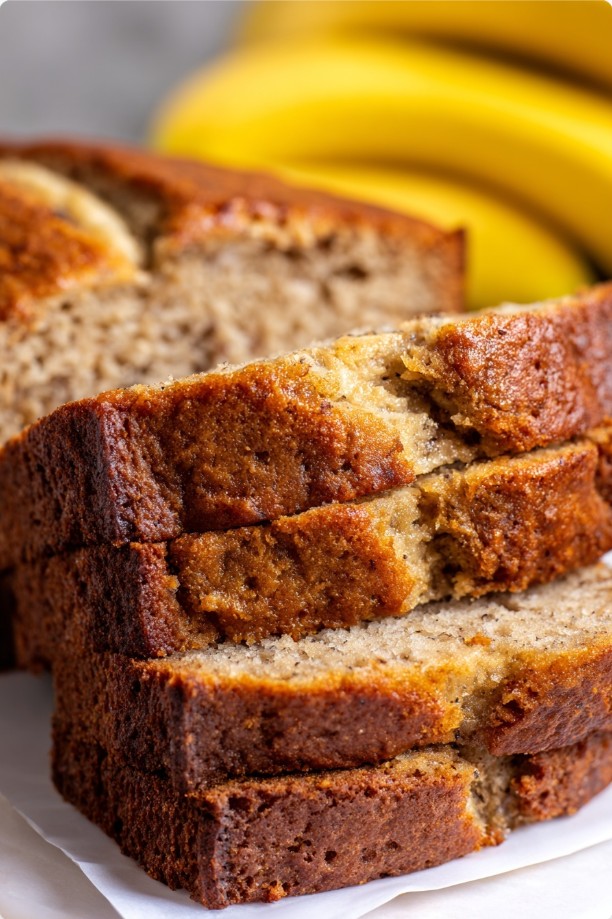
What to do when something goes wrong: quick diagnosis and rescue steps
The worst feeling is pulling the pan out and realizing the result isn’t what you wanted—and it feels like it’s ruined. In reality, banana bread can often be rescued, or at least diagnosed so you don’t repeat the same thing next time.
The center is raw but the top is already dark
What happened: the temperature was too high, the pan sat too high in the oven, or the batter was too wet.
What to do right now:
- cover the top loosely with foil like a “roof”;
- move it to a lower rack;
- bake in short intervals, checking the center with a skewer.
If you’ve already taken it out and sliced it, you can put pieces back in the oven, but the texture won’t be as good. It’s better to finish baking it whole.
It turned out dry and crumbly
What happened: overbaking, or not enough fat/moisture; sometimes too many dry add-ins that soaked up the liquid.
What to do right now: let it cool completely, then wrap it in paper/a clean towel for a few hours. Often the internal moisture evens out and it softens. If it’s truly dry, people usually “save” it by serving it with something moist (yogurt, fruit). But the main thing is remembering the cause: next time, bake a bit less or at a lower temperature.
Rubbery, dense, feels underdone—but the skewer is clean
What happened: most often, overmixing or a too-bready structure from the flour.
What to do right now: baking it longer won’t fix this—it’s a texture issue. Next time: mix less, use a gentler hand with a spatula, and don’t chase perfect smoothness.
It sank after coming out of the oven
What happened: either it was underbaked (the center didn’t set), or there was too much baking powder/baking soda, or the batter was too wet.
What to do right now: let it cool and don’t fuss with it. A sinkhole isn’t always a flavor disaster. But if it’s wet inside, next time bake longer at a lower temperature, or reduce the moisture (banana/other liquids).
Quick tip: if you don’t trust your oven, place a small oven-safe dish of water on a rack nearby. The steam can soften the heat and reduce the risk of drying out the edges while the center finishes. Not a miracle cure, but it can really help sometimes.
How to make banana bread ‘healthier’ without losing flavor: changes you can actually taste
I’ve seen a lot of attempts to make “clean” banana bread, and honestly: half of them end with someone eating a dry compromise and still craving sweets an hour later. I’m more into this approach: don’t punish yourself—tune it. Shift the balance a bit so it’s delicious, and so a slice behaves like real food, not a roller coaster.
Reduce sugar—without killing the aroma
Overripe bananas already do a lot of the work. If you add too much sugar, the flavor turns into that flat, one-note sweetness. Cut it back, and suddenly you can taste banana, nuts, that gentle caramel edge on the crust.
What helps when you lower the sweetness:
- a pinch of salt (seriously—it makes sweet taste brighter);
- cinnamon/vanilla very lightly, as background;
- proper browning: a good crust can make it taste “sweeter” than it actually is.
Add “slow” satiety
Nuts, seeds, oats, a portion of whole wheat flour—these all help. Just don’t throw everything in at once, or you’ll end up with a heavy, crumbly brick.
A small confession: I had a phase where I tried to “do it right” and dumped every healthy thing I could find into the batter—seeds, bran, oats, nuts. It tasted good, but it sliced poorly, crumbled, and felt like an energy bar. Some people love that, but I wanted banana bread, not “gym snack.” That’s when it clicked: one or two changes, done well, beat ten changes done loudly.
Choose a fat that feels “lighter”
Butter gives aroma and tenderness. Oil gives moisture and softness. Cultured dairy adds lightness and a little tang that freshens everything up. Any of these can be totally fine—the question is what result you want.
Quick tip: if you want a softer flavor and less of that oily/buttery feel, shift some of the fat into add-ins. Nuts or seeds bring fat too, but they read as texture and satiety—not greasiness.
Portion size is technique too
Yes, it sounds obvious, but it’s practical. Banana bread often gets sliced “like bread”—thick slabs. But it’s eaten like dessert. If you want it to fit into a normal day, slice it thinner. Or pair it with something that adds protein and makes it a real snack (yogurt, cottage cheese, nut butter—whatever works for you). This isn’t about rules; it’s about how you feel afterward.
My honest take as a cook: banana bread can be healthy, but it’s not ‘magic’
Banana bread doesn’t automatically become healthy just because it contains bananas. But it also doesn’t deserve a one-stroke “unhealthy” stamp. It’s baking—something you can make more balanced pretty easily, and also something you can ruin just as easily if you don’t understand how banana, moisture, mixing, and your oven behave.
To me, the “healthy” part here is control: you know why it turns out moist, why it browns, how to avoid a raw center, how not to mix it into rubber, and how to set the sweetness to your taste. And then you cut a slice, hear that quiet whisper of crust under the knife, catch the warm banana smell—and eat without anxiety.
How is banana bread for you—does it usually come out moist and tender, or does it sneakily stay raw in the middle? And what does “healthy” mean to you in a bake like this: less sugar, more satiety, or simply feeling good after you eat it?