Kitchen Appliances Bought in Vain: An Honest Review

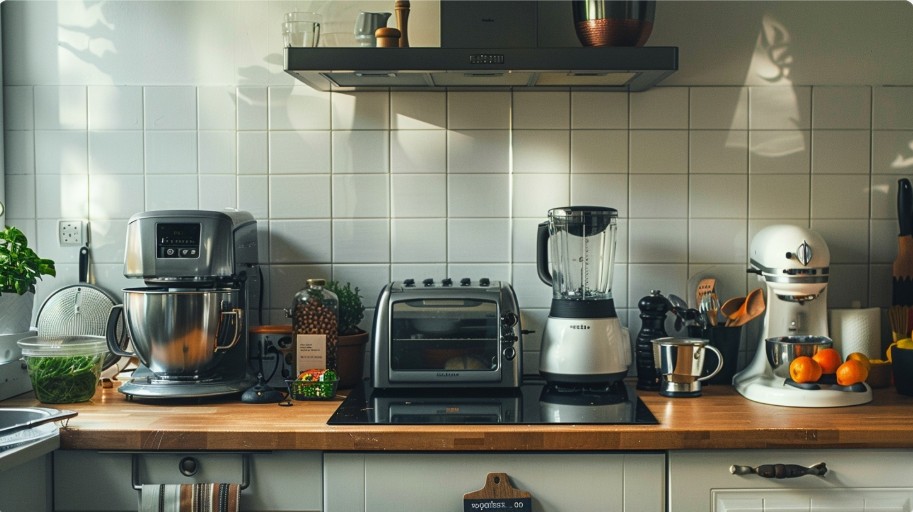
Once, I was also fascinated by the idea that the kitchen should have the maximum of modern appliances. I remember buying a device with a bonus I earned, which I had dreamed of since my student years. Two months later, it was gathering dust on the most distant shelf. Familiar situation? Most kitchen appliances are bought with the hope that they will make life easier, but in practice, many remain unnecessary burdens. Especially if the kitchen space does not allow for much or if there is no time and energy for complex maintenance.
In this review, I want to honestly talk about the kitchen appliances that most often turn out to be redundant. Not because they are “bad” or “unnecessary at all,” but because for the real life of most of us, they just don’t work. Some devices are bought under the influence of advertising or beautiful photos — and then disappoint. Sometimes it’s painful to admit, but wasted money and occupied space in the cabinet are also experiences. I share mine and those I’ve seen around me in the kitchen — without moralizing, just humanly and honestly.
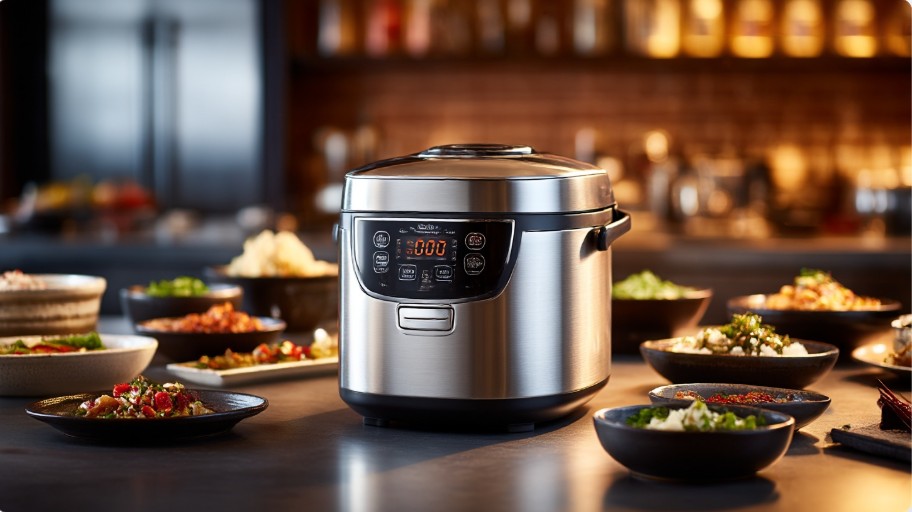
Multicooker: Promises of Simplicity, Realities of Everyday Life
The multicooker always sounds like the perfect option for busy people. Press a button — and the dish is ready. In practice, it’s a bit different. I lived with a multicooker for several months: initially using it daily, then once a week, and eventually, it just became a fruit stand. The problem is not in the idea itself, but in the fact that most dishes from the multicooker come out with the same texture. If you love variety, it will quickly become boring.
What else is important? The size. The multicooker takes up a lot of space. For a small kitchen, this is a significant detail. Washing it is another story: the lid, bowl, valves. Not everything is always easy to disassemble, and food remnants sometimes get “stuck” in hard-to-reach places. I caught myself thinking several times that a regular pot and pan do the job just as well, and washing them is faster.
Typical Mistakes When Choosing a Multicooker
- Buy with the thought “I’ll cook everything” — but actually only use it for porridge or pilaf.
- Don’t consider the size of the kitchen and storage space.
- Believe that the multicooker will replace all the cookware.
Don’t buy a multicooker “just in case.” If you don’t like porridge or stew, it definitely won’t become a favorite.
Alternatives and Care
A regular deep pot with a thick bottom plus an oven — and you’re not limited by programs. After using a multicooker, be sure to disassemble and wash all parts, otherwise, the smell will linger for a long time.
Stand Mixer: The Pleasant Illusion of a Large Kitchen
The stand mixer looks like a symbol of serious cooking. Heavy, metal, stylish — and always in photos in cooking blogs. But if you don’t bake cakes every week, it just stands and takes up space. One of my friends dreamed about this mixer for a year, bought it — and admitted that she uses it once every six months when guests come. Small household tasks are easier to handle with a hand mixer or even a whisk.
Moreover, maintaining it is not easy. Many heavy parts, a bowl, beaters, attachments — after each operation, all this needs to be washed. And also find a place where it won’t be in the way. If the kitchen is small, it’s always a compromise.
Typical Mistakes When Choosing a Stand Mixer
- Choose based on appearance, not needs.
- Don’t consider the weight and dimensions.
- Believe it will instantly become the “heart” of the kitchen, even though they hardly bake.
A stand mixer is a story about ambitions, not about real life simplification.
Alternatives and Care
A hand mixer or even a regular whisk is enough for most tasks. After use, wash all parts immediately, don’t let the dough dry: it will be much harder to clean later.
Yogurt Maker, Bread Maker, and Other ‘One-Time’ Gadgets
Yogurt maker, bread maker, popcorn maker, waffle maker — all these devices seem attractive when you want to diversify the menu. But the truth is: enthusiasm quickly fades. After the first dozen portions of homemade yogurt or bread, most return to familiar store-bought products. In my experience, the bread maker was a gift from relatives — it moved to the country house, and then it gathered dust there too. The yogurt maker didn’t catch on at all: caring for the jars, sterility, constant temperature control — too much hassle for daily use.
These gadgets take up a lot of space, and the benefit is only a few times a year. Maintenance is like in a laboratory: everything must be as clean as possible, otherwise unpleasant odors quickly develop.
Typical Mistakes When Choosing One-Time Devices
- Buy under the influence of emotions or promotional offers.
- Don’t consider that most dishes can be prepared with ordinary means.
- Underestimate the hassle of maintenance and storage.
Alternatives and Care
Yogurt can be made in a regular jar wrapped in a towel. Bread — in the oven or even on a pan. If you’ve already bought these gadgets, after each use, thoroughly wash all parts, dry them, and don’t store with food residues inside.
Juicer: Many Promises, Little Practice
The juicer is another “symbol of a healthy lifestyle” often bought with the best intentions. But honestly, making juice every day is a marathon for the patient. Washing the whole construction after each portion gets boring very quickly. In my family, the juicer survived two bursts of enthusiasm: first, everyone drank fresh carrot juice, then the device stood idle. In the end, fresh carrots or apples are just tastier to eat whole, rather than turning them into a pile of pulp that is then a pity to throw away.
This equipment takes up a lot of space, especially if it’s a powerful centrifugal model. Maintenance is always a quest: brushes, small sieves, pulp residues. If not washed immediately, the smell appears instantly.
Typical Mistakes When Choosing a Juicer
- Buy for the sake of a “healthy breakfast,” but then are too lazy to wash the appliance.
- Choose a model that’s too large to fit in the kitchen.
- Don’t consider that juice is a perishable product.
Before buying a juicer, calculate how much time you’re really willing to spend on care and cleaning after each use.
Alternatives and Care
Smoothies or fresh juice can be made with a regular blender. Wash all parts immediately after use, don’t leave it for later — dried pulp is almost impossible to clean.
Rice Cooker, Egg Cooker, and Other Specialized Devices
Rice cooker, egg cooker, pasta maker — these are all single-function devices. In practice, they rarely catch on, especially if the kitchen is small. Eggs can be boiled in a regular pot, rice too. Friends once gave me an egg cooker for my birthday: used it a few times, then it became part of the decor — and that’s it. Narrow specialization is convenient for large families or fans of a specific dish. For most, such devices just lie idle.
Typical Mistakes When Choosing Specialized Equipment
- Buy as a gift “with a hint of usefulness.”
- Believe the advertising about the “perfect” cooking result.
- Don’t consider the lack of space in the kitchen.
Alternatives and Care
Almost everything a rice cooker or egg cooker can do can be done with a regular pot or pan. After using such devices, they need to be completely dried — moisture residues quickly lead to odors.
Grill, Electric Skewer, Deep Fryer: Seasonal Kitchen Guests
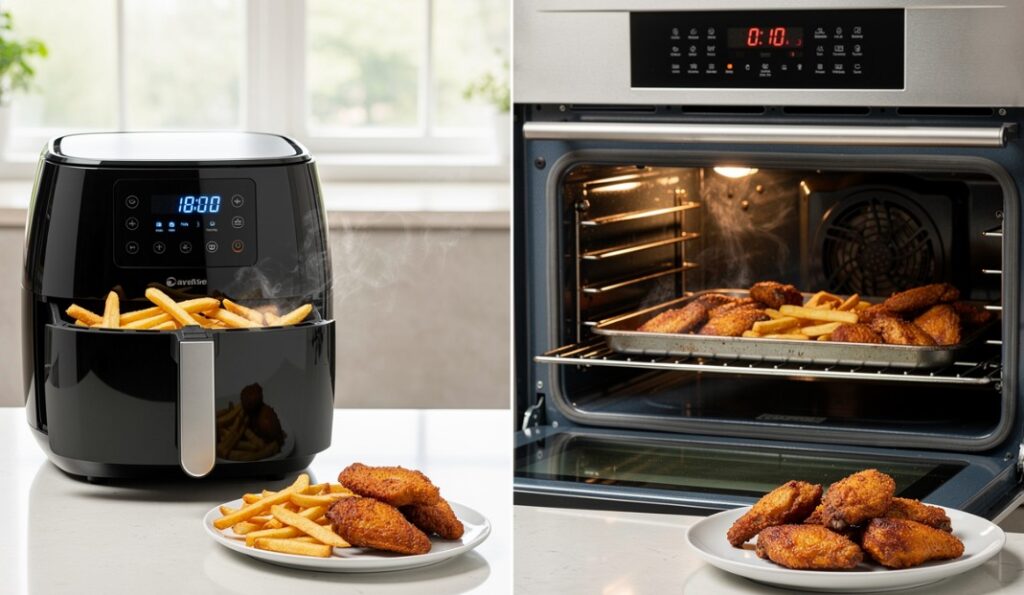
Grills or deep fryers seem like a great idea for home parties, but in the usual rhythm of life, they are used very rarely. I sometimes take the grill out to the summer terrace — and even then only a few times a season. In an apartment, the smell of frying lingers for a long time, and cleaning the grates is not enjoyable. A deep fryer is even more hassle: oil, splashes, burnt crumbs, and then disposing of the used oil. If you make fries once a month, it’s hardly worth dedicating a whole shelf to a deep fryer.
An electric skewer is almost a joke. Friends have one since last Easter — then finding a place for it is difficult, and it didn’t catch on even at the country house.
Typical Mistakes When Choosing Seasonal Equipment
- Buy under the influence of a holiday or promotion.
- Don’t consider the hassle of maintenance and disposal of leftovers.
- Believe they will cook dishes “like in a restaurant” every week.
Before buying a grill or deep fryer, honestly count how many times a year you’ll really use it.
Alternatives and Care
A grill pan on the stove gives a similar result with minimal effort and maintenance. All grates, bowls, and attachments should be washed immediately — leftover grease quickly turns into a “permanent stain.”
Coffee Machine: Convenience or Unnecessary Luxury?
The coffee machine is the appliance that coffee lovers often dream about. But honestly, for most people, a drip coffee maker or French press works just as well, with less hassle. The coffee machine requires meticulous care: regular system cleaning, descaling, removing and washing parts. If you’re lazy to do this — the taste of the drink quickly deteriorates, and the machine itself breaks down. Friends have a coffee machine in the corner — they make coffee in a cezve or regular coffee maker because it’s faster and easier.
For a small kitchen, it’s also a matter of space. If the family is small and coffee is not a daily tradition, the machine becomes another dust collector.
Typical Mistakes When Choosing a Coffee Machine
- Buy under the influence of fashion or office experience.
- Don’t think about regular maintenance.
- Choose a complex model, although they use only basic functions.
Alternatives and Care
French press or cezve — simple and reliable options. The coffee machine needs regular cleaning, descaling, and not leaving water inside after use.
Vacuum Sealer, Dehydrator, and Other ‘For Reserve’ Equipment
Vacuum sealer, vegetable dehydrator, pasta maker — all these are bought with the idea of reserves “for winter” or homemade preparations. But if it’s not a family tradition, enthusiasm lasts for one season. I once bought a dehydrator for mushrooms: used it actively for the first two years, then once a year. The vacuum sealer appeared after watching cooking shows — and also ended up on a distant shelf. If you don’t preserve constantly, these devices just take up space.
Caring for them is not as difficult as storing them: small parts, lots of plastic, and they are afraid of moisture and dust. After a year of irregular use, a persistent smell often appears from the plastic.
Typical Mistakes When Choosing Reserve Equipment
- Buy with the thought “what if it’s needed.”
- Don’t count how many preparations they actually make each year.
- Don’t consider the complexity of storage and maintenance.
Alternatives and Care
Vegetables can be dried in the oven, preparations packed in regular jars. If you already have a dehydrator or vacuum sealer — store in a dry place, don’t leave in the sun, periodically wipe off dust.
Food Processor: Many Parts, Little Convenience
The food processor looks like a universal soldier: chops, slices, mixes. But in practice, most people use one or two attachments, and the rest lie in the box. I caught myself using the processor for a big party, but on weekdays I chop vegetables with a knife — faster and easier. Another problem is washing: lots of small parts, sieves, blades. If not washed immediately, it all turns into a quest.
Storage is a separate story. If the kitchen is small, finding space for all the boxes and attachments is quite a challenge.
Typical Mistakes When Choosing a Food Processor
- Buy without understanding what it will really be used for.
- Don’t consider the time for assembly and washing.
- Choose with the thought “just in case,” not based on real needs.
Before buying, honestly count how many times a week you’ll really assemble and wash the processor just to slice one carrot.
Alternatives and Care
A sharp kitchen knife and grater are universal tools for most tasks. If you already have a processor — regularly check all attachments, dry them before storing, don’t leave food residues.
Microwave: When It’s Really Needed and When It’s Not
The microwave is a device with mixed feelings. For some, it’s a must-have, for others — an unnecessary item. In my experience, a microwave is only needed when you often reheat ready meals. If you cook in portions, eat fresh — it just stands there. For friends with two kids, it’s a lifesaver, for a couple without kids — hardly used. Maintenance is simple: wipe after each use, otherwise, smells and stains appear quickly.
It takes up noticeable space, for a small kitchen it’s always a matter of compromise. If you don’t reheat anything daily — think about whether you really need it.
Typical Mistakes When Choosing a Microwave
- Buy “just in case.”
- Choose a model that’s too large or complex.
- Believe it will solve all cooking problems.
Alternatives and Care
An oven or pan is a classic solution for reheating. After each use, wipe the microwave with a damp cloth to prevent odors from accumulating.
How to Avoid Impulsive Purchases: Practical Tips
Over the years, I’ve learned to evaluate kitchen appliances not by appearance or fashion, but by three simple criteria: how many times a week I’ll actually use it, whether there’s space for it, and how much time I’m willing to spend on maintenance. Honesty with yourself is the best protection against unnecessary purchases. Ask yourself: if the appliance suddenly breaks, what will replace it? If the answer is “a regular pot” or “a knife,” think again.
Another tip is not to buy appliances because “everyone buys them.” Listen to your lifestyle, your habits. A simple method helps me: write down over a week what appliances I actually use. Everything that wasn’t needed even once — maybe it should be given away or sold.
Lifehacks for Choosing and Caring for Appliances
- Before buying, imagine where the appliance will stand and how to wash it.
- Prefer multifunctional devices.
- Always read the manual, especially the care and storage section.
- After each use, wash and dry all parts.
- Don’t forget to periodically review kitchen cabinets: sometimes freeing up space is more useful than buying something new.
The kitchen is not a showroom, but a space for life. Choose what adds convenience to you.
I still sometimes catch myself wanting to buy something new — it’s normal. But now I approach the choice more calmly. Better a simple knife and pot that you use every day than a bunch of equipment that collects dust. What gadgets have become “dust collectors” for you? Share your experiences in the comments — I’m curious about what hasn’t caught on for others.