

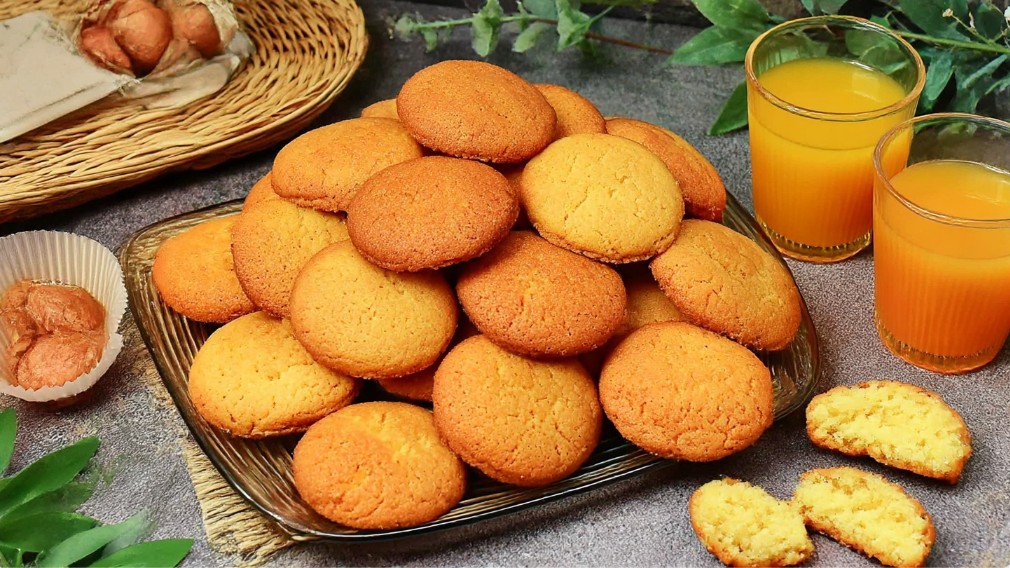
Baking cookies without baking powder requires a slightly different approach. Without the help of leavening, the dough’s structure is determined entirely during mixing. This means these recipes either turn out perfectly or not at all.
Lard is the key ingredient here. It provides crispness and tenderness without additional agents. But it only works if the dough isn’t overheated or overworked. Here, taking pauses is more important than speed.
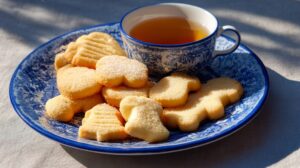
These cookies won’t be fluffy. They’re flat and calm, with no hollows inside. They’re perfect for enjoying with tea and won’t crumble in your hands.
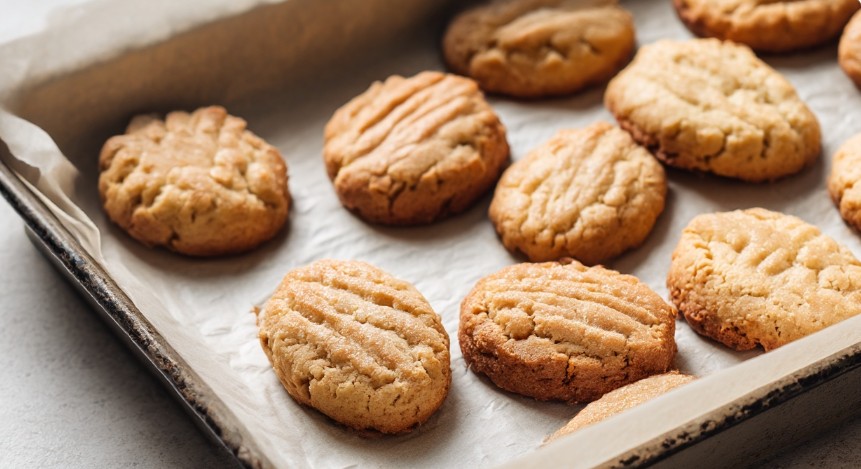
Ingredients You Can’t Skimp On
In cookies without baking powder, the ingredient list is short, but everything plays a direct role. There’s no room for error, so understanding the behavior of each ingredient in the dough is crucial.
Lard.
Lard should have a clean smell and mild taste. In this recipe, it doesn’t hide behind other flavors or spices, so any off-note will stand out. The best lard is firm enough to slice when cold, not crumbly or runny. If it’s too soft, the dough heats up quickly and loses shape. If too hard, it’s difficult to distribute evenly, making the texture patchy.
Flour.
Flour here isn’t just filler; it’s the structure. Regular wheat flour works better than “special” blends. Too dry flour absorbs fat and makes the dough brittle. Too strong gives a density that even chilling can’t fix. It’s better to add a little less and stop than overdo it and try to correct.
Sugar.
Sugar in these cookies isn’t just for sweetness. It affects how the dough holds its shape and behaves in the oven. White sugar works predictably and doesn’t alter the cookie’s character. Reducing the amount makes the structure denser and less crumbly. That’s fine, but know what you’re getting into.
Egg.
The egg is the only “flexible” part of the recipe. It helps the dough come together and not fall apart without baking powder. It should be at room temperature — a cold egg makes the mix uneven and hard to combine. No need to whisk; just blend it evenly.
Salt.
Even a pinch of salt makes a difference. Without it, the cookies taste bland, but not salty. Salt gathers the flavors and adds clarity. Don’t skip it, even if you think there’s enough sugar.
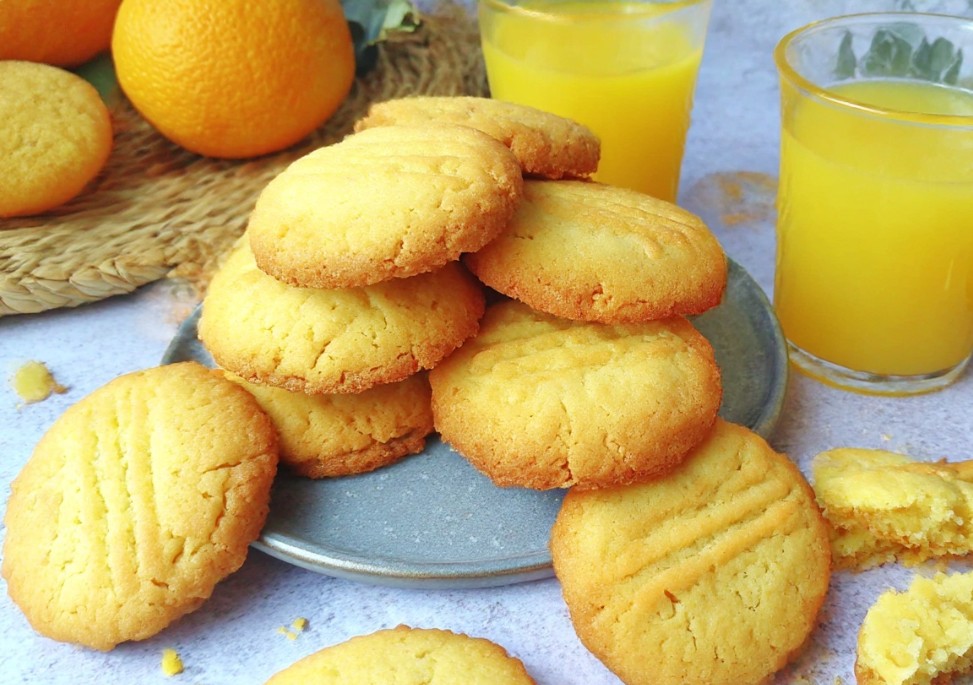
Lard Cookies Without Baking Powder
Ingredients
- 200 g lard Use homemade lard for the best flavor.
- 100 g sugar Adjust to taste.
- 400 g flour Sift before use to avoid lumps.
- 1 tsp salt Balances the cookie's flavor.
- 1 pack vanilla sugar For aroma and flavor.
- 50 ml water May be needed to mix the dough.
Method
- Take the lard out of the fridge ahead of time so it's cold but pliable. Cut it into small cubes and place in a bowl. Add the sugar and start creaming with a spatula or spoon, pressing the mixture against the sides. Keep your movements calm and steady. You want a smooth, matte mixture without lumps, but not glossy. If the lard starts to melt and gets shiny, stop and let the bowl rest for a few minutes.
- Add the egg and quickly combine it with the fat mixture. Don't strive for perfect smoothness right away. Initially, the mixture might look a bit separated, which is normal. After a few movements, it will come together. At this stage, avoid overworking — prolonged mixing will warm the dough before adding flour.
- In a separate bowl, mix the flour with a pinch of salt. Add the dry mixture in small portions, briefly combining each time. Don't knead or stretch the dough. Once it stops sticking to your fingers and holds its shape, stop. Continuing will make the dough tough and lose its crumbly texture.
- Gather the dough into a ball, slightly flatten it to form a disk about 2–3 cm thick. Wrap it and refrigerate for at least 45 minutes. During this time, the lard will stabilize, and the dough will become firmer and more manageable. This is especially important since there's no baking powder, and the cold provides the needed structure.
- Take the dough out of the fridge and let it sit for 2–3 minutes so it's not rock hard. Roll it between two sheets of parchment to a thickness of 6–8 mm. Apply even pressure, without "stretching" the edges. If the dough starts to soften or stick, stop and return it to the cold for a few more minutes.
- Cut out the cookies or slice with a knife — whatever is more convenient. Place them on a baking sheet lined with parchment, leaving a small space between each piece. Cookies without baking powder don't spread much, but space is still needed for even baking.
- Bake in a well-preheated oven at 170°C. Bake for about 15–18 minutes, depending on thickness. Focus on the bottom, which should become dry and slightly golden. The top will remain light, which is normal for this dough.
- After baking, don't rush to remove the cookies. Leave them on the baking sheet for 3–5 minutes to let the structure "set." Then transfer them to a rack to cool completely. Only after cooling will the cookies achieve the dense, even texture they're known for without baking powder.
Notes
- Pauses are more important than speed in this recipe.
- Mixing should be brief, without kneading.
- The dough shouldn't be warm before baking.
- Without baking powder, the shape depends on thickness.
- Thin cookies turn out drier.
- A light top is normal, not underbaking.
- Chilling before shaping is essential.
- Cookies become crumblier after full cooling.
Private Notes
Tried this recipe?
Let us know how it was!I see this recipe as a foundational test. There are no hidden ingredients like baking powder, flavorings, or textural tricks. Everything is visible right from the bowl to the baking sheet. That’s why I love it. It doesn’t forgive haste, but it doesn’t demand anything overly complicated either.
Baking without baking powder forces you to pay closer attention to the dough. Not just the recipe, but the state of the mixture: how it comes together, how it reacts to the cold, how it behaves when rolled out. This isn’t the kind of recipe where you can just “mix and go.” But it’s also not one that requires you to fear every movement. You quickly gain a sense of control.
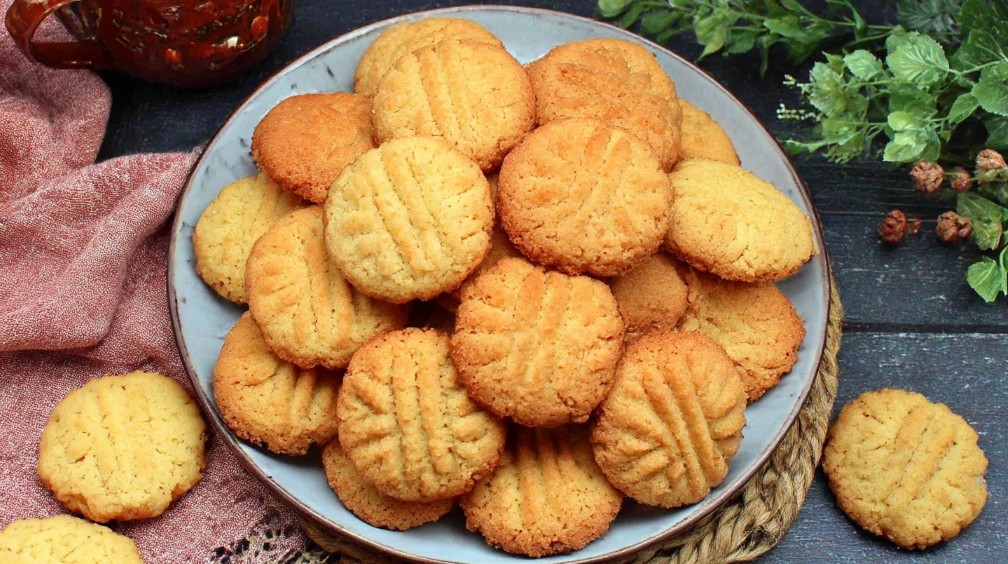
I like that the outcome is predictable. If the dough is cold and not overworked, the cookies hold their shape, have an even density, and a clean taste. They don’t crumble unexpectedly or break for no reason. They’re easy to pick up by hand, don’t fall apart, and leave no greasy marks.
This cookie isn’t about the “wow” factor from the first bite. It’s about stability. It’s about tea you can sip slowly. It’s about cookies that don’t become boring after just two pieces. The next day, they often taste even better than right after baking—the flavor rounds out, and the texture becomes more mellow.
I would recommend this recipe to anyone wanting to understand dough better, rather than just looking for something sweet to enjoy with tea. It clearly shows the difference between a brief mix and an “overmixed” dough. Between cold dough and merely chilled dough. And if it doesn’t turn out perfectly one time, it’s not a failure but rather an experience that can easily be adjusted next time.

Responses