What to Use Instead of Mayonnaise in Pasta Salad

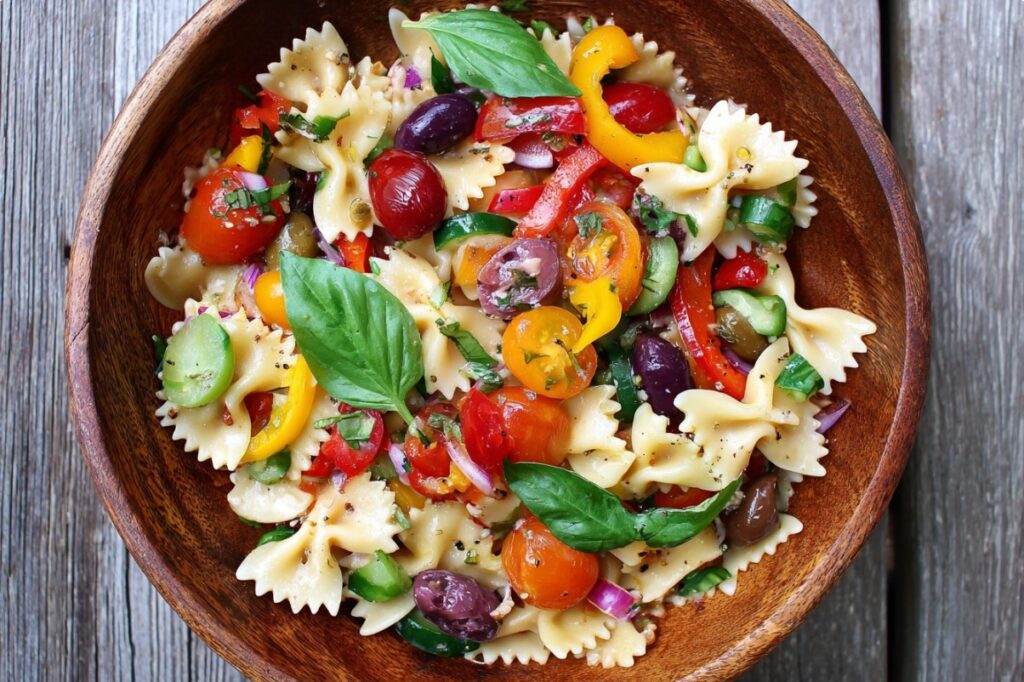
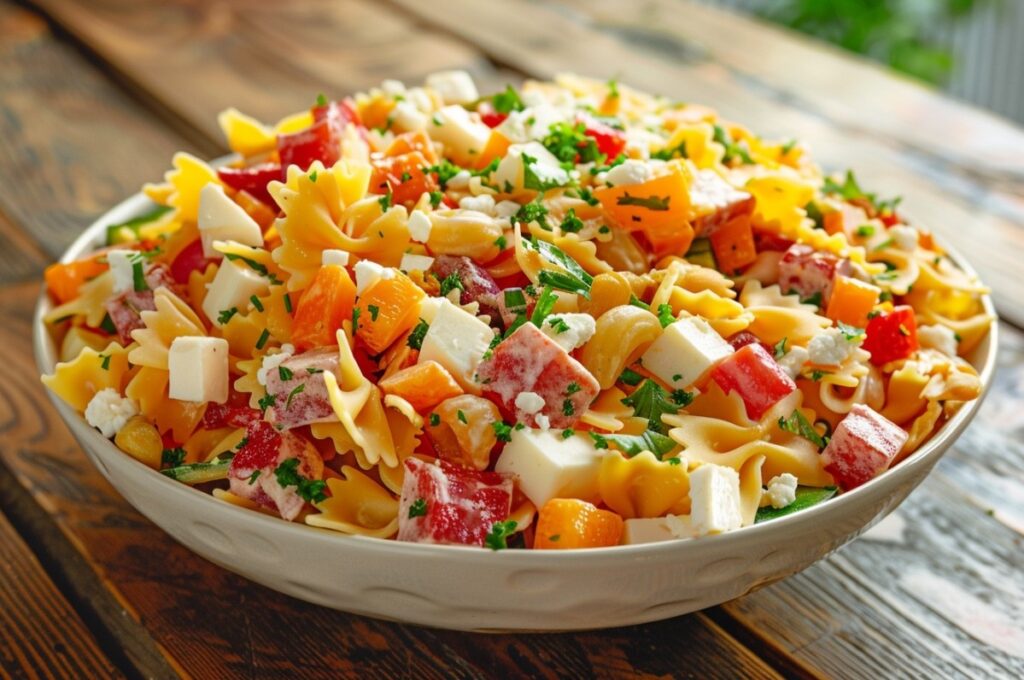
Pasta salad is often tied to a mayo-heavy dressing, but honestly, there are plenty of lighter options that taste just as good. Sometimes you want something less rich, a bit fresher, or you’re simply in the mood for a new flavor.
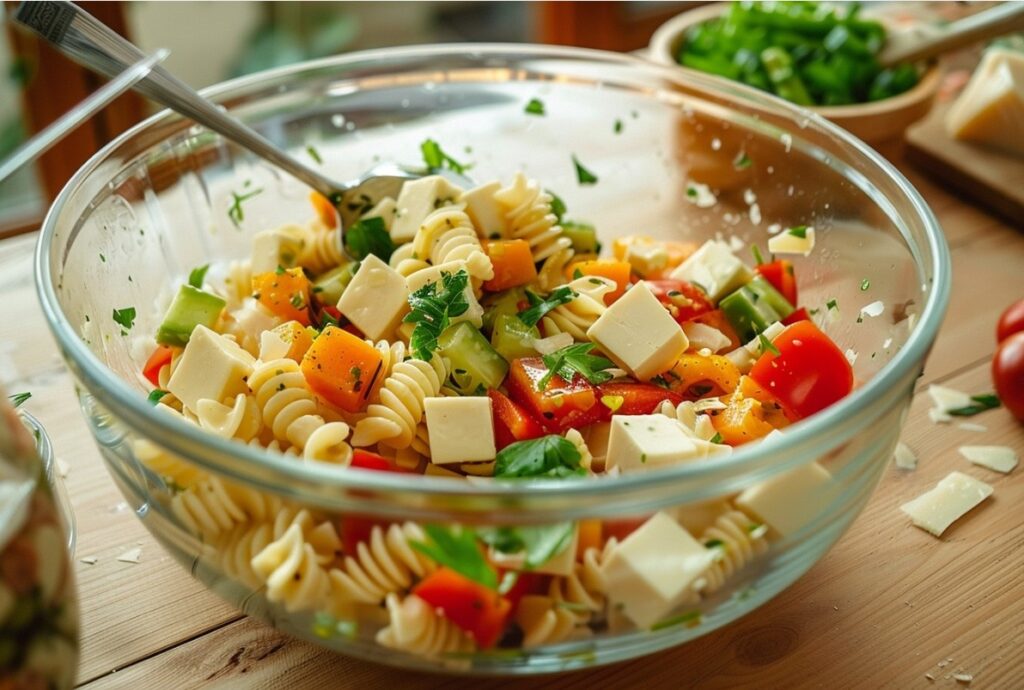
Yogurt, olive oil, mustard-based dressings, or even avocado can all step in for mayonnaise in pasta salad. These swaps keep things lighter, let the ingredients shine, and add a little something extra.
Pasta salad is that one dish that saves the day when you need to feed people fast without spending half your life at the stove. I love it for the simplicity: boil pasta, toss in whatever’s in the fridge, stir—suddenly it looks like you “planned” dinner. But there’s one thing that can ruin it: mayonnaise.
Not because mayo is “bad.” It just behaves in its own way in pasta salad: sometimes it turns everything heavy and sticky, sometimes it separates after chilling, sometimes it bulldozes the flavor of fresh veg and herbs. And sometimes you just don’t have any—or you’re not in the mood for it today, after a long day when your body wants something lighter but still filling.
I genuinely don’t believe in “perfect eating.” There’s just real life: work, kids, commuting, being tired, the whole “oh wow it’s late again” situation. Food should fit into that life, not make it harder with rules. So swapping out mayo isn’t about bans—it’s about convenience and options, so your salad can be exactly what you need today.
Below are practical, real-world alternatives to mayonnaise for pasta salad: what gives creaminess, what holds up, what plays nicely with vegetables, what survives the fridge and a lunchbox. No preaching—just what actually works, plus a few small kitchen tricks I’ve learned the hard way.
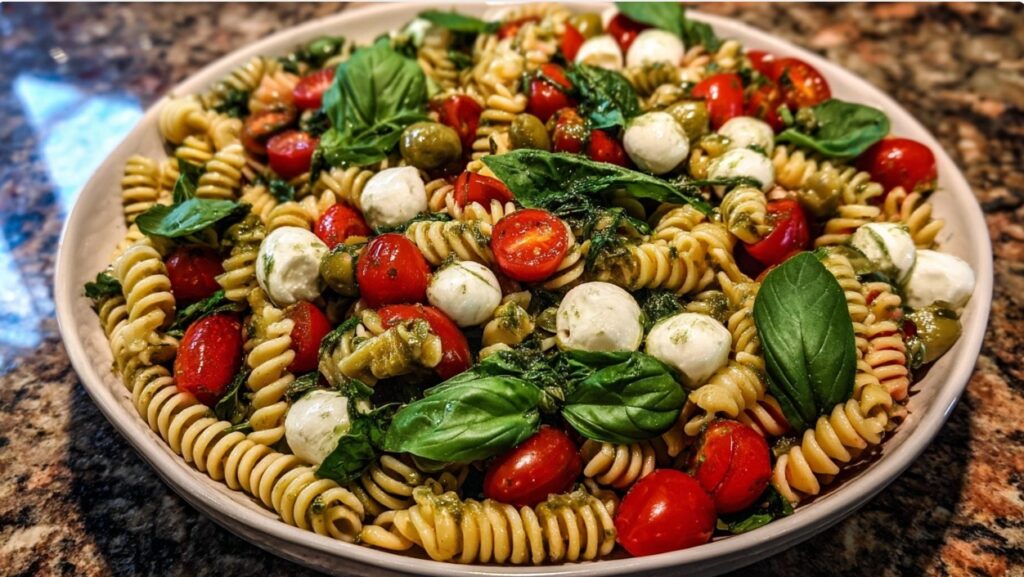
What mayonnaise actually does in pasta salad (and what your substitute needs to do)
When people say “I want to replace mayonnaise,” they can mean totally different things. Some want a different flavor. Some want a lighter texture. Some just don’t want that unmistakable “mayo” note. And some are simply trying to avoid ending up with a dry pile of pasta.
In pasta salad, mayonnaise does a few jobs at once:
- It binds everything together so every forkful feels “dressed.”
- It adds creaminess and that satisfying, filling feel.
- It brings acidity (a little tang) that wakes up the flavors.
- It boosts flavor: salt + mustard + fat = everything tastes louder.
So your substitute should cover at least two of those: creaminess + a good acid balance. If you use only oil, it can feel slick and kind of empty. If you use only yogurt, it can turn watery and too tangy. If you use only avocado, it’s thick—but sometimes a bit flat without a hit of acid.
Tip #1: don’t think “what replaces mayo,” think “what replaces what mayo does.” The best solution is often a combo: something creamy + something acidic + something aromatic.
I once made a big bowl of pasta salad for friends and went heavy on the mayo—“just to be safe.” An hour on the table and it turned dense and clumpy, and people took less even though the mix-ins were great. Next time I did a yogurt dressing with mustard and a splash of oil, and the bowl disappeared first. Not because it was “healthier,” but because it was simply easier to eat.
Yogurt and cultured dairy dressings: when you want it lighter, not dry
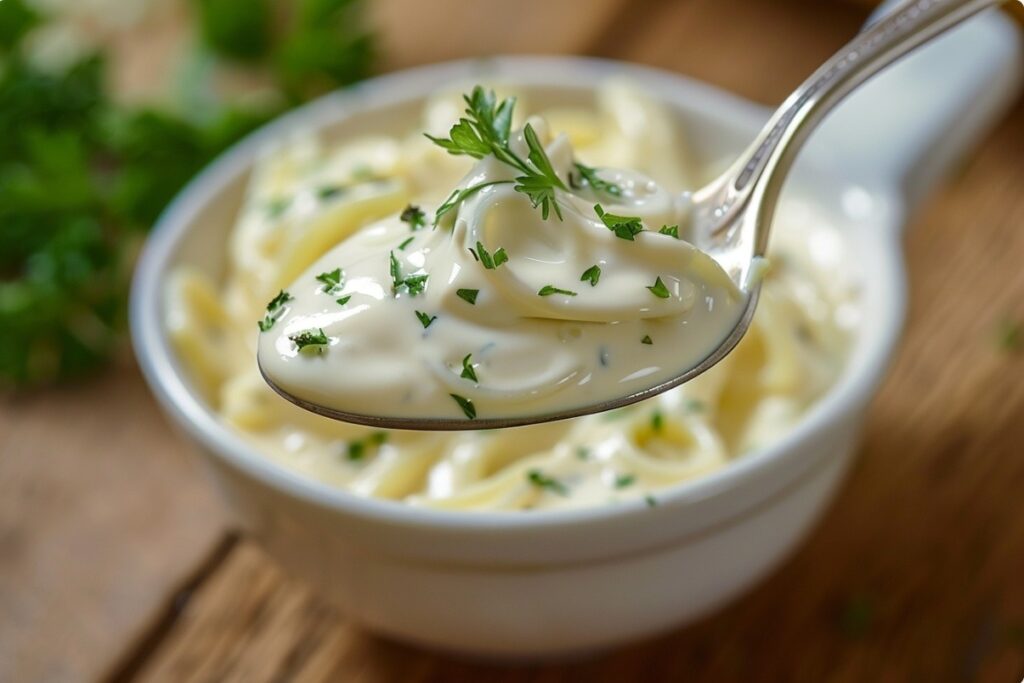
The easiest mayonnaise swap in pasta salad is thick, plain yogurt. It gives you creaminess and a pleasant tang. But there’s a catch: not every yogurt behaves the same way, and not every salad “likes” it.
Which yogurt actually works
I go for thick, unsweetened yogurt with no flavorings. If it’s runny, your salad will “weep” fast and you’ll end up with a little puddle at the bottom of the bowl. It’s especially noticeable if you’ve got cucumber, tomato, or corn in there—those already release moisture.
Tip #2: if your yogurt isn’t thick enough, let it drain in cheesecloth or a fine sieve for 10–15 minutes. Tiny effort, big payoff: the salad holds its shape instead of sliding around.
How to make yogurt feel more like mayo
Yogurt is often missing two things: depth and “body.” Body comes from a bit of fat (not necessarily a lot), and depth comes from mustard, garlic, lemon, vinegar, herbs, and spices.
- Yogurt + mustard — great with pasta salad that includes chicken, egg, and herbs.
- Yogurt + lemon juice + dill — perfect when there’s lots of cucumber, radish, or peas.
- Yogurt + grated garlic + a pinch of paprika — nice with sausage/ham-style add-ins or roasted vegetables.
I also like adding 1 teaspoon of oil per bowl—not to make it “greasy,” but to round out the flavor. It softens yogurt’s sharpness.
Tip: if you’re making pasta salad for tomorrow, keep a little dressing aside. Pasta soaks up sauce, and the next day it can taste drier. Add a spoonful and it’s back to life.
Real-life detail: on “lunchbox days” at my place, I intentionally make the yogurt dressing a bit thicker and salt it slightly more than feels right. In the fridge, the salt mellows out and everything tastes balanced. And yes, I oversalt sometimes—then a pinch of sugar or extra herbs fixes it. No drama.
Sour cream, kefir, ryazhanka: cozy, homemade flavor with zero fuss
Sour cream isn’t mayonnaise, but in pasta salad it can be even more reliable. It’s thicker, softer than yogurt, and gives that cozy “homemade” comfort a lot of people want from this kind of dish.
I don’t make it a religion: sometimes you want sour cream—so you use sour cream. It doesn’t have to be “right” or “wrong.” It just has to fit the job.
When sour cream is the best choice
- When your salad includes potatoes, eggs, or chicken—sour cream just makes sense.
- When you want a gentle flavor without sharp tang.
- When the salad will sit out and you don’t want the dressing to slide off quickly.
Kefir and ryazhanka are trickier because they’re thinner. But if you specifically want them, think “half sauce, half marinade”: a little kefir for lightness + something thick (sour cream/yogurt/soft cheese) for structure.
Tip #3: if you’re using sour cream, add a tiny splash of acid (lemon/vinegar) and a pinch of mustard. It keeps the flavor from feeling flat. And yes—sometimes that “cafeteria-style” vibe is exactly the mood. Honestly.
I remember making pasta salad for a kids’ party once. The parents asked for “no mayo.” We did sour cream with finely chopped dill and lemon. Kids ate it, adults ate it, and nobody felt like anything had been “substituted.” That’s my favorite kind of swap—the one you don’t have to explain.

Soft cheese and curd-based dressings: thick, gentle, and holds its shape
If your issue with mayonnaise isn’t the taste but the way the salad “falls apart” or turns watery, soft cheese can be the perfect fix. Think cream cheese, a spreadable farmer-style cheese, or even well-mashed homemade curd (as long as it’s not very grainy).
This kind of base gives you structure: the pasta gets coated, and the salad still looks neat even after a few hours.
What it tastes especially good with
- Roasted vegetables, sweet peppers, corn — the cheese highlights the sweetness.
- Tuna/salmon/chicken — it turns into a “spread-like” salad, just with pasta.
- Herbs, lemon zest, capers — if you want a more grown-up flavor.
There is one trap: soft cheese can be too thick and can weigh the salad down. That’s when a little liquid saves it—1 spoon of yogurt, a splash of pickle/olive brine (if it fits the flavor), or simply a bit of warm pasta water.
Tip #4: save about ½ cup of pasta cooking water. It’s starchy, and just 1–2 spoonfuls can make a dressing silkier without extra fat—and without that “you watered it down” feeling.
Quick story: once I rushed and made a cream-cheese dressing without thinning it. Tasty, but it ate heavy—every forkful felt like it had resistance. A splash of pasta water and a squeeze of lemon fixed it instantly. The texture went from “modeling clay” to a soft cream right in front of me.
Hummus, tahini, and bean spreads: filling, bold, and surprisingly perfect
If you want a swap that gives creaminess and that “I actually ate a proper meal” feeling—without mayo heaviness—hummus and other bean spreads are a lifesaver. They’re thick, flavorful, and they work in pasta salad way better than it sounds.
I love this on busy weekdays: open a tub of hummus and you’ve already got a base. From there it’s two minutes—add acid, a bit of water/oil, and spices.
How to turn hummus into a sauce, not a clump
Hummus is thick by nature. You need to loosen it up:
- add lemon juice or a little vinegar,
- stir in 1–3 spoonfuls of water (or pasta water),
- optionally add a drizzle of olive oil,
- mix until it’s about sour-cream consistency.
Tahini (sesame paste) has a strong personality: slightly bitter, super aromatic. In small amounts it tastes “fancy,” but it’s easy to overdo. I treat it like seasoning, not the main base.
Quick story: I once made pasta salad for a road trip and wanted something that wouldn’t spoil or turn to mush in a container. The hummus dressing held up perfectly—no leaking, no slippery pasta, and a nutty-lemony smell that was genuinely appetizing even cold.
It’s also great when your salad has lots of crunch—celery, cucumber, sweet pepper. A creamy bean base makes the contrast pop, and the whole thing feels more interesting.
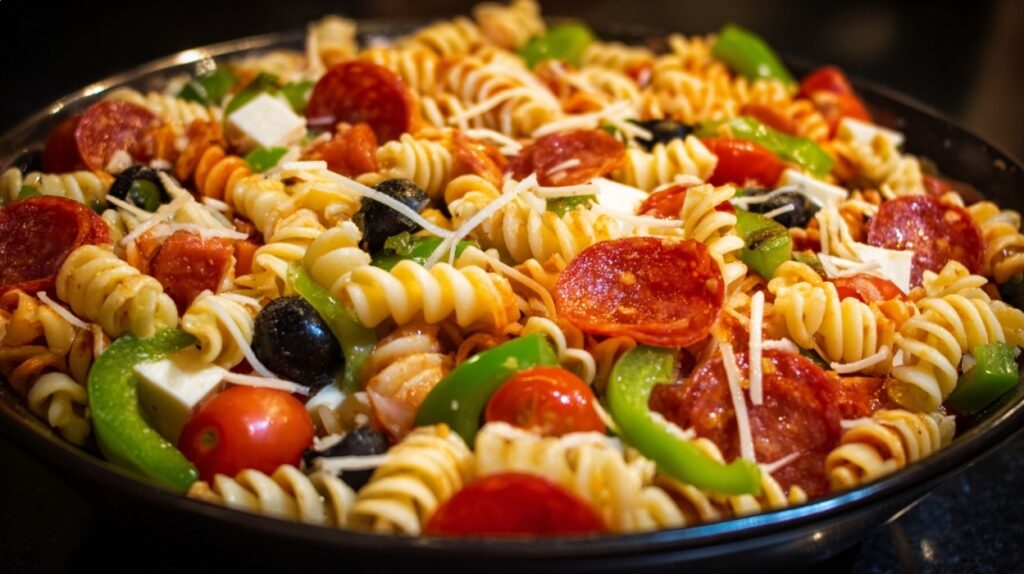
Avocado and vegetable purées: creaminess without that “mayo” vibe
Avocado is usually the first thing people mention when talking about replacing mayo. And yes, it really works—but not as “mash and done.” Avocado is about texture: it brings buttery smoothness and a gentle sweetness. But you absolutely need to add acid and salt, otherwise the salad tastes kind of muted.
How I use avocado in pasta salad
I mash it with a fork until creamy (not perfectly smooth—I like a few small bits), then add lemon or lime, salt, and pepper. If I have it, a little mustard or garlic goes in too. And I almost always add something crunchy to the salad itself: cucumber, radish, scallions.
Tip #5: avocado browns. If the salad needs to sit, mix the avocado with the acid first, then combine with the pasta. And cover the salad so the wrap/lid touches the surface—less air contact, less browning.
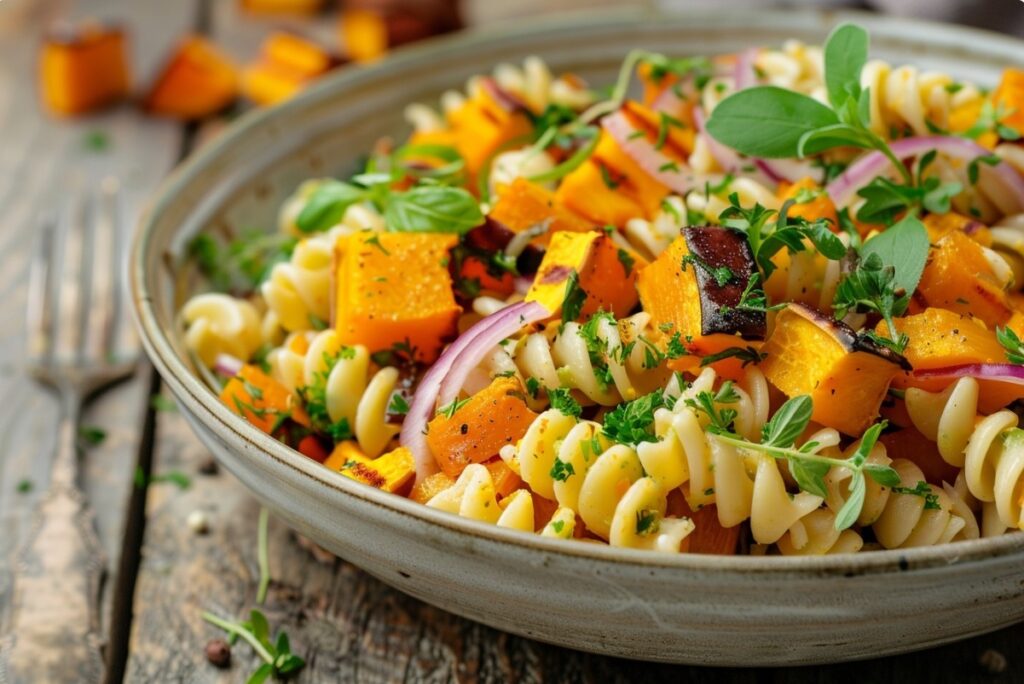
Vegetable purées are another underrated move. Roasted pumpkin, roasted peppers, even boiled carrots (blended with lemon and spices) can become a dressing base. It won’t taste “like mayo,” and that’s the point: the flavor turns more vegetable-forward and fresh.
I’ve done this when I had leftover roasted peppers from dinner. I blended them with a spoonful of yogurt, salt, and smoked paprika, and got a sauce that smelled sweet and smoky. Pasta salad with that kind of dressing gets eaten more slowly, with curiosity—people want to figure out what that flavor is.
Olive oil, pesto, vinaigrette: when you want shine, not a creamy coat
Not every pasta salad needs to be creamy. Sometimes the best “mayo substitute” is skipping the white dressing entirely. Oil with acid, pesto, or a simple vinaigrette makes the salad lighter, more aromatic, and less like a potluck classic.
One nuance, though: pasta likes sauce, and if the dressing is too thin, it’ll slide to the bottom. So it’s all about how you build it.
How to make an oil-based dressing stick to pasta
I make a quick emulsion: oil + acid + mustard (or honey/syrup if you want it softer) + salt. Shake it up and it’s no longer “just oil”—it turns into a sauce that actually coats.
Tip #6: dress the pasta while it’s still slightly warm. Not hot (you don’t want to wilt herbs or make veggies sad), but not fridge-cold either. Warm pasta absorbs the aroma of oil and acid better, and the salad tastes more pulled together.
Pesto is its own kind of magic. It brings fat, aroma, and “body” thanks to nuts and cheese. Thin it with a spoonful of yogurt or a splash of pasta water and you get a sauce that doesn’t feel sticky—but also doesn’t run away.
Quick story: I once brought a pesto-and-tomato pasta salad to work. People expected the mayo version and looked skeptical at first. Then they started asking why it tasted so fresh and didn’t get boring. Simple answer: no heavy creamy base, and you could actually taste the herbs.
Common mistakes: why the swap “doesn’t work” and the salad turns weird
I’ve seen plenty of situations where someone tries to replace mayo and then says, “Nope, not it.” Often the problem isn’t the ingredient—it’s a few small technical things. Here’s what happens most often.
Mistake 1: the dressing is too thin
Runny yogurt, kefir without thickening, too much lemon juice—and the pasta starts swimming. Fix: thicken the base (drain yogurt, add soft cheese/hummus) or use starchy pasta water to help the sauce bind.
Mistake 2: there’s not enough acid or salt
Avocado without lemon, sour cream without a booster, hummus without acid—and the flavor turns “cottony.” Don’t be afraid of small doses: a few drops of lemon, a pinch of salt, a little mustard often does more than another spoonful of dressing.
Mistake 3: the pasta is overcooked
Overcooked pasta + any dressing = mush. Then it feels like the sauce is to blame. In reality, pasta needs to hold its shape and have some bite. In a salad it’s critical because it will absorb moisture from the dressing and vegetables.
Mistake 4: you dressed the salad too early
Especially with cucumber and tomato. They release juice, the dressing thins out, the pasta absorbs too much—and an hour later it’s a different dish. If you’re prepping ahead, keep watery ingredients separate or add them at the last minute.
Mistake 5: you’re trying to make it exactly like mayo
Sometimes the best move is accepting it’ll be a different salad. That’s fine. There isn’t one perfect version for every situation—there’s your mood, your ingredients, and your day.
Tip: if you’re worried about ruining a whole bowl, mix the dressing separately and add only half at first. Toss, taste, then decide if you want more.
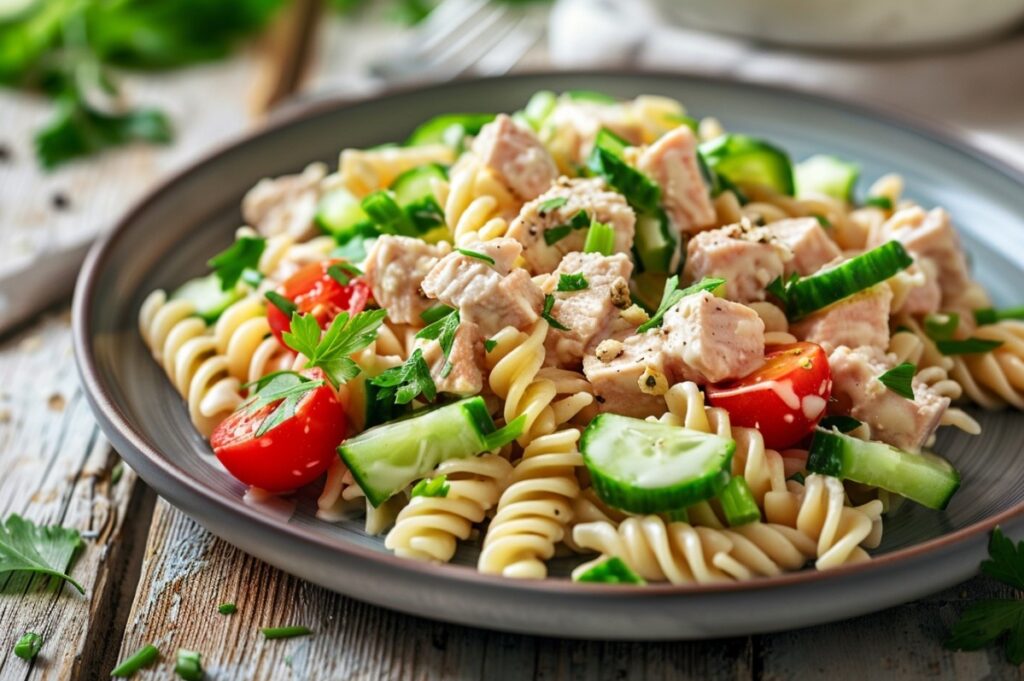
How to pick a substitute for your day: fast, kid-friendly, lunchbox, guests
I’m a fan of simple guidelines. Not rules, not “you must,” just little prompts that save brain space when your head is already full.
When you’re tired and you just need it to taste good
Go with something that doesn’t require a performance: thick yogurt or sour cream. Add salt, pepper, and one aromatic thing (dill/garlic/mustard). Done. This is the moment when “simple” beats “genius.”
When you’re cooking for kids
What I’ve noticed: kids often care more that it’s mild and creamy than that it’s “interesting.” Sour cream or soft cheese works well here, and go easy on the acid. More crunch (cucumber, sweet pepper) usually lands better than lots of spices.
When the salad is coming to work/on the road
Bet on stability: hummus, soft cheese, thick yogurt. Oil-based dressings are fine too, but make sure you emulsify them (mustard helps), and don’t add super juicy vegetables right away.
When guests are coming and you want a little “wow” without the effort
Pesto, a small amount of tahini, yogurt with lemon zest and herbs—quick, but it sounds special. Plus these dressings don’t smother the ingredients, and the salad looks lighter on the table.
Tip #7: keep “flavor boosters” in the fridge rather than ready-made sauces: mustard, lemons, capers/olives, herbs, garlic. With those, any yogurt/sour-cream base or hummus becomes a dressing in 30 seconds.
One more real-life thing: if you have mayonnaise at home and you actually want it—use it. Or mix it half-and-half with yogurt or sour cream. That’s not a “compromise,” it’s a normal kitchen move. The flavor stays familiar, the texture feels lighter, and the salad doesn’t get old as fast.
Replacing mayonnaise in pasta salad isn’t about crossing a food off the list. It’s about having a few options for different days: thick yogurt for lightness, sour cream for that cozy homemade taste, soft cheese for stable creaminess, hummus for a filling vibe, avocado for buttery softness, and oil-based dressings for a fresh, bright character.
So what’s your favorite kind of pasta salad—creamy and classic, or lighter with olive oil and herbs? And what do you reach for most often when you’re not feeling mayo?
If you like lighter, more varied pasta salad ideas, take a look at these pasta salad recipes. You’ll find plenty of Nudelsalat-style inspiration—from classic versions to modern no-mayo twists that are great for picnics or everyday lunches.
FAQ
Can you make pasta salad without mayonnaise?
Yes—pasta salad tastes great without mayonnaise. Instead, people often use yogurt, olive oil, mustard, or lemon juice. These dressings keep the salad lighter and highlight the natural flavor of the ingredients.
What’s the most common mayonnaise substitute in Nudelsalat?
The most popular swap is thick, plain yogurt. It has a creamy texture and pairs well with vegetables, pasta, and meat. In many Nudelsalat recipes, a yogurt dressing makes the salad taste fresher and lighter.
Can you use olive oil instead of mayonnaise?
Yes. Olive oil is one of the simplest alternatives. It’s often mixed with lemon juice, mustard, or vinegar. This kind of dressing makes pasta salad lighter and gives it a Mediterranean feel.
Is avocado a good substitute for mayonnaise?
Avocado can be a great creamy base for a dressing. Mash it with lemon juice and spices and you’ll get a smooth sauce for pasta salad with a mild flavor and healthy fats.
What other sauces work well?
Mustard-based dressings, pesto, and sour-cream dressings all work well in pasta salad. You can also mix yogurt with herbs, garlic, or lemon juice. These options are common in European-style Nudelsalat recipes.
Is pasta salad without mayonnaise good for a picnic?
Yes—salads with lighter dressings are often even better for picnics. They don’t feel as heavy and tend to stay fresher. Plus, olive oil or yogurt won’t make the salad overly greasy.
How do you make the dressing creamier without mayonnaise?
To keep pasta salad creamy, mix yogurt with a spoonful of sour cream or add a bit of avocado. Mustard also helps: it thickens the dressing slightly and adds aroma.
Does skipping mayonnaise change the flavor of the salad?
Often it improves it: pasta salad without mayonnaise can taste fresher and lighter. The other ingredients stand out more, and the dressing supports them instead of overpowering them.