10 Most Popular Pasta Salads in Germany

Some dishes don’t look “special-occasion” at all, yet they quietly hold everyday life together. In Germany, pasta salads are exactly that kind of food. They go into lunchboxes, land on birthday tables, get brought along to a get-together as “something easy,” and—maybe best of all—are made ahead so tomorrow feels simpler.
I used to find the whole idea odd: pasta is supposed to be warm—so why turn it into a cold salad? Then I watched how it actually works in real life. Evening kitchen chaos: someone’s chopping cornichons, someone’s cracking open a can of sweetcorn, a pot of pasta is still steaming on the stove—and 15 minutes later there’s a bowl that will “feed everyone” and sit in the fridge overnight without taking it personally.
The problem is that “pasta salad” is way too broad. For one person it’s mayo and bologna-style sausage; for another it’s yogurt, herbs, and cucumber; for someone else it’s oil and vinegar, more like a potato salad dressing. If you’re trying to understand German habits through food, this is where it gets interesting: one format, wildly different approaches.
Below are ten of the most popular German-style pasta salads—not as strict “recipes,” but as little cultural snapshots: what usually goes in, where people eat them, why they exist, and how differently people feel about them. I’ll add a few kitchen observations, common mistakes, and some practical tricks so pasta salad stops feeling like a mystery.
Why Germans love pasta salads: it’s not a trend, it’s everyday life
Germany’s affection for “salads that can live in the fridge” isn’t a quirky fad. It’s simple logic: a lot of everyday food needs to be convenient. Something you can make ahead, pack up, share, and not worry about it turning sad and watery an hour later.
Pasta is perfect for that. It’s inexpensive, mild, it soaks up dressing, and it holds its shape. It also makes a salad filling. In a country where a sandwich-style meal (think Brotzeit) can absolutely count as lunch, “salad as a side” often really means “salad as the second main thing on the plate.”
There’s a historical layer too, without the long timeline: post-war thrift, the rise of canned goods, and supermarkets becoming the norm all nudged home cooking toward mixing simple, shelf-stable ingredients. Pasta salads get along beautifully with things that keep: pickles, peas, sweetcorn, sausage, cheese, mayonnaise, mustard, vinegar. Picture an average family fridge and you can basically see the bowl already.
And then there’s the crowd factor. Germany has a lot of “food for groups”: office spreads, kids’ parties, Vereinsfest (club/community events), barbecues. Pasta salad is a kind of universal currency—easy to bring, familiar to most people, and it doesn’t need reheating.
Micro-story from the kitchen
I remember one house party where the host put out two bowls of pasta salad. One was the “classic” mayo-and-sausage version; the other was lighter, with yogurt and herbs. The best part? Nobody argued about which one was “right.” People just went for the one that tasted like their childhood. That’s how food often works in Germany: it’s about memory, not a single official standard.
Tip: if you want to understand German pasta salad, don’t start with the ingredients—start with the situation it’s meant for: work lunch, a barbecue, bringing something to friends, or “so there’s food tomorrow.”
The base that decides everything: pasta shape, chopping, and temperature
With pasta salads, the small stuff matters. Especially three things: which pasta, how it’s cooked, and how quickly it’s dressed.
In Germany, it’s usually short pasta: fusilli, Hörnchen (little elbow “horns”), penne, sometimes farfalle. The reason is practical: it’s easy to eat from a bowl with a fork, it grabs onto dressing, and mixed with diced veg and sausage it looks neat and “tidy.”
Cook it so it won’t turn into mush after a night in the fridge. What feels al dente on a hot plate can become cottony in a cold salad by the next day. So people often cook it just a touch firmer than they would for a warm dish. Then comes the very un-Italian move: rinsing under cold water. Yes, it breaks the rules—but it serves a different goal here. Rinsing stops the cooking and washes off excess starch so the salad doesn’t clump.
Chopping is another quiet detail. In a lot of German pasta salads, everything is cut small and evenly: cubes of cheese, sausage, pickles. It’s not chef-y aesthetics—it’s fairness. Every spoonful should make sense. When the pieces are all over the place, someone ends up fishing out the big sausage chunks while someone else gets mostly pasta.
Common mistakes that ruin even a good idea
- Overcooked pasta. It softens even more in the fridge, and the salad loses that pleasant bite.
- Dressing it “perfectly” right away. Pasta keeps absorbing sauce. If it looks ideal immediately, it’ll often be dry an hour later.
- Warm pasta + mayonnaise. Not a scare story—just texture. Mayo can split a little, turn oily, and the salad feels heavy.
- Too much sweetness (sweetcorn + sweet peas + a sweet dressing). People do it in Germany too, but it’s easy to throw the balance off.
Tip: use a “two-step dressing.” First, toss the pasta with a little oil/marinade or part of the sauce, mix, and chill. Right before serving, add the rest—juicy, not soggy.
The mayo classic: “Nudelsalat” for parties and big bowls
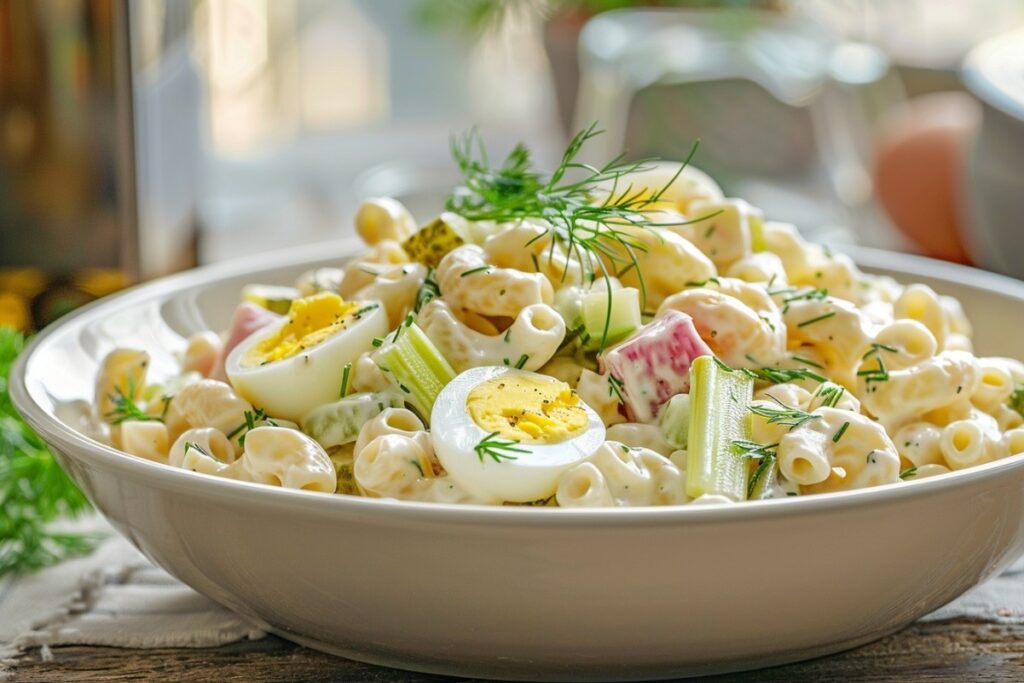
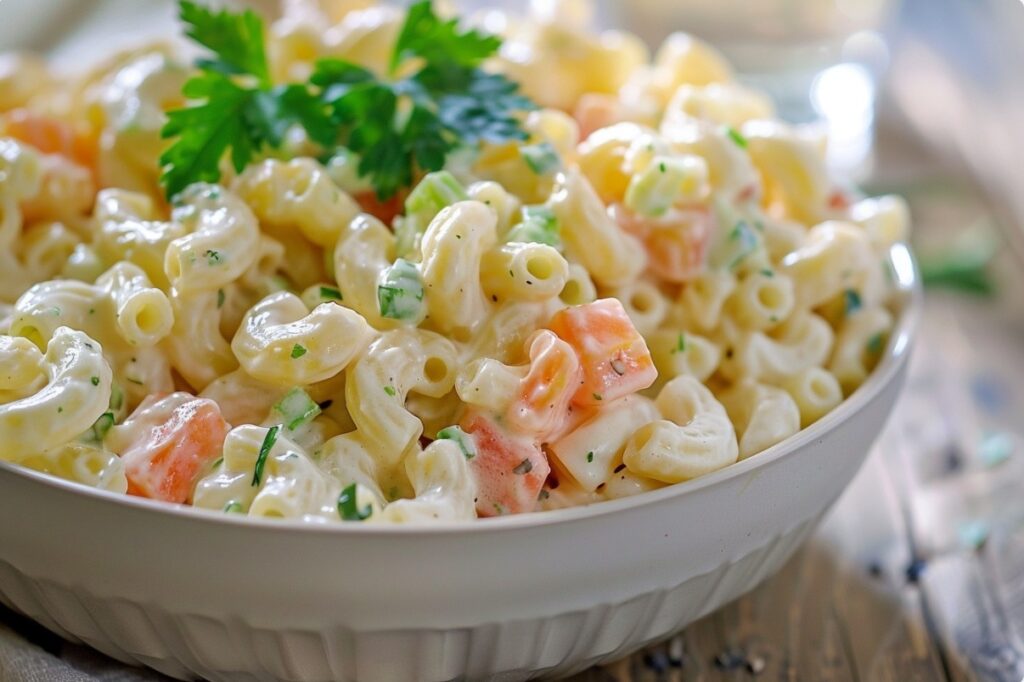
If someone in Germany says “Nudelsalat” with no extra details, many people picture the classic mayonnaise-based version. It’s thick, filling, holds its shape in a mound, smells like pickles and a faint smoky note from sausage. It’s the bowl that gets parked in the middle of the table next to bread rolls, sausages, meatballs, roast chicken—and somehow disappears first.
Its superpower is predictability. Kids eat it, adults don’t argue about it, and it travels well: home to the park, kitchen to the office, apartment to a weekend place.
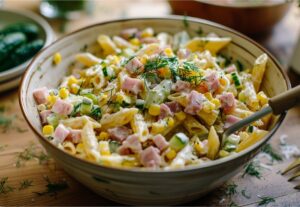
A typical “German home” lineup looks like this: short pasta, mayonnaise or a mayo-style dressing, pickles, hard-boiled eggs, peas, sometimes sweetcorn, cooked ham or Lyoner/Extrawurst (a mild bologna-style sausage), and sometimes apple for freshness. Not always all at once, but that’s the general logic.
Where it lives culturally
This is “event food.” It shows up at kids’ birthdays, family gatherings, summer picnics—and especially barbecues. A German grill isn’t only about meat; it’s about the table next to it: bread, sauces, salads, something pickled. Mayo pasta salad works as the soft, comforting backdrop to anything hot off the grill.
Micro-story: the salad you’re “supposed to let sit”
I’ve heard the phrase “It needs to sit” more times than I can count. And it’s not just ritual. In a mayo-based salad, the flavor changes over a few hours: pickles give up their tang, pasta drinks in the dressing, sausage adds a salty edge. Yesterday’s bowl is often better than today’s—assuming it didn’t dry out.
Tip: if a mayo pasta salad tastes a bit flat, don’t rush to add more salt. A teaspoon of pickle brine or a little mustard often gives it depth.
Southern vibes: “Italienischer Nudelsalat” with oil, vinegar, and an antipasti mood
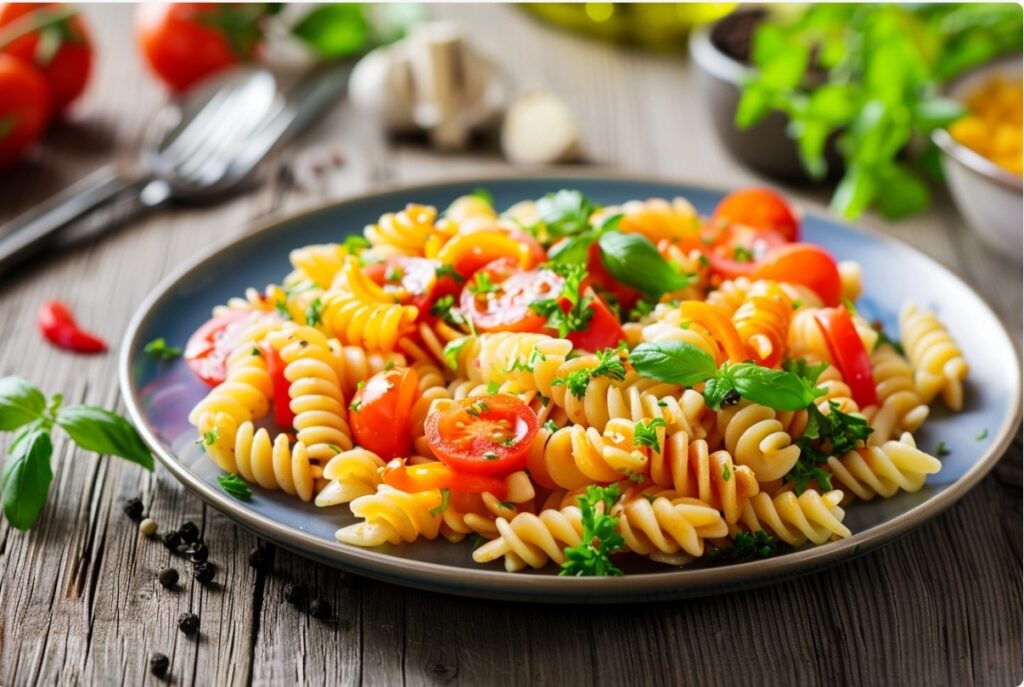
The second big camp is “Italian” pasta salad, German-style. It’s not trying to be authentic Italian cuisine, and that honesty is part of the charm. Think Mediterranean mood: olive oil, vinegar or balsamic, sun-dried tomatoes, olives, arugula, mozzarella or another mild cheese, sometimes tuna. Cherry tomatoes, sweet bell pepper, and jarred artichokes show up a lot too.
It’s lighter and brighter, with a salty-tangy kick. The aroma leans herby and garlicky with a little vinegar edge. Texture-wise it feels more like a “real salad”: lots of separate bits, not everything glued together by a creamy sauce.
Why did it get so popular? Because Germany has long had this idea of “holidaying in the south.” Italy, Croatia, Greece—those aren’t just destinations, they’re flavor memories. You come home and want something that smells like summer, even if it’s raining outside.
A comparison without judgment: “mayo” vs “oil”
Mayo salad is about softness and fullness—it’s like a blanket. The “Italian” one is about acidity and freshness—it wakes you up. Neither is better. One is more “I want to be properly full,” the other is “I want to eat well and still function afterward.”
Tip: salt behaves differently in oil-based salads. Season gradually, then let it sit for 10–15 minutes—the acid and oil open up the flavors, and you’re less likely to oversalt.
“Schwäbischer Nudelsalat”: when mayo meets vinegar
Germany isn’t one single cuisine. Regional habits show up even in something as “simple” as pasta salad. In Swabia and the southwest, people often love dressings with vinegar, mustard, and broth—you see it in potato salads too. Pasta salads sometimes follow that same mixed approach: not pure mayo, but not pure oil either.
This kind of salad can have a creamy base with a noticeable tang, sometimes with a splash of broth or pickle brine. It’s not as heavy as the classic mayo version, but not as “salad-y” as the Mediterranean one. I like it because the flavor feels sharper, more grown-up.
Small details matter here: a bit of onion (sometimes briefly blanched), cornichons, mustard, maybe pieces of sausage or ham, herbs. And above all—getting the acid/salt balance right.
Micro-story: how one ingredient changes everything
I once tried a version where the dressing included just a few spoonfuls of warm broth. The whole salad changed: the aroma lifted, the pasta felt like it “woke up,” and the acidity stopped feeling harsh. It sounds tiny, but that’s home cooking—less about technique, more about small decisions.
Tip: if your dressing has vinegar/mustard, give the salad 20–30 minutes before serving. At first it can taste sharp, then it settles and comes together.
“Wurstsalat mit Nudeln”: hearty, beer-table energy and zero shame simplicity
There’s a very German love for salads that don’t even pretend to be “light.” Wurstsalat—sausage salad—is served in many regions at beer halls with onion, vinegar, and oil, sometimes with cheese. At home or for gatherings, it’s easy to “stretch” it with pasta, and you get a seriously filling version.
This one is pure practicality: sausage is ready to eat; pasta is quick; pickles or onion bring the attitude. The dressing is usually vinegar-and-oil, sometimes with mustard. The result is punchy, salty, with that onion crunch.
Culturally it reads like a “guys’ table” not because women don’t eat it, but because you often see it where there’s beer, a group, conversation, and simple plates. It’s not about finesse. It’s about good flavor without spending half the day in the kitchen.
The mistake that makes it feel heavy
The most common issue is too much fat and not enough acidity. If the sausage is soft and fatty and the dressing is also “round,” it can feel sticky on the palate. That’s where vinegar, pickle brine, or even a tiny pinch of sugar (carefully) can bring it back into balance.
“Thunfisch-Nudelsalat”: the German logic of “open a can and you’re basically done”
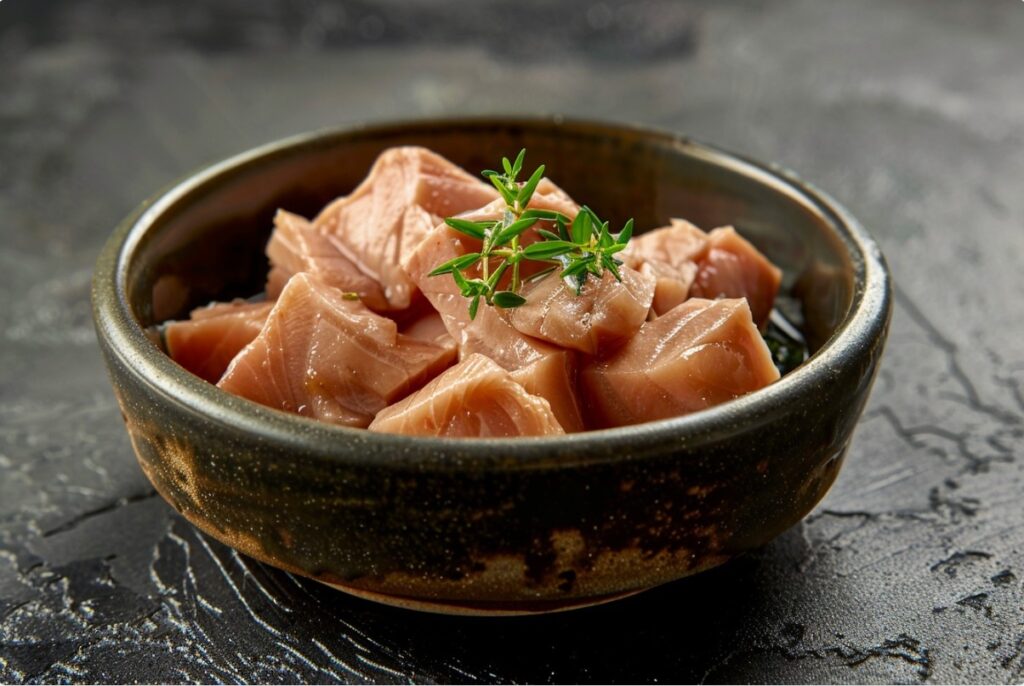
Canned tuna is one of those ingredients that genuinely saves weekdays in Germany. It’s affordable, keeps forever, adds protein, and helps you make something that feels like “real food” with minimal effort (pasta aside, of course).
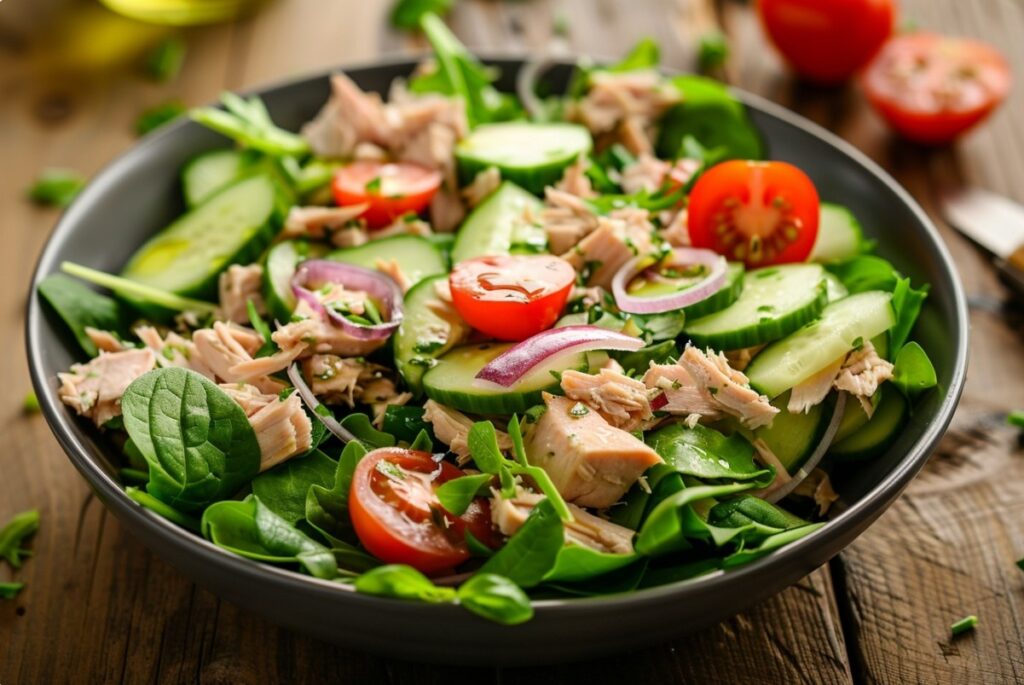
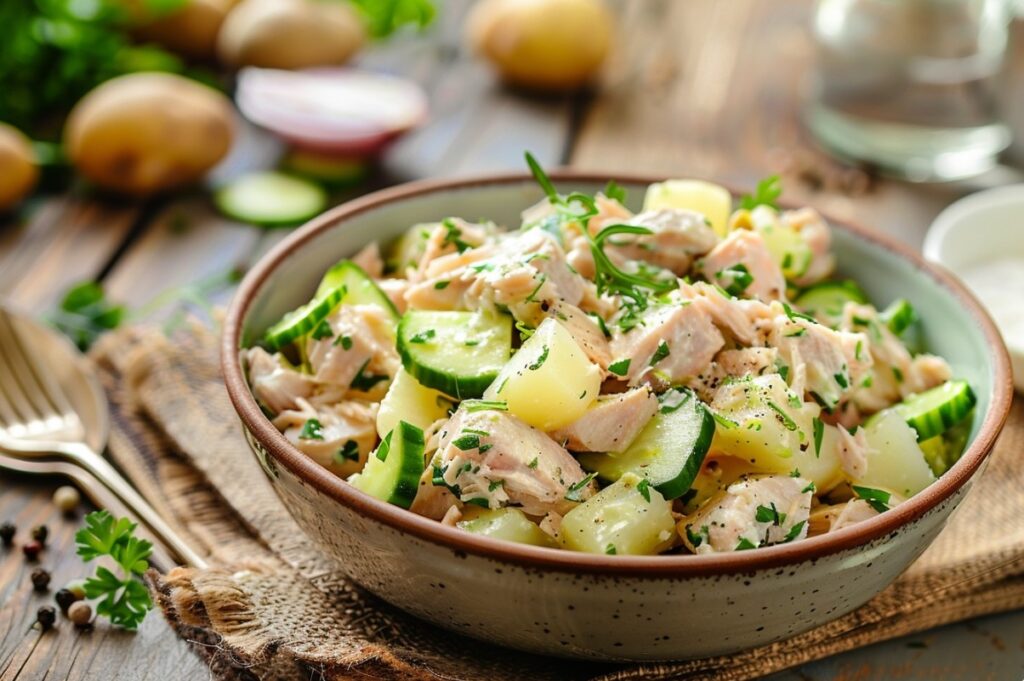
Thunfisch-Nudelsalat shows up when speed matters: student kitchens, office lunches, that post-work evening when you can’t be bothered. It might be mayo-based, yogurt-based, or oil-based—depends on the household. Alongside tuna you’ll often see sweetcorn, peas, onion, cucumber, sometimes apple or celery for crunch. Some people add capers or lemon juice, which makes it feel more “sea-ish.”
I like how the aroma behaves here: you open the can and there’s that ocean note, but once it’s mixed with pasta and a bit of acidity it softens. With the right dressing, it doesn’t taste “fishy”—just rich and savory.
Micro-story: about the smell that scares people
Once a friend told me, “I don’t bring tuna salad to work because everyone will smell it.” Fair. But often the issue isn’t tuna—it’s lack of balance. Add a little acid (lemon/vinegar), something crunchy (cucumber/onion), and herbs, and the smell becomes part of the flavor instead of an announcement to the whole office.
Tip: if you’re making tuna pasta salad ahead, hold back some of the dressing and add it right before serving. Otherwise the pasta “eats” the sauce and the tuna can feel drier.
“Hawaii” vibes: pasta salad with pineapple, ham, and cheese
Yes—Germany loves “Hawaii,” and not just on pizza. There’s a whole category of home cooking that pairs ham, cheese, and pineapple. For some people it’s pure 80s/90s nostalgia; for others it’s simply that sweet-salty comfort combo.
That approach lives on in pasta salad too: pasta, ham, cheese (often a firm cheese cut into cubes), canned pineapple, sometimes sweetcorn, sometimes a little curry powder in the dressing. The dressing is usually creamy: mayonnaise, or yogurt mixed with mayo. The flavor is gentle, slightly sweet, very comforting.
This one often appears on kids’ tables or anywhere people want something with no heat and no sharp acidity. It’s not trying to be “fine dining.” It’s about the simple joy of a familiar combination.
Where it’s easy to overdo it
With pineapple, the key is not turning the whole thing into dessert. Add sweetcorn and a sweet dressing and—yep, balance gone. A pinch of salt, a little pepper, and something neutral/fresh on the side (cucumber or celery, for example) can bring it back to “food” instead of “fruit salad with ham.” Not a rule—just a rescue plan.
“Joghurtsauce” and lighter versions: when the salad should feel fresh, not heavy
A more modern direction is lighter pasta salads built on yogurt, sour cream-style sauces, or mixes of the two. In Germany they’re often framed as a “summer” option: more cucumber and herbs, sometimes radishes, spring onion, lemon juice. Meat is either skipped or swapped for something lighter—chicken, turkey, or just cheese.
This isn’t always about dieting. Often it’s about how it feels. In hot weather, a mayo salad can seem too dense. A yogurt-based one tastes cool and tangy, with that fresh herb aroma. It hits differently: not “I need to be stuffed,” but “I want to eat and keep going.”
Texture is everything here: cucumber crunch, juiciness, light creaminess. When it’s done well, it’s almost like a cold pasta sauce—just in salad form.
Mistake: watery salad
Yogurt-based salads often go watery because of cucumbers and other juicy veg. The home-kitchen fix is simple: lightly salt the cucumber, let it sit, then squeeze it out. Or add it closer to serving time if the salad needs to sit overnight.
Tip: in yogurt dressings, a small spoonful of mustard or a bit of lemon zest makes the flavor feel more “adult” and layered, even with very basic ingredients.
Colorful “party pasta salads”: corn, peas, bell pepper, and the “make sure there’s enough” mindset
There’s another very common type: the “party” pasta salad where the main goal is big, colorful, and familiar. It can be mayo-based or mixed, but it almost always includes bright components: sweetcorn, peas, bell pepper, carrot, sometimes cherry tomatoes, sometimes cheese. It’s built from ingredients you can find in supermarkets year-round.
It looks festive without any garnish: yellow, green, red, white. On a table, that bowl is the backup plan—if someone doesn’t eat meat, if kids get picky, if someone shows up late. It doesn’t mind being eaten with a spoon from a plastic plate.
It reminds me of a very German kind of organization. Not “everything must be perfect,” more like “everything should be predictable.” A colorful pasta salad is predictable comfort.
How it often gets overloaded
People try to cram in everything they have: sausage, eggs, cheese, corn, peas, pickles, apple… and suddenly it’s not a salad, it’s a pantry in a bowl. At that point the flavor gets muddy and the whole thing relies on salt and mayonnaise to be “tasty.”
If you think of this salad like a conversation, it needs one main voice and a few supporting ones. For example: pasta + creamy dressing + one protein + two vegetables + one acidic element. That’s already enough to be filling and interesting.
Tip: to keep a “party” pasta salad from tasting bland, add one bold element: cornichons, a splash of pickle brine, mustard, or a pinch of smoked paprika. One—not five.
How these salads fit modern life: supermarket tubs, office potlucks, and home compromises
Today in Germany, pasta salads live in two worlds at once. One is homemade: “I’ll make it tonight so I don’t have to think tomorrow.” The other is ready-made: supermarkets sell plastic tubs of Nudelsalat next to potato salad and meatballs. That’s part of the culture too—people are busy, not everyone wants to dice everything into tiny cubes, and that’s fine.
What’s more interesting is this: even when people buy a ready-made salad, they often “finish” it at home. Add herbs, extra pickles, a bit more salt or acidity. It feels very human—like telling the dish, “I’ll take your base, but I’m going to make you mine.”
Office potlucks (where everyone brings something) play a big role too. Pasta salad is king there because it:
a) doesn’t need a stove, b) is easy to share, c) holds up well, d) feels familiar to most people. And there’s another cultural detail: people often keep it “neutral” so nobody gets scared off. Less garlic, less heat, fewer “weird” ingredients. That’s not cowardice—it’s consideration.
What to do if your salad is dry or doesn’t come together
Dryness is the most common issue. Pasta absorbs dressing, especially if the salad sits overnight. The fix is simple: don’t pour it all in at once—keep extra dressing and add it before serving. If you don’t have any dressing left, pickle brine, a bit of yogurt, a spoonful of mayo, or a little oil plus acid (depending on the salad style) will save it. Add gradually and mix, so you don’t turn it into soup.
If the salad tastes like “everything is there but it’s not exciting,” it usually needs one of three things: acidity, salt, or aroma. Aroma can be herbs, pepper, mustard, a bit of onion, sometimes a smoky note. Acidity is vinegar, lemon, pickle brine. Salt is obvious—but remember sausage/cheese/pickles already bring plenty.
A few more practical moves that help me
- Cool the pasta properly: for mayo- or yogurt-based salads, only mix with fully cooled pasta for a cleaner texture.
- Keep at least one crunchy element: cucumber, bell pepper, celery, onion—without crunch, the salad turns one-note.
- Don’t make every piece the same size: if the sausage is cubed, chop the pickles a bit smaller; if the pasta is large, keep the add-ins smaller. It eats better.
- Give it time: most pasta salads benefit from resting. But if you’re using lots of fresh veg, add some of it closer to serving.
Tasty pasta salads in Germany aren’t about “ten correct recipes.” They’re ten ways of living. Sometimes it’s about being full and tasting something familiar from childhood; sometimes it’s about lightness and herbs; sometimes it’s the convenience of “open a can and mix”; sometimes it’s a group around the grill and a big bowl you can put on the table without ceremony.
I love that these salads have very little pretension and a lot of real life in them: families, workdays, casual celebrations, compromises, and small clever tricks. Which pasta salad tastes like home to you—mayo-based, oil-based, tuna, pineapple? And what do you add that makes people raise an eyebrow… and then ask for seconds?
Why is pasta salad so common in Germany?
Because it’s practical: it can be made ahead, travels well, feeds a crowd, and doesn’t need reheating—perfect for barbecues, birthdays, and office potlucks.
What pasta shape works best for German pasta salad?
Short shapes like fusilli, Hörnchen (elbow “horns”), penne, or farfalle. They’re easy to eat from a bowl and hold onto dressing.
Should you rinse pasta for pasta salad?
For German-style pasta salad, many people do rinse it under cold water to stop cooking and remove excess starch so it doesn’t clump—especially when the salad will be chilled.
How do you keep pasta salad from drying out overnight?
Hold back some dressing and add it right before serving. Pasta absorbs sauce as it sits, so a two-step dressing keeps it juicy without turning soggy.