New Year’s Sweets for Kids Without a ‘Sugar Shock’

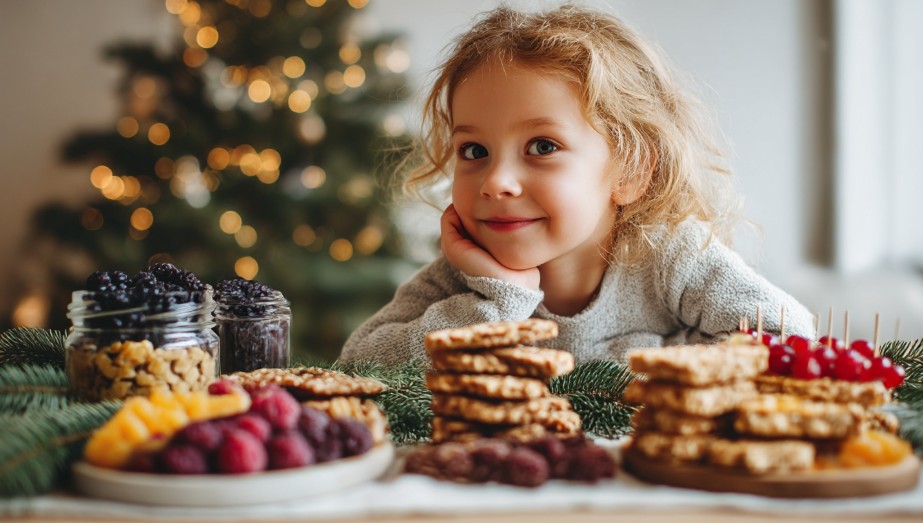
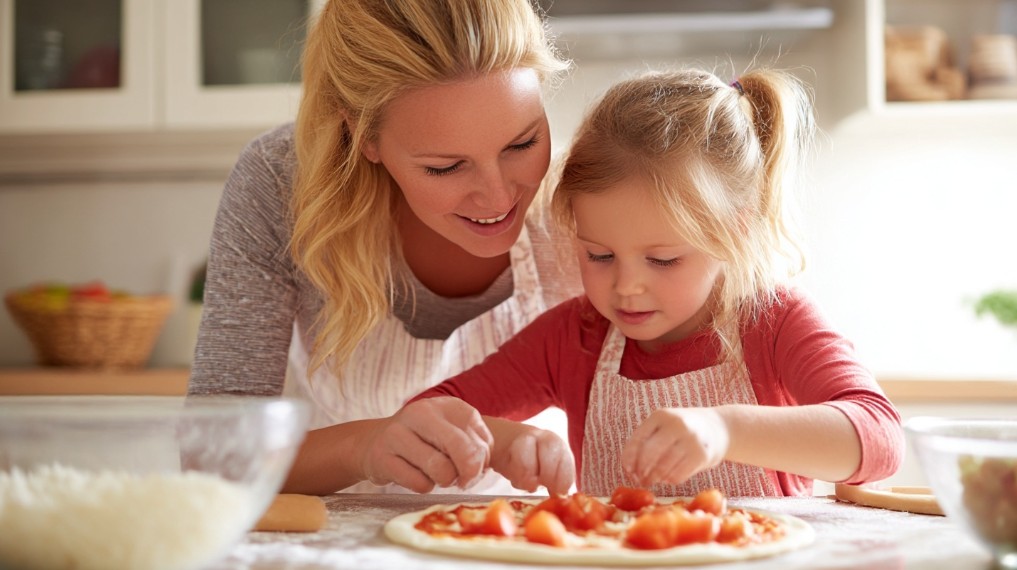
New Year’s cuisine is always a bit more noise, a few more hands at the table, and much more sparkle in the eyes. Especially when children are around. You want something festive, but you don’t want the little ones to be bouncing off the walls from sugar or falling asleep in tears. These shared moments are not about perfect desserts, but about feeling together: flour-dusted socks, sticky fingers, and laughter that clings to the apron. This is where the true New Year’s magic lies, and it’s what gets remembered—not the gloss, but the small shared rituals.
I’ve often caught myself thinking that children’s sweets are not so much about the sugar itself as they are about the anticipation of the holiday. But when you see how every child at school receives a bag with five lollipops, a chocolate bar, and something else ‘for fun,’ you realize: there is another way. You can make sweets a part of a shared activity, not a competition of who has the highest glucose level. That’s why I love involving children in making New Year’s treats—without fear of mess or extra crumbs.
In this article, I want to share how to make festive sweets a real adventure for children. Not only delicious but also leaving them with good moods, warm memories, and a bit of confidence in their abilities. And it’s entirely possible—even if you’re only three years old and the spoon is bigger than your hand.

Why ‘Sweet’ Is Not the Enemy If You Cook Together
Many people think that sweets and children are always a risk. But I’ve seen something entirely different: when a child is involved in the process, they perceive taste, quantity, and the very meaning of ‘treats’ differently. I’ve often noticed: if you give kids the chance to mix something themselves, decorate, add berries or fruits, they don’t crave ‘more sugar.’ For them, the main thing is to be part of the event, not just consumers.
Once, my niece (she was five at the time) and I were making fruit skewers. At first, she dreamed of ‘lots of chocolate,’ but then she got so carried away stringing kiwi and bananas that the chocolate was almost untouched. She decided herself: ‘I want another berry!’ And it worked better than any persuasion or prohibition.
When a child sees how something bright and tasty comes from simple ingredients, they begin to appreciate the process and the result. It’s not about control, but about involvement. Yes, a bit more mess. But in exchange—interest, trust, and genuine laughter.
Age and Capabilities: Who Can Do What in the Kitchen
Every age has its discoveries and limitations. You shouldn’t expect a three-year-old to be as careful as a jeweler. But don’t underestimate how much joy even a simple action can bring. I focus on these capabilities: Here’s about: Christmas dishes that can be cooked together with children
3–4 years: First Touches to the Kitchen
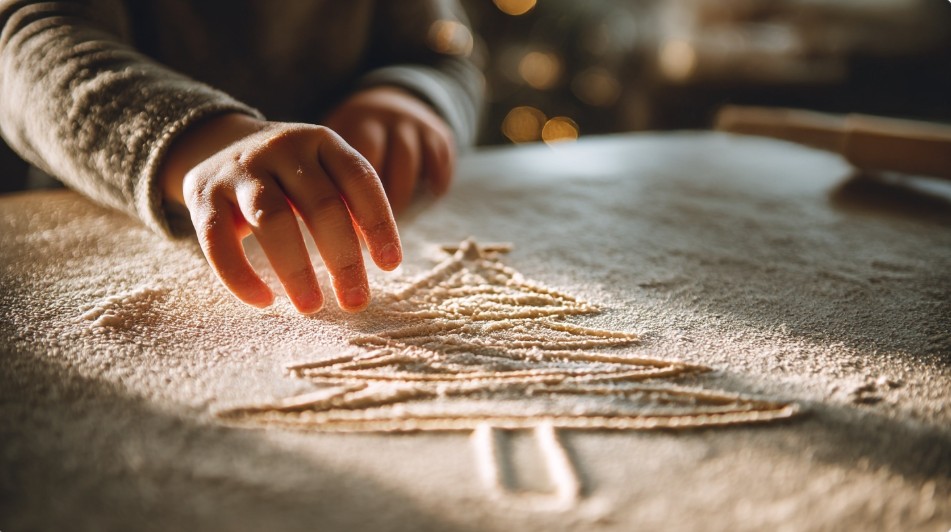
- Washing and drying fruits
- Placing berries on a plate
- Pouring water into a bowl
- Setting paper forms for cupcakes
- Decorating the finished dish (sprinkles, fruit pieces)
The main thing here is not to rush. I always give simple tasks that are sure to succeed. The child immediately sees the result: ‘I did it!’ This boosts confidence. A micro-story: my son was proud for a week at the age of three that he ‘arranged raspberries’ in the dessert himself.
5–7 years: Discovering and Experimenting
- Cutting soft fruits with a plastic knife
- Mixing ingredients with a spoon
- Shaping balls from dough or truffle mass
- Placing fillings inside (nuts, dried fruits)
- Threading pieces onto skewers or sticks
At this age, children already come up with ideas themselves. My goddaughter once ‘invented’ a new flavor—dried apricots with pistachios in foil. Not very convenient to eat, but the excitement was genuine.
8–12 years: Almost Like Adults
- Cutting hard fruits under supervision
- Mixing ingredients for the filling themselves
- Using a mixer (with supervision)
- Measuring ingredients on scales
- Decorating the dessert as they wish
The main thing is not to interfere when you see the child is managing. At this age, they want not just to help, but to be ‘the chef.’ I only suggest and back up if needed.
Safety Without Fear: How Not to Ruin the Mood and Avoid Injuries
My golden formula: ‘calm safety.’ Don’t scare, just agree and show what and how can be done. The child sees: you trust them—and this gives them courage.
- Sharp knives—only for older kids and always together
- Hot items—explain, show, but don’t dramatize
- Dishes—choose non-slip, lightweight, non-glass
- Water on the floor—don’t scold, but wipe it together
- Sweets—don’t ‘steal,’ but openly taste, discuss the flavor
Once, a whole bowl of dough spilled in my kitchen. It was a pity, but we gathered it together—and turned it into a joke. It’s important for children to know: a mistake is not a catastrophe. It’s just another part of the adventure.
A child who isn’t afraid to make mistakes experiments more boldly and enjoys the kitchen more.
Life hack: always keep wet wipes and a spare apron handy. It’s not about cleanliness, but about freedom of movement.
How to Assemble a ‘New Year’s Sweet Set’ Without a Sugar Shock
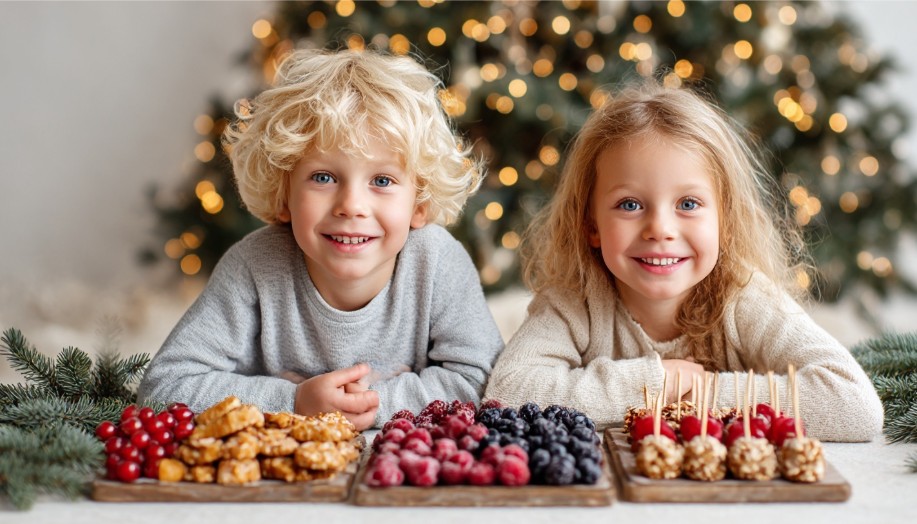
Believe it or not, children are delighted even with the simplest things—if they are brightly presented and made together. It’s not necessary to fill bags with candies to make it ‘festive.’ You can create a special festive menu: a set of small treats that don’t cause addiction and don’t spoil the mood.
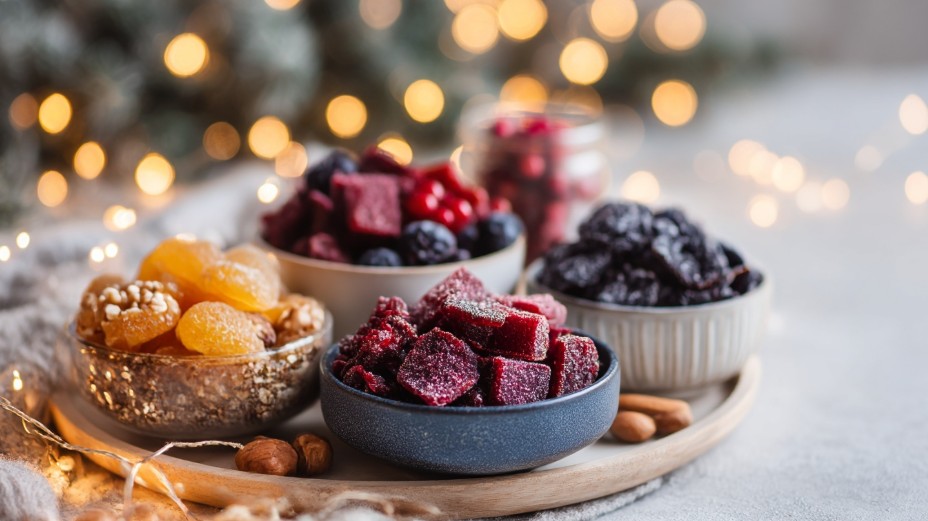
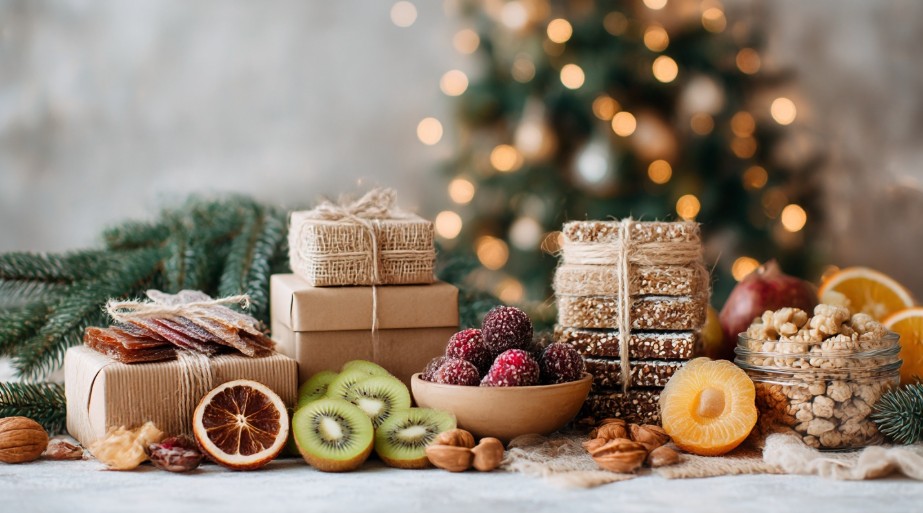
- Fruit chips (apple, pear, kiwi)—oven-dried, crunchy, and sweet without added sugar
- Nuts in cocoa or cinnamon (for children 5+ and without allergies)
- Homemade berry pastilles (puree + oven, minimal sugar)
- Dried fruit balls (dates, dried apricots, seeds)
- Mini skewers with grapes, apple, banana
- Tiny portions of homemade jelly on agar, not gelatin
- Cubes of homemade apple marshmallow (a bit of sugar, but no more than in store-bought)
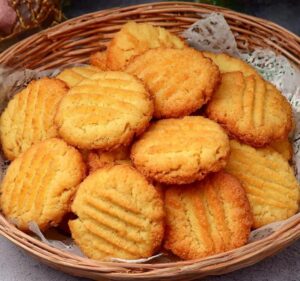
- Oatmeal and berry cookies (minimal sugar, sweetness from fruits)
It’s not necessary to do everything yourself. Sometimes it’s enough to buy a quality product and present it nicely. A small life hack: pack sweets in transparent bags with stickers or tie with a ribbon—children love ‘surprises’ even in simple things.
The main thing is not to turn the set into a ‘sugar bomb.’ One or two sweet accents, the rest—something light and interesting. The child will learn to enjoy even small things if there is support and a calm mood nearby.
Noise, Mess, Spilled Water: How to Embrace Kitchen Chaos
Never in my life have I managed to cook something with children without stains on the floor, crumbs in the hair, or spilled juice. And that’s okay. I’ve long realized: if you take it as part of the game, you’ll have more nerves, not less.
Last Christmas, we made homemade jelly with the family. Sticky traces on the table, orange fingers in the children, a pile of napkins at hand. But these are the moments they remember: ‘Remember how we messed up the whole table?’ Instead of scolding, we turned cleaning into a relay—who can gather crumbs faster.
I always tell my children: ‘Here you can experiment, try, even spill—but together and with respect for others.’ Kitchen chaos is not the enemy. It’s a space for trust and shared decisions.
Don’t be afraid of mess: in the kitchen, it means you’re living a real holiday, not posing for a perfect picture.
Life hack: have a special ‘kitchen adventure cloth’—children love having ‘their’ tool for tidying up.
Emotions That Remain: Trust, Curiosity, Memories
The most valuable thing that joint cooking gives is not the dessert, but the feeling of being together. I remember how in my childhood we made cookies with my grandfather. He didn’t scold when I made them crooked. He laughed, saying: ‘These are your cookies, they should be as you want them to be!’
Now I see how my children remember not the tastes, but the moments: ‘Do you remember how we all gathered around the kitchen table?’ This is the foundation of trust and openness. When a child feels part of the process, they perceive sweets, the holiday, and themselves differently.
Very simply: let the child choose what to decorate, what shape to cut, which berry to add to the set. Even if the result is not perfect—it will be ‘theirs,’ special.
Sticky fingers and scattered sugar are memories that stay with a child forever.
Life hack: from time to time, record ‘kitchen stories’ with your child—a funny word, a random photo, or a drawing. This will warm the heart later, just like sweets.
Also interesting about how to decorate the table for New Year
Involvement Instead of Control: How to Give Freedom and Maintain Order
It took me a long time to teach myself not to control every step in the kitchen. Yes, I want it to be clean and my way. But children feel when they are constantly corrected. So over the years, I developed a few simple rules:
- Explain, don’t command: ‘Look how interesting the colors mix!’
- Give a choice: ‘Which filling do you want to try?’
- Demonstrate, don’t grab from hands: ‘Let me show you, and you repeat’
- Stop in time: if the child is already tired, it’s better to leave part for later
One of the best kitchen stories is how my daughter decided to mix cocoa with milk on her own. There were many splashes and laughter, but when she first tasted ‘her cocoa,’ pride shone in every move.
Don’t be afraid to give the child more freedom. It’s not just about the kitchen—it’s about relationships. A child who is trusted learns faster and is less afraid to try new things.
Typical Adult Mistakes: How Not to Spoil the New Year’s Mood
- Perfectionism: the desire to make it ‘like in the picture’ kills joy
- Too much sugar ‘for taste’: children are already happy with simple sweets
- Impatience: the kitchen process with little ones is always slower
- Fear for safety: excessive control scares more than it helps
- Ignoring children’s ideas: ‘We don’t do it that way!’—and the interest disappears
- Focus on the result, not the process
There were times when I was nervous about spilled flour or crooked figures. But over time, I realized: it’s not about me, it’s about them. If the child laughs, tries, and feels confident—the holiday is a success, even if the sweets aren’t perfect.
The main thing is not quantity or perfection, but shared impressions. Only then does sweet become safe and a true celebration.

Practical Life Hacks for a Festive Kitchen with Kids
- Prepare everything in advance: cut, arrange, prepare the place—then there’s less fuss and quarrels
- Designate a zone for ‘children’s rituals’: a separate board, bowl, spoon
- Use colorful dishes and napkins—it adds a festive mood even to ordinary fruits
- Give the child ‘personal responsibility’: for example, in charge of decorations or packaging
- Skip complex desserts: simpler is better (and more fun)
- Involve children in cleaning—in the form of a game or competition
My micro-story: last year, we painted paper bags for sweet sets with the kids. It took an hour, there was more paint on their hands than on the bags, but they proudly gave these packages to friends at school.
Another tip—don’t be afraid to improvise. Children are fine with replacing an apple with a pear, or pastille with dried banana. The main thing is the atmosphere, not the ingredients.
What to Do If a Child Doesn’t Want ‘Healthy’ Sweets
Sometimes children stubbornly ask only for ‘store-bought’ candies. Here, you shouldn’t push. I act like this: I let them try both options, but I don’t compare or comment on ‘what’s better.’ Most children appreciate the taste if it’s accompanied by adventure and attention.
Once, I had three children in my kitchen—each wanted their own dessert. We did a ‘blind choice’: each assembled their skewer with different ingredients. In the end, everyone wanted to repeat the ‘homemade’ version—because it was interesting and fun.
Don’t scold for choice. Invite to experiment. Even if the child chose a candy, next time they will gladly make something together.
Life hack: let the child decide what to put in the festive set. Often they choose fruits, nuts, pastille themselves—if they see it’s also ‘festive.’
Cooking sweets with children for New Year is not about sugar and not even about food. It’s about shared experience, trust, and joy. Don’t be afraid of mess, don’t chase perfection—allow yourself and the children to celebrate truly. Leave room for fun, random discoveries, and small victories.
How do your New Year’s sweet adventures go? What moments are most memorable to your children? Share your stories—it’s always more interesting together.