Pasta Salad for a Crowd

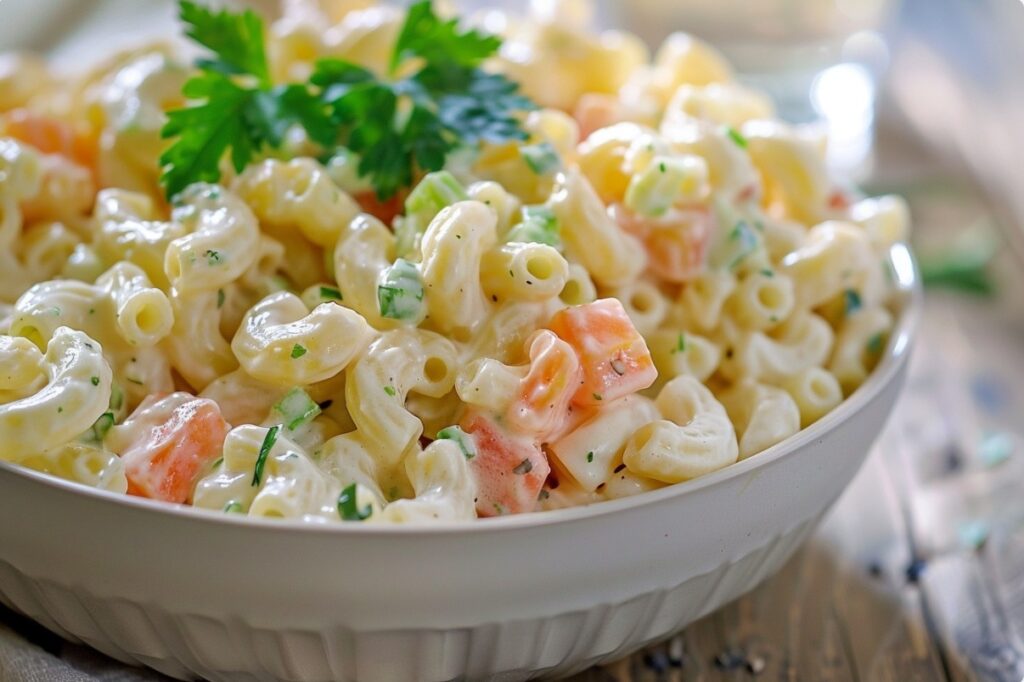
When you’re feeding a big group, you want something that tastes great but doesn’t glue you to the stove all evening. That’s exactly why pasta salad has become a go-to for holidays, picnics, and casual get-togethers. You can toss it in one big bowl, and that mix of pasta, veggies, and dressing gives you a satisfying, crowd-pleasing bite.
This kind of pasta salad is perfect for a backyard BBQ, a party spread, or a big family lunch. It holds up well in the fridge, portions easily, and always looks inviting on the table. Plus, every spoonful has something going on—tender pasta, crisp vegetables, and a creamy dressing that ties it all together.
There’s always that moment right before guests arrive: the kitchen’s already warm, the first plates are hitting the table, someone asks for “something light,” and someone else wants “something filling.” And you’re stuck between two very real truths—you want to feed everyone, but you don’t want to spend the next two hours babysitting the stove.
That’s where pasta salad saves the day. Not as a “quick recipe,” but as a way of thinking: how to make one big bowl of food that holds its shape, doesn’t turn to mush, doesn’t dry out after 30 minutes on the table, and can handle the fact that someone will show up late. It’s also one of the best low-stress formats because so much can be prepped ahead, then tossed together right before serving.
I’ve seen pasta salad be a little celebration—springy pasta, crunchy veg, a dressing that coats without running, and that hit of fresh herbs that somehow pulls everyone toward the table. And I’ve seen the other version too: a sticky mass that turns dry fast, with a puddle collecting at the bottom of the bowl. The difference is almost always in the small stuff: temperature, timing, mixing order, and one or two habits that are easy to build in.
If you want to stop worrying about “ruining it” and actually feel in control, let’s break pasta salad down. Not in a “do step one, two, three” way—but in a “here’s why this works” way.
Why pasta salad is the perfect format for a crowd
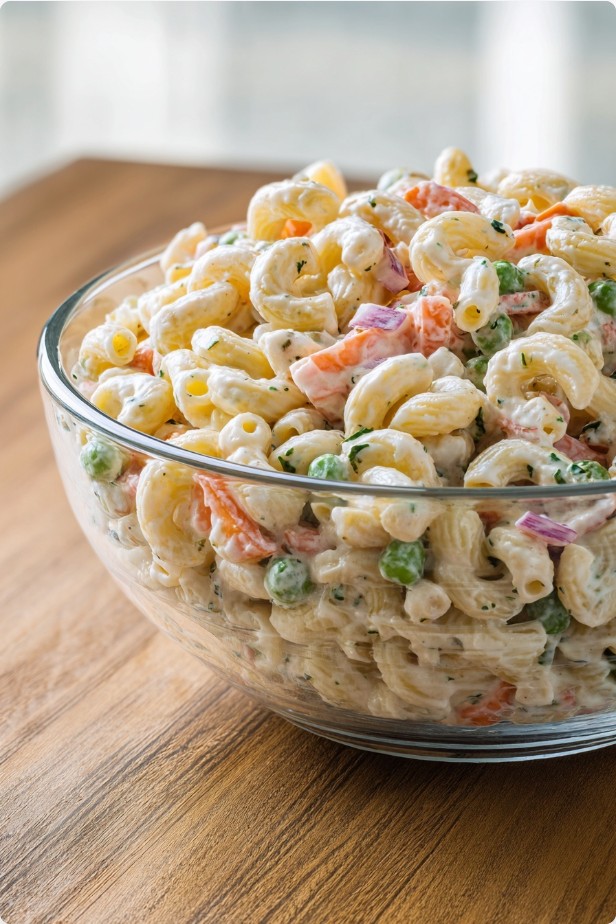
When you’ve got a lot of people, the hardest part isn’t “feeding them”—it’s making food that holds up. The room gets warm, someone opens a window, someone moves the bowl closer to a radiator (yes, it happens). Pasta salad is sturdy in a way delicate leafy salads just aren’t.
It also scales beautifully. With a regular salad, you double the ingredients, eyeball the dressing, and somehow it’s never quite right. With pasta, it’s easier to think in volume: you can see how much base you have and adjust everything else around it.
And honestly, pasta salad is comfort food in a bowl. It’s filling without feeling heavy—assuming you don’t drown it in mayonnaise until it shines. It plays well with different flavors: tang, salt, smokiness, heat. It’s also great for using up odds and ends: yesterday’s roasted veg, a chunk of cheese, a can from the pantry—suddenly it all looks intentional in one big bowl.
A quick story from my kitchen: once I was cooking for a group where half the people were “no meat,” two were “no dairy,” and one wanted “just something simple.” I made a basic pasta-and-veg bowl, then set add-ins on the side: cheese, something fishy, something spicy. Everyone built their own plate. Instead of stress, it turned into a fun little choose-your-own-adventure—and I wasn’t juggling ten pots.
The mechanics of pasta in salad: texture, starch, and why it clumps
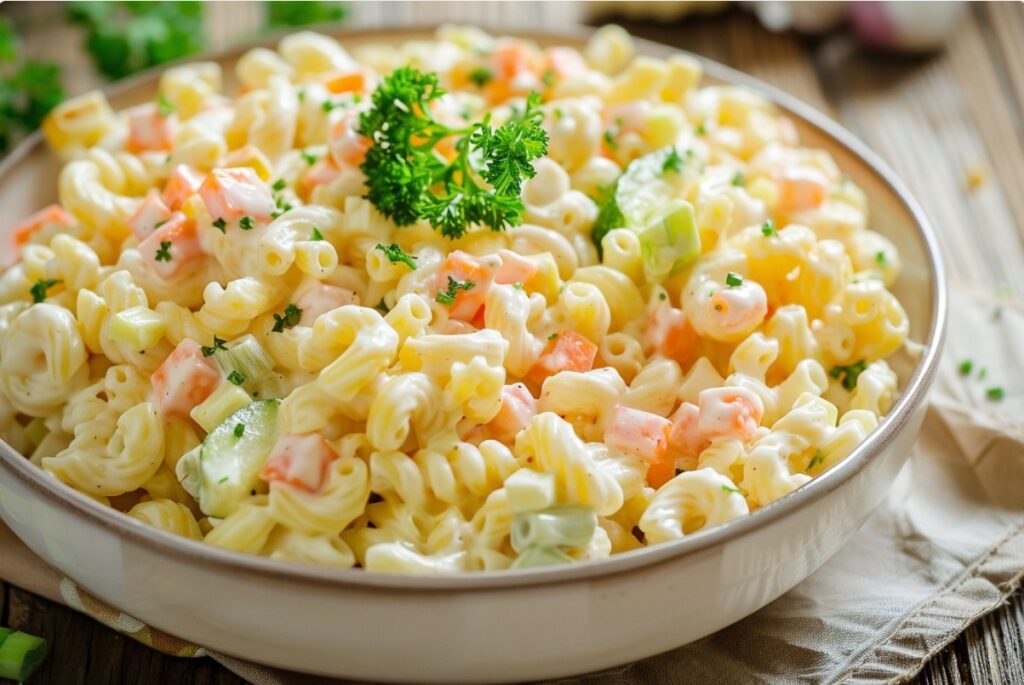
Pasta in salad isn’t just “a side dish that cooled down.” What matters is how it behaves once it’s mixed with dressing, vegetables, and then sits on the table.
As pasta cooks, some starch comes to the surface. Leave too much of it and it acts like glue: the pasta sticks together and the dressing clumps. Rinse it until it’s squeaky-clean, though, and the dressing has nothing to grab onto—it slides off, and the salad can end up a bit dry, especially after an hour.
So I aim for the middle ground: don’t turn your pasta into soap, but don’t leave it in a starchy fog either. In practice: drain it, then give it a quick, light rinse with cool water (if you’re making a cold salad) or just shake it well and let the steam escape (if the dressing will be warm/room temp). The key is not leaving it wet.
Al dente for salad isn’t snobbery—it’s insurance
In a salad, pasta keeps “living.” It absorbs moisture from the dressing and juices from the vegetables. If you cook it soft like you would for soup, it’ll turn cottony after 30–60 minutes. Cook it a touch firmer, and it’ll relax into the perfect texture in the bowl.
The test is simple: bite a piece. There shouldn’t be a white raw dot in the center, but it should still have spring. Not rubbery—just firm enough to hold its shape and not collapse.
Temperature: why hot pasta “kills” a salad
Mix hot pasta with delicate ingredients and you get two problems. First, vegetables start to “weep”: cucumber and tomato release water faster, herbs wilt, and liquid collects at the bottom. Second, if your dressing includes yogurt or cheese, heat can make it split or turn grainy.
My rule: pasta should be warm or fully cooled—depending on the vibe you’re going for. But “straight from boiling water” is almost always bad news for a big bowl that needs to sit and stay nice.
Tip: short on time? Spread the drained pasta out in a thin layer on a large plate or baking tray. It cools several times faster than it does in a deep bowl.
How to choose a pasta shape so it doesn’t turn into a tangled mess
Shape isn’t just aesthetics—it’s logistics. For a crowd, you want a salad that scoops easily, doesn’t drag into strings, doesn’t crumble into bits, and doesn’t turn into one big clump.
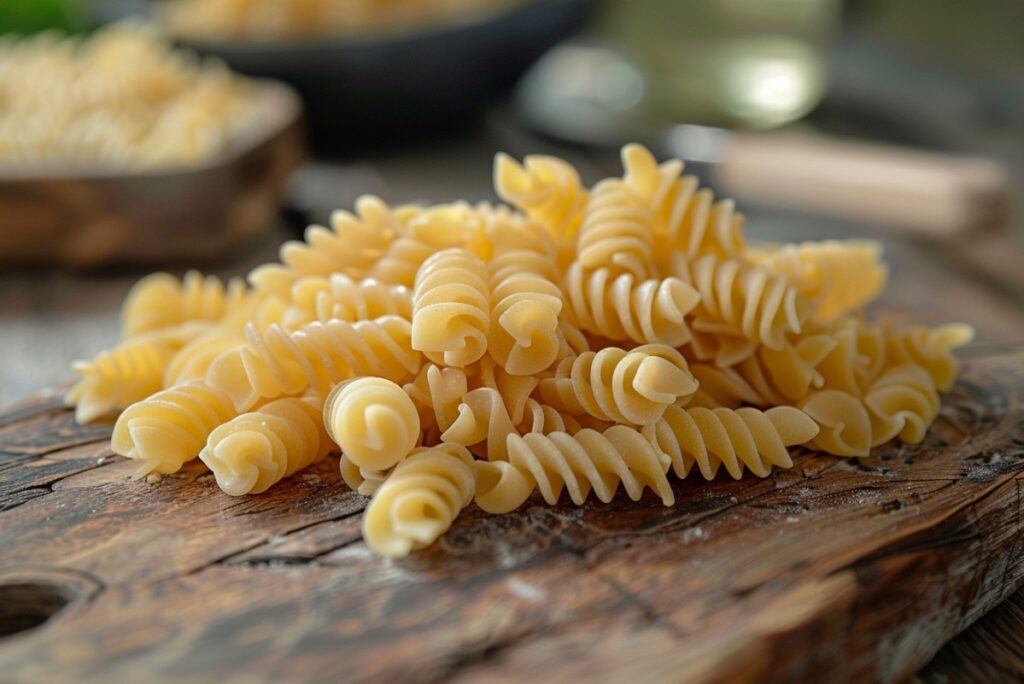
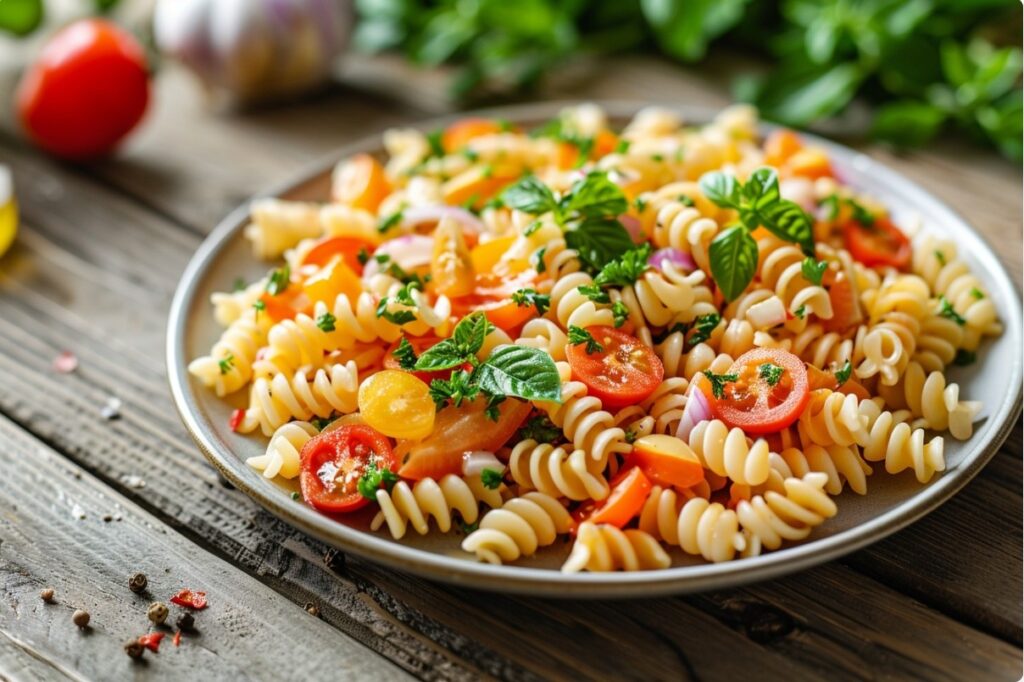
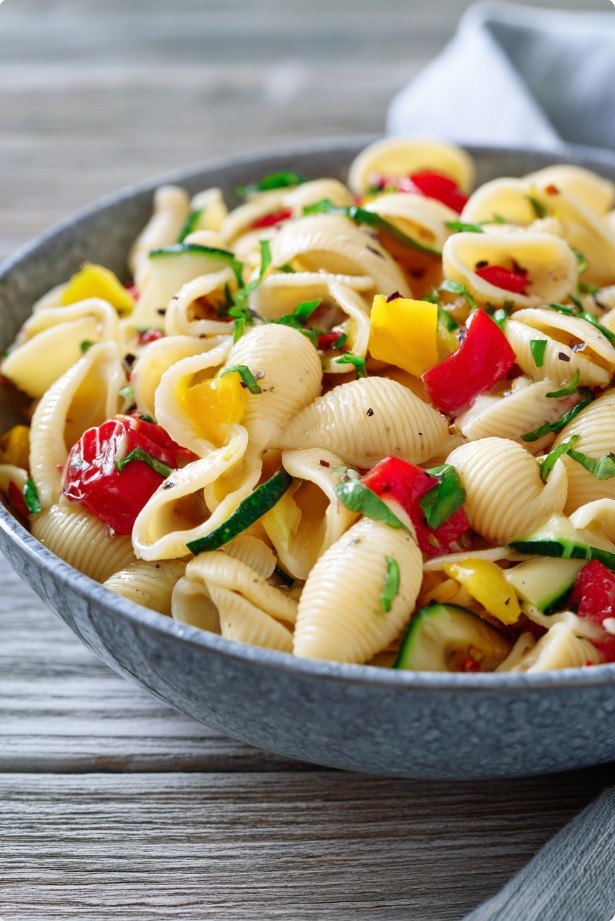
Short shapes with ridges or little “pockets” are the best: they hold onto dressing, catch small pieces of veg, and make each spoonful feel balanced. Long pasta in salad is almost always a struggle: it’s hard to mix evenly, it tangles into bundles, and someone inevitably pulls out half the bowl in one go.
“How it should be” vs “how people often do it”
How it should be: keep the pasta roughly the same “size” as the other ingredients. If you dice the veg small, choose smaller pasta. If you’re going for chunkier pieces, pick a larger shape.
How people often do it: they use whatever’s in the pantry (often spaghetti), chop the veg however it happens, then wonder why it’s awkward to eat and looks chaotic.
Quick story: once I was rushing and grabbed tiny pasta, then cut the vegetables into big rustic chunks. Every spoonful was either mostly pasta or mostly veg—they didn’t “lock” together. Since then, I treat size like a puzzle: the pieces should fit.
Tip: if you’re unsure which shape to buy, pick one that’s easy to eat with a spoon straight from a bowl. It sounds silly, but for a crowd it’s half the battle.
Prep order: how to save time and avoid kitchen chaos
When you’re cooking for a lot of people, the winner isn’t the fastest chopper—it’s the person who doesn’t make extra moves. I build the process around two moments: while the water heats and the pasta cooks, I prep everything else; while the pasta cools, I finish the dressing and the “dry” components.
Real-life version on a home stove: the pot is still coming up to temperature and you’re already washing and drying herbs. Pasta goes in—now you chop vegetables, open cans, and set up the container for the finished salad. Pasta gets drained—and you’re not standing there holding it, because the space is ready.
Two counter “zones” that save your sanity
I always set up two simple zones:
- Dry zone: pasta, chopped veg, herbs, add-ins that don’t leak.
- Wet zone: dressing, pickled things, anything that releases juice.
Why does it matter? Because if you mix all the “wet” with all the “dry” right away and then remember you still need to chop cucumber, the cucumber will start releasing water, the pasta will start absorbing it, and the texture will drift.
Tip: chop herbs last. They lose aroma and good looks the fastest once they’re cut.
Dressing and balance: why pasta salad is either dry or swimming
The most common pasta-salad problem is moisture balance. And the reason is usually the same: people make dressing like it’s for spreading on sandwiches or like it’s for leafy greens—without accounting for the fact that pasta will absorb some of it.
I think of pasta as a sponge. At first it looks slick with dressing, then 20 minutes later it suddenly feels dry. That’s why a two-stage approach works best: first, give the pasta a base coating so it doesn’t stick and actually tastes like something; then bring it to final “juiciness” right before serving.
Acid, fat, salt: three knobs for flavor control
In a big bowl, flavor gets diluted. What tastes fine in a small portion can feel flat at scale. I check balance with three “knobs”:
- Acid wakes everything up and keeps the salad tasting fresh. Without it, pasta can feel heavy.
- Fat adds roundness and that satisfying feel, and it helps aromas come together.
- Salt isn’t about making it “salty”—it makes the flavors clear. An under-salted pasta salad always tastes bland, even with lots of add-ins.
No need to box yourself in. You can go lighter or richer—the logic stays the same: if something’s missing, you know which knob to turn.
Dressing texture: it should coat, not run
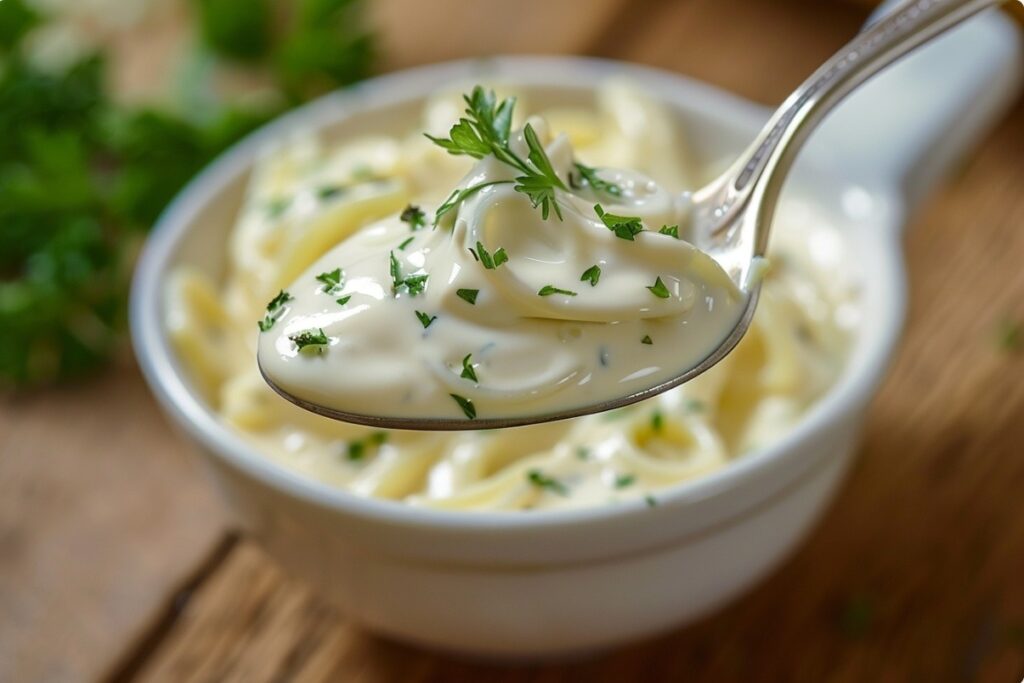
For a crowd, I like dressings that cling in a thin layer. Too runny and it sinks to the bottom, leaving the top dry. Too thick and it lands in blobs and makes the salad feel heavy.
The sign you nailed it: you toss the salad and the pasta looks glossy, but there’s no puddle collecting at the bottom. If there is a puddle, either there’s too much liquid or the vegetables have already released juice—and you’ll want a different fix (more on that below).
Tip: if the salad will sit for a while, keep a little dressing on the side. Add it right before serving to bring back juiciness without creating a swamp at the bottom.
Common beginner mistakes: how it turns into mush—and what to do instead
I don’t know anyone who hasn’t made a “meh” pasta salad at least once. It’s a normal learning moment—it’s just very obvious: everything’s in the bowl, and yet nobody wants to eat it.
Mistake 1: overcooked pasta
What people often do: cook it “just to be sure,” cover the pot, then forget it for a minute or two.
What to do instead: drain it a little earlier than you would for a hot dish. Salad needs that springy bite.
Mistake 2: mixing hot and cold
What people often do: hot pasta goes straight in with cucumber, herbs, and a yogurt/cheese dressing—then they wonder why everything “melts.”
What to do instead: let the pasta cool to warm, and add delicate ingredients at the end.
Mistake 3: chopping vegetables like a green salad, not a pasta salad
There’s a difference between a leafy salad and a pasta salad. In pasta salad, everything should fit comfortably into one spoonful.
What people often do: big tomato chunks, long thin pepper strips, tiny pasta. It eats unevenly.
What to do instead: keep one consistent “piece size.”
Mistake 4: eyeballing the dressing and not letting it rest
Pasta doesn’t absorb dressing instantly. Taste it right after mixing and it seems perfect. Twenty minutes later—dry.
Fix: dress in two stages, or at least plan for a short rest and then adjust.
Mistake 5: salting only the dressing
If your pasta water was bland, you’ll try to “catch up” with salt in the dressing, and the flavor turns uneven: some bites too salty, others flat.
Fix: salt the pasta water properly so the base has flavor. Then you can keep the dressing more balanced and gentle.
Tip: if you’re afraid of over-salting, make one “test spoon.” In a small bowl, mix a little pasta, a little dressing, and a few add-ins, then taste. It’s cheaper than trying to fix the whole big bowl.
How to keep it fresh for 2–3 hours: prep ahead and “last-minute assembly”
For a crowd, you don’t want a salad that’s “great for the first 10 minutes.” It needs to last. The principle is simple: keep anything that loses texture separate until the last moment.
What loses texture? Tender herbs, juicy vegetables, crunchy elements (croutons, nuts), anything that hates moisture. Mix it too early and it goes soft—and sometimes even turns a little bitter (herbs can do that).
A system that almost always works
- Ahead of time: cook the pasta, cool it, lightly toss with a base dressing (so it won’t stick), and store in a container.
- Ahead of time: chop “sturdy” vegetables (the ones that don’t leak quickly) and prep add-ins that can sit.
- Separate: the dressing (or part of it), herbs, and anything crunchy.
- Right before serving: toss, adjust with dressing, then add herbs and crunchy bits.
Quick story: once I made the salad an hour before guests arrived and felt very proud of myself. Then people showed up, conversations started, and the salad sat for another hour. When we finally ate, it was dry on top and wet on the bottom. That’s when I started holding back part of the dressing. It sounds tiny, but it’s the difference between “fine, I guess” and “oh, this is good.”
Tip: if the salad needs to sit for a while, keep it slightly under-dressed, then add the final bit of dressing right at the table. It tastes freshly tossed.
What to do if something goes wrong: dry, watery, bland, clumped
This is where I love pasta salads most: you can almost always save them. Not perfectly, maybe—but you can get it back to “really decent” without panicking.
If the salad turned out dry
Classic: the pasta drank the dressing, especially if it sat for a while.
- Add a little more dressing (if you kept some aside), toss well, and let it sit for 5 minutes.
- No extra dressing? Add a small amount of a flavorful liquid (not plain water). Add it spoon by spoon, mixing and tasting as you go.
- Check the salt: a dry salad often tastes bland even when it isn’t. Once you rehydrate it, the flavor “comes back.”
If there’s a puddle at the bottom and everything is “swimming”
Usually it’s juicy vegetables, a too-thin dressing, or both.
- First, gently toss and see if the puddle disappears—sometimes the liquid just hasn’t distributed yet.
- If there’s truly a lot of liquid, pour off some of it (yes, really) or lift the salad out with a slotted spoon into another bowl, leaving the excess behind.
- Add “absorbers”: something that will take up a bit of moisture and add structure. Then give it 10 minutes to come together.
Quick story: I once had a salad go watery because the tomatoes were extremely juicy. I didn’t heroically add more pasta (I didn’t have any). I poured off some liquid, added more herbs, and saved the crunchy topping for right before serving. It wasn’t what I planned, but everyone ate it—and nobody noticed the “incident.”
If it tastes bland even though you “added everything”
In a big bowl, what’s missing is often not salt itself, but contrast.
- Check salt—but add it gradually, mixing well.
- Add acid: it lifts flavor fast without making it taste “over-salted.”
- Add aroma: fresh herbs, a little zest, something with a bright smell. Sometimes the issue isn’t taste—it’s that the salad doesn’t smell like anything.
If the pasta clumped together
That’s either too much starch + not enough dressing, or it sat packed into a tight mass for too long.
- Break it up with your hands or a spoon, add a little base dressing, and toss—often that’s enough.
- If the clumps are firm, the salad is dried out. Moisten first, then break it up.
Tip: if the pasta is waiting in a container, give it one quick stir 10–15 minutes after it cools. Small thing, big difference for preventing clumps.
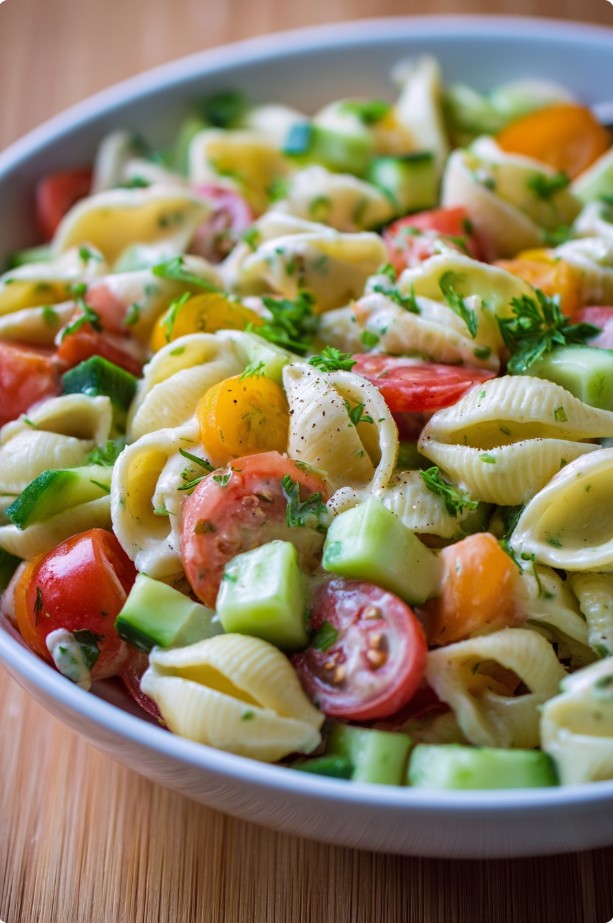
Serving, portions, and small details that make it feel special (without extra work)
A big gathering isn’t a restaurant. People wander, sit, stand, go back for seconds. Your job is to make the salad easy to serve and enjoyable all the way to the last scoop.
I’m team wide bowl, not tall bowl. In a tall bowl, heavy ingredients sink and light ones sit on top, so every portion tastes different. In a wide bowl, it’s easier to toss and easier to lift ingredients from the bottom.
Two serving spoons, not one
It sounds funny, but it works: one spoon disappears fast, someone borrows it for another dish, and suddenly it’s “where’s the spoon?” I put out two and the problem vanishes. Bonus: two spoons make it easier to give the salad a quick toss before it starts making the rounds.
Crunch goes in at the last second
If you like adding something crunchy, don’t toss it into the bowl early. Keep it separate and sprinkle it on top portion-by-portion, or right before the bowl hits the table. You get that satisfying little crackle when the spoon digs in—and the whole salad feels fresher.
Smell and looks: the salad should “call you in”
Pasta salad can look a bit pale if you’re not careful. I usually fix that with two things: herbs at the end and something bright on top (it doesn’t have to be much). The salad should smell fresh—when you lift a spoon, you want aroma, not just “pasta.”
One more practical detail: if the salad sits for a while, it settles a bit. Before serving, I often toss it again and check—does it want a splash more dressing, a pinch of salt, a handful of herbs? That’s not perfectionism; it’s making sure the last portion tastes as good as the first.
Tip: serving outside on a hot day? Set the salad bowl inside a larger bowl with cold water (about 2–3 finger-widths deep). It stays fresher longer, especially if there are dairy ingredients in the dressing.
Pasta salad for a crowd is really about staying calm. You make one big bowl, but you’re managing the process, not just the volume: the right pasta texture, a smart mixing order, dressing in two stages, delicate ingredients at the end. Do that, and the salad won’t fall apart, dry out, or turn into a random mix.
Now I’m curious: do you like your pasta salad lighter and fresher, or closer to a hearty main dish? And what goes wrong most often for you—dryness, a puddle at the bottom, or clumping?
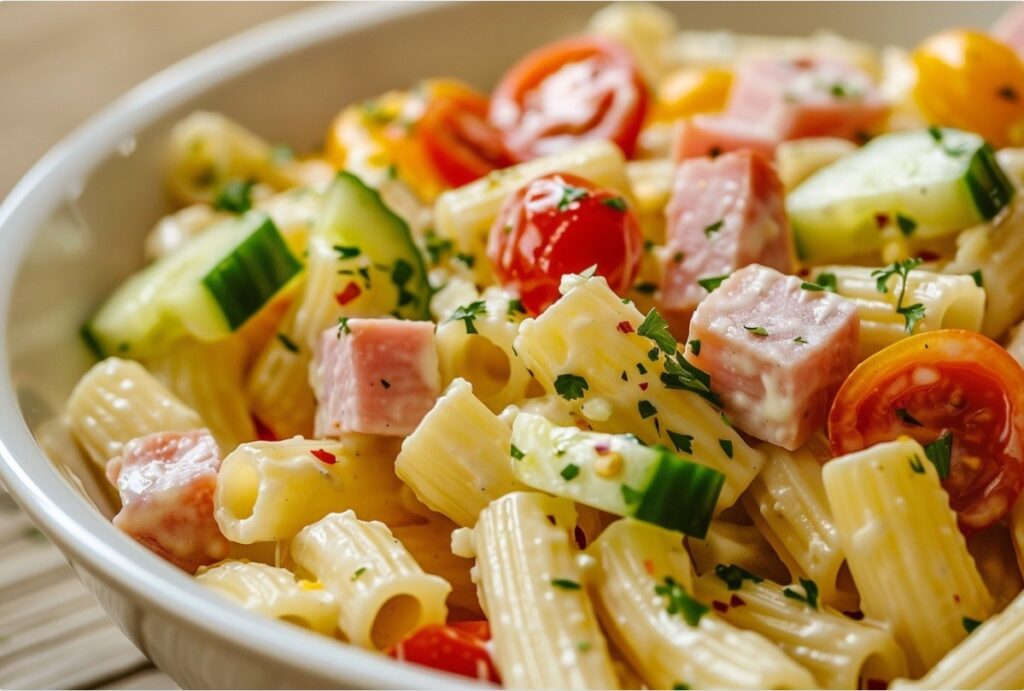
If you’re into dishes like this, take a look at these pasta salad recipes—they’re great for picnics, parties, and family lunches. It’s an easy format for mixing pasta with vegetables, cheese, or meat, and coming up with new flavor combos.
QUESTIONS & ANSWERS (FAQ)
Can I make pasta salad ahead of time?
Yes—pasta salad is great for making ahead. You can prep it a few hours in advance or even the day before serving. The flavors meld and taste more developed. Before serving, just give it a good toss (and add a splash more dressing if it looks dry).
What pasta works best for pasta salad?
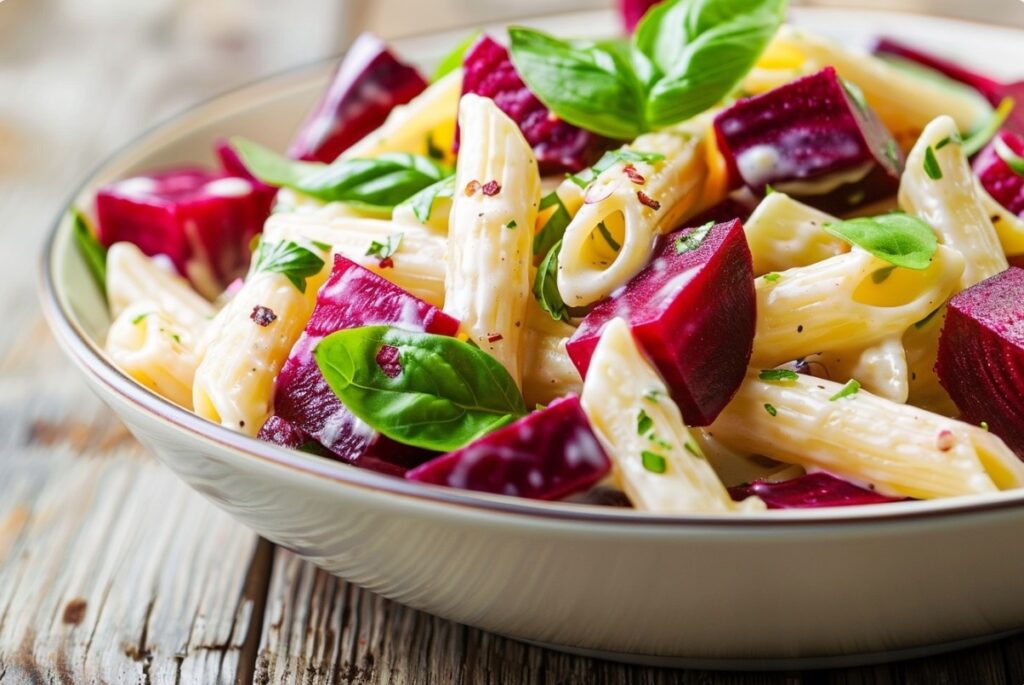
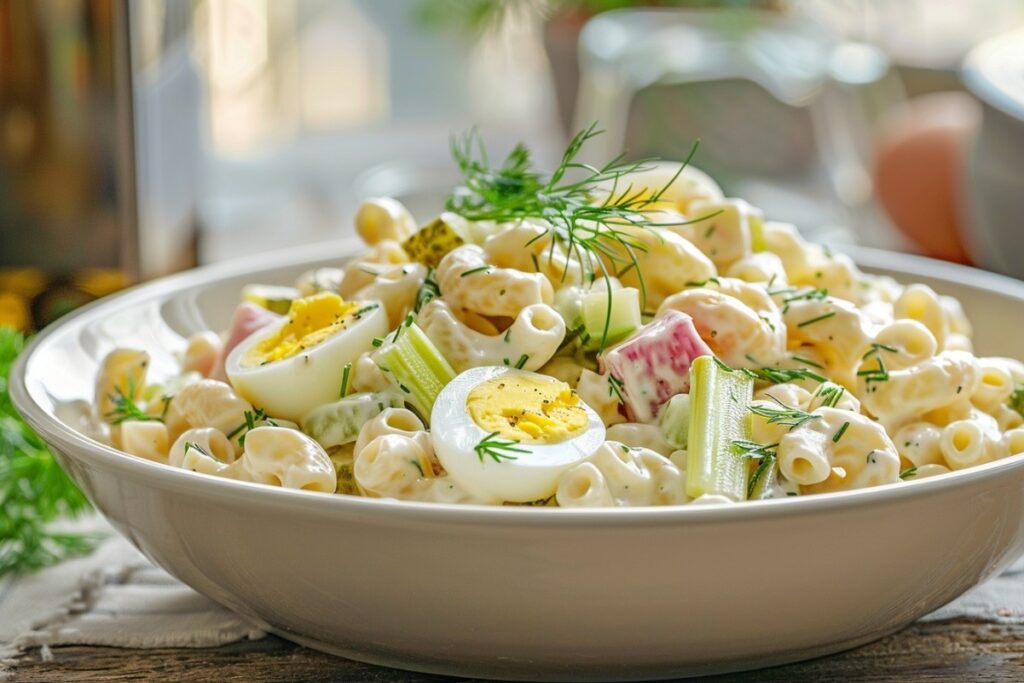
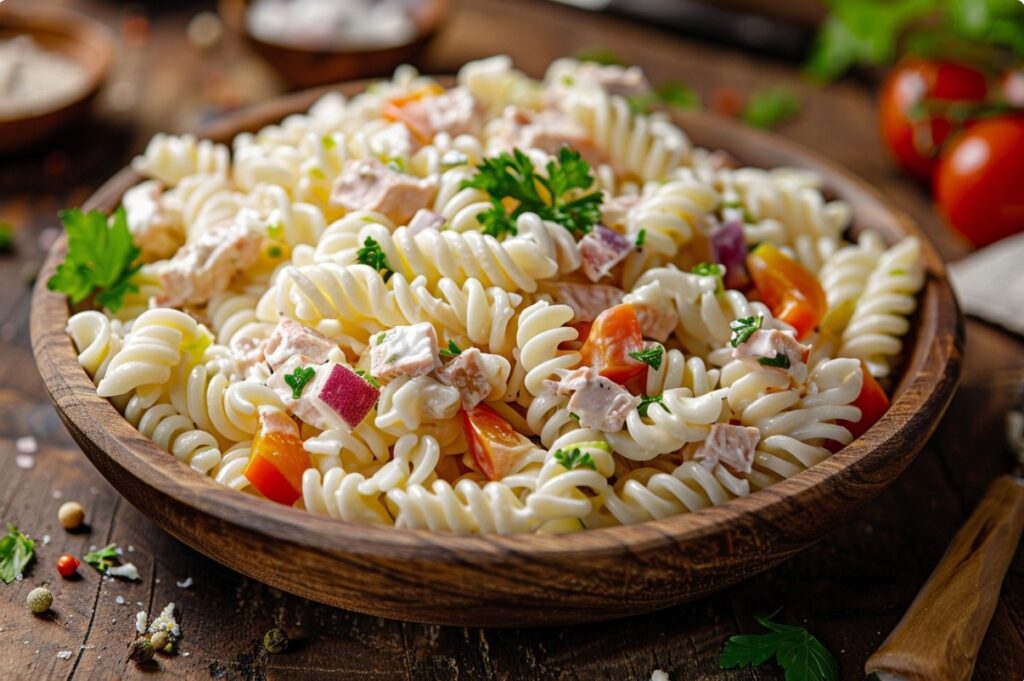
Short pasta shapes are the easiest: macaroni, penne, farfalle (bow ties), or rotini. They hold onto dressing and mix evenly with the other ingredients, which makes the salad more textured and satisfying.
How many servings do you get from a big bowl of pasta salad?
It depends on portion size, but a large bowl will typically feed about 8–12 people. If you’re serving it as a side at a BBQ or party, that’s usually enough for the whole group.
Can I add different vegetables to pasta salad?
Absolutely. Pasta salad is very flexible—cucumber, bell pepper, sweetcorn, tomatoes, and fresh herbs are all popular. Vegetables make it brighter, fresher, and more interesting texture-wise.
What’s the best dressing for pasta salad?
Creamy dressings are the classic choice—usually mayonnaise-based or yogurt-based—because they coat the pasta well. For a lighter version, use olive oil with lemon juice (or vinegar) and seasonings.
Can I make a lighter pasta salad?
Yes. An easy swap is replacing part of the mayonnaise with Greek yogurt. You can also bump up the vegetables and herbs. It stays flavorful but feels lighter.
How should I store pasta salad?
Store finished pasta salad in the fridge in a sealed container. It usually keeps well for up to 2 days. Before serving, toss it and add a little extra dressing if needed.
Why is pasta salad so popular for parties?
Because it’s simple, scalable, and versatile. You can make a lot at once, it holds up well, and most guests enjoy it. Plus, it’s easy to customize with different add-ins.