The Perfect Shakshuka: Temperature, Texture, and Timing


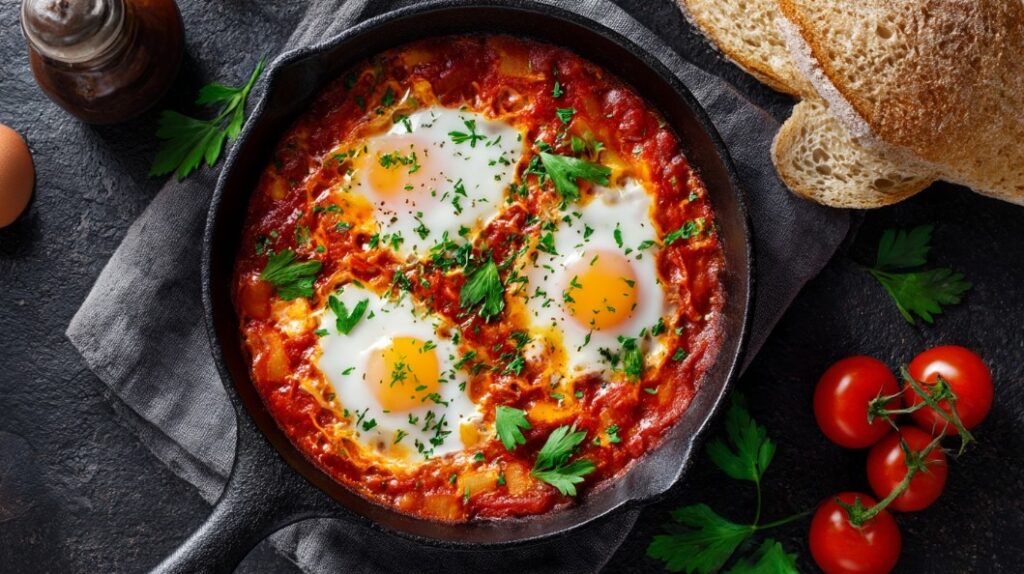
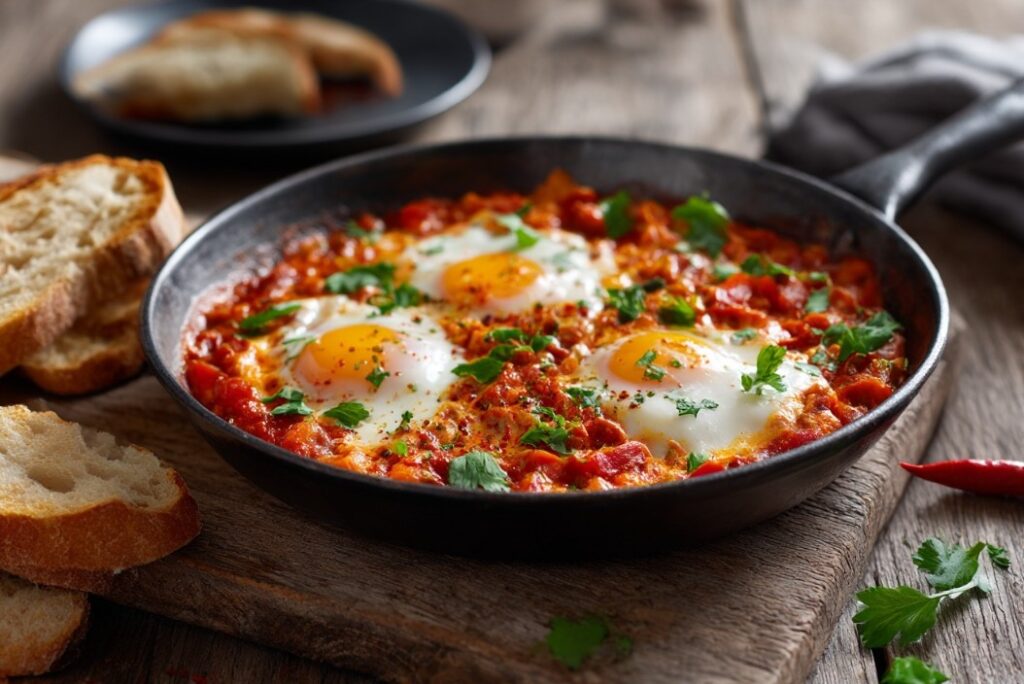
You’ve probably seen this dish in photos: bright eggs against a thick red sauce, green specks, a piece of bread to scoop up the yolk. Shakshuka looks impressive, but when you try to make it, questions arise. The eggs become rubbery, the tomatoes watery, and the whole thing doesn’t resemble any photo. Many people don’t want to return to this dish after the first attempt, thinking they need special pans or that they just can’t do it. In reality, it’s all about temperature, texture, and timing — and a bit of attention to detail. I’ll show you how it works from my experience — and why the fear of ruining shakshuka isn’t worth your nerves.
Remember how sometimes eggs suddenly turn into a protein foam, and the sauce spreads almost to the edge of the pan? Or vice versa, when everything is frozen and completely unappetizing. I’ve been through this too. And that’s when you start to notice: the pan, the stove temperature, the order of adding ingredients — these are not just trifles, but what forms the ‘taste memory’. When you understand what’s happening at each stage, shakshuka is no longer intimidating. It becomes a reason to experiment, not fear mistakes.
Why Shakshuka is More Than Just ‘Eggs in Sauce’
Shakshuka seems very simple on the outside: sauce, eggs, spices. But like in life, the simplest things are the hardest to do really well. The idea of the dish is to balance the juiciness of the tomatoes with the tenderness of the eggs. There’s no magic here, but there is physics: how to combine two very different products so they feel like a single whole, not a mush.
Eggs are easy to boil but just as easy to overcook. Tomatoes quickly release juice but even faster turn into sour ‘cotton’. And this is where it gets interesting. Real shakshuka is not when the eggs sit on top, but when they blend with the sauce in texture, appearance, and taste. It’s a balance caught through temperature and attention to detail.
I once thought it was enough to just throw the eggs into the sauce and wait. But many times it turned out either runny or hard. That’s why I started looking for patterns. And I realized: if you don’t control the temperature and monitor the stages, you can’t achieve that impressive look and taste.
Temperature: The Main Driver of the Process
The first thing to get used to is that temperature in the kitchen decides everything. In shakshuka, this is especially noticeable. If the sauce boils, the eggs ‘jump’ on the surface and immediately become tough. If it’s too cold, the white spreads, and the yolk loses its tenderness.
What Happens in the Process?
When the sauce is hot but not boiling, it gently ‘hugs’ the eggs. The white slowly thickens, the yolk remains runny. Here, not only the heat is important, but also the thickness of the sauce layer: a thin layer evaporates moisture faster, while a thick one takes longer to heat, and the eggs may remain raw on top.
- Optimal temperature is a gentle bubbling when the sauce ‘breathes’ but doesn’t burst with bubbles.
- The advantage of a home stove is that you see the reaction with your own eyes. If the pan is too hot, try lowering the heat before adding the eggs.
I often noticed: if you rush and pour the eggs into the hot sauce, the white immediately curdles, and the yolk already cracks. It feels like eating something rubbery.
Common Mistake: Too High Heat
When the heat is at maximum, the dish loses its lightness. The eggs become dense, the sauce thick and heavy, ‘clogging’ the taste. It’s important to trust not only the recipe but also your eyes: if the white around the yolk immediately turns white and a yellowish crust appears at the bottom, it’s a signal to lower the heat. The stove doesn’t always respond instantly, so it’s better to act in advance.
Tip: if you’re afraid of losing temperature, it’s better to lower and raise the heat 2-3 times than to keep it at maximum.

Texture: How to Know When the Dish is Ready
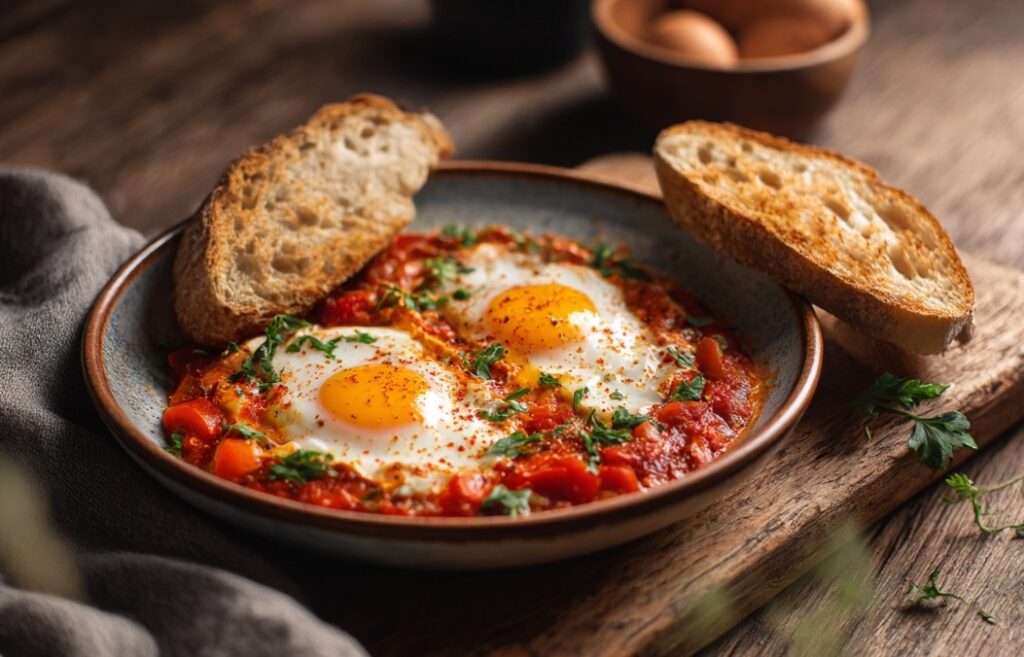
Shakshuka is about contrasts: a tender yolk, a firm white, a moist but not watery sauce. Understanding that everything worked out is not about a timer, but attention to appearance and feelings.
Signs of Ideal Texture
- White: has become matte but still slightly wobbles when touched with a spoon.
- Yolk: bright, as if slightly illuminated from within. If you shake the pan, it ‘lives’.
- Sauce: thick but not pasty; you can see pieces of vegetables, but there’s no puddle of liquid.
I often check the edge with a spoon: if the sauce holds its shape and the egg doesn’t spread, you can turn off the stove. Don’t wait for the white to become completely hard — the dish will finish cooking with residual heat.
Common Mistake: Trying to ‘Overcook’
Many people keep shakshuka on the heat until the white becomes completely white. But that’s when the yolk becomes dry, and the sauce loses its juiciness. Here, the rule works: remove the dish a little earlier than it seems necessary. In a few minutes, the taste will be perfect.
The smell is another clue. If you smell a light aroma of tomatoes, spices, and a slight hint of egg — the shakshuka is ready. If you smell sulfur or burnt whites — the dish is already overcooked.
Tip: get used to relying on appearance and smell, not just time. It gives a faster sense of control.
Timing: When and What to Add
Timing in shakshuka is not just about cooking time, but also the sequence of actions. It determines whether the dish will be balanced.
Logic of Stages
- Vegetables (onion, pepper) provide the flavor base. It’s important not to over-fry them — just enough for them to become soft and slightly golden. If they burn, the taste can’t be saved.
- Tomatoes. The variety and ripeness determine how long to stew them. If the tomatoes are watery, keep them longer to evaporate the liquid. It’s good when the sauce thickens but doesn’t ‘stand’ like a column.
- Eggs. It’s better to pour them one by one, making ‘pockets’ in the sauce with a spoon. This way, the white doesn’t spread, and the yolk stays intact.
Once I rushed and poured the eggs right after adding the tomatoes. The white sank, the yolk was barely visible, everything mixed. And then I realized: each stage is like a step in a dance. If you skip it, the dish loses its rhythm.
Tip: always keep a spoon nearby to quickly make a depression for the eggs. This way, you won’t miss the moment.
Typical Timing Failures
- Eggs poured into too runny a sauce — the white spreads, doesn’t set.
- Eggs added when the sauce is already too thick — the white doesn’t have time to heat through, the yolk remains raw.
- Keeping on the stove too long after adding eggs — everything becomes hard.
What to Do If Something Goes Wrong
Even experienced cooks sometimes face failures. I’ve seen shakshuka turn into an omelet or tomato mush more than once. It’s normal. Here are some solutions for typical situations.
Eggs Overcooked or Not Set
- If the white becomes rubbery, next time lower the heat earlier, and now add a bit of thick yogurt or cheese on top. This will soften the texture.
- If the white hasn’t set and the sauce is already thick, cover the pan with a lid for 1-2 minutes. The heat will help set the white without overcooking the yolk.
Sauce Too Runny or Thick
- The situation with a runny sauce has happened to me more than once, especially with winter tomatoes. Then I just let the sauce simmer for another 2-3 minutes before adding the eggs, stirring constantly.
- If the sauce has become ‘paste’, I add a few tablespoons of water or tomato juice, stir, and bring to a gentle boil.
Yolk Spread
No big deal. This often happens when rushing or when the eggs are too fresh. Next time, try cracking the egg into a cup and then gently pouring it into the sauce. If the yolk spreads, mix everything together and cook as a ‘scrambled shakshuka’ — the taste won’t be spoiled.
Sensing: How to Read the Dish ‘On the Go’
To cook shakshuka confidently, you need to learn to read the dish’s cues. It’s not about recipes, but about the ability to catch the moment. Here are some practical observations that help me.
- Sound: at first, you hear sizzling — this is water evaporating. When adding eggs, the sound changes to a light crackling. If it starts to smell fried, lower the heat.
- Smell: tomatoes and spices should smell fresh, not burnt. If you smell bitterness, something went wrong at the vegetable frying stage.
- Appearance: the yolk should ‘glow’, the sauce should hold its shape, and drops of oil should appear at the edges.
Once, my shakshuka turned out too dark, with a burnt pepper smell. That’s when I learned: it’s better to remove the pan from the heat several times, let the dish ‘rest’, than to finish cooking at high temperature.
Tip: during cooking, try a small spoonful of sauce — it’s easier to feel the degree of readiness and acidity.
Micro-Stories from the Kitchen: Observations and Life Hacks
The first time I cooked shakshuka for friends, everything went wrong: the eggs curdled, the sauce spread, and the guests politely said ‘delicious’. But that’s when I realized: the fear of ruining is just a barrier in the mind. When you cook for yourself, it’s easier to notice nuances and not be afraid to experiment.
- If you want a more pronounced flavor, add spices at the vegetable frying stage, not in the sauce. This way, the aroma will be brighter.
- Oil temperature: if you throw in a piece of vegetable, there should be a light sizzle immediately, but it shouldn’t ‘shoot’ with drops.
- If you don’t have a lid, use foil to retain heat while cooking the eggs.
Over time, you notice that each shakshuka is slightly different. Eggs can vary in size, tomatoes in juiciness, spices in freshness. And here, the main thing is not to be afraid that something will go wrong. It’s just a signal to try again, draw conclusions, and move on.
What Distinguishes a Confident Shakshuka from an Unsuccessful One
The essence is in the sense of control. A confident shakshuka is when you ‘catch’ the moment: you see how the white starts to set at the edges, you smell the aroma, you hear a light crackling. You don’t chase the recipe but act intuitively, understanding why this way and not otherwise.
A bad shakshuka is when you do everything ‘by the book’, but don’t feel the dish. When you’re afraid of ruining it, constantly checking recipes, and the result still doesn’t please you. Here, it’s important to give yourself the right to make mistakes and see each unsuccessful attempt as experience.
Tip: don’t be afraid to make your own adjustments — shakshuka withstands improvisation. The main thing is to understand the logic of the process.
Life Hacks for the Home Kitchen
- Don’t pour eggs into cold sauce — the white will spread, and the dish will be watery.
- Use a spoon or a small cup to add the eggs — this way, the yolk will stay intact.
- Add greens and cheese after cooking — this way, the aroma will be fresher, and the texture more interesting.
- If using canned tomatoes, give them a bit more time to evaporate the liquid and remove acidity.
- Don’t be afraid to leave the shakshuka ‘undercooked’ in appearance — a minute after turning off, it will be perfect.
One of my favorite little tricks is to let the shakshuka ‘rest’ under a lid for 2-3 minutes after turning off the stove. During this time, the white sets completely, and the yolk remains runny. The taste is completely different.
See the Ukrainian shakshuka recipe hub here
How to Stop Being Afraid: The Psychology of Mistakes in the Kitchen
The fear of ruining shakshuka is not about food, but about expectations. Many people fear not the taste, but that it won’t turn out like the picture. I’ve caught myself thinking, ‘What if it’s not right again?’ But when you start to understand what and why things happen, the fear disappears. You’re no longer mechanically following steps but understanding the logic. This adds confidence.
I remember a friend saying, ‘I can’t do it, mine is always runny or dry.’ We cooked together, and she saw for the first time how the appearance of the white changes at the ‘almost ready’ stage. The sense of control comes with experience, but the main thing is not to fear mistakes. They are part of learning.
Tip: treat each unsuccessful attempt as a hint, not a failure. Next time will be better.
Over time, you start cooking shakshuka not for the ‘perfect picture’, but for your own pleasure. And that’s the main thing.
I’m sure that by understanding temperature, texture, and timing, you will no longer be afraid to cook shakshuka. Try to look at the process through the eyes of a curious cook, not a strict critic.
What mistake with shakshuka have you made most often? Maybe you have your own trick or experience? Share in the comments — it’s interesting to read how it happened in your home kitchen.