


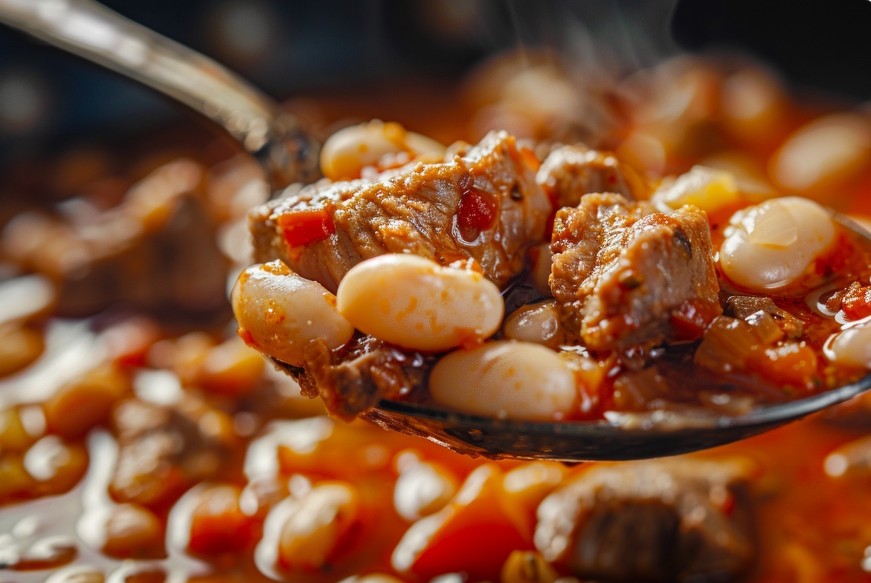
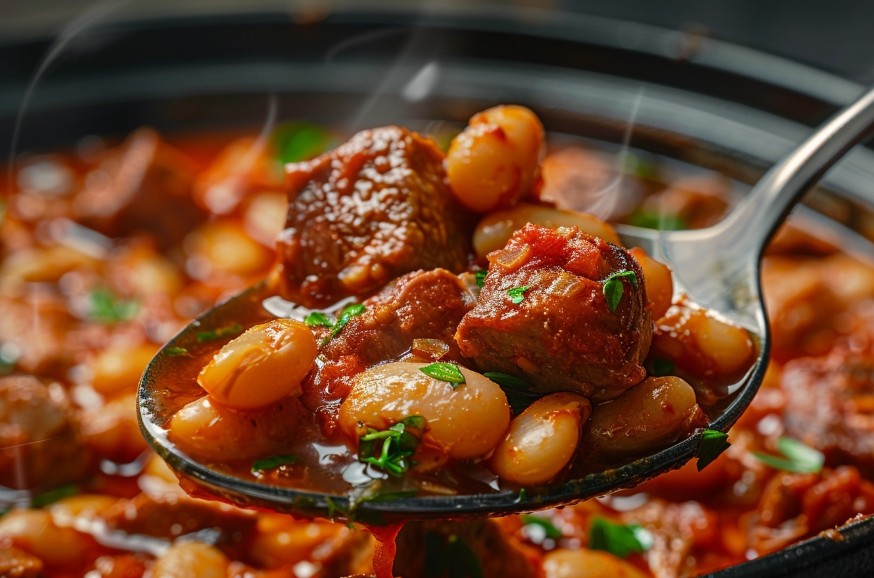
In a heavy pot, the smell hits fast: onions and garlic sizzling first, then that sweet, cosy note from carrots and tomato. The flavour goes properly deep and meaty, with a gentle tang from the tomatoes and that quiet, familiar warmth from bay leaf. Texture-wise, it’s exactly what you want—pork that pulls apart into strands, beans that stay intact, and a gravy that turns thick and almost silky. Under the lid you’ll hear that soft little “blip-blip” as it simmers; that’s the sound of dinner doing its thing on low heat. It looks the part too: an amber-red sauce, chunks of pork, white or red beans, and a scatter of herbs on top. The spoon goes in with a bit of resistance—and honestly, that’s the best sign. The steam alone tends to pull everyone into the kitchen.
In this recipe, you’ll learn
- Why you’ll love this recipe
- Tips before you start
- What to look for when choosing ingredients
- Secrets for perfect pork and bean stew
- How to serve pork and bean stew
- Nutritional perks
- Recipe variations
- Questions & answers
- Common mistakes
Why you’ll love this pork and bean stew
Like the kind of dinner that smells “homey” just 15 minutes after you start? This one ticks that box. It’s hearty, it tastes familiar, and one pot gives you both the main and the “side” in one go. Bonus: the gravy clings to bread like it was made for it—handy when you need to feed a few people without turning the kitchen upside down.
- Thick gravy that actually coats the spoon
- Tender pork (no dry, sad chunks)
- Beans make it extra filling
- One pot = fewer dishes
- Even better reheated the next day
Tips before you start
If your beans are undercooked, the whole stew drags on forever and the texture stays a bit gritty—especially if tomato goes in too early. The culprit is acidity: it can “tighten” the skins and slow down softening. Easy fix: cook the beans separately until they’re almost done, then add the tomato while the pork is stewing. One more small thing—cut the pork into 2–3 cm cubes. That way it can brown properly in 8–10 minutes and won’t dump all its juices into the pot.
- Soak the beans for 8–12 hours
- Add tomato after browning
- Salt closer to the end of simmering
- The liquid should just barely cover everything
- Let it sit for 10 minutes before serving
What to look for when choosing ingredients
Pork shoulder is usually cheaper than pork neck, and with the right simmer it turns out just as good—it simply needs a bit more time. Dried beans cost less than canned and give a cleaner flavour (plus a thicker gravy if you cook them until nearly tender). Tomato paste is budget-friendly and concentrated; passata/crushed tomatoes cost more but bring a softer acidity and a gentler colour.
Pork (shoulder or neck)
Shoulder for a leaner result; neck for extra juiciness. Look for a piece with fine streaks of fat and not too much tough silverskin.
Dried beans
White beans taste milder; red beans are a bit bolder. The beans should be whole and uncracked—old beans simply take longer to cook.
Tomato paste or passata
If you’re using paste, loosen it with 3–4 tbsp of stock so it doesn’t catch. If you’re using passata, add it at the end of sautéing the veg for a more even colour.
Onion and carrot
Onion should feel firm (no soft spots); carrot should be sweet and medium-sized. Grated carrot melts into the gravy faster; diced carrot keeps its shape.
Oil or lard
Lard gives a deeper, old-school aroma; oil keeps it lighter. For browning, 1–1.5 tbsp is plenty if your pork isn’t super lean.
Secrets for perfect pork and bean stew
The key is 180°C—no higher—if you finish it in the oven with a lid on. On the hob, keep it at the faintest simmer: the gravy should “breathe”, not boil like crazy. It feels like higher heat will speed things up, but that’s how pork tightens up and turns tougher.
- Brown the pork in batches—don’t crowd the pot
- Cook the tomato for 1 minute with the veg
- Add liquid gradually, 100–150 ml at a time
- Remove the bay leaves at the end
- Let it rest for 10 minutes with the lid on
How to serve pork and bean stew
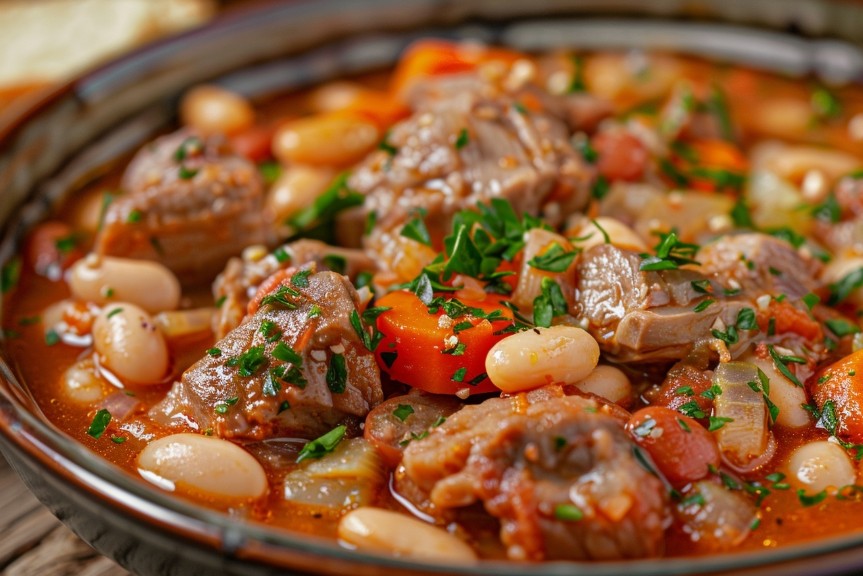
A deep ceramic bowl keeps it warm, so the gravy doesn’t cool off in five minutes. Finish with fresh herbs and something tangy on the side—pickles or sauerkraut—and the whole thing snaps into balance.
- With rye bread rubbed with garlic
- With mashed potatoes and dill
- With buckwheat, spooning the gravy over
- With sauerkraut or a crunchy pickle
- With quick-pickled onion rings
Nutritional perks
Beans bring plant protein and fibre, which helps the stew feel satisfying (and helps that gravy stay lush). Pork adds complete protein, and with the vegetables it lands as a balanced, real-food kind of plate—no dramatic claims needed.
- Protein from both pork and beans
- Fibre from legumes
- Vegetables add micronutrients
- Thick gravy means you don’t need extra sauces
Pork and bean stew variations
If you’re short on time, go with canned beans: simmer the pork until tender, then add the beans for the last 15 minutes.
- Smoked paprika instead of some of the black pepper
- Button mushrooms, browned separately
- Red beans for a richer colour
- Spicy version with chilli
- More veg: celery and sweet pepper
Questions & answers
When my friend made pork and bean stew for the first time, she was mostly stressed about two things: how long the beans take, and how to get that gravy thick (but not gluey).
How do I know the beans are almost done?
You should be able to squash a bean easily between your fingers, but it still holds its shape and doesn’t crumble. For dried beans (after soaking), that’s often 40–60 minutes of gentle simmering.
Why warm up the tomato paste before simmering?
A quick cook (30–60 seconds) gets rid of that ‘raw’ tomato taste and smooths out the aroma. Just make sure the paste is loosened with liquid and don’t leave it on a dry pan for long.
What if I oversalted the gravy?
Add 100–150 ml hot water or stock and let it simmer gently for 5–7 minutes. Another fix: stir in an extra portion of unsalted cooked beans, or simmer 1 small potato in the stew for 15 minutes, then remove it.
How long should I simmer the pork so it turns tender?
2–3 cm cubes usually take 60–80 minutes at a gentle simmer under a lid. If your pieces are larger or the shoulder is particularly firm, allow up to 90 minutes and check with a fork.
Common mistakes when making pork and bean stew
Sometimes the beans stay firm because they met the tomato too early and the acidity slowed everything down. Other times the pork turns “wooden” because it was cooked at a hard boil instead of a gentle simmer. Another classic: an overcrowded pot—so instead of browning, everything just steams in its own juices. Don’t stress; it happens. Keep an eye on the heat and the order you add things, and you’ll be fine.
Why are the beans still hard after simmering?
You added tomato at the start, or the beans are old. Cook the beans separately until almost tender, then add the tomato after browning; if needed, pour in hot water and give it another 20–30 minutes on low heat.
Why is the pork dry and tough?
Heat was too high, or the cut was too lean. Keep it at a barely-there simmer and add liquid in small additions; next time choose shoulder with some marbling, or add 1 tsp lard.
The gravy is too thin—how do I fix it?
Too much liquid, or the lid stayed on tightly the entire time. Take the lid off for 10–15 minutes and bring the heat up to medium; you can also mash 2–3 tbsp beans and stir them back into the pot.
The vegetables burned on the bottom
The temperature was too high and there wasn’t enough fat. Turn the heat down, add 50–80 ml hot stock, and scrape the browned bits with a wooden spoon/spatula—they’ll add flavour as long as they’re not black.






Responses