How to Throw Together Nudelsalat Fast When Guests Are on the Way

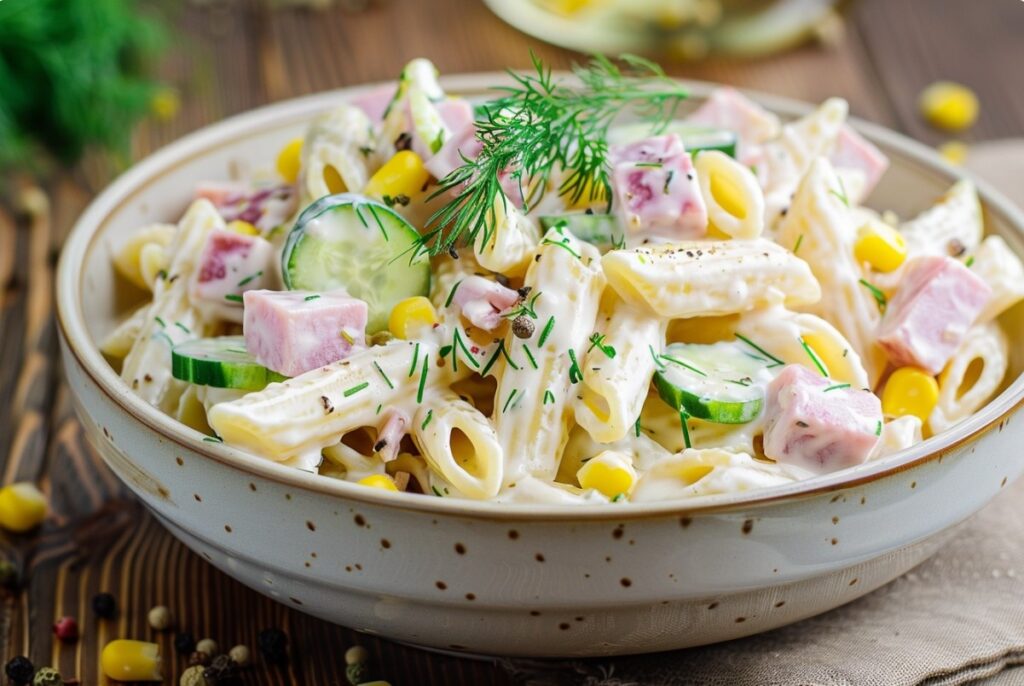
It happens like this: the doorbell rings—“We’re basically there”—and you’re still in house socks, there’s one lonely pot on the stove, and one question looping in your head: what can I put on the table that looks generous, not like “I panicked and mixed whatever was in the fridge”?
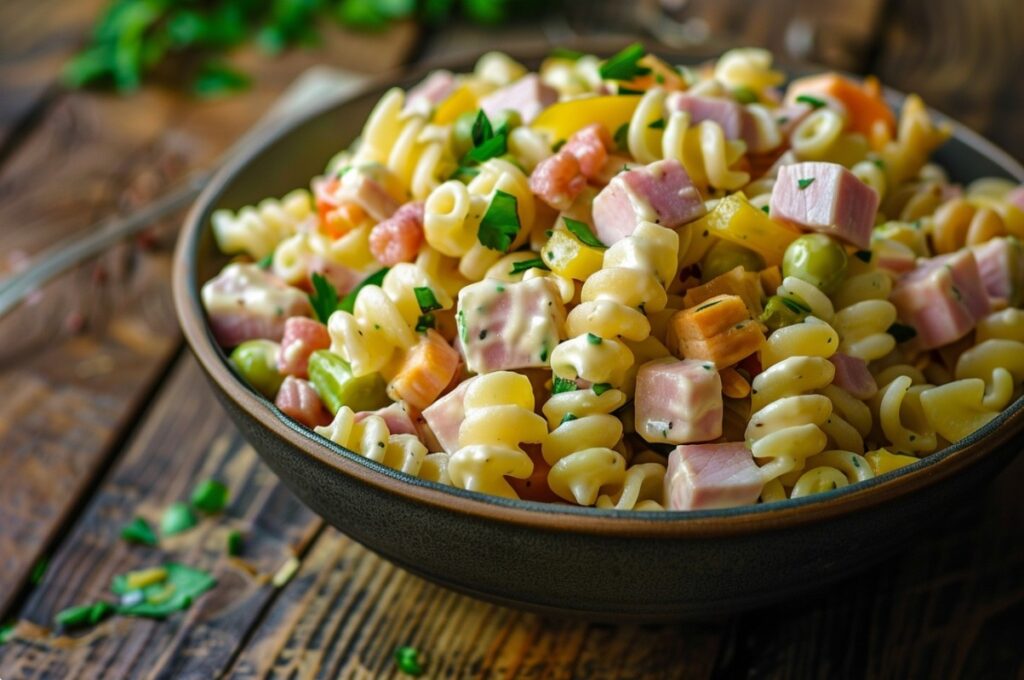
Nudelsalat (German-style pasta salad) is exactly the kind of dish that saves you in moments like that. It’s filling, it likes a crowd, it doesn’t get offended if it sits for a bit, and you can scale it up for any number of people. But here’s the catch: fast doesn’t have to mean frantic. If you do what a lot of people do (cook pasta, dump something on it, stir), you can end up with a sticky, bland mess.
I like the “30-minute control” approach: you’re not reinventing anything—you’re just managing temperature, moisture, and timing. Do that, and the salad doesn’t taste like “after work,” it tastes like “someone who knows what they’re doing made this.” You can tell from the first forkful: the texture, the smell, even the way it looks—glossy and lively instead of dull and clumped.
Let’s break down how to organize the process so Nudelsalat hits the table quickly, without stress, and without sacrificing flavor.
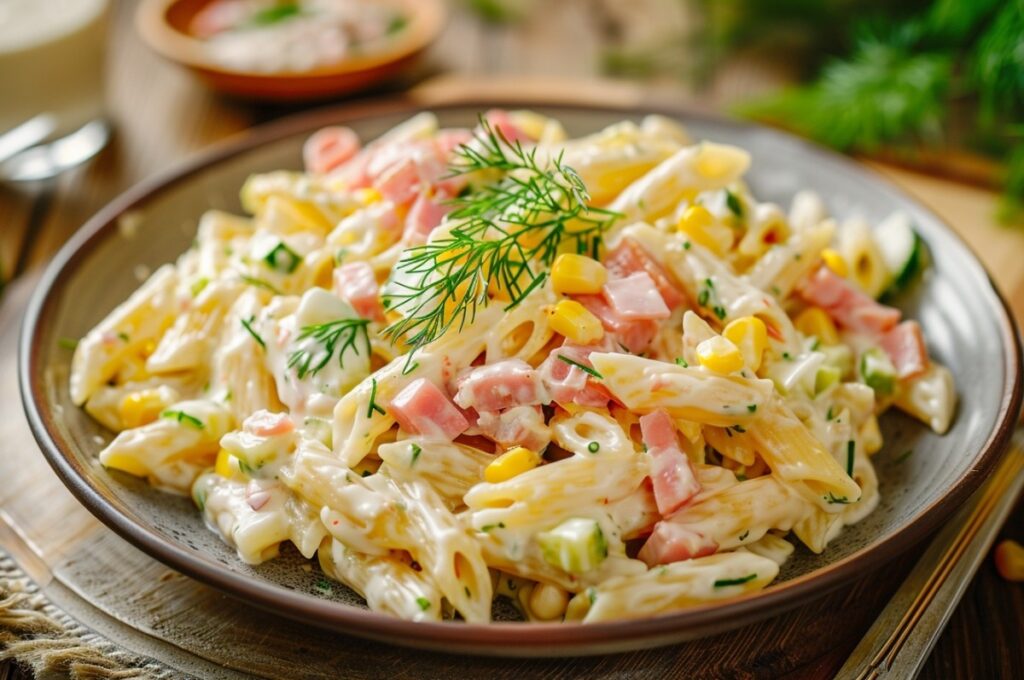
Speed doesn’t start with the knife: set up your kitchen in 3 minutes
When you’re short on time, what really eats it up isn’t chopping—it’s the running around: where’s the bowl, where’s the colander, what am I stirring with, where do I put the chopped stuff. I’ve watched this happen a hundred times. I’ve done it myself.
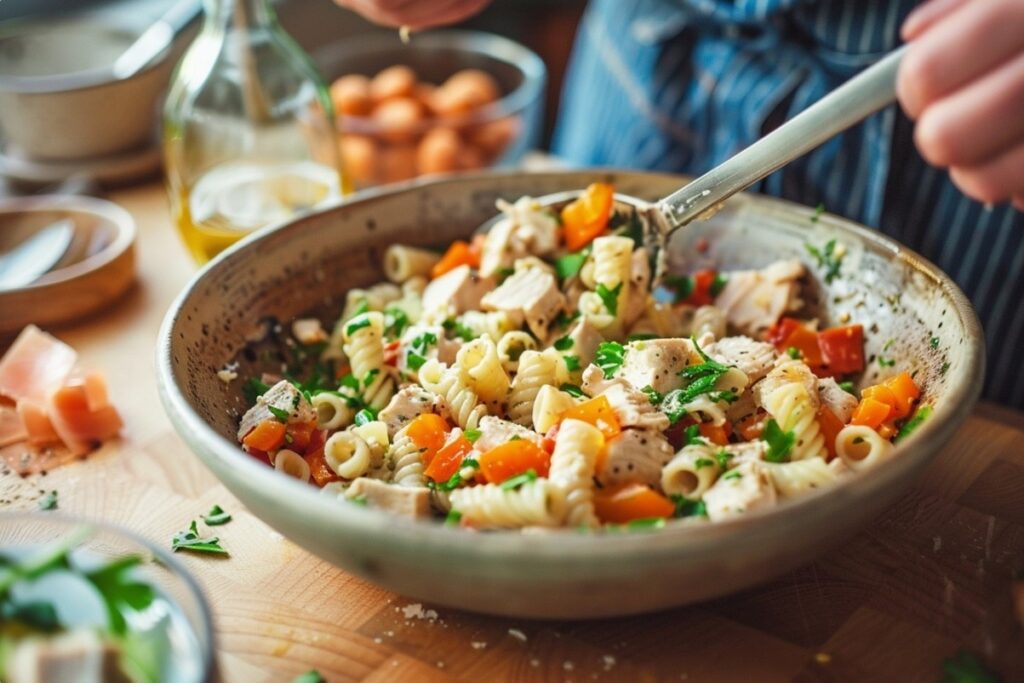
Here’s what I do: before I even turn on the stove, I set up a little “station” on the counter.
- A big bowl the salad can actually live in (not a tiny “for now” bowl—something you can toss in without flinging pasta onto the table).
- A colander in the sink or set over a bowl.
- A cutting board and knife, plus a small bowl/plate for scraps (ends, peels, wrappers).
- A spoon or spatula for mixing (wide is better—you don’t want to mash everything).
Hack #1: if guests are truly minutes away, I put out a second clean spoon right away—for tasting. Otherwise you taste with the same spoon you stirred with, then you’re standing there with sauce on your hands trying to figure out where to put it.
Quick story: once I tried to “save time” and started boiling pasta without prepping anything else. Pasta’s done, and I’m frantically hunting for the colander (of course it’s buried in the dishwasher under pots). By the time I found it, the pasta had overcooked by a minute or two—and you could feel it in the salad: soft, no bite, and it clumped. Since then: station first, water second.
Pasta for Nudelsalat: how to cook it fast so it won’t clump
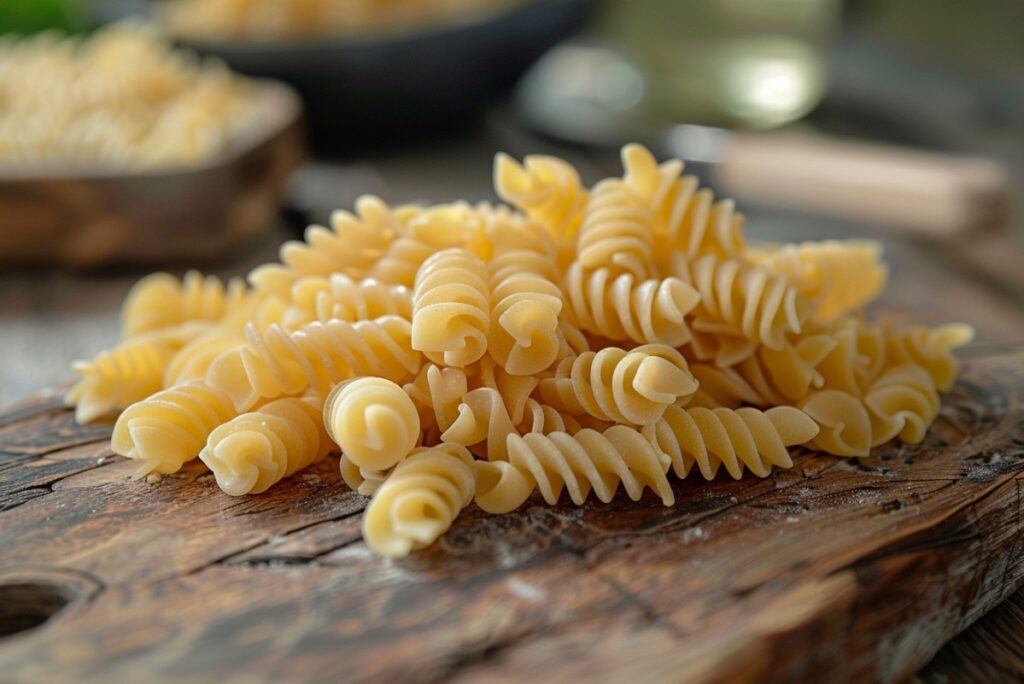
In Nudelsalat, pasta isn’t “filler.” It’s the structure. Get it right and the salad holds up, doesn’t turn to mush, and drinks in the dressing the way it should. Get it wrong and even the best dressing in the world won’t save you from that sad “cold pasta with mayo” vibe.
The mechanics: what happens to pasta in a salad
While pasta cooks, the starch on the surface swells. Overcook it and the outside gets too soft, the starchy film gets thick, and everything sticks to everything. Cook it with a bit of bite and the surface stays intact—so the salad stays loose and pleasant, with that little resistance when you chew.
Second: temperature. Warm pasta actively absorbs dressing. That’s great if you’re in control. Not so great if you pour a cold sauce onto hot pasta and then wander off to chop other things—five minutes later the pasta has sucked it all up, the salad feels dry, and the dressing has “disappeared.”
How it should be vs. what people often do
How it should be: pasta cooked until tender but still springy; the surface isn’t slimy; after draining it doesn’t sit in one solid mound.
What people often do: toss pasta into barely warm water so it takes forever to come up to temperature; get distracted and overcook it; then rinse it until it “squeaks,” leaving it watery and bland.
Practical pace: how to save time while cooking
- Start with a wide pot: the wider it is, the faster it returns to a boil after you add the pasta.
- Use a lid at the beginning to bring water to a boil faster. Once it’s boiling and the pasta is in, slide the lid off a bit so it doesn’t boil over.
- Stir twice in the first minute—this genuinely reduces sticking.
Hack #2: if you’re really down to the wire, drain the pasta 30–60 seconds before “perfect.” In the salad it’ll finish settling into the right texture—not from heat, but from the dressing and vegetables giving off a bit of moisture. That’s still better than overcooking.
To rinse or not?
For Nudelsalat, I sometimes rinse—but not to “sterile.” The goal is simple: stop the cooking fast and wash off excess surface starch so it won’t clump. If you rinse until the pasta is cold and kind of glassy, it won’t absorb flavor as well.
My compromise: a quick rinse under cool water for 3–5 seconds, shake well, let it drain, then immediately toss with a small portion of the dressing—or at least a drop of oil (if it fits your salad style). Don’t leave pasta sitting in the colander “for a minute.” That’s how you get dry edges and a sticky center.
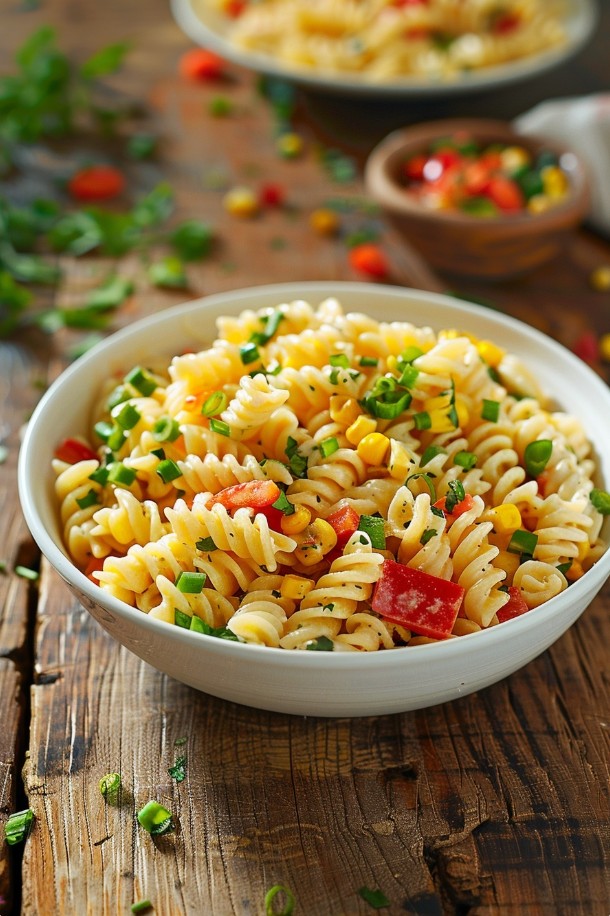
No-fuss dressing: how to make the flavor feel “pulled together” in 2 minutes
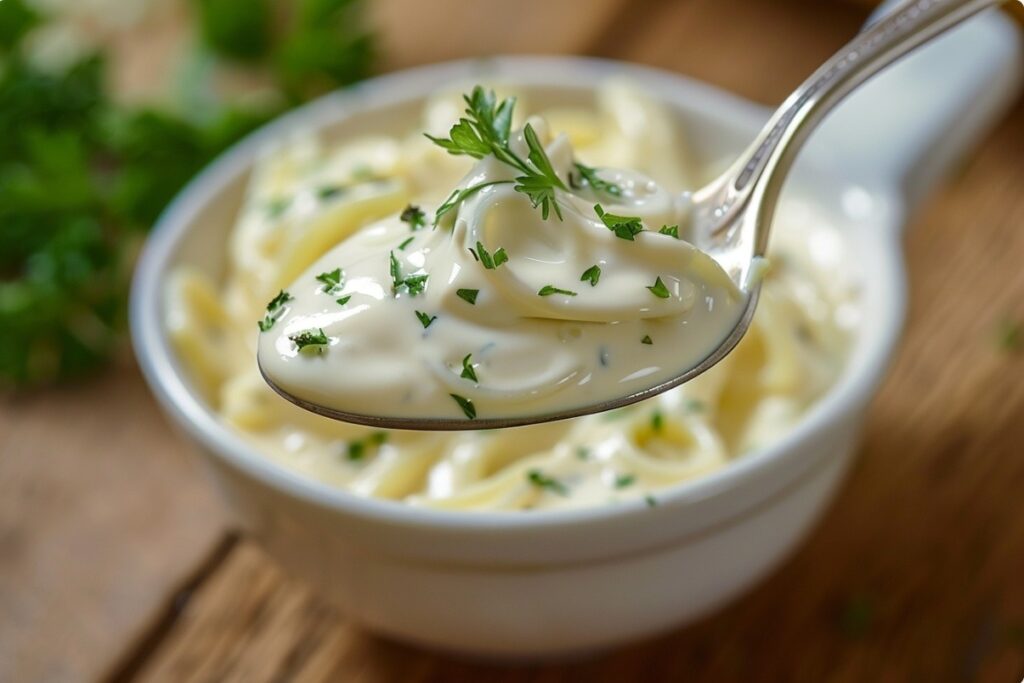
In a quick Nudelsalat, the dressing is your main tool. Yogurt-based, mayo-based, oil-and-vinegar—doesn’t matter. The principle is the same: balance acidity, salt, a touch of sweetness, and some “body.”
When people rush, they usually under-salt and don’t add enough acid. The result is a flat flavor, and the pasta feels heavy.
The mechanics: why salad needs acid
Pasta and most “guest-friendly” add-ins (sausage, ham, cheese, eggs, canned bits) bring richness and that satisfying, fatty feel. Acid (vinegar, lemon juice, pickle brine) does two things: it lifts aroma and it cuts through the richness so the salad doesn’t feel tiring after the third spoonful.
One more thing: cold food tastes muted. What seems perfectly seasoned in a warm kitchen can taste bland on the table 15 minutes later. So the dressing should be half a step brighter than you’d make for a hot dish.
A fast way to make dressing without measuring spoons
I do this all the time: grab a small jar with a lid (or a mug), add your base (whatever you’ve got), add acid, a pinch of salt, a little pepper, then shake or whisk. A jar means one less bowl and no time wasted “mixing until smooth.”
Tip: always taste the dressing on its own. Don’t rely on “it’ll work itself out in the salad.” If it tastes good by itself, the salad is almost guaranteed to taste good.
Hack #3: if the dressing tastes too sharp, don’t rush to add sugar. Add a spoonful of water or a splash of liquid from pickled vegetables (pickles/peppers). Often the issue isn’t the acid—it’s the concentration.
Knife work that saves time: how to cut things so the salad eats easily
Nudelsalat is happiest when everything is roughly the same scale. Not tiny, not “holiday salad” dice—just small enough that pieces cling to the pasta and don’t tumble off your spoon.
In a lot of home kitchens it goes like this: small pasta, huge cubes of add-ins. You take a bite and it’s either one big chunk of pickle or just plain pasta. It sounds minor, but those little details are exactly what makes something feel thoughtfully made.
The “one spoon = one bite” rule
I use a simple test: if I scoop the salad with a tablespoon, I want a bit of pasta, a bit of dressing, and 2–3 different textures in that one spoonful. To get there:
- crunchy things (cucumber, bell pepper, celery) go smaller so they distribute evenly;
- soft things (cheese, egg, ham) can be a touch bigger so you actually notice them;
- very aromatic things (onion, pickled items) go even smaller so they don’t shout over everything else.
A quick onion story
I once made Nudelsalat for a group and decided to add raw red onion “for character”—lots of it, cut chunky. The salad sat for 20 minutes and that was it: all anyone remembered was onion. It wasn’t bad, it just took up all the space. Now I either slice it paper-thin or take the edge off—at least a minute in cold water. Not a fancy trick, just basic care for your guests.
Hack #4: chop “into one container.” Anything that doesn’t release much liquid (sausage, cheese, eggs) can go straight into the big bowl. Juicy things (tomatoes, fresh cucumbers) I keep separate until mixing time if I don’t want the salad to go watery.
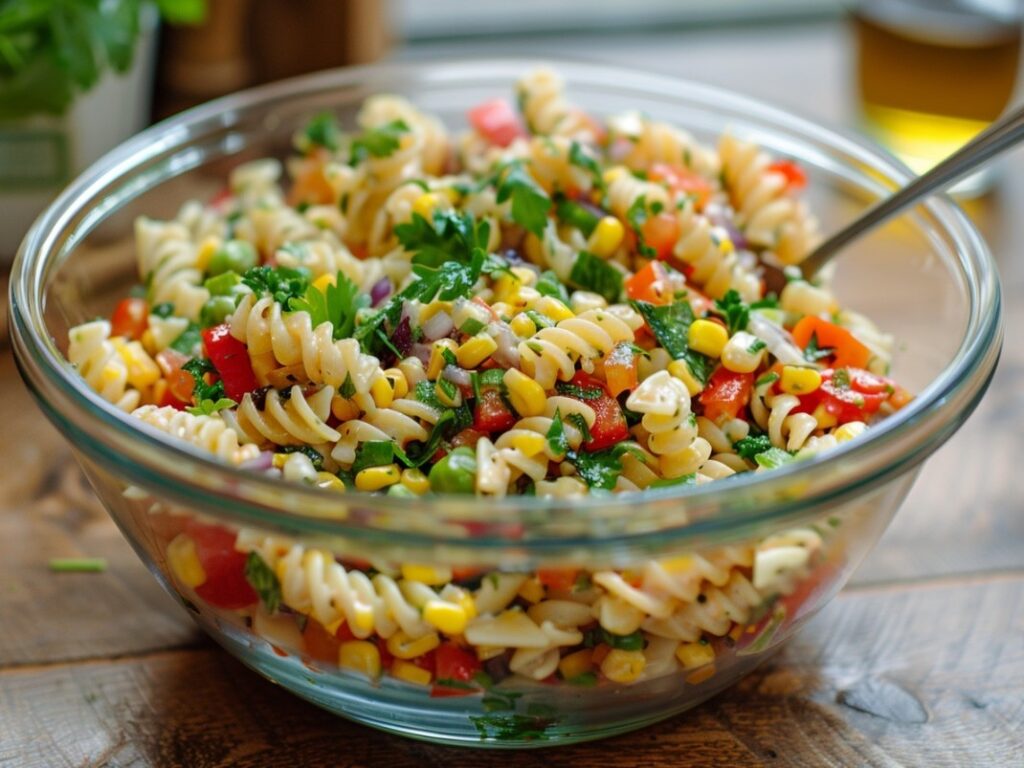
Two big pillars of flavor: temperature and timing that decide everything
This is where “fast and tasty” usually falls apart. People do all the right actions, but they don’t manage two things: the temperature of the components and how long the pasta sits with the dressing. Nudelsalat is very sensitive to both.
Mechanic #1: warm pasta + cold add-ins
Picture it: pasta is freshly drained and still warm. You add cold ingredients straight from the fridge. What happens? The outside of the pasta cools quickly while the inside stays warm. The dressing coats unevenly—some spots absorb, others sit under a slick film.
What I do in real life: I let the pasta sit for 2–3 minutes after draining so excess steam can escape and the temperature evens out. Not until it’s cold—just until it stops being piping hot. Then the dressing goes on more gently, and the salad feels consistent.
Mechanic #2: time for flavors to “marry”
Nudelsalat is almost always better 15–30 minutes after mixing. Not because it “magically rests,” but because the pasta absorbs some dressing and the aromatic bits (pickles, spices) spread through the whole bowl.
But there’s a trap: if you pour in all the dressing right away and then the salad sits, it can turn either dry (pasta drank it) or watery (vegetables released juice). That’s why I like a two-stage mix.
- Stage one: add 70% of the dressing right away so the pasta gets seasoned.
- Stage two: add the remaining 30% right before serving to bring back juiciness and shine.
Hack #5: if you need to sit everyone down right now and there’s no time for “15 minutes,” flip the strategy: toss the pasta with part of the dressing, but add the juicy components at the last minute. The salad will feel fresher even without resting.
Common mistakes that make Nudelsalat taste like cafeteria food
I’ve seen people try so hard—and it still comes out heavy and a bit sad. Almost always it’s not “bad ingredients,” it’s a few repeat mistakes.
Mistake 1: overcooked pasta
Sign: the pasta is soft, the edges start to break down, and the salad quickly turns uniform. No bite.
Next time: pull it off the heat earlier and don’t leave it sitting in hot water “while I finish chopping.” Pasta keeps cooking even after you turn the stove off.
Mistake 2: adding the dressing “at the end”
Sign: the pasta is dry inside, and the sauce feels like a coating on the outside.
How it should be: some dressing should hit the pasta while it’s still slightly warm—then the flavor goes deeper.
Mistake 3: too much of one dominant ingredient
Sign: all you taste is smoke/onion/vinegar/salt. Everything else disappears.
My move: if something has a strong aroma, I add it in small amounts, stir, and taste each time. That’s not slow—it’s faster than trying to “save” a whole bowl later.
Mistake 4: salting the wrong way
Sign: you salted, but it still tastes like nothing. This often happens when people only salt the dressing and don’t salt the pasta water (or barely do).
Salt in the water isn’t “to make it salty.” It’s the baseline seasoning for the pasta itself. Without it, the salad is harder to bring into balance because you end up over-salting the dressing.
If something goes wrong: quick fixes without the panic
This is my favorite part, because it’s what gives you that feeling of control. Salad isn’t cake. You can adjust almost everything on the fly.
The salad turned out dry
This happens when the pasta absorbs the dressing, or you made the salad ahead and it sat.
- Add a bit more dressing, but it doesn’t have to be the same thickness. Often 1–2 spoonfuls of liquid is enough: pickle brine, a splash of water, or a little oil plus acid.
- Stir and let it sit for 3 minutes—the pasta will relax and soften.
The salad is watery
Usually it’s juicy vegetables or mixing too early.
- Add a bit more “dry” base: extra pasta (if you have it) or something that absorbs—finely chopped cheese/egg/another firm ingredient (don’t go overboard).
- Pour off excess liquid from the bottom if there’s truly a lot. It’s fine. Not a sin.
- Rebalance the seasoning after draining—salt often goes out with the liquid.
You oversalted it
Most often this happens when the salad already has salty components (pickles, sausage, cheese) and then you add salt out of habit.
- Add a neutral, unsalted base: a bit more pasta or another unsalted ingredient.
- Add acidity carefully: it won’t remove salt, but it shifts attention and helps balance.
- Don’t try to “fix” it with sugar—often it gets worse and turns into that odd sweet-salty thing.
The flavor is flat and boring
This is the most common scenario—and the easiest to fix.
- Add salt in a small pinch and mix well.
- Add acid drop by drop (lemon/vinegar/brine), then mix again.
- Add aroma: a little black pepper, a pinch of dried herbs, or something punchy in a micro-dose.
Tip: when it feels like “something’s missing,” 8 times out of 10 it’s either salt or acid. Start there, not with extra ingredients.
Serving for guests: how to make it look generous and hold its shape
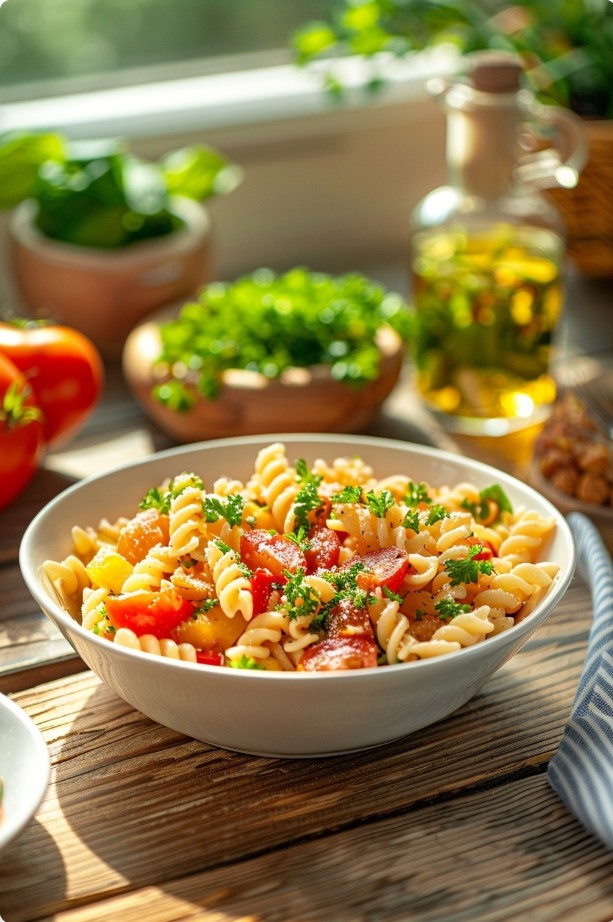
Nudelsalat is a party dish. And here it’s not just what’s inside—it’s how it sits on the table. People eat with their eyes as much as with their mouths.
I like serving Nudelsalat in a big bowl, but with a sense of order. Not “mixed into one concrete mass,” but a salad where you can still see different pieces and textures. When it’s fresh, it has a little shine, it smells bright and a bit tangy with spices, and the spoon goes in easily and comes out with a portion that holds together.
How to prep the salad when guests are minutes away
- Toss the pasta with 70% of the dressing.
- Add the “dry” components that won’t weep.
- Add juicy and crunchy components in the last 5 minutes so they keep their personality.
- Right before serving: quick taste and adjust salt/acid.
A quick story about “two bowls”
Once I made this for a birthday, and while everyone was arriving I put the bowl on the table right away. Half an hour later it was denser and drier than I wanted. Now, if people tend to trickle in, I keep it simple: the base in one bowl, the remaining dressing in a jar. Right before we sit down—pour, toss, and the salad is lively again. It takes 20 seconds, and the impression is completely different.
A few more small things that work
Hack #6: if the salad needs to sit on the table, don’t park it right next to the stove/oven. Heat thins the dressing and the salad “runs” faster. Put it closer to the cooler side of the kitchen.
Hack #7: keep a bit of crunchy “finish” separate (finely chopped cucumber/pepper or herbs) and scatter it on top right before serving. It’s not decoration for decoration’s sake—it’s about that first bite tasting fresh.
When Nudelsalat is made in a rush, it can slide into “good enough.” But if you manage the pasta, the dressing, and the moment you mix everything together, it becomes a different story: a salad you’re happy to put in the center of the table—and one that disappears faster than you can fill the kettle.
I’m curious how you usually make pasta salads: do you mix everything at once, or keep some things separate until serving? And what trips you up most often—pasta, dressing, or timing?