Serving Caesar Salad: How to Make It Look Restaurant-Style

You’re assembling a salad and suddenly realize: everything is tasty, but the appearance is lacking. Even with fresh greens, chicken, and croutons, when you put it on a plate, it doesn’t meet the mood or expectations. At home, you want to recreate something restaurant-like without unnecessary fuss and pomp. Often, there’s a fear: what if it all falls apart, the leaves wilt, or the dressing runs? I’ve caught myself thinking this, and interestingly, most problems aren’t with the ingredients but with how and when you arrange them.
I’ve often seen how a beautiful dish in a restaurant photo makes you want to try it, but a similar combination at home disappoints. The secret isn’t just in the ingredients or dressing. The magic is in the details: what you place first, what last, how you touch the leaves, how you highlight the structure. Once you understand this process, the salad starts to ‘speak.’ And you notice that the fear of ruining it turns into curiosity about how to make it better.
This is all about how to approach serving Caesar so that the look, taste, and mood are like in a great restaurant—without unnecessary stress and clichés. About the little things that make a difference and the mistakes that have happened to me and others. Because there’s nothing wrong with a slightly crooked salad if you understand why it turned out that way and how to fix it.
Understanding Aesthetics: Why ‘Restaurant Look’ Works
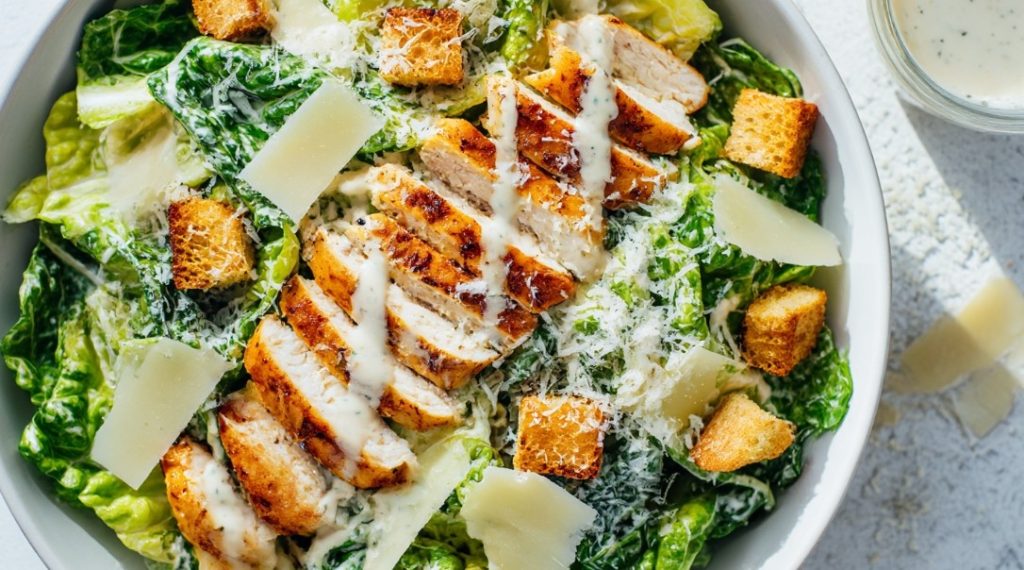
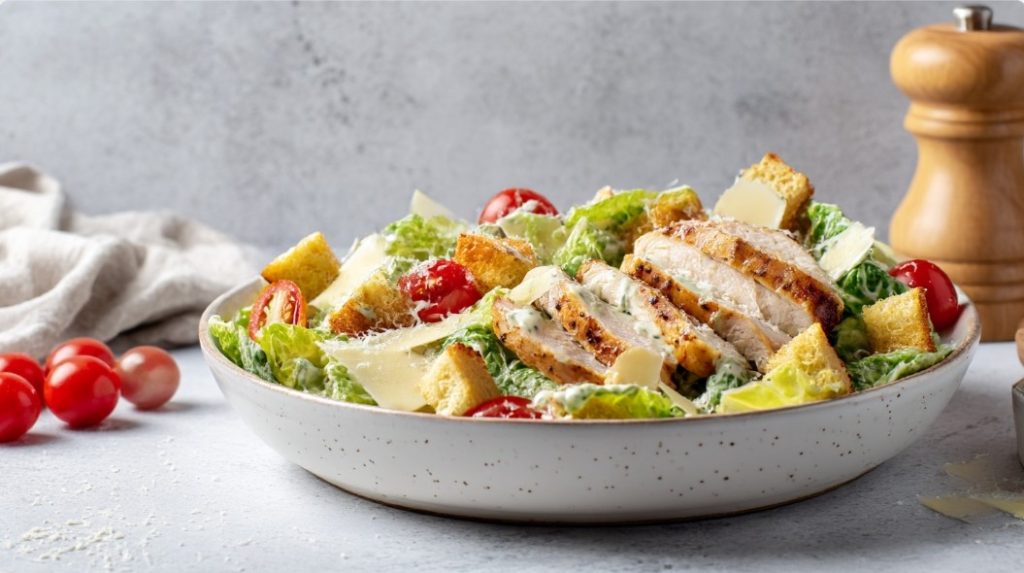
Often, there’s an image in mind: a white plate with bright leaves, crunchy croutons, slices of cheese—all not in chaos but with a sense of space. Restaurant presentation works not because the chef spent an hour arranging it. It’s simpler: the right emphasis on texture, clean lines, nothing extra. It’s like mood on a plate—not ‘piled up,’ but ‘arranged.’
Why is this important? When food looks appealing, you perceive it differently. I always find it helpful to imagine the plate as if it’s a small stage. What do you want to highlight as the main feature? Choose it and build around it. In Caesar, it’s usually the leaves and chicken or shrimp, with cheese as an accent. Everything else enhances, not overshadows.
Another nuance: restaurant presentation is about balance. Some colors highlight others, textures don’t stick together. When everything is mixed, the dish looks ‘tired.’ But if the leaves stay separate, croutons aren’t soggy, and cheese is visible—the dish comes alive. It’s not about perfection but about the feeling that everything is in its place.
Choosing the Dishware: Why the Plate Solves Half the Problem
You can make a delicious salad, but if you serve it in a deep soup bowl—it loses its look. I didn’t believe this for a long time until I started experimenting at home. The plate is the frame for the picture. Sometimes just changing the dishware makes the salad look twice as good.
I recommend using a flat plate with a rim, medium-sized. It provides space but doesn’t let everything spread out. It’s good when the background is white or light: then the leaves and cheese look brighter. Plates with patterns often ‘steal’ the attention, and the dish no longer looks like the main focus.
Another detail: don’t try to fill the entire surface. If there’s a bit of free space, the dish looks lighter. When I tried to pile the salad ‘to the max,’ it looked heavy, even if it was light. Now I leave a few centimeters around the edges—and it immediately changes the impression.
Preparing the Components: From Texture to Temperature
Before arranging anything, it’s worth taking care of the individual details. Often, the salad spoils not on the plate but before it. Order is important here—and a bit of patience.
Leaves: Crunchiness is the Basis of Appearance
Romaine lettuce is not just leaves but the main volume and texture. If it’s wilted, no presentation will save it. I washed the leaves in cold water, dried them with a towel, and put them in the fridge for a few minutes. This makes them crispy, and water droplets don’t dilute the dressing. Don’t dry the leaves with a hairdryer or on a radiator—they’ll become limp.
Croutons: Crunchy, Not ‘Wet’
It’s best to toast croutons separately and cool them before serving. If you add them to the salad while still warm, they quickly become soggy and lose their appearance. I like to leave them on a rack so they don’t steam from below. Croutons should be golden but not over-dried.
Chicken, Shrimp, Bacon: Warm or Cold?
Restaurants often use warm proteins—it adds freshness. At home, you can let them cool for 3-4 minutes before adding them to the salad. This way, they don’t ‘steam’ the leaves, and the dish holds its shape. If the proteins are cold, they don’t release juice, and the dish looks neater.
Cheese: Not Chunks, But Shavings
Parmesan is not just a flavor but also an accent. It works best when you grate it into thin shavings—this way, it doesn’t sink into the dressing but lies on top in light waves. I’ve often seen how thick chunks looked rough, while fine shavings (on a fine grater) got lost among the leaves.
Dressing: Not ‘Piled,’ But a Thin Layer
Dressing is the binding element. If there’s too much, the salad ‘floats’ and looks heavy. If too little, it looks dry. I add the dressing gradually, mixing with my hands in a separate bowl, so each leaf is lightly coated. This way, the salad looks neat, not ‘splattered.’
Assembly and Arrangement: How to Create Volume and Lightness
This is where the most interesting part begins—the dish ‘comes to life’ under your hands. I’ve noticed that when I rush, everything turns into a pile. When I give myself a few minutes to think, the appearance is completely different.
Start with the Leaves
The leaves are the base. I arrange them ‘airy,’ not pressing down, slightly diagonally or chaotically, but with the feeling that there should be space between the pieces. This makes the dish look voluminous, not ‘flattened.’
Add Proteins and Croutons
I place chicken or shrimp on top, but not all together. It’s better in small groups, so as not to cover all the leaves. I arrange croutons around the edges, some ‘nestled’ in the leaves, some left on top. This creates a sense of movement, and the dish looks natural.
Cheese is the Finishing Touch
I don’t sprinkle Parmesan shavings but ‘toss’ them lightly. They fall in waves, and each piece shows different thicknesses of cheese. This is not only beautiful but also gives different tastes in different parts of the salad.
Visual Accents
Sometimes I add a few small details—a few grains of black pepper on top, a couple of drops of olive oil around, or even one or two sprigs of microgreens. It’s not necessary, but it adds a ‘stage’ for the eye.
Tip: Arrange the salad in the center of the plate, then gently ‘stretch’ it with a fork to create the effect of natural disorder. Don’t strive for perfect symmetry—it’s the light chaos that looks most lively.
Temperature and Serving Speed: Why Timing Plays a Key Role
Another common problem is that the salad wilts while you’re bringing it to the table. It’s happened to me: everything looks beautiful, but after 10 minutes, the leaves become wet, the croutons soft, and the cheese sticks.
Important: All components should be chilled or at room temperature. Only proteins can be slightly warm, but not hot. And the assembly and serving should be done just before the meal—otherwise, even the best presentation will lose its look.
One trick: leave the plate in the fridge for 10 minutes before serving. The cold surface helps the leaves stay fresh longer.
Common Mistakes: What to Avoid
Everyone makes mistakes, and I’m no exception. Here’s what happens most often:
- Over-dried or wilted leaves: if not dried after washing—the dressing runs, and the look is ‘watery.’
- Too much dressing: leaves stick together, and the dish looks heavy.
- Adding croutons warm: they become soggy and lose crunch.
- Too dense arrangement: everything turns into a pile, no volume.
- Using thick cheese slices: cheese ‘stretches’ and looks rough.
- Serving too early: the salad loses its look before reaching the table.
I used to have a habit of ‘pre-mixing’ everything together—and serving it already a bit wilted. After several unsuccessful attempts, I started assembling the salad only before serving—and the look became completely different.
How to Fix It If Something Goes Wrong
Sometimes, even with all the efforts, the salad doesn’t please the eye. It’s not the end of the world—you can always ‘revive’ it.
- If the leaves have wilted—put them in ice water for a few minutes, then dry them, and they will partially regain their crunchiness.
- Croutons became soft—toast them on a dry skillet or in the oven for 2-3 minutes.
- Too much dressing—add a bit more dry leaves and gently mix to absorb excess moisture.
- Cheese clumped—add a bit more fresh shavings on top.
Once, my salad looked completely ‘sad’ because of warm chicken—the leaves wilted before my eyes. I just laid a new portion of leaves on top, leaving the previous ones below. Presentation saved, and even the taste wasn’t affected.
Life Hacks for Home Serving: Simple Tricks with Big Differences
- Hands are better than a spoon: gently mix leaves and dressing with your hands, so everything stays intact.
- Plate with a rim: supports structure, convenient for portioned serving.
- Light ‘chaos’: don’t strive for perfect symmetry, let the dish look lively.
- Oil or balsamic drops: around the edges of the plate for color and shine.
- Portioned serving: in restaurants, they often serve separately, not ‘in a big pile’—it works at home too.
A simple trick: if the salad looks dry—moisten your fingers with water and lightly run them along the edges of the leaves. The look becomes fresher in a second.
Color, Light, Background: How Details Affect Perception
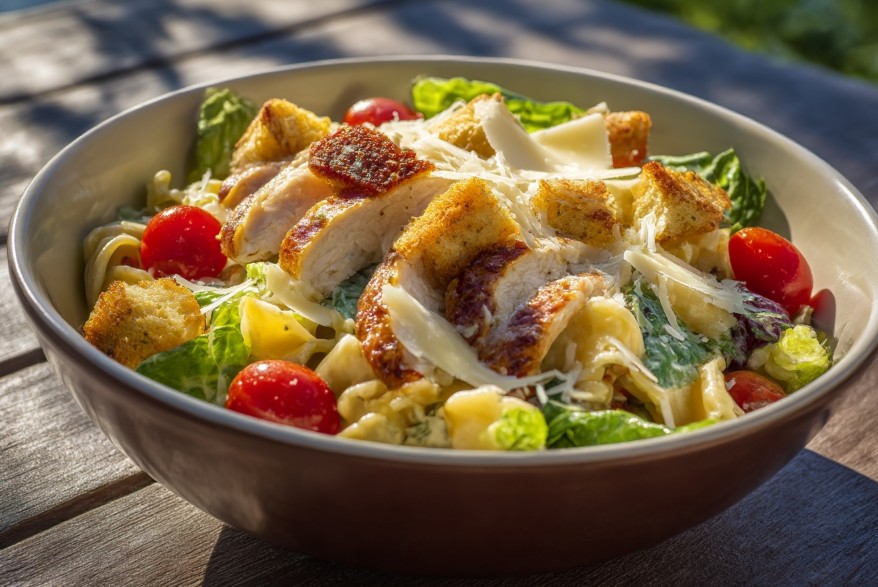
I’ve noticed that even a simple salad looks different depending on the lighting. Natural light is the best option, especially in the morning or afternoon. If you’re dining, use a table lamp from the side—the dish looks more voluminous.
The background of the plate also matters. On a white background, the greens look bright, on a dark one—more dramatic. I avoid patterned tablecloths or towels under the plate because they distract attention. Sometimes a wooden board or a simple napkin is enough.
Micro-Stories: How It Works in Life
When I first made Caesar for friends, I wanted to do everything ‘like in the photo.’ I mixed it in a large bowl, put it on a plate—and it looked like someone had argued with the salad. One of the friends suggested, ‘Let’s try arranging everything separately.’ We just took the leaves, laid them out in a fan, added chicken, croutons, cheese—and the dish looked much better, even though the ingredients were the same.
I also remember how at the café where I interned, the chef said, ‘You don’t need to find the perfect form—just give each component space.’ It was a revelation. I stopped ‘pressing’ on the leaves, and even at home, salads started to look festive.
Once, guests arrived early, and I was in a hurry. I served the salad while the chicken was still hot. After 15 minutes, everything became wet. Since then, I let proteins cool down, and I no longer rush. Better to wait a bit than lose the look.
Serving for Yourself and Guests: How Not to Fear Experimenting
Many think: at home, it’s not a restaurant, and it’s not worth bothering with the presentation. But even for yourself, you want it to be beautiful. I’ve noticed: when you pay a little attention to the arrangement, eating becomes more enjoyable, and appetite increases.
Don’t be afraid to try new forms. Serve the salad in portions, or on a large board, or even in glasses—it changes perception. If you’re afraid of ‘ruining’ it—assemble one portion, see how it looks, and then make it for everyone. Every attempt is an experience, even if not perfect.
It helps me to imagine that I’m cooking not only for guests but also for myself. This relieves tension, and the presentation comes out more naturally. Don’t try to replicate an exact Instagram picture—better give freedom to your hands and feelings.
In the end, the main thing is the enjoyment of the process. If the dish gives you a good mood, it already looks better.
So, serving Caesar is not magic or an art for the chosen ones. It’s a set of small techniques that can be mastered even in a home kitchen. With each attempt, it becomes easier, and the desire to experiment further arises. What are your favorite tricks for serving salads? Share in the comments—it’s interesting to compare experiences!