Shakshuka as a Complete Meal

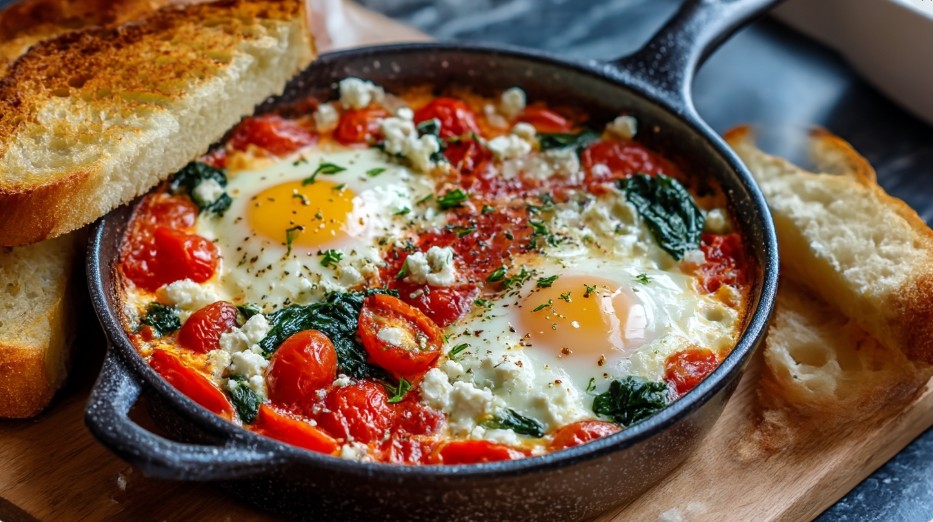
I often come home after a long day, feeling too tired for a complicated meal, yet hunger doesn’t wait and pulls me towards the fridge. In such moments, it’s easy to grab something on the go or fall into the trap of a ‘snack’ that doesn’t really satisfy. That’s when I remember shakshuka. It’s not just a dish—it’s a way to reconnect with myself, eat deliciously, enjoy, and feel that I’m not sacrificing health for speed or convenience. Shakshuka has become a symbol of common sense in the kitchen for me, where balance is more important than any restrictions, and satiety is not just about food but also about feeling. Although for some, this dish is just a fried eggs with tomatoes.
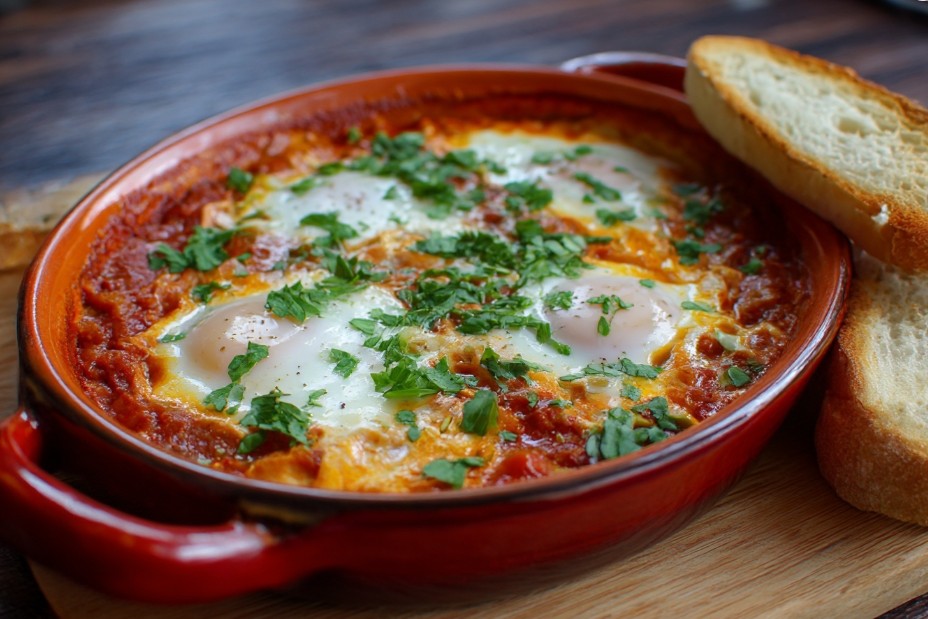
Why Shakshuka is More Than Just Breakfast
Traditionally, shakshuka is perceived as something for the morning. But it’s not just about how to start the day. When you come home in the evening and want to eat something filling but not heavy, shakshuka serves as a complete meal. It’s simple but not primitive: eggs, vegetables, a bit of spices, and—most importantly—the feeling of home comfort. You don’t feel like you’ve ‘eaten something wrong,’ as can happen after fast food, and you don’t torment yourself with thoughts that you should have chosen a salad instead of dinner.
Eggs provide protein, vegetables add juiciness, texture, and aroma, and spices add warmth. It tastes like a good conversation: bright but not intrusive. It’s a dish that adapts to you, not the other way around. I find it important that after shakshuka, I don’t feel the need to ‘chew on’ something else or run to the fridge an hour later.
A friend of mine told me how she made shakshuka when she had little time before a night shift. It turned out quick, filling, and not at all boring. Since then, this dish has become her savior for evenings after work. For me, it proves once again: shakshuka doesn’t have a fixed place in the meal schedule—it works at any moment.

Balance of Proteins, Fats, and Carbs Without a Calculator
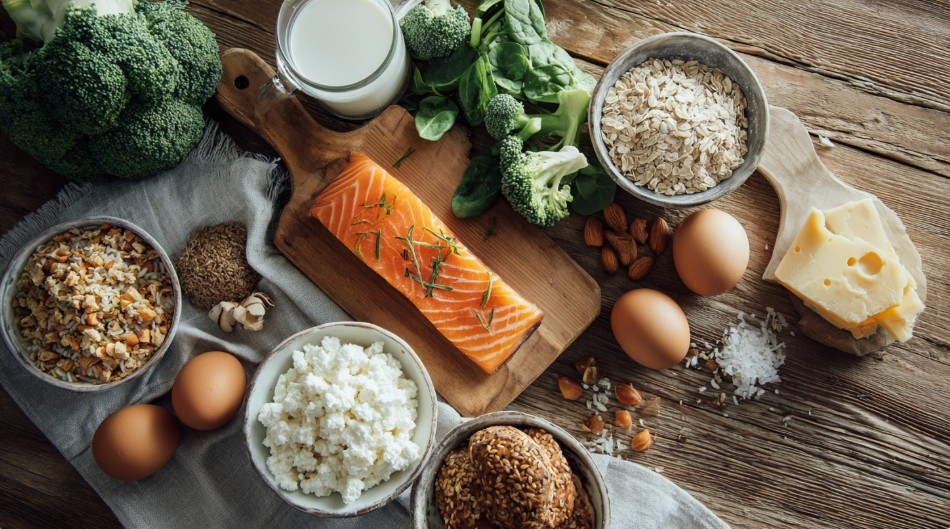
Often, when talking about balance in nutrition, schemes, tables, and some ratios appear. In real life, it rarely comes to that. I don’t count how much I’ve eaten—I rely on appetite, the feeling after eating, and simple logic. In shakshuka, everything is intuitively balanced: eggs are a source of protein, vegetables are carbohydrates and fiber, olive oil adds a bit of fat for taste.
When you cook shakshuka, you don’t think about formulas. You see the eggs slightly set on the surface of the tomato sauce, hear a light sizzle, and the aroma of pepper and onion deepens. It’s about pleasure and natural balance. If I feel like I need more energy, I add a piece of whole-grain bread. Sometimes, satiety comes even without it.
Guide for myself: after shakshuka, the body responds with gratitude—there’s no heaviness, drowsiness, or feeling that ‘you ate something wrong.’ This is the main indicator of a healthy meal for me.
What is Satiety and How Shakshuka Helps to Feel It
The feeling of satiety is not just about ‘filling the stomach.’ It’s when food leaves a sense of calm: you’re not drawn to sweets, you don’t want to snack on something else. With shakshuka, this feeling comes naturally. Vegetables provide moisture, juiciness, and texture. Eggs add softness and creaminess, filling the space on the plate and inside. When you eat shakshuka, each piece of bread absorbs the tomato sauce, and satiety comes not suddenly but gradually.
I’ve noticed that after shakshuka, I’m rarely drawn to ‘wash it down’ or eat ‘dessert.’ It’s not like after a light salad when you remember you’re hungry an hour later. Here, satiety lasts longer, and both the body and mood feel it.
My Observations from Practice
There were days when I made shakshuka after a work marathon. At first, it seems like it won’t be enough, but in fact—it’s sufficient, and there’s even a desire to spend time with family rather than hang around for snacks. When the kids ask for seconds, I understand: the dish really works for satiety. And here’s a recipe for Shakshuka with a Moroccan Twist.
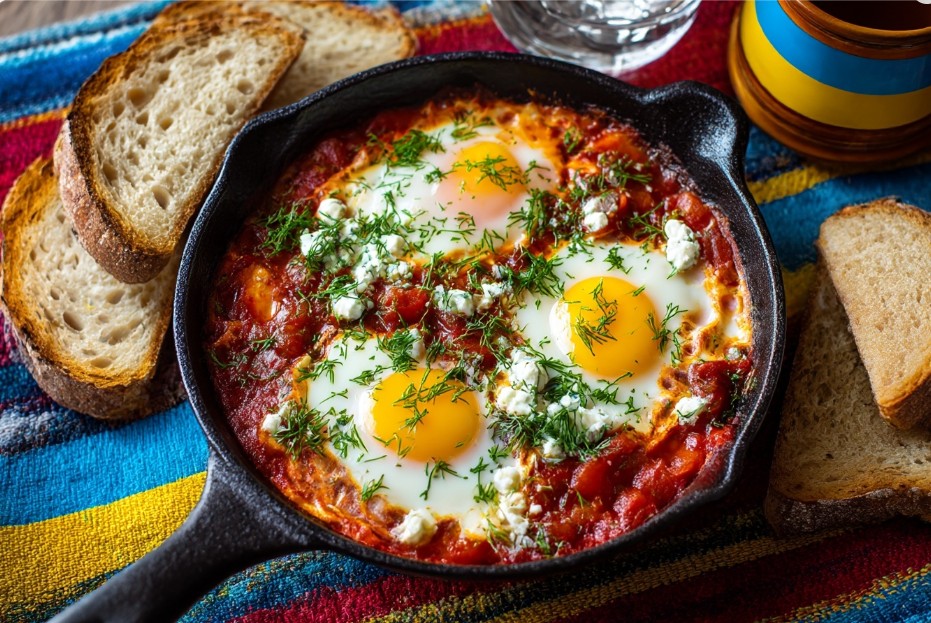
Flexibility: How Shakshuka Adapts to Life
I like that shakshuka doesn’t require special ingredients. If you have eggs, that’s already good. You add what you have on hand: tomatoes, peppers, onions, even leftover vegetables from yesterday. It doesn’t confine you to a framework: you don’t have to run to the store for something exotic. It’s a very practical dish, especially if the fridge is empty and the kids are already asking for food.
When making shakshuka, I don’t feel the ‘burden of correctness.’ If I want, I add a bit of cheese; if not, I stick to what’s available. There are no prohibitions or mandatory steps. This allows you not to ‘break down’ and not ruin a good mood over food.
Life Story
Once, after a festive feast, I didn’t want heavy food at all. I made shakshuka with leftover vegetables. It turned out light but filling. After that, there was no desire to ‘compensate’ with something else because the body received everything it needed. Shakshuka is about flexibility, not about following a diet.
Tip: Don’t be afraid to improvise. Add greens, different vegetables, even a bit of beans or spinach if you have them on hand. It won’t spoil the balance but will make the dish more interesting.
Common Sense and Habits: Shakshuka Instead of a System of Prohibitions
I’ve long stopped asking myself ‘is this healthy or harmful?’. There are things that just work for the body, give energy, and don’t provoke guilt. Shakshuka is one of those dishes. It helps not to fall into extremes: you don’t have to exclude something from your diet, fear ‘wrong’ foods, or count every bite.
Instead of a system of prohibitions, shakshuka taught me small habits: eat some vegetables every day, don’t be afraid of fat (olive oil is very appropriate here), listen to yourself and your appetite. It’s not perfect food, but it doesn’t have to be. It’s about balance and common sense.
Typical Mistakes I See in the Kitchen
- Trying to make shakshuka ‘dietary’ by removing oil or eggs—then the taste and satiety disappear.
- Cooking without vegetables—you just get eggs, not a dish.
- Being afraid to add spices—shakshuka loves aroma and warmth!
I’ve seen some acquaintances try to ‘lighten’ shakshuka and lose the main thing—texture and taste. Common sense in the kitchen is not about removing everything that seems ‘extra,’ but about being able to keep moderation and listen to yourself.
Shakshuka in Real Life: Workdays, Fatigue, Kids
When the day has been too busy, shakshuka is like a lifeline. It doesn’t require much time, doesn’t make you run between the stove and the fridge. For me, this is especially important when the kids are hungry, and there’s no energy for long preparations. You can involve them in the kitchen: let them chop vegetables, stir the sauce. It adds warmth and shared joy even on weekdays.
One of the life hacks is to cook shakshuka in a large pan and serve it directly at the table. It saves time and creates a cozy dinner feeling. Kids love to take pieces of bread and dip them in the sauce, and adults appreciate not having to wash a lot of dishes.
Tip: If there’s a bit of shakshuka left, you can reheat it the next day and add it to breakfast. It doesn’t lose its taste and sometimes even gets better.
After such dinners, there’s no feeling of heaviness, but there is peace and satisfaction—for both kids and adults.
How to Avoid Emotional ‘Breakdowns’ and Stay in Balance
There are moments when everything goes haywire: fatigue, stress, and your hands automatically reach for sweets or snacks without measure. I’ve developed a simple habit for myself—not to wait until hunger becomes unbearable. Shakshuka helps here perfectly: you can prepare it quickly without much effort and get exactly what you want—a warm, filling dish.
Another point is not to punish yourself for ‘imperfect’ dinners. If you don’t want to cook something complicated, shakshuka is a compromise between wanting to eat well and not losing control. It doesn’t cause guilt because you know: it has everything the body needs and nothing extra.
Life Hacks from Experience
- Keep a can of canned tomatoes on hand—shakshuka is always within reach with them.
- Vegetables can be grated instead of chopped—the dish cooks even faster.
- Don’t be afraid to substitute ingredients—the main thing is to keep the taste and texture rich.
Shakshuka has become my answer to how not to ‘break down’ during periods of stress. It gives a sense of support even when everything around is chaotic.
Practical Guidelines for Everyday Eating
I don’t like complicated rules. Instead, I focus on simple things:
- Eat when hungry, not when ‘you should.’
- Add a bit of vegetables to every meal—shakshuka is perfect for this.
- Don’t get hung up on ‘correctness,’ but enjoy the taste.
- Be flexible: if you lack strength or time, don’t demand perfection from yourself.
Shakshuka is not a recipe but an approach to life. It’s about how food can be both filling and tasty, and it doesn’t obligate you to live by a list of prohibitions. It helps me maintain balance not through strictness but through trust in myself and my feelings.
Tip: If you want to diversify the dish, add a bit of hot pepper or fresh greens. It won’t spoil the balance but will only enhance the flavor.
Micro-Stories: Shakshuka in Different Life Situations
I’ve seen many times how shakshuka saves in different circumstances. Here are a few short stories from my experience:
- After a workout, when you need a light but nutritious dinner—shakshuka provides that same feeling of recovery.
- On a day off, when you want to gather everyone at the table—shakshuka unites because it’s easy to share and eat together.
- When guests are at home, and time is short—shakshuka looks bright and always impresses.
- On weekdays, when the kids are hungry, and the fridge is almost empty—shakshuka saves even with minimal products.
In these situations, the main thing is not to adhere to strict rules but to seize the moment and enjoy simple things. Shakshuka doesn’t require perfect conditions or a perfect mood; it supports even when the mood is at zero.
How to Feel Balance Without Fanaticism
Over the years, I’ve realized: perfect nutrition doesn’t exist. There’s only what suits you right now. Shakshuka reminds me of this every time I sit at the table. Balance is not about mathematics but about feeling. The body tells you when you’re full, when you need more vegetables, when you want more spice or, conversely, a milder taste.
I had a period when I tried to eat ‘by the rules.’ In the end, I realized that it only adds stress. Shakshuka helped me return to simplicity: eat with appetite, listen to myself, don’t be afraid to experiment. That’s true balance.
Tip: Don’t chase perfection. It’s better to focus on the feeling after eating—if it’s satisfying, light, and tasty, then you’re on the right track.
Shakshuka is not a formula but a way to remind yourself: food is a part of life, not a source of anxiety.
When I think about shakshuka, I remember how the pan sizzles, how steam rises over the vegetables, how the eggs gently wrap in the sauce. In these moments, all the hustle and bustle quiets down. It’s not about a diet but about caring for yourself and your loved ones. It’s about life with a taste of balance.
What was your best shakshuka? Does this dish help you find balance in your daily life? Share your stories—it’s interesting to see how shakshuka works in your life rhythm.