Shakshuka for Beginners: A Step-by-Step Guide Without Mistakes


There are dishes that seem more complicated than they actually are. Shakshuka is one of them. I remember the first time I cooked it in a regular home kitchen, not even my own, but at a friend’s place. He was worried that the eggs would spread, the vegetables would burn, and the taste would be ‘not quite right.’ This is familiar to many who are just starting to experiment with this dish: it seems simple, but it turns out to be either a puree of tomatoes and eggs or something completely different from what was intended. And the main thing is the fear of ruining it, being disappointed, and thinking ‘it didn’t work out again.’ In reality, shakshuka can be the point where you feel: I control the process, I understand what’s happening in the pan, and I can intervene if something goes wrong. Today, I want to explore how to feel this control and avoid classic mistakes, even if you’re making shakshuka for the first time.

What is Shakshuka: Understanding the Essence of the Dish
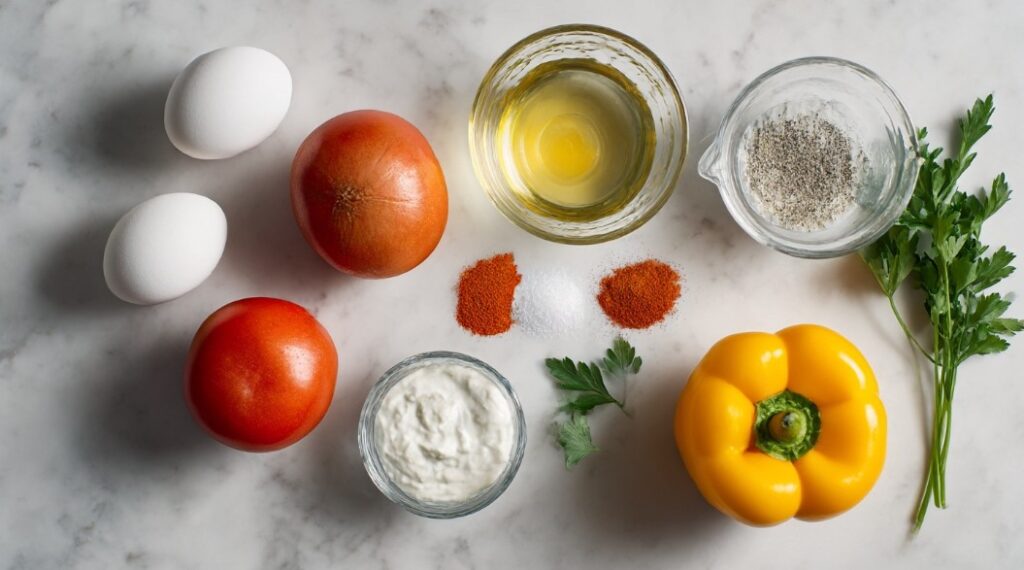
Shakshuka is a dish where eggs are cooked directly on a mixture of vegetables, mainly tomatoes and peppers, with spices. It’s about texture and balance, not about strictly following instructions. It’s important to understand: shakshuka is not an omelet, not scrambled eggs, and not a stew. It’s lively, juicy, with a noticeable structure of vegetables, not turned into mush. Every household has its own approach, but the mechanics are the same: a thick, aromatic sauce and eggs that gently ‘sit’ on top.
Anyone who has tried shakshuka in different places will immediately notice the difference: for some, it’s closer to a soup, for others, a thick paste. This range is not a mistake but a space for your style. But there is a basic boundary: if the vegetables are burnt or the eggs turn rubbery, it’s no longer shakshuka, but a compromise with the pan. So the key to success is not in precision, but in understanding the process.
Understanding Temperature: Why the Pan is the Main Hero
Almost all mistakes with shakshuka start with the wrong temperature. The pan is not just a vessel, but your tool for managing the process. If it’s barely warm, the vegetables ‘suffocate’ in their juice, becoming watery and sour. If it’s too hot, everything will quickly seize, but the taste will be flat, with burnt notes.
I often use a simple test: a drop of water on the pan should ‘dance,’ not sizzle or evaporate immediately. Then the vegetables will start to release their aroma, not just stew.
- It’s not shameful but useful to heat the pan for a long time.
- Don’t rush to add vegetables if the pan doesn’t yet have a slight smell of hot metal.
The first mistake is too strong or weak a fire. The second is constantly ‘jumping’ between modes, not allowing the process to stabilize. Shakshuka loves medium heat: it gives the vegetables a chance to reveal their flavor, and the eggs to cook evenly.
Texture: How to Know When Vegetables are Ready
One of the most typical problems is a watery or ‘mushy’ base. This happens when the tomatoes don’t have time to evaporate, and the pepper is still raw. The right shakshuka begins when you feel: the vegetables have lost their sharp freshness, become soft, but still hold their shape.
The smell changes at this moment: from a light sour tomato to a sweet, deep, ‘culinary’ aroma. Visually, the base becomes thicker, the spatula leaves a trace, not immediately filled with juice. If you run a spoon along the bottom of the pan, a short groove should remain. This is your signal: it’s time to add the eggs.
There’s no need to bring the vegetables to a jam-like state. On the contrary, a light texture and even pieces are what’s needed. There was once a case: I was cooking shakshuka in a country kitchen, where everything was cooked on an old cast-iron pan. There, the vegetables evaporated more slowly, and I almost turned everything into a paste. Only timely stopping helped — I tried with a spoon and saw that the structure held.
Eggs: How to Get That Perfect Yolk
Perhaps the biggest fear is ruining the eggs. Some fear the yolk will spread, others that it will remain raw. The secret is that the eggs cook not in a vacuum, but in hot sauce. Therefore, they will never cook instantly, as on a dry pan.
I place the eggs directly on the thick base, make a small ‘well’ with a spoon so that the white immediately envelops the vegetables, and the yolk remains open. It’s important not to stir — just let the eggs ‘sit’ in place. Then slightly reduce the heat and cover with a lid (you can even use foil or a plate if there’s no lid).
- If you want a runny yolk, aim for 4-5 minutes.
- If you prefer fully cooked, leave under the lid for up to 8 minutes.
An important signal is that the white should become matte, but the yolk still ‘trembles’ if lightly touched with a spoon. If the eggs are already covered with a white film, this is the limit, beyond which they will be overcooked. This happened to me when I was distracted by my phone — and then the yolk became ‘rubbery.’ Over time, I developed the habit of looking not at the clock, but at the appearance and a light touch with a spoon.

Aromas and Spices: Why Spices Work This Way
Shakshuka is not just tomatoes and eggs. Its character lies in the spices. Usually, cumin, paprika, sometimes a bit of cayenne pepper or garlic are used. But it’s important to understand not ‘what to add,’ but ‘when and why.’
Spices reveal themselves in fat. If you add them at the very beginning, when the pan is just heating up, they will start to ‘burn,’ and the taste will be bitter. If added to liquid vegetables, the aroma will remain weak.
Tip: add spices right after the onion and before the vegetables. They will have time to reveal themselves but won’t burn.
I always rely on the smell: when the spices start to smell ‘deep’ and even a bit sweet, that’s your moment. If you smell sharp smoke or a burnt smell, reduce the heat and immediately add the vegetables.
In shakshuka, spices shouldn’t ‘shout’ — they create a background, not draw attention. It’s good when after a few minutes of cooking, the kitchen becomes warm and cozy, with a spicy base, not just the smell of fried onions.
Common Mistakes: What Ruins Shakshuka at the Start
- Too much liquid: the tomatoes haven’t evaporated, and everything ‘floats.’
- Eggs are placed in still raw vegetables — the white spreads, and the yolk doesn’t hold its shape.
- Overcooked eggs: the yolk turns gray, the white becomes rubbery.
- Spices are added at the very end — the dish turns out bland.
- Fear of leaving the sauce thick — and everything turns into mush.
There was a case: a friend decided to cook shakshuka when guests were already at the table. Rushing, high heat, immediately adding eggs to raw vegetables — and instead of shakshuka, it turned into egg soup. He was upset, but in reality, this is the kind of experience that sticks. The next time he already controlled the process, and everything worked out.
Process Mechanics: How to Visually and Tactilely Feel That Everything is Going Right
How to know that you’re on the right track, even if you have no experience? The feel of texture and smell are the main clues.
- Vegetables: soft to the touch, but not falling apart. The smell is sweet, deep, without sharp acidity.
- Eggs: the white becomes firm but not transparent, the yolk is mobile, shiny.
- If a spoon leaves a trace in the sauce, and the liquid doesn’t immediately flow back, the base is ready.
Sound is another signal. If the pan quietly ‘clicks,’ there’s no sharp sizzling or splattering — the right pace. If you hear something sizzling loudly, reduce the heat. Balance is important here: shakshuka should ‘breathe,’ not boil.
Tip: sometimes it’s enough to take a spoon and gently press on the vegetables — if they yield but don’t spread, everything is fine.
I often rely on the appearance of the yolk: if it starts to be covered with a thin film, it’s time to remove from the heat. It may not be perfect the first time, but by the second or third time, you’ll feel that you’re in control of the process in the kitchen.
What to Do If Something Goes Wrong
Even experienced cooks sometimes face force majeure. To avoid disappointment, keep a few tricks up your sleeve.
- Is the sauce too runny? Give it a few more minutes on medium heat without a lid — the liquid will evaporate.
- Are the eggs already cooking, but the vegetables are still raw? Gently push the eggs aside with a spoon, stir the vegetables around, and continue cooking — the white won’t spoil if you act carefully.
- Overcooked eggs? Not a disaster. Just cut them up and mix with the sauce — it will be a hearty dish, even if not ‘classic’ shakshuka.
- Too spicy? Add a bit of yogurt or a piece of bread to smooth out the spiciness.
Sometimes shakshuka becomes so thick that it’s hard to distinguish the vegetables. I’ve seen this in a student kitchen: they left the sauce on the heat while making tea. They decided to add a bit of water, stirred — and it turned into a new, more tender version. It’s not a failure, but another experience.
Tip: if the shakshuka turned out completely ‘wrong,’ just remember what exactly went wrong. Next time, the process will definitely be under control.
Practical Tips for the First Time
- Cook shakshuka in a shallow, wide pan — so the eggs cook evenly.
- Use a spoon to create ‘nests’ for the eggs, so they don’t spread.
- Don’t be afraid to reduce the heat — it’s better to take a little longer but stay in control.
- When covering with a lid, leave a tiny gap — so the steam escapes and the sauce doesn’t become runny.
- If the pan is thin, watch the temperature: it heats up quickly, especially on gas.
A chef friend once said: ‘Shakshuka is like a conversation. If you listen, you hear all the nuances.’ And indeed, the more you observe the process — the texture, the smell, the sound — the easier it is to manage everything.

Feeling in Control: How Shakshuka Helps Overcome Kitchen Fears
I’ve noticed one thing in many beginner friends: the first successful experience with shakshuka gives confidence in one’s hands and the ability to improvise. Everything here is subject to correction — temperature, thickness, spices. There is no ‘right’ or ‘wrong’ taste, there is what turned out today.
When you learn to listen to the pan, observe the color of the white, smell the spices in the hot oil, you’re not just repeating actions, but understanding why each step is important. This experience can be transferred to many other dishes: suddenly there’s a sense that the kitchen can be controlled, not feared for every mistake.
And even if the shakshuka doesn’t look like the perfect one from the picture — it’s still a result that teaches. Each time will be better, and over time the fear of doing something wrong disappears.
How to Develop Intuition: Cooking Shakshuka with Feeling
The last secret is not to get hung up on perfection. Inhale the smell of vegetables, watch the movement of the white, listen to the sound of the pan. It’s like music: first, you play by the notes, and then you start to improvise. With each shakshuka, the understanding of the process becomes deeper, and the fear becomes less.
I often cook this dish in different companies and see how people gradually let go of tension. Someone laughs at crooked yolks, someone tries a new spice, and someone dares to leave the white undercooked for the first time. All these little things are true cooking, where every step is not about the result, but about the experience.
The main thing is to try to enjoy the process. Shakshuka for beginners is not a test of skill, but an opportunity to believe in your abilities in the kitchen. Hold on to this moment and move forward.
If you’ve had an unsuccessful experience with shakshuka, share what exactly went wrong and how you managed. Maybe your story will help someone not to be afraid of experiments. Or, on the contrary, if everything worked out the first time, tell what exactly helped. I love reading such stories because that’s where real cooking is born.