Shakshuka as a Gastronomic Symbol of the Region

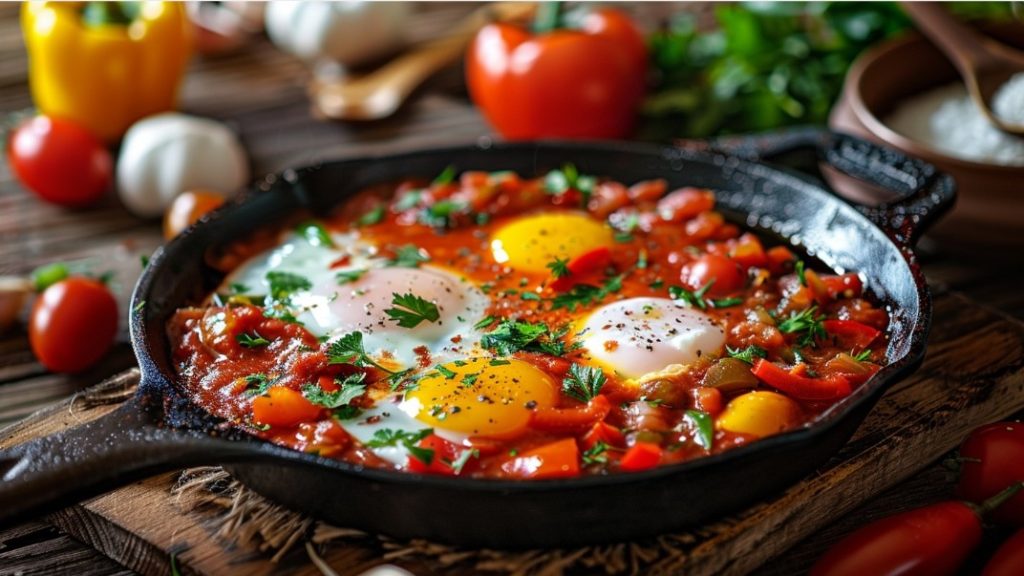
I have a special memory: dawn in Jaffa, a terrace over the sea, fresh air that hasn’t yet heated up, and a plate of shakshuka with tangy-sweet tomatoes, the thick aroma of cumin, and a spicy note of pepper. It’s not just breakfast. It’s a moment when food becomes a bridge between people, the city, memories, and history. I pondered for a long time why shakshuka has become not just a dish but a symbol of an entire region for many — both for myself and for those who come here in search of gastronomic experiences.
Food is rarely ‘just food.’ Especially when we talk about dishes that emerged not in someone’s kitchen but in entire communities, at the intersection of cultures. Shakshuka is one of those. It tells a story about people who changed cities, about markets with fresh vegetables, about families gathering around the table on a Sunday morning. I’ve always been curious: how did a dish, so simple in appearance, become a gastronomic symbol, and why is it still so valued?
Shakshuka is not just about taste. It’s about context, ritual, and the feeling of home even in a foreign city. It absorbs a whole world of habits, traditions, expectations, childhood memories, and even debates about the ‘right’ way to prepare it. Ultimately, it’s eaten in different ways, but the feeling it gives is common to many. And that’s why shakshuka has become a gastronomic symbol of an entire region.
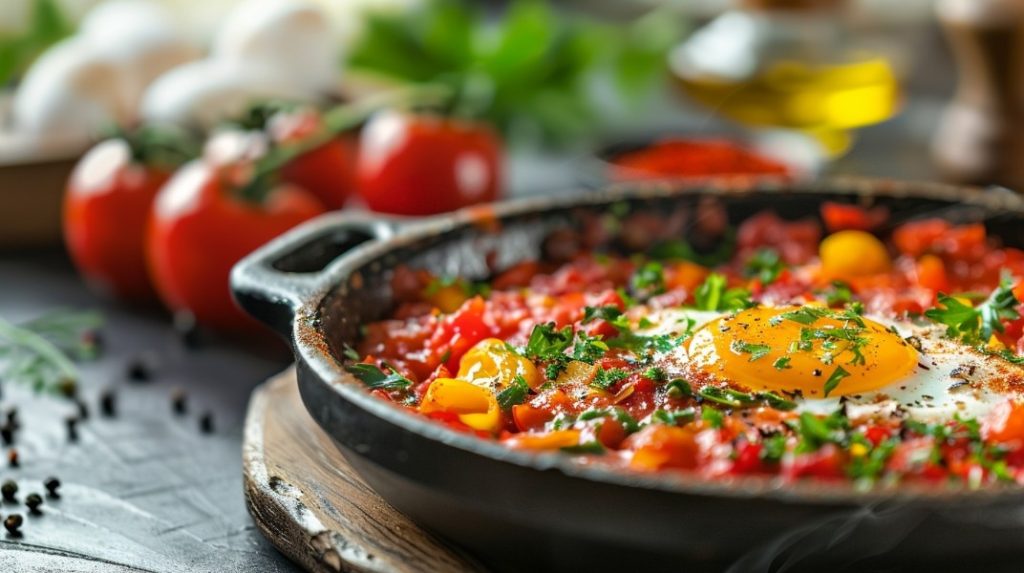
The Origin of Shakshuka: A Journey Across Continents
If you start unraveling the thread of where shakshuka came from, you can quickly get lost. It appears on tables in North Africa, the Middle East, Turkey, Israel, and even some parts of Italy. There are legends about Berber shepherds who cooked something similar over a fire, and stories about Yemeni immigrants who brought the dish to Tel Aviv. Each version has its logic, but they all agree on one thing: shakshuka originated where vegetables were available, and meat was a luxury.
I like the version where shakshuka is the result of constant travels, changes, and adaptations. Where people took what they had on hand: ripe tomatoes, peppers, eggs, spices. By adding spices, each family, each market left its mark on this dish. That’s why shakshuka is not about strict authenticity but about adaptation.
It’s noticeable: in different countries, it even sounds different. In Morocco — with cumin and hot peppers, in Tunisia — with harissa, in Israel — with tomato sweetness and always fresh greens. But the essence remains: simple ingredients, quick preparation, lots of sun and flavor.
Why Shakshuka?
I often ask myself: why did this dish spread so widely? The answer is obvious: it’s universal. For some, it’s breakfast; for others, it’s dinner. It’s not tied to any specific religion, doesn’t require special ingredients. And also — it’s perfect for sharing. You put the skillet on the table, dip a piece of bread — and the conversation has already begun.
Symbol of Locality: Food as a Reflection of Place
Locality in food is something special. It’s not just about ‘grown here,’ but also about a way of thinking, about the rhythm of life. In shakshuka, you can feel this locality to the touch: tomatoes that still smell of the earth, greens that crunch sharply, olive oil that carries a taste of the sea. In different cities and villages of the region, shakshuka will be slightly different — and that’s not a drawback, but its feature.
My first shakshuka ‘not at home’ was in a small café on the Carmel coast. The owner, an elderly man with a hoarse voice, grew his own tomatoes — and they were indeed sweeter than anything from the supermarket. He said: ‘The main thing is not to rush, to let the vegetables give all their juice.’ And then I realized: these details are the locality. Shakshuka here is not just a dish; it’s a reason to be proud of your garden, your hands, your land.
- The noticeable difference between ‘urban’ and ‘rural’ shakshuka is often in the quality of vegetables, the amount of spices, and the way it’s served.
- In big cities, shakshuka sometimes includes feta cheese, avocado, even tahini-based sauces — this is the modern influence of globalization.
- In small towns, they often keep everything simple: no unnecessary ingredients, just what grows nearby.
This feeling of locality is even conveyed in how people talk about shakshuka: ‘my mom’s is the best,’ ‘in our city, they make it like this.’ And always — with a note of pride.
Rituals and Habits: Shakshuka as an Event
Every culture has rituals around food. Shakshuka is no exception. It’s almost never eaten alone. It’s always an event: friends, family, long conversations, the aroma of coffee in the air. I’ve witnessed several times how on a Sunday morning in Tel Aviv, people occupy tables in cafes even before they open — just to start the day with shakshuka. There, they don’t ask ‘what will you have?’ they ask: ‘which bread to start with?’ And that’s very telling.
I have an acquaintance — an Israeli who says: ‘If there was no shakshuka on Sunday, the week will be crooked.’ For him, it’s not just a dish — it’s a starting point, a ritual, a way to gather the family, even if everyone is busy. In other countries of the region, the traditions are similar: shakshuka is always for several, not for one.
Interestingly, shakshuka often appears at festive breakfasts, family gatherings, even weddings — as a sign of abundance and hospitality. In some families, it’s the father who is responsible for this process: he cooks, and the family gathers around. This is also part of the ritual.
Why is it Important?
Food that is shared is always perceived as warmer. I’m sure: it’s this moment of collectivity, the opportunity to escape the routine and gather together — one of the reasons why shakshuka has become so important for the region.
Experiencing Shakshuka: Texture, Aroma, Sound
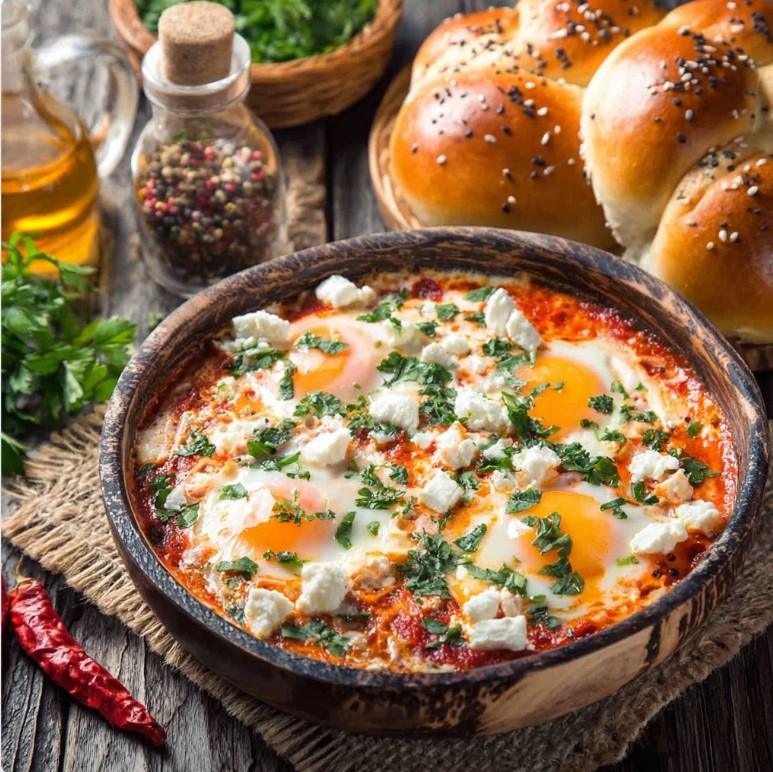
What distinguishes real shakshuka from all ‘similar’ dishes is the feeling of a live process. When you cook it, everything starts with how the onion sizzles in hot oil, how the tomatoes gradually release their juice, how the spices unfold in the air. When the eggs are lowered into the thick sauce, a special aroma appears — tart, spicy, yet sweet. I love watching this process: it calms, sets the mood, makes you slow down.
Shakshuka to the touch is a combination of the softness of the egg and the thick, slightly sticky sauce. It must be scooped up with bread, not a spoon — that’s how you feel the essence. The bright color, the contrast between the white of the egg and the red of the sauce, the shine of the oil — that’s also part of the emotion.
- The sound of the skillet when you add the eggs is a mini-symphony.
- The aroma of cumin and paprika reminds of the markets of Marrakech or Tel Aviv.
- The contrast of textures — soft egg and crispy bread crust — is especially important in the perception of the dish.
There was a case when I was cooking shakshuka on a rooftop in Jerusalem, and neighbors, hearing the familiar smell, started looking out on their balconies. Everyone immediately recognized what was being cooked, and someone even jokingly asked: ‘Can we join you?’ That’s how shakshuka unites even at the level of smell.
Shakshuka in Gastronomic Tourism: Why It’s Sought After
In recent years, shakshuka has become a true tourist magnet. For many travelers, there is a ‘must-do’ — to try the local version of this dish. I’ve talked to dozens of guests for whom shakshuka is not just breakfast but part of the experience of the country, the region, the city.
Tourists often look for ‘the best shakshuka,’ but in truth, it’s always a personal experience. Some remember the market atmosphere, some the taste of tomatoes, some the morning sun and the smell of coffee nearby. There’s even a whole community of gastronomic tourists who keep their own ‘shakshuka diaries’ and compare where the dish is better. I’ve seen people return for ‘that very’ shakshuka years later — and it’s not about taste, but about emotion.
Gastronomic tourism around shakshuka is also a way to better understand the country. Through food, you can feel what the city lives by, how it treats traditions, foreigners, changes. Practice shows: an open kitchen, a skillet on the table, the opportunity to talk to the chef — all this creates a sense of involvement. Thus, shakshuka becomes not just a dish for a tourist, but a real experience.
Travel Hack for Travelers
Don’t look for the ‘most famous’ shakshuka in guidebooks. Go to a small café where the skillets are still sizzling on the stove, and the owner himself brings the bread to the table. There, the chance to feel the real mood of the place is much higher.
I remember how in Nazareth I accidentally ended up in a place where there was no English menu. The owner simply said: ‘We have shakshuka today.’ And it was one of the best in my life — because along with it, I got a story about the family, the garden, the city. That’s what real gastronomic tourism is.
Comparison Without Judgments: Shakshuka and Similar Dishes Worldwide
An interesting thing: many cuisines around the world have something similar to shakshuka. Italian ‘eggs in purgatory,’ Turkish menemen, Spanish pisto with egg, even Hungarian lecsó… Each of these dishes shares the same essence: vegetables, egg, spices. But in the details — a whole world of differences.
- Menemen is lighter, without hot spices, often with a lot of greens.
- ‘Eggs in purgatory’ is about Italian tomatoes and basil, lighter and less spicy.
- Lecsó is sweeter, with bell peppers, but without the characteristic acidity.
I’ve often observed how people from different countries argue about whose dish was ‘first.’ But in reality, it doesn’t matter. The main thing is how in each culture, food becomes a reason to gather together, talk, and share stories. That’s why shakshuka became a symbol of the region: it shows that even with simple ingredients, you can create something profound and meaningful for many.
What is Similar, and What is Different?
The main common feature is the idea of sharing. All these dishes are cooked in a large skillet, placed in the center of the table, and eaten with bread. The differences are in the spices, acidity, and the degree of readiness of the vegetables. But they all carry one thought: food is more than just a set of products.
Common Mistakes and Myths Around Shakshuka
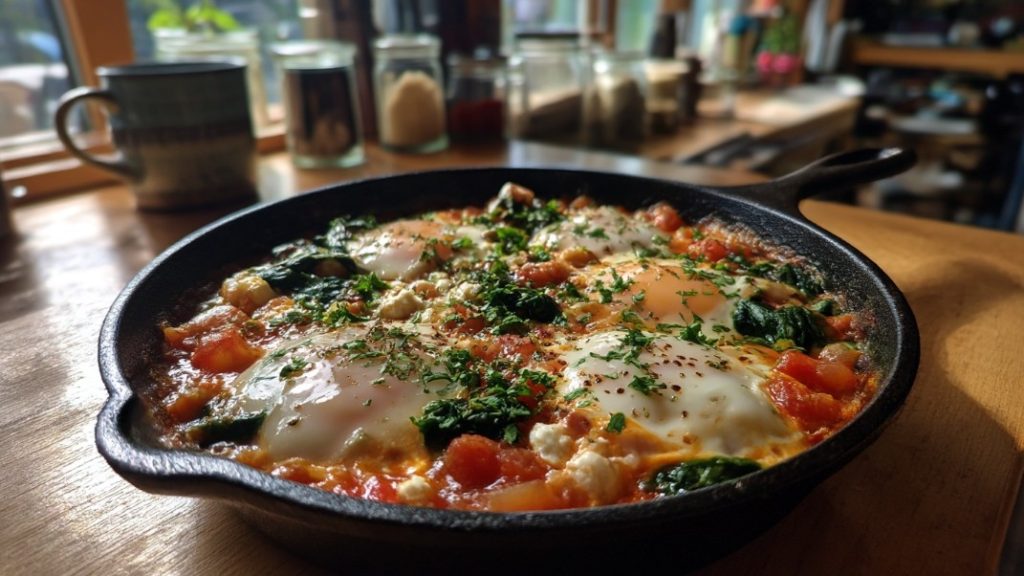
Even such a simple dish as shakshuka is surrounded by myths and mistakes. I’ve seen people in pursuit of ‘authenticity’ make it dry, overload it with spices, or, conversely, turn it into a tomato soup with egg. Some restaurant versions stray so far from the essence that they lose the character of the dish.
- The main mistake is overcooking the vegetables. The sauce should be thick but not ‘stand in a circle.’
- Eggs should not be overcooked — the white should remain tender, the yolk — runny.
- Too many spices can ‘mute’ the natural taste of the vegetables.
- Another mistake is adding cheese, meat, or other ingredients just ‘for satiety.’ The essence is in the balance of simple products.
And also: shakshuka is not about stereotypical ‘spiciness.’ In different regions, it can even be slightly sweet. It’s important to listen to yourself, to the product, not to someone else’s standards.
Micro Story
A chef friend once told me: ‘In shakshuka, the feeling is more important than the technique.’ He cooked it over an open fire, added spices intuitively, and each time the dish turned out different but always delicious. That’s the essence: the process is important, not the strict instruction.
Shakshuka Today: Changes and Trends
Like everything in the world of food, shakshuka is changing. Modern cities add their touches: shakshuka with goat cheese, with eggplants, with avocado, even with sun-dried tomatoes appear on the menu. On the one hand, it’s a step towards globalization — the dish becomes universal. On the other — it’s a sign of a living culture that isn’t afraid of changes.
Now shakshuka is not just a morning ritual. It’s served in trendy cafes, in hotels, even at street food courts. It goes beyond the home, becomes a reason for creativity. But the essence remains: simplicity, taste, the opportunity to share.
I’ve seen young chefs invent their versions of shakshuka, add local products, experiment with spices. It’s not a betrayal of tradition but its development. That’s how the dish remains alive, relevant, interesting to both locals and guests.
- Now shakshuka is a popular choice for vegetarians and those who value healthy eating.
- You can find it in various formats — from street food to fine dining.
- Modern chefs often play with textures: add crispy elements, greens, local sauces.
And yet, at the heart of shakshuka is the same simple emotion: to gather together, to feel the taste of the moment.
Personal Experience: Shakshuka as a Bridge Between People
Over the years of traveling and working with food, I’ve realized: shakshuka is not just a dish but also a language of communication. Often, when I found myself in a new city, I started with shakshuka — and always found common ground with the locals. Someone would recommend their favorite place, someone would invite me home, someone would share their ‘secret ingredient.’ There’s a lot of warmth and openness in this process.
I like to see how a dish familiar from childhood becomes a reason for new acquaintances. How in a café by the sea, people who were strangers five minutes ago start sharing bread, joking, and discussing whose shakshuka is tastier. It’s a simple but very strong social glue.
Micro Story from Life
Once in Haifa, I met a couple who had been coming to the same café every Sunday for twenty years. They said: ‘Shakshuka is our family time.’ The children grew up and left, but they kept the ritual. And then I realized: it’s in such details that true culinary culture lives.
Shakshuka as a Symbol: Meanings and Future
Every culture has its gastronomic symbols. Shakshuka is one of them, but not because of the complexity or uniqueness of the recipe. It symbolizes openness, simplicity, the ability to share and enjoy the little things. It’s a dish that unites different generations, cities, even countries.
I’ve seen many times how shakshuka becomes a reason for conversations about identity, about connection to the land, about childhood memories. It doesn’t divide but rather erases boundaries. And it seems to me that this is its main meaning. In a world where everything changes so quickly, shakshuka reminds us: there are things that remain simple and genuine.
My life hack: when cooking shakshuka, don’t think about ‘correctness.’ Think about the people you’ll be eating with. That’s the whole essence.
Perhaps that’s why shakshuka continues to be a gastronomic symbol of an entire region. It’s simple but multi-layered. Like life, like a family album, like a conversation with a neighbor over the threshold.
All this is just part of a large culinary mosaic. But shakshuka is a dish that teaches us to be closer and appreciate simple moments. Do you have your own story related to shakshuka? Write in the comments how this dish became something more than just food for you.