Should You Heat Oil for Korean Carrot Salad

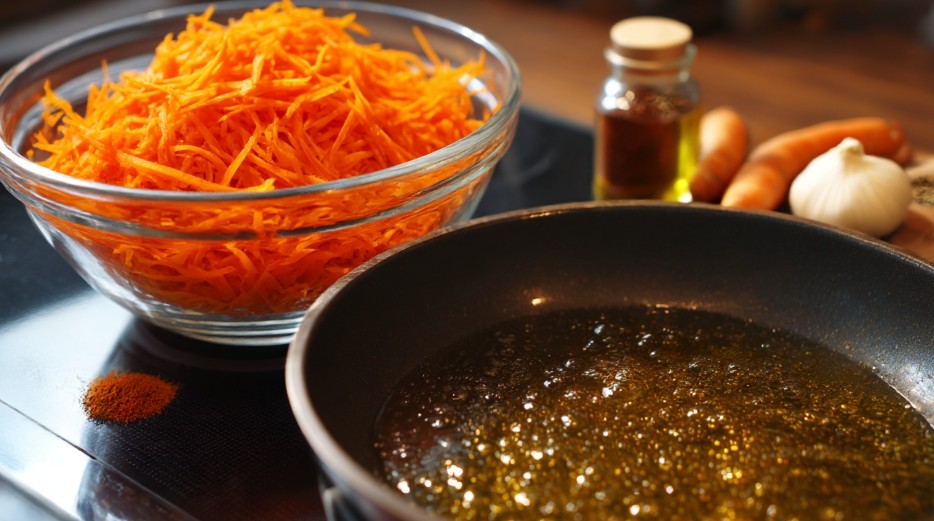
I once had an experience: standing in my home kitchen, the carrots were already cut into thin strips, and the spices were waiting their turn. But then a question arose that seems to haunt many — what about the oil? Should it be heated, or poured cold directly onto the carrots? My friends often admit: this moment is a real stumbling block. Some fear the oil will start to smoke, others worry the spices will burn, and most are simply unsure why they should do it at all.
I understand this doubt: you want to do everything ‘right,’ but you don’t understand why this way and not another. It’s important not just to follow someone else’s instructions but to really feel that you’re in control of the process, not the other way around. Let’s figure out together how this technique works, what it offers, and when it’s actually necessary.
What Happens to Oil When Heated
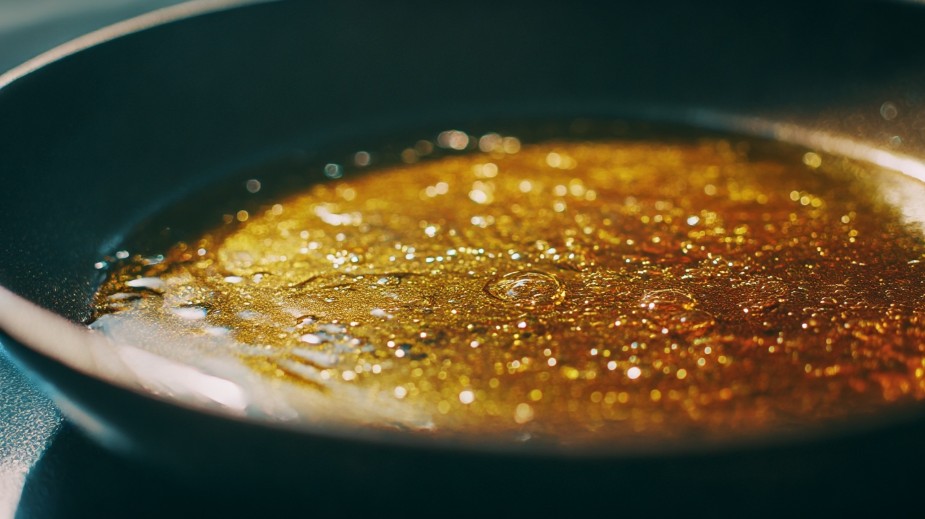
I like the idea that cooking is not magic but a sequence of reactions. Ordinary sunflower or refined oil behaves quite differently in a pan than in a bottle on the shelf. When you put it on the fire, it gradually heats up: first, it just becomes thinner, more fluid, then it starts to sizzle slightly. If you look closely, you can see a thin film appearing on the surface — the first sign that the temperature is rising.
Why is this important for Korean carrot salad? Warm oil is not just ‘adding fat.’ It acts as a conductor for spices, helping them unfold, mixing aromas, and creating that characteristic taste. If you pour it cold, the spices will remain ‘raw,’ and the dish will lose the deep aroma for which we undertake this dish.
I’ve noticed how oil in the pan starts to smell even before you add anything else. There’s a light nutty note, and at this moment, it’s ready to accept the spices.
Why Heat Oil for Korean Carrot Salad
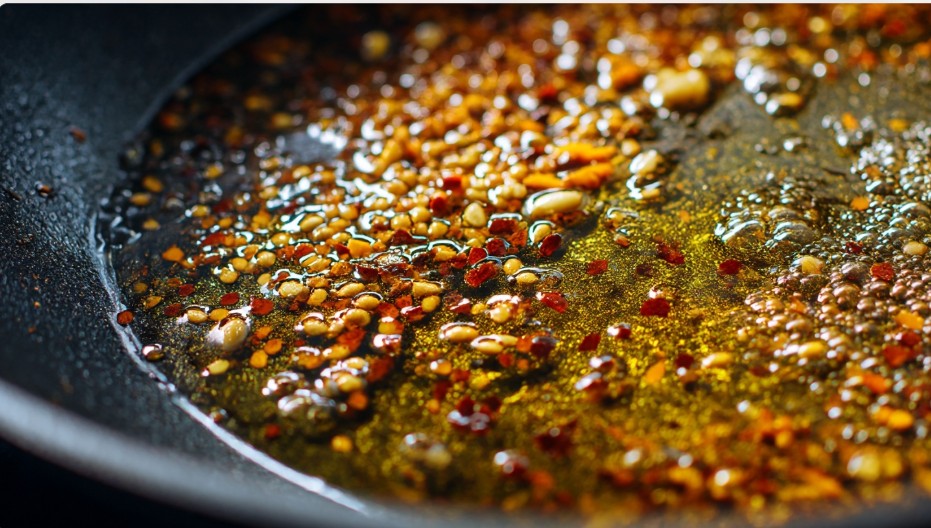
The smell, texture, and even color — all depend on this single step. Heated oil has two main roles. First, it extracts aromas from spices: paprika, garlic, coriander, black pepper. Second, it gently cooks the carrots, not turning them into mush but making them more tender, juicy, yet crunchy.
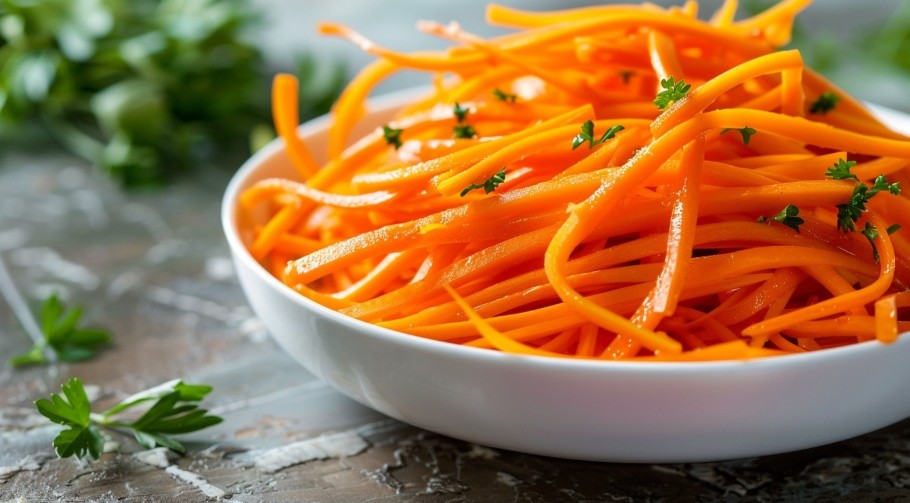
Imagine: you sprinkle the carrots with spices, and pour hot oil over them. You immediately hear a quiet sizzle, the spices seem to ‘come alive,’ and the kitchen fills with the aroma you usually find in good eateries. If you don’t do this, the carrots will remain just a mix of vegetables with spices, not transforming into the dish that is loved.
My advice: don’t rush and don’t be afraid of the temperature. I always control the level of heat — the oil should be hot but not smoking. It’s a fine line, easy to catch if you feel the smell and see how it ‘plays’ in the pan.
Tip: throw a small piece of carrot into the oil — if it starts to sizzle immediately but doesn’t burn, the temperature is perfect.
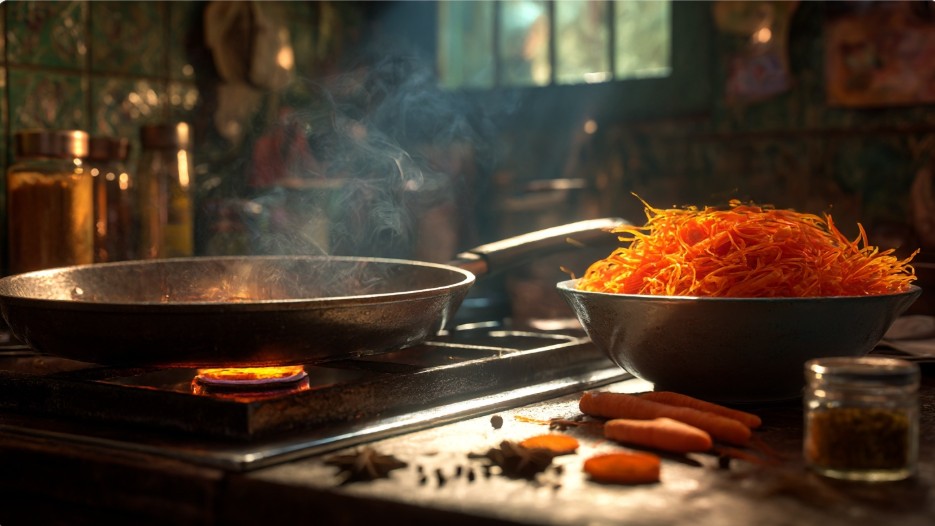
How Spices Unfold in Hot Oil
Here, all the magic is in the reaction of spices to heat. Many are used to adding them just like that, but spices reveal their flavor only under the influence of temperature. This is especially noticeable with coriander and garlic: in their cold state, they’re just powder. But once you pour hot oil over them, the smell becomes deeper, with a sweet, spicy tint, and the sharpness smooths out.
I often show friends: try smelling paprika before and after contact with hot oil. The difference is like between a photograph and a live moment. The essence is that the oil extracts essential oils from the spices, allowing them to ‘come alive.’ Without this, Korean carrot salad is just a salad, not a vibrant appetizer.
This oil trick is often used in other cuisines: Chinese, Vietnamese, Indian. But for Korean carrot salad, it provides that characteristic ‘explosion’ of aroma that’s hard to replicate.
What Happens If You Skip Heating the Oil
I often hear: ‘I don’t want to bother with a pan, I’ll just add oil and spices.’ The question is, what will be the result? You can say confidently: the taste will be flat, the spices will remain raw, and the carrots won’t get that special texture.
I had a period when, due to lack of time, I poured cold oil. Visually, everything seemed fine, but when you taste it, something is missing, the taste isn’t cohesive. The spices give off bitterness, the carrots stand apart, and all the aromas just dissolve. This is especially noticeable if you’ve tasted real Korean carrot salad, where the spices are properly revealed.
It’s worth trying both ways once — the difference will surprise even the inexperienced. Hot oil is not a complexity but a key to flavor.
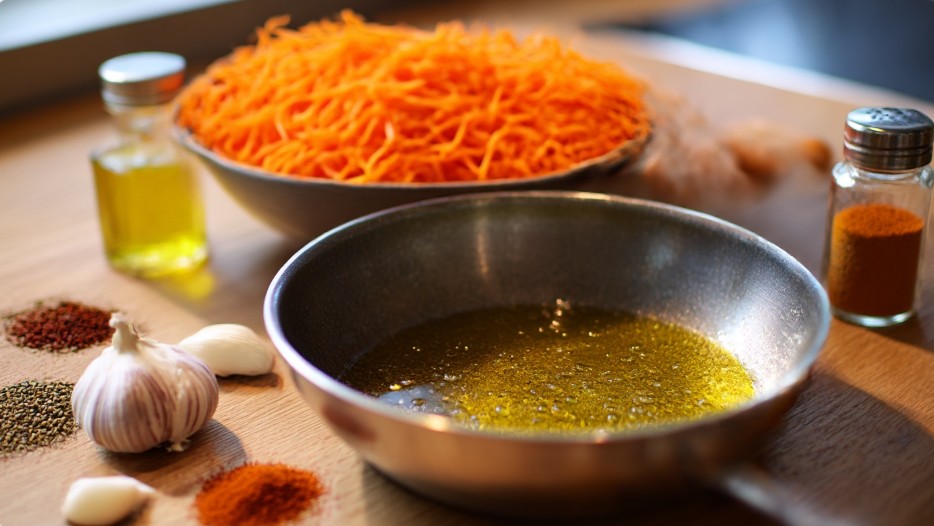
How to Determine the Right Oil Temperature
This step often scares people: how long to heat? Won’t I burn the spices? Here, a rational approach helps deal with uncertainty.
- Visually: the oil becomes more fluid, slightly shimmering, but not smoking.
- Aroma: a light nutty smell appears, characteristic of refined oil.
- Sound: if you throw a pinch of spices, they start to sizzle quietly but don’t blacken instantly.
My method is to use a wooden skewer or stick: dip it into the hot oil, and if bubbles appear around it, it’s ready. If the oil smokes, reduce the heat and let it cool a bit — overheated oil turns bitter and spoils the taste.
Tip: better less than more — oil heats up quickly, especially in a small pan.
Here you’ll be interested to learn about basic techniques for every cook.
Common Beginner Mistakes and How to Avoid Them
From experience, I see that most problems arise not from the complexity of the technique itself but from haste or lack of confidence.
- Overheated oil. Often people wait until it starts to smoke. As a result, the spices burn, and the dish becomes bitter. Solution: don’t get distracted, control the process, don’t leave the pan unattended.
- Oil that’s too cold. If it’s barely warm, the spices won’t unfold, and the carrots will remain ‘raw.’ Solution: rely on smell and a slight sizzle when in contact with spices.
- Adding spices to hot oil in the pan. This is not quite the approach needed for Korean carrot salad: the spices can burn in a second. It’s better to sprinkle the spices on the carrots and pour hot oil over them.
- Fear of working with hot oil. Very common. Just choose a dish with high sides and pour carefully — it’s safer than it seems.
- Small amount of oil. The spices don’t have time to heat up, the taste comes out bland. Don’t skimp on oil, but don’t pour it ‘to the brim’ either — find the golden mean.
At the beginning, I was also scared: it seemed that hot oil was a risk. But after a few tries, when I saw and heard the sizzle, I realized — there’s nothing to fear if you don’t rush and act calmly.
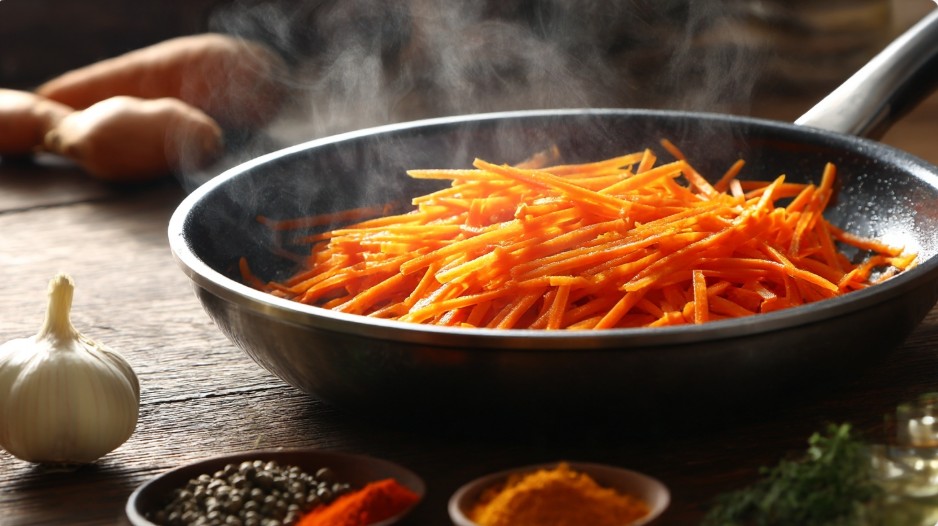
What to Do If Something Goes Wrong
Even the most experienced sometimes have mishaps. Not everything always goes according to plan, and that’s okay.
- The oil smokes and has an unpleasant smell — don’t hesitate, pour it out and start over. Smoky oil gives bitterness that can’t be masked.
- The spices burned — replace them with new ones, otherwise, the taste will be spoiled. Better to lose a little time than to get a harsh aftertaste.
- The carrots became soft, lost their crunch — next time reduce the amount of oil or pour it less hot. And use these carrots as a garnish for a hot dish — they can still please.
- Oil got on the table or skin — quickly rinse the area with cold water, don’t panic. Next time just choose a dish with higher sides and work more slowly.
From my experience, every ‘mishap’ is not the end of the world but an opportunity to feel the process more deeply. It’s through mistakes that you start to better understand the reactions of products and no longer fear improvising.
The Essence of the Technique: What Hot Oil Changes
Adding hot oil is not just a tradition. It’s a step that triggers a whole chain of flavor reactions. The carrots soften a bit but remain crunchy. The spices release their essential oils, the aroma becomes more complex, deeper. That very taste appears, distinguishing real Korean carrot salad from any other salad.
When you work with hot oil, you feel in control: you’re not just mixing ingredients, you’re managing the process. This adds confidence, the fear of ruining something disappears. In the kitchen, this feeling is like a breath of fresh air. You see how the product reacts and are no longer afraid to try something new.
I always say: don’t be afraid to experiment, but first try to understand why this step is so important. Hot oil is the bridge between dry spices and juicy carrots.
Tips for Your First Experience with Hot Oil
- Prepare everything in advance. Slice the carrots, lay out the spices, choose the dish. Hot oil doesn’t wait — everything should be at hand.
- Don’t fear small portions. For the first try, it’s better to take less carrot — it’s easier to control the process.
- Use refined oil. It has a higher smoke point, doesn’t turn bitter, and doesn’t overpower the taste of spices.
- Add spices directly to the carrots, not the oil. This prevents burning.
- Watch the smell and color. Smell is the best indicator. As soon as you sense a nutty note, take it off the heat.
- Engage all your senses. Listen to the sizzle, inhale the aroma, observe the color of the carrots after adding the oil.
I love working to soft music — it helps not to rush. When the oil sizzles and the spices darken, you feel that everything worked out. It may not be perfect the first time, but you’ll understand that the process is completely under control.
Tip: after the first try, note your impressions — what worked, what didn’t. This helps quickly learn from your own mistakes.
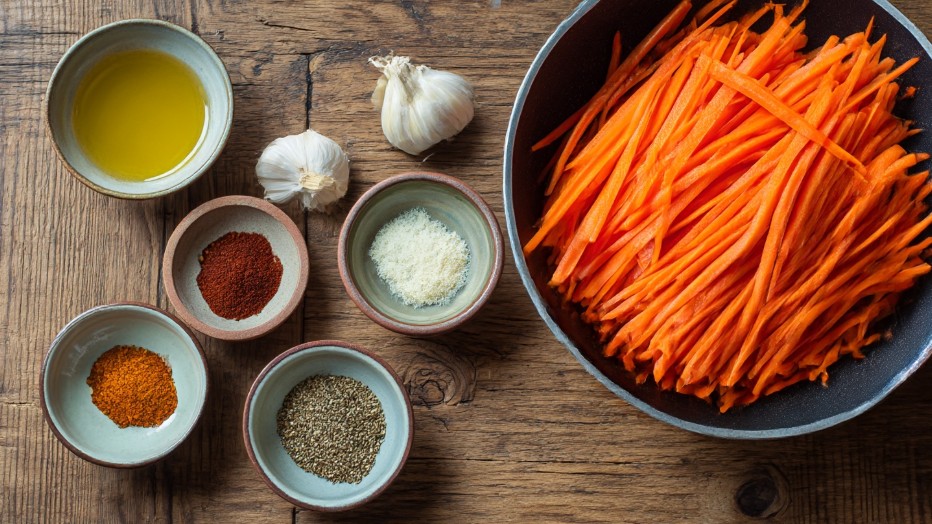
Why Fear of Hot Oil is Normal and How to Overcome It
I know this fear: hot oil seems like something dangerous and uncontrollable. But in reality, if you act calmly, the risks are minimal. Choose a pan with a thick bottom and high sides, keep a towel handy, and don’t rush. Don’t pour oil from a height — hold the spoon or ladle low over the bowl with carrots.
Over time, the fear disappears when you realize that the main thing is not to rush and not to get distracted. I remember teaching my mom: she was afraid of hot oil since her youth. After a few careful tries, the fear turned into curiosity and even enjoyment of the process. It’s important to allow yourself to try and not judge for small mistakes.
After the first successful attempt, the feeling of victory is guaranteed. Not because the dish turned out well, but because you overcame doubt and took the process into your own hands.
When You Can Skip Heating the Oil: Exceptions and Special Cases
There are situations where you can do without hot oil. If you fundamentally don’t work with hot, or you’re cooking for children or people sensitive to fried flavors, you can add oil at room temperature. Yes, the taste will be different — the spices won’t fully unfold, the carrots will remain completely crunchy, but it’s safer and simpler. Sometimes this version is even appropriate — for example, if you’re serving the carrots as part of a light lunch or are afraid of spices.
I know several people who fundamentally don’t use hot oil for medical or personal reasons. In such cases, just don’t expect a bright ‘Korean’ taste — it’s already a different dish with different accents. But even here you can experiment: add a little lemon juice, more greens, or combine different types of pepper.
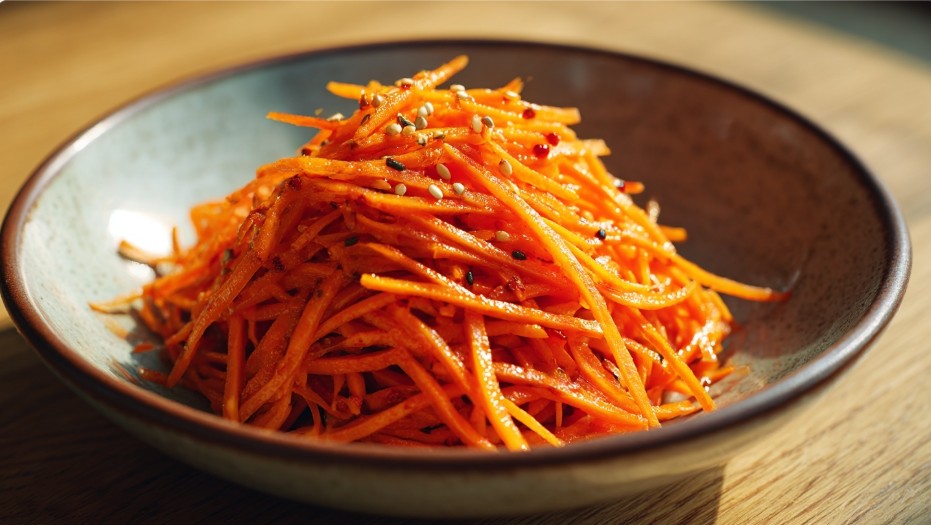
The main thing is to understand that the technique with hot oil is not mandatory for everyone, but it creates the classic taste. If you want, try both options and choose the one that suits you best.
When you make Korean carrot salad for the first time, you want to do everything ‘right.’ But with experience, you realize: the main thing is not precision, but the feeling of the process and the desire to understand why you’re doing it this way. Hot oil is a tool for flavor, not an end in itself. When you smell the spices, see how the carrots change before your eyes, there’s a feeling that the kitchen is your territory, and you’re in charge. You’re no longer just following instructions but creating the result with your own hands.
If you’re making Korean carrot salad in winter, here’s a seasonal calendar of what else is best to buy.
Now I’m curious: have you tried the technique with hot oil? Was there anything that scared or surprised you? Share your experience — I’m always interested in how people perceive the same process differently.