Summer vs Winter Shakshuka: Ingredient Differences

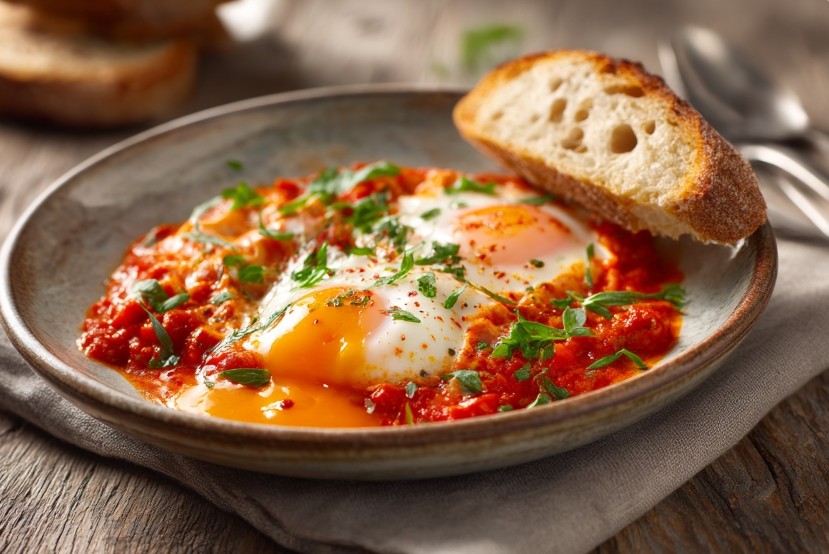
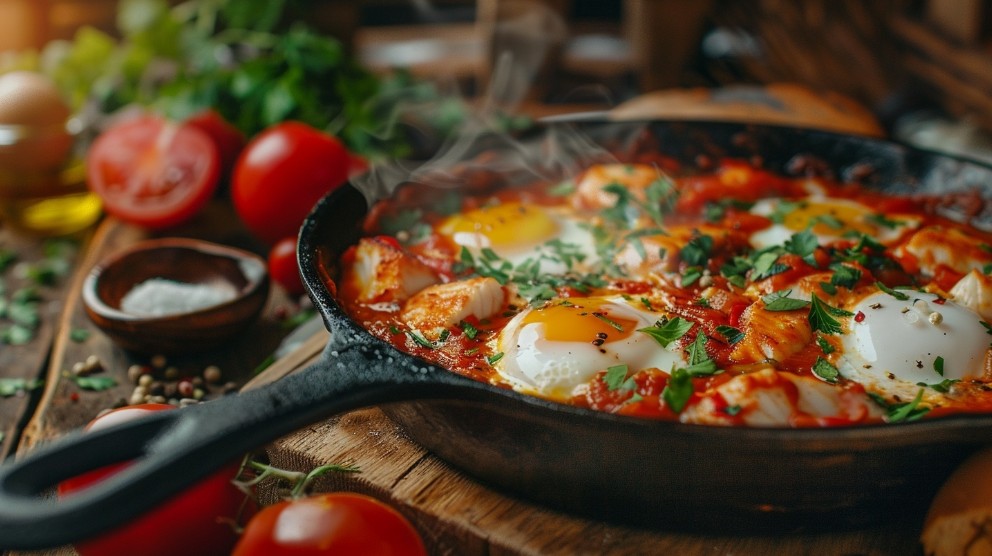
When the kitchen smells of ripe tomatoes and eggs gently bounce on a hot pan, shakshuka becomes more than just breakfast — it’s a little celebration. But try making it in winter, and you’ll be surprised: the same recipe, but the taste is completely different. Why is that? It all comes down to the choice of ingredients. I felt it myself when I tried to bring back a piece of summer with greens and vegetables from the supermarket shelves in winter. Instead of the aroma of the sun, I got something bland and watery. That’s when I realized: it’s time to learn to choose products according to the season, not just “by the list.”
In this article, we’ll talk about how different ingredients change the taste of shakshuka in summer and winter, what to pay attention to when standing in front of the counter, and how not to fall into the trap of marketing or your own habits. It’s not about strict rules, but about common sense and feelings that come with experience — and unsuccessful attempts.
How Seasonality Affects Shakshuka Ingredients
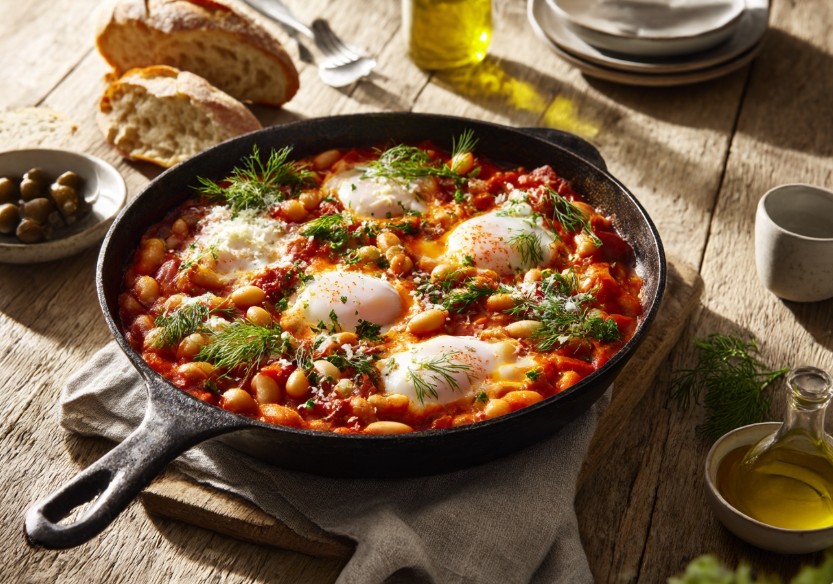
Season is not just a word for farmers. It dictates what’s in your pan and how it will taste. Shakshuka is a simple dish, but it’s only tasty when the vegetables are “alive.” Summer gives us meaty tomatoes, juicy peppers, greens that smell of honey and grass. In winter, the shelves have different tomatoes, different greens, even the eggs might taste different.
I remember choosing tomatoes at the market in July: thin skin, soft core, rich aroma — even your hands smell different after them. In winter — plastic hardness, almost no smell. That’s seasonality. And it’s not just about taste, but also about price, texture, even the appearance of the dish.
Tomatoes: The Heart of Shakshuka
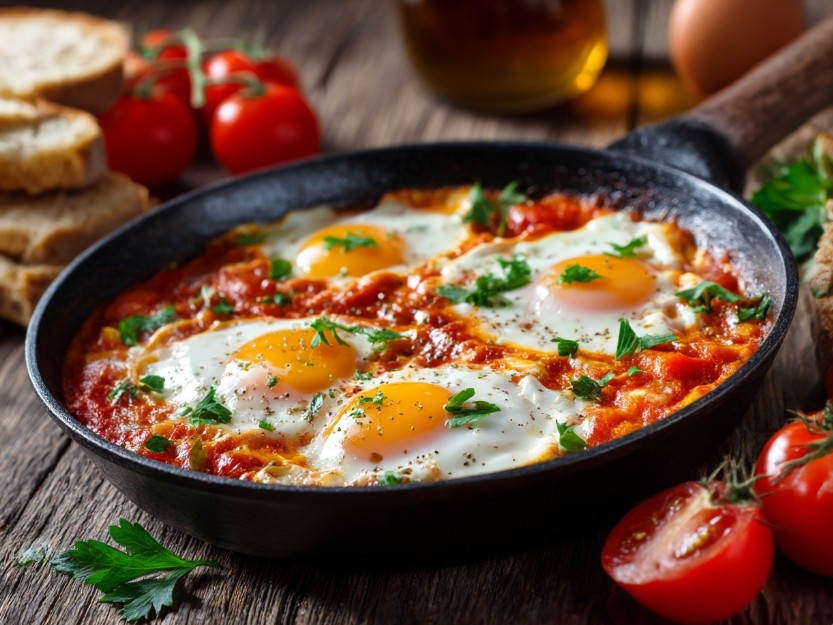
Without tomatoes, shakshuka is not shakshuka. But not all tomatoes are the same. In summer, they are sweet, with a slight acidity, the skin is soft, the flesh is juicy, and the aroma is such that you want to eat them just with your hands, without salt. At the market, they often let you try a piece — and that’s the most honest test. I always buy tomatoes by weight, not in a package: I see what I’m buying, I can touch, smell them.
In winter, the choice is more complicated. Most store-bought ones are watery, with a thin smell, thick skin, firm flesh. If you’re going to buy them — look for those that ripened on the bush, even if they’re slightly bruised. Or canned in their own juice — they’re better for sauce than “rubbery” fresh ones. One of my favorite tricks: in winter, I add a little tomato paste for depth of flavor, but I always check the ingredients — no sugar and extra water.
What to Pay Attention To
- Color: Ripe tomatoes are bright red, without green spots.
- Aroma: Fresh ones have a rich tomato aroma, especially near the stem.
- Texture: Soft, but not falling apart in your hands.
- Seasonality: July-September is the best time for fresh ones.
Tip: If summer tomatoes are too soft, take them for shakshuka — these give a juicy, thick sauce.
Common Mistakes in Choosing
- Choosing “perfect” looking but hard and odorless products.
- Trusting “organic” labels without trying to smell or cut them.
- Ignoring the season and buying tomatoes in winter “like in summer” — the result will be different.
Peppers: Summer Accent or Winter Substitute?
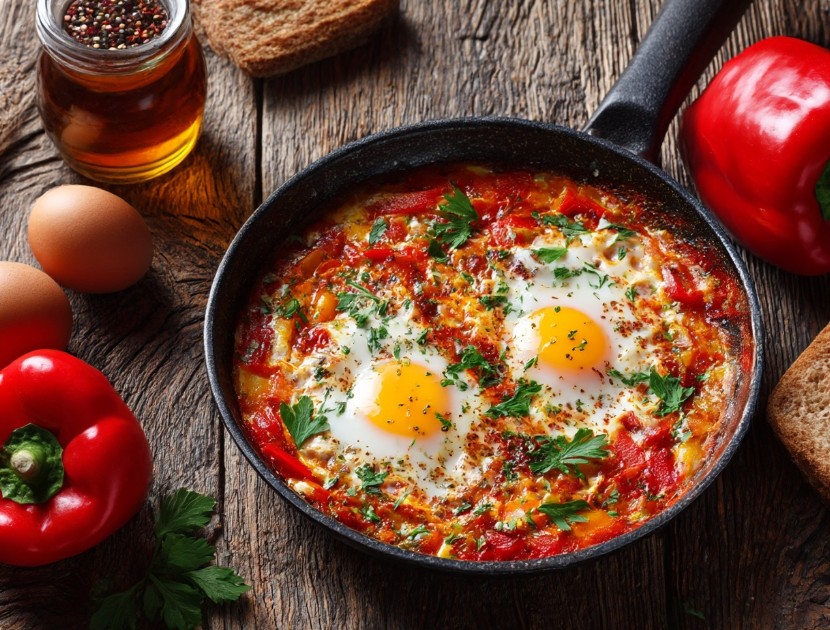
Pepper in shakshuka is crunch and sweetness. In summer, I take yellow or red bell peppers, sometimes adding hot ones. At the market, peppers are smooth, shiny, firm but not wooden. When cut — the smell is sweet, even slightly fruity. In winter, peppers can be either imported or greenhouse-grown — they lose flavor, become watery.
In the cold season, I sometimes take roasted peppers from a jar or frozen ones — if they’re of good quality, they add an interesting smoky note. But be careful: canned ones often have vinegar, which can spoil the balance. Another life hack — in winter, add a little smoked paprika, it “warms up” the taste.
How to Choose Peppers
- Smooth skin, without spots and wrinkles.
- Firm, but not “stone-like.”
- Noticeable aroma after cutting.
- Bright color — a sign of ripeness.
Tip: Don’t be afraid of imperfections — small “scars” or irregularities don’t affect the taste in the dish.
Onions and Garlic: The Base of Aroma
Without onions and garlic, shakshuka loses its character. In summer, onions are juicier, sweeter, even slightly crunchy. In winter — they’re sharper, drier. For shakshuka, both regular and red onions are suitable, the main thing is that they’re not old or sprouted. I always look: roots should be dry, husks shiny, without dark spots. If there’s a green “tail” — it’s not right, the taste will turn bitter.
It’s better to take Ukrainian garlic — the cloves are smaller, but the aroma is stronger. Chinese garlic is giant, but watery and almost odorless. If there’s a lot of garlic — it’s better to add it in parts at different stages, not all at once.
Here’s a recipe for Shakshuka with Moroccan Character
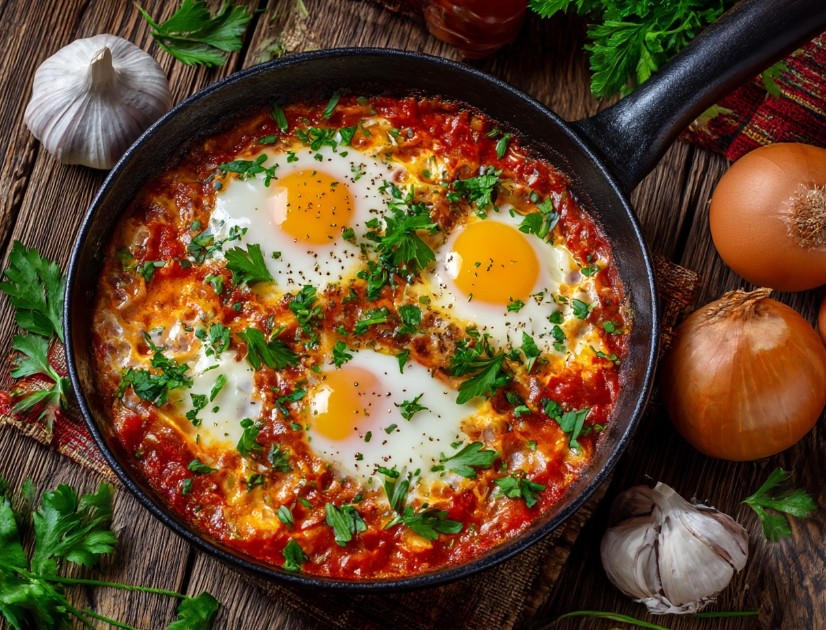
Common Mistakes
- Buying pre-peeled garlic or onions — they spoil quickly, lose flavor.
- Ignoring the smell — good garlic smells even through the skin.
- Using sprouted onions — they taste bitter and are softer.
Eggs: The Foundation of Texture and Taste
Shakshuka is held together by eggs, like a foundation. Eggs vary: summer ones from home-raised chickens have bright, thick yolks, dense whites. In winter — often dull, runny. I always ask the seller when they were laid. I check them in the light: a fresh egg is semi-transparent, without dark spots. If there are cracks or sticky shells — I don’t take them.
Here’s a simple recipe for Eggs with Tomatoes
Another nuance: sometimes eggs “smell” only after opening. So at home, I first break them into a cup, not directly into the dish. In summer, eggs spoil faster, especially in warm weather — keep them in the fridge, but not on the door, deeper inside where the temperature is stable.
How to Choose Eggs
- Clean, without spots, not sticky.
- Shell not cracked, without dents.
- Lay date — the fresher, the better.
- Yolk color — not always an indicator, but home-raised are usually brighter.
Tip: If you’re unsure if an egg is fresh — drop it in cold water. If it sinks — it’s fresh. If it floats — better not risk it.

Herbs and Spices: Summer Explosion or Winter Economy
Summer is parsley, cilantro, basil, mint. The greens are fresh, aromatic, even slightly crunchy. I always smell the bunch: the aroma should be rich, not musty. Leaves should be spotless, not wet. If the greens are “leaking” — they’re no good. In winter, greens are often greenhouse-grown or brought from afar, so the taste is weaker, the aroma barely noticeable.
In winter, I take greens cautiously, often replacing part with dried spices: cumin, smoked paprika, a pinch of coriander. But I always add them at the end, so the aroma doesn’t disappear with the steam. The main thing with spices is not to overdo it, shakshuka should feel like a vegetable dish, not a spice rack.
Life Hacks for a Green Note
- In summer, keep greens in a damp cloth in the fridge — they’ll “live” up to a week.
- In winter, dried greens reveal more if you rub them between your fingers before adding.
- Don’t buy greens in vacuum packs — they’re often already “tired” and have lost some flavor.
Marketing Traps and Price Logic
It’s easy to fall into a trap on the supermarket shelves: “organic,” “farm,” “eco” — the labels are beautiful, but not always truthful. I’ve bought “farm” vegetables that turned out to be just like the regular ones. Don’t rely solely on the label: smell, touch, ask to try. At the market, sellers don’t like it when you choose for a long time, but it’s better to lose a minute than to throw away half the purchase later.
Price doesn’t always equal quality. In summer, seasonal vegetables are cheaper and much tastier. In winter, the price “rises” due to transportation and storage, but the taste isn’t better. If there’s a choice — it’s better to buy good quality canned tomatoes than fresh “plastic” ones for crazy money.
When Is It Worth Paying More?
- For fresh eggs from a trusted seller.
- For greens that smell and look “alive.”
- For canned tomatoes in glass, without extra additives.
- For spices, if they’re whole, not ground to dust.
Tip: Don’t skimp on the base of the dish — if the tomatoes and eggs are of high quality, the small things can be replaced.
Storing Vegetables and Eggs: How Not to Lose Flavor
Proper storage is half the success. In summer, don’t put tomatoes in the fridge — they’ll lose their aroma and become watery. Keep them in a shaded place, spread out in a single layer. In winter, if you’ve bought “store-bought,” it’s better to use them right away, as they quickly lose their appearance.
Peppers can be kept in a paper bag, away from moisture. Greens — in a damp cloth or a glass of water, but not for long. Eggs — in the fridge, but not on the door. Spices — in a dry, dark place, tightly closed, otherwise the aroma will just disappear.
How to Extend Freshness
- Don’t wash tomatoes until use, otherwise they’ll rot faster.
- Change the water regularly if you keep greens in a glass.
- Don’t put peppers near apples, as they’ll wilt faster.
- Store eggs with the pointed end down, so they “live” longer.
Tip: If the greens are a bit wilted, soak them in cold water for 10 minutes — they’ll revive.
How Ingredients Behave When Cooking: Summer vs Winter Experience
In summer, vegetables release a lot of juice — shakshuka turns out thick, the sauce becomes rich, and the eggs “sit” on top, not sinking. Tomatoes quickly cook down, peppers keep their shape but become soft and sweet. Greens give an explosion of aroma, even when added at the end.
In winter, the sauce is often watery, tomatoes don’t release as much juice, so you have to cook longer or add a little tomato paste or even water. Peppers can remain tough or, on the contrary, fall apart. Eggs — sometimes spread out because the whites are thinner. Greens — just for decoration, less flavor.
Once I made shakshuka with winter vegetables that had been in the fridge for a week. The sauce turned out watery, the eggs sank, and the taste was like a cafeteria stew. Since then, for winter shakshuka, I use more spices, add a bit of butter for depth. And if there are good canned tomatoes — I don’t hesitate, they save the situation.

Life Hacks for Perfect Taste in Different Seasons
- In summer, don’t skimp on greens, add them at the end — the aroma won’t disappear.
- In winter, use a mix of fresh and canned tomatoes for balance of taste and texture.
- In winter, it’s better to lightly fry peppers separately — they’ll become softer and sweeter.
- Break eggs into a small bowl before adding to the sauce — to avoid unpleasant surprises.
- Rub spices before adding — they’ll release aroma even in winter vegetables.
Common Mistakes in Choosing and Using Ingredients
We’ve all made shakshuka with what’s on hand at least once. But there are mistakes that repeat. The main thing is not to chase the “perfect list,” but to listen to yourself and look at the product.
- Buying vegetables “by eye,” not paying attention to smell and texture.
- Taking greens in plastic packages that are already “steamed.”
- Using eggs of questionable freshness — even if “the date is fine.”
- Overcooking vegetables — losing taste and color.
- Adding spices at the beginning of cooking — the aroma disappears, especially in winter dishes.
Once I bought “organic” pepper that turned out to be completely odorless, even though it looked perfect. Since then, I always smell and don’t hesitate to ask the seller. Another story — in winter, I tried to make shakshuka only with fresh store-bought tomatoes. It turned out to be “tomato water.” Conclusion: in season — everything fresh, out of season — combine and don’t be afraid to experiment.
The taste of shakshuka is determined not only by the recipe but also by attention to the products. Summer and winter offer different possibilities, different flavor palettes, sometimes even different shopping logic. Don’t chase the ideal: find “your own” by feelings, smell, even intuition. Choose simple, seasonal, fresh — and even ordinary shakshuka will become special.
Also, read the useful material: Shakshuka as a Full Meal
What ingredients for shakshuka have you found to be the tastiest in their season? Share your experience in the comments — it’s interesting to see how it turns out for everyone and what changes the taste for you.