

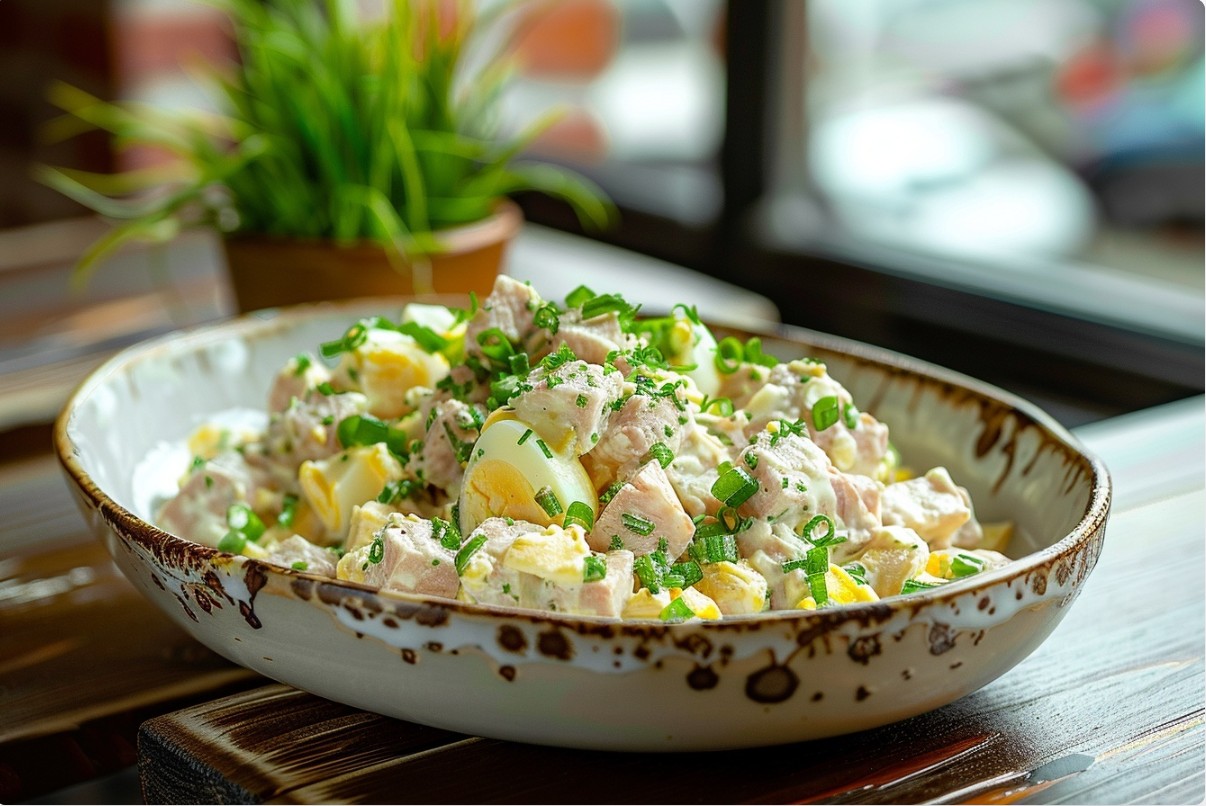
Tuna, egg, and spring onion salad is one of those “simple on paper” recipes that only really works when the balance is right. It’s not about piling in loads of extras—it’s about texture, seasoning, and keeping everything distinct.
The tuna brings that hearty, protein backbone, the eggs soften everything with a creamy bite, and the spring onion cuts through with fresh crunch. Mayonnaise ties it together so it’s cohesive (but not mashed into oblivion), and a little lemon juice keeps the whole thing from tasting heavy.
One thing matters most: this shouldn’t look like a spreadable paste.
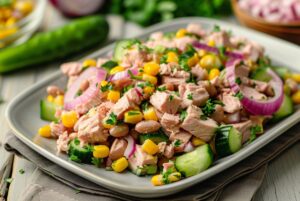
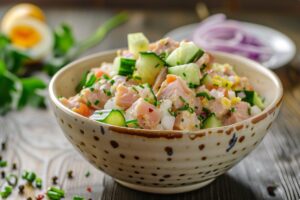
You want to clearly see: flakes of tuna, neat egg cubes, and thin slices of spring onion.
My kitchen reality with this salad usually looks like this: the kettle’s rumbling, the chopping board is drying by the sink, and the fridge has a tin of tuna and a bunch of spring onions. While the eggs finish in the saucepan, I grab a wide bowl and a fork—not a blender, because texture is the whole point. I mash the tuna just enough to break it up, leaving juicy pieces instead of turning it into mush. The eggs get diced into roughly 8–10 mm cubes, and suddenly it looks properly “homemade” (in the best way). Spring onion goes in at the very end so it stays snappy, not wilted. A few drops of lemon and a pinch of pepper—and you’ve got something that’s great on toast and weirdly perfect with baked potatoes too.
In this recipe, you’ll learn
- Why you’ll love this recipe
- Tips before you start
- What to look for when choosing ingredients
- Secrets for the perfect tuna, egg & spring onion salad
- How to serve tuna, egg & spring onion salad
- Nutritional perks
- Recipe variations
- Questions & answers
- Common mistakes
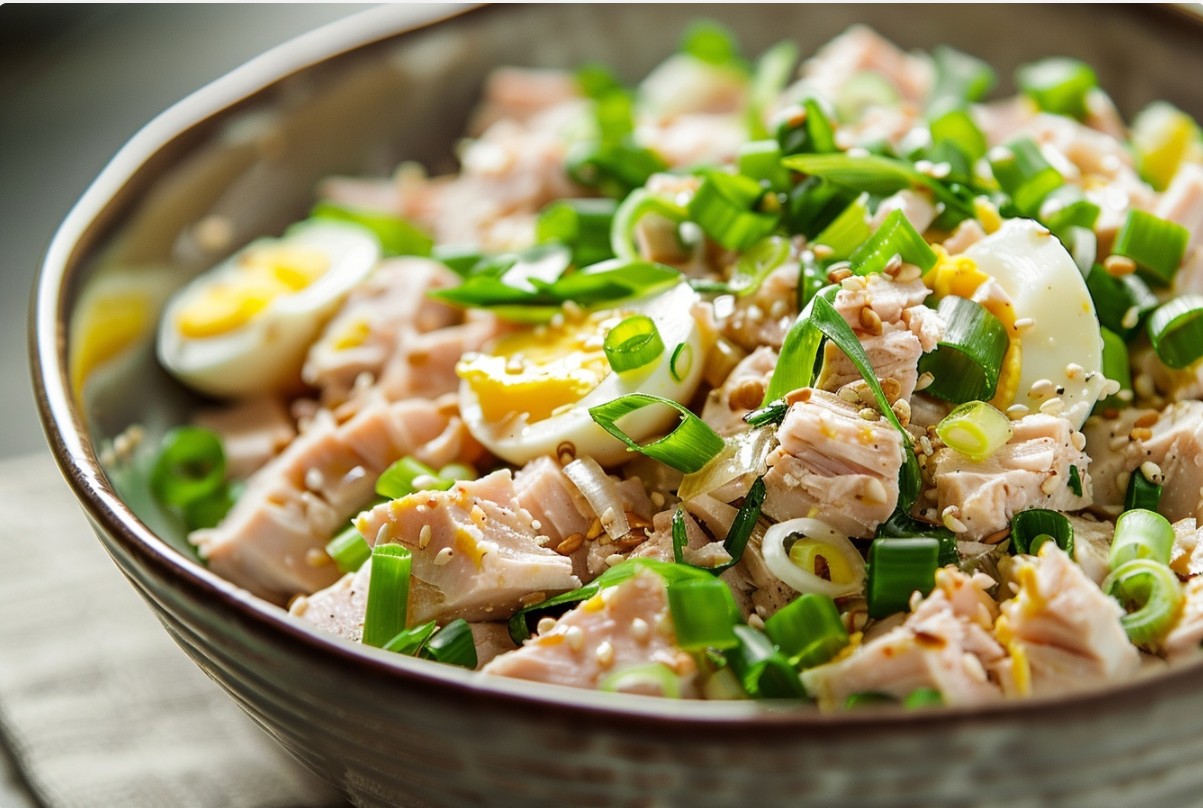
Tuna, Egg & Spring Onion Salad
Ingredients
- 160 g Canned tuna in brine/spring water drained weight
- 3 pcs Eggs hard-boiled
- 30 g Spring onions thinly sliced
- 2 tbsp Mayonnaise thick, up to 3 tbsp to taste
- 2 tsp Lemon juice add drop by drop, to taste
- 1 pinch Salt add after dressing
- 1 pinch Black pepper freshly ground
Method
- Cook the eggs: cover with cold water so it sits 2–3 cm above the eggs, bring to a boil over medium heat, then simmer at a gentle, steady boil for 9 minutes. Cool immediately in ice-cold water for 5 minutes so the whites stay springy and the yolks set.
- While the eggs cool, open the tuna and drain almost all the liquid, leaving 1–2 tsp for juiciness. Mash with a fork for 20–30 seconds, keeping 1–2 cm pieces; it should look moist, not watery.If your tuna is very dry, add 1 tsp yoghurt or a splash of the liquid from the tin.
- Peel the cooled eggs and dice into roughly 8–10 mm cubes—don’t crumble the yolks into dust. Transfer to a wide bowl, add the tuna, and fold with a spatula for exactly 20 seconds so everything distributes but stays visibly chunky. Keep the bowl cool—around
 8 °C (46 °F) so the flavour settles and the dressing tightens up the texture. Meanwhile, toast bread in the oven at 190 °C (374 °F)6 minutes[/timer] until the edges go golden.
 - Serve chilled: plate up 150–200 g or spread onto toast in a thin layer (~5 mm). For balance, add 1 tsp wholegrain mustard on the side or a few slices of green apple—the crunch against the creamy salad is immediate. Eat within 30 minutes of serving.


Notes
- Cool the eggs in icy water
- Drain excess liquid from the tuna
- Dice the eggs into 8–10 mm cubes
- Add the spring onion at the end
- Salt after the mayo goes in
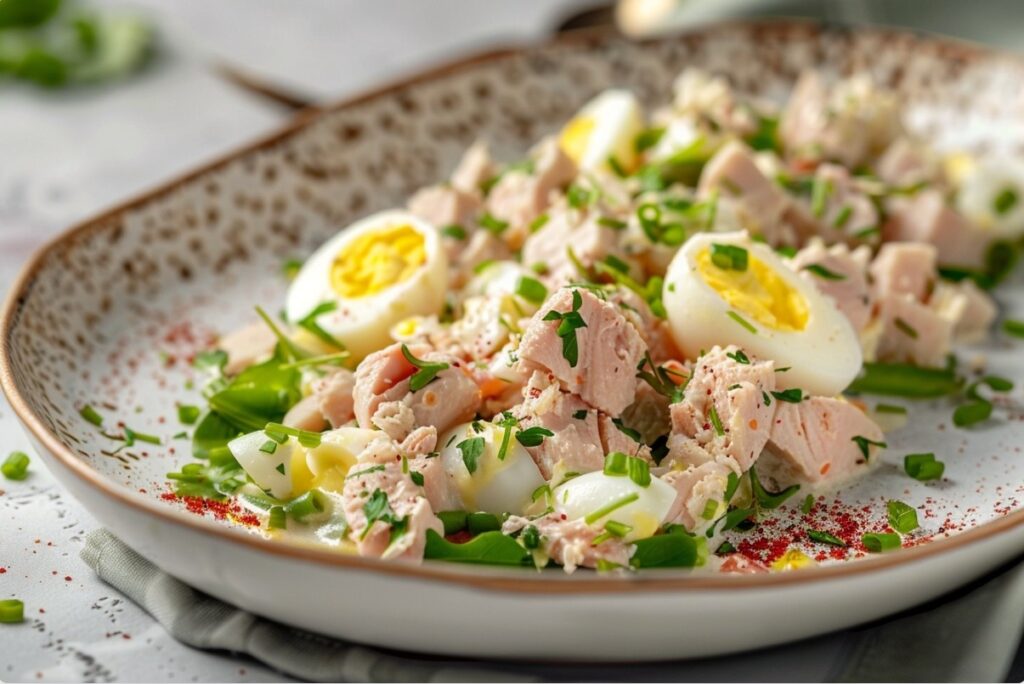
What to look for when choosing ingredients
Go for tuna in brine/spring water (not oil) for a cleaner flavour that won’t bulldoze the egg. And don’t sleep on the spring onion: the white part sliced very thin gives you that sharp, “pointed” onion aroma without turning harsh.
Canned tuna
Drain the liquid, then break it up with a fork—leave small chunks.
Eggs
Hard-boil for 9–10 minutes, then chill fast so the yolks stay firm (no grey ring).
Spring onions
Slice on the diagonal into thin half-moons; save a bit of the green tops for sprinkling.
Mayonnaise
Thick mayo works best—it binds instead of watering the salad down.
Lemon juice
Add it drop by drop. It should brighten the tuna, not take over.
Secrets for the perfect tuna, egg & spring onion salad
The trick is temperature: [wprm-temperature icon=”temperature” value=”8″ unit=”C” /> and not a degree warmer. This salad holds its shape best when everything is properly chilled. Mixing should be quick—just until it’s bound together—without mashing the egg.
- Mash the tuna roughly
- Add the spring onion at the end
- Add the mayonnaise in stages
- Lemon juice: just a few drops at a time
- Use freshly ground pepper (not pre-ground)
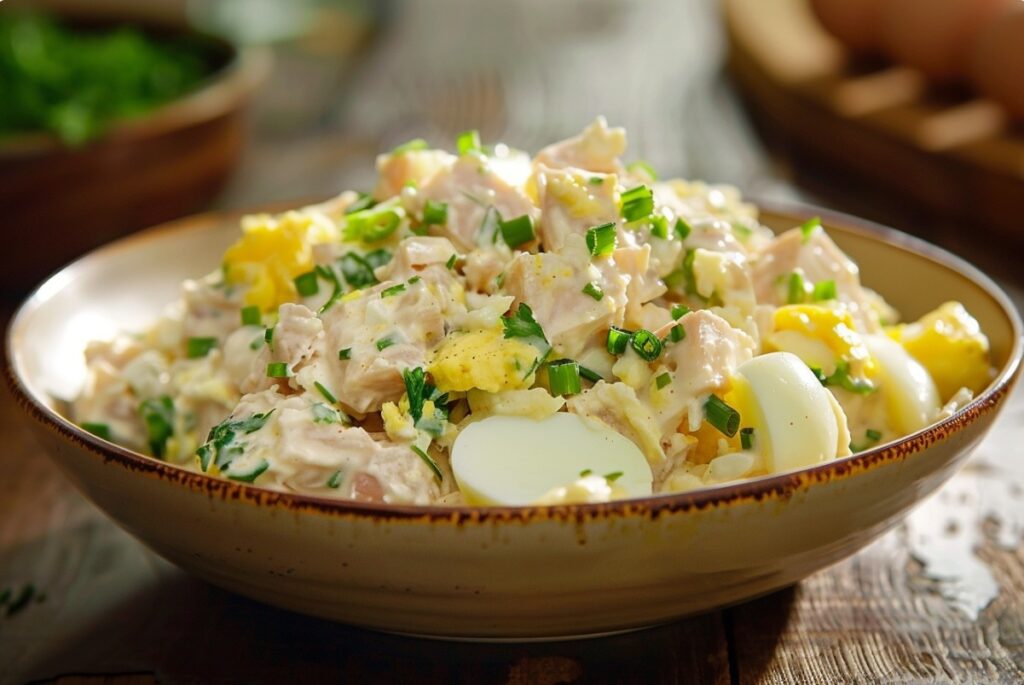
How to serve tuna, egg & spring onion salad
Serve it with thin oven-toasted crostini and a spoon of wholegrain mustard on the side. The slightly unexpected add-on: a few slices of green apple. Crunch + gentle tartness = it just works.
- On toast, in a thin layer (~5 mm)
- Scooped into romaine leaves like little boats
- As a topping for baked potatoes
- Rolled into flatbread with cucumber strips
- With crostini and wholegrain mustard
Nutritional perks of tuna, egg & spring onion salad
You get a solid protein combo from tuna and eggs, which makes this a very satisfying snack without any frying or fuss. It’s also genuinely handy for a packed lunch: it sits neatly in a container and still tastes good cold.
- Protein from tuna and eggs
- Satisfying, without frying
- Spring onions add freshness
- Easy to portion for meal prep
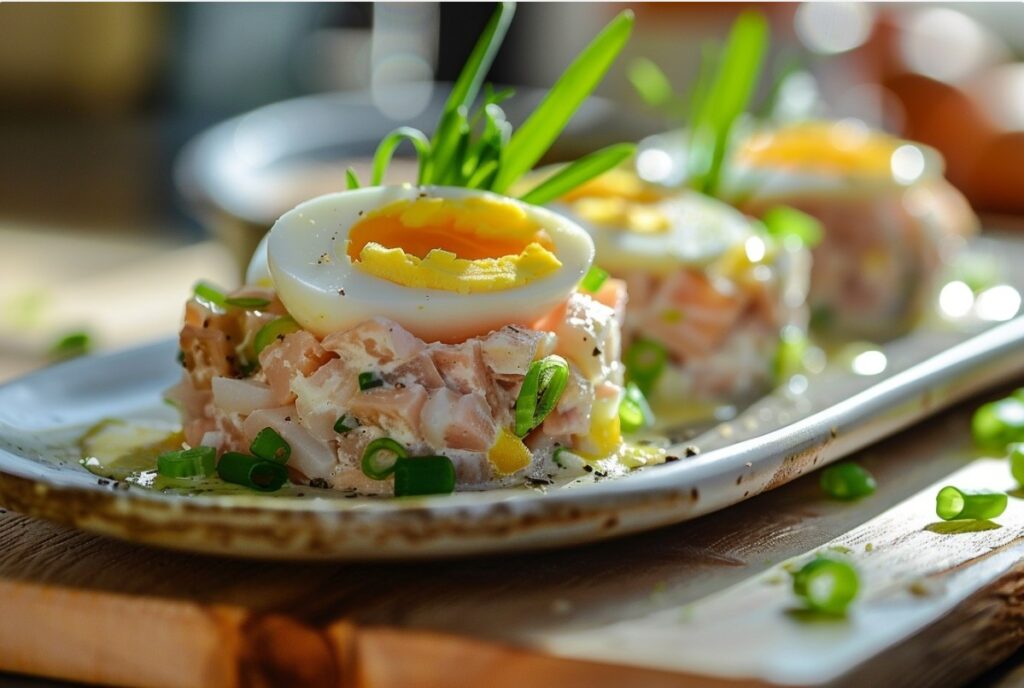
Tuna salad variations
Want more crunch or a bit more tang? Pick one “accent” and keep the salt in check—this salad is all about balance.
- Add 1 tbsp capers
- Stir in a finely chopped gherkin
- Add 1 tsp wholegrain mustard
- Swap part of the mayonnaise for Greek yoghurt
- Add 1 celery stalk, diced
If you’re after something quick, straightforward, and not loaded with extras, take a look at this tuna and egg salad. It’s one of those flexible recipes with loads of versions—from very simple “fridge raid” bowls to more café-style ones. With the basic combo of tuna, eggs, and a light creamy dressing, it’s easy to tweak for different tastes while keeping the main advantages: clear texture, balanced flavour, and speed.
Questions & answers
Який тунець краще використовувати для цього салату?
Найкраще підходить консервований тунець у власному соку шматочками (chunk). Саме такий формат дає правильну текстуру: шматочки залишаються видимими і не перетворюються на пасту.u003cbru003eТунець в олії теж можна використовувати, але тоді салат стає значно важчим і жирнішим, а кремова структура може “плисти”. Крім того, смак стає менш чистим.u003cbru003eВажливо не розминати тунець занадто сильно — він має залишатися у вигляді природних волокон і шматочків.
Чому салат виходить як каша і як цього уникнути?
Це одна з найчастіших проблем. Причин зазвичай три:u003cbru003eТунець занадто розім’ялиu003cbru003eЯйця нарізані надто дрібноu003cbru003eСалат активно перемішувалиu003cbru003eЩоб уникнути цього:u003cbru003eяйця нарізай середніми кубикамиu003cbru003eтунець просто розділяй на шматочки, не тисни йогоu003cbru003eперемішуй акуратно, буквально кількома рухамиu003cbru003eПравильний салат — це коли ти бачиш u003cstrongu003eкожен інгредієнт окремоu003c/strongu003e, а не однорідну масу.
Як досягти ідеальної кремової текстури, але без “перебору”?
Баланс дуже простий: майонез має u003cstrongu003eпокривати інгредієнтиu003c/strongu003e, а не “топити” їх.u003cbru003eДодавай його поступово:u003cbru003eспочатку невелику кількістьu003cbru003eперемішайu003cbru003eпри потребі додай щеu003cbru003eПравильна текстура:u003cbru003eлегкий глянецьu003cbru003eзв’язана масаu003cbru003eале без надлишку соусу на дніu003cbru003eЛимонний сік допомагає зробити текстуру легшою і “освіжити” майонез.
Навіщо додавати лимонний сік?
Лимонний сік тут не просто “опція”, а балансуючий елемент.u003cbru003eВін:u003cbru003eприбирає жирність майонезуu003cbru003eдодає легку кислотністьu003cbru003eробить смак більш чистим і свіжимu003cbru003eАле важливо не переборщити — достатньо кількох крапель, щоб не перебити основний смак тунця.
Чи можна зробити салат менш калорійним?
Можна зменшити кількість майонезу або частково замінити його (наприклад, легшим соусом), але тоді зміниться текстура.u003cbru003eУ цьому рецепті майонез — це не просто соус, а основа структури.u003cbru003eБез нього салат може стати:u003cbru003eсухимu003cbru003eрозсипчастимu003cbru003eменш зв’язанимu003cbru003eТому якщо зменшувати — роби це обережно.
Як правильно нарізати яйця?
Яйця повинні бути:u003cbru003eне дрібно подрібненіu003cbru003eне перетворені на кремu003cbru003eне надто великі шматки, хоча я особисто люблю пізати навпілu003cbru003eОптимально — середні кубики, які:u003cbru003eтримають формуu003cbru003eдобре змішуютьсяu003cbru003eзалишаються видимимиu003cbru003eЦе критично для правильної текстури.
Чи можна приготувати салат заздалегідь?
Так, але є нюанс.u003cbru003eСалат можна зберігати в холодильнику до 24 годин, але:u003cbru003eзелена цибуля може втратити свіжістьu003cbru003eтекстура стане більш щільноюu003cbru003eНайкращий варіант — готувати безпосередньо перед подачею або максимум за кілька hours.
З чим найкраще подавати цей салат?
Найкращі варіанти:u003cbru003eпідсушений хліб або тостиu003cbru003eяк намазка для сендвічівu003cbru003eяк окрема страваu003cbru003eВін добре тримає форму і не розтікається, тому ідеально підходить для швидких перекусів.
Як зрозуміти, що салат зроблений правильно?
Ознаки правильного результату:u003cbru003e✔ видно шматочки тунцяu003cbru003e✔ видно кубики яйцяu003cbru003e✔ є свіжі зелені акцентиu003cbru003e✔ текстура кремова, але не “каша”u003cbru003e✔ легкий глянець від соусуu003cbru003e✔ нічого не виглядає сухимu003cbru003eЯкщо це все є — ти зробив все правильно.
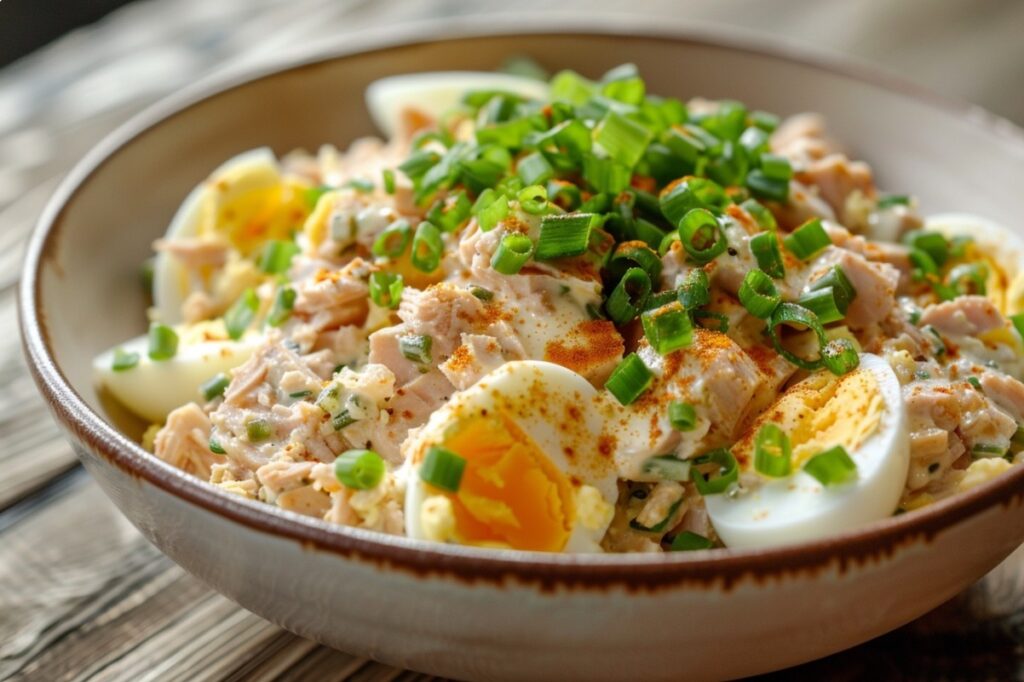
Common mistakes when making tuna, egg & spring onion salad
Sometimes it turns watery because the tuna wasn’t drained properly—or because too much lemon went in. The other classic issue: it becomes a thick smear when you overmix and basically grind the egg into the mayo. The end result is a salad that’s dry, too salty, or soggy… and it won’t even sit on a spoon.
Why does the salad “run” on the plate?
Too much liquid from the tin, or a very runny mayonnaise. Drain the tuna well, press it lightly against the side with a fork, and add the dressing 1 tsp at a time so you can control thickness.
Why is it dry and crumbly?
The tuna was mashed into tiny crumbs and there wasn’t enough “binder.” Keep 1–2 cm pieces and add another 1–2 tsp mayonnaise, or 1 tsp yoghurt.
Why do the spring onions taste bitter?
They were sliced too thick, or the onions were old. Slice thinly on the diagonal; if needed, rinse the white part in cold water for 1 minute and pat dry.
Why is it over-salted?
You salted before tasting the tuna and mayo. Season at the end, pinch by pinch, then balance with 2–3 drops of lemon—or add half an extra egg to mellow it out.
Recommended for you
Popular recipes

Leave a comment
Did you like this recipe? Share your impressions and tips in the comments!
Responses