Tuna Salad for a Fitness Diet

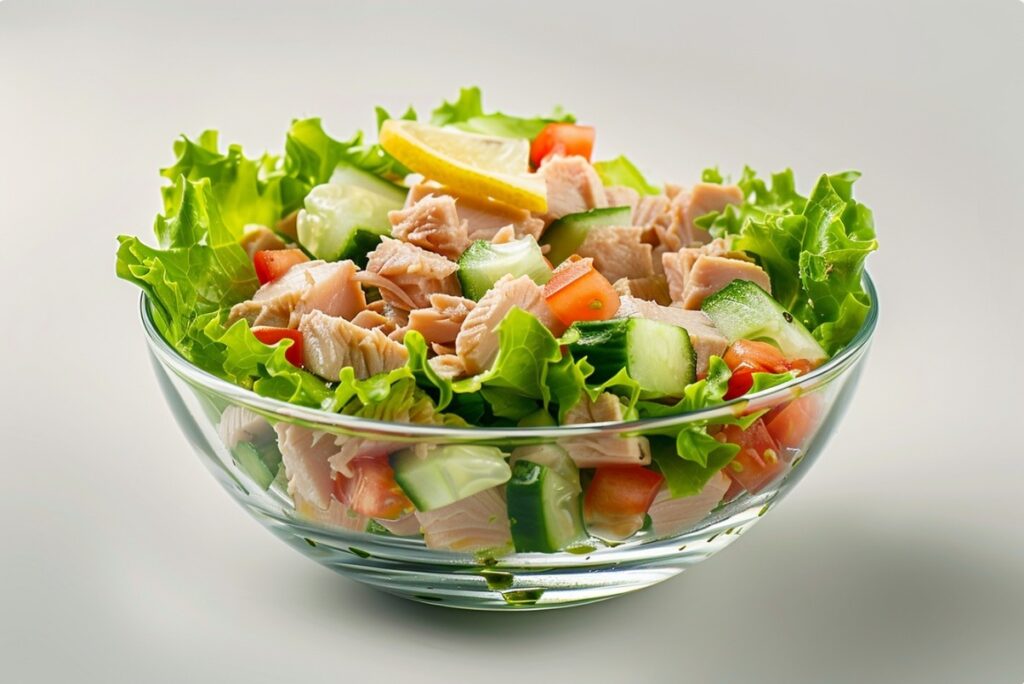
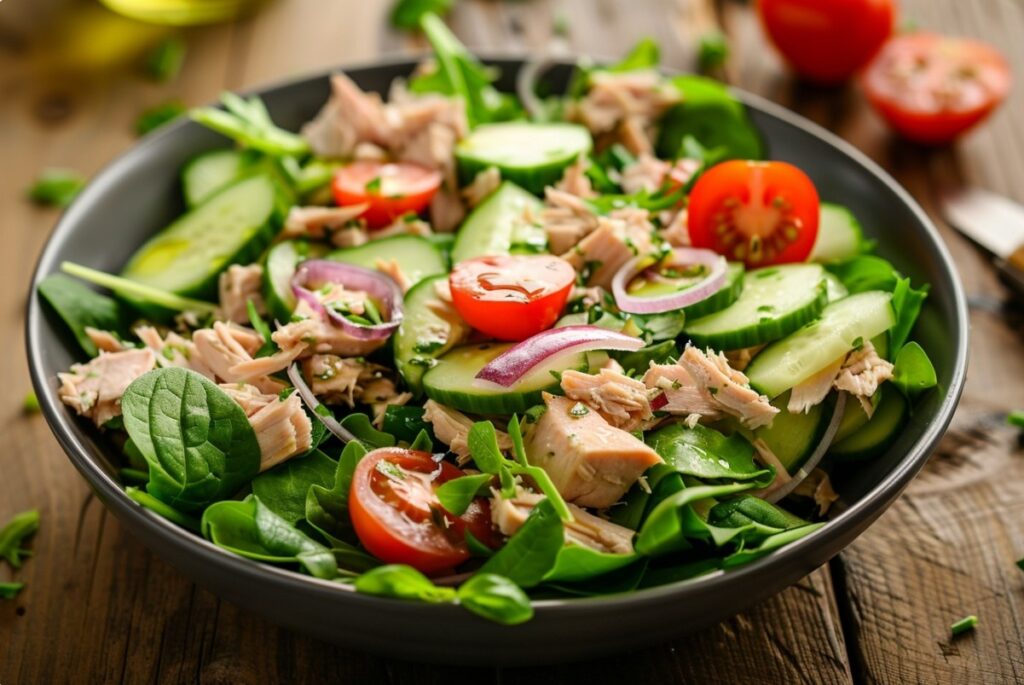
Tuna salad is one of the easiest meals to lean on when you’re eating for fitness: it’s light, filling, and genuinely nourishing. Tuna brings solid, high-quality protein to the table, which helps support muscle and keeps you satisfied for longer. Pair it with fresh vegetables and you’ve got a balanced plate that doesn’t feel heavy—perfect for everyday eating.
The best part is how flexible it is. You can tweak the same basic tuna salad for fat loss, maintenance, or training days without turning dinner into a complicated project. Simple ingredients, quick prep, no extra fuss—exactly what you want when you’re trying to eat well without living on elaborate recipes (or extra calories).
Some days you finish a workout and feel like you’ve just moved apartments: your head is buzzing, your legs are jelly, and you either want “real food” or to lie down and disappear for a bit. In moments like that, I have one very specific fear—if I don’t eat something sensible now, I’ll end up grabbing random food an hour later. Not because of “weak willpower,” but because my body is simply asking for energy.
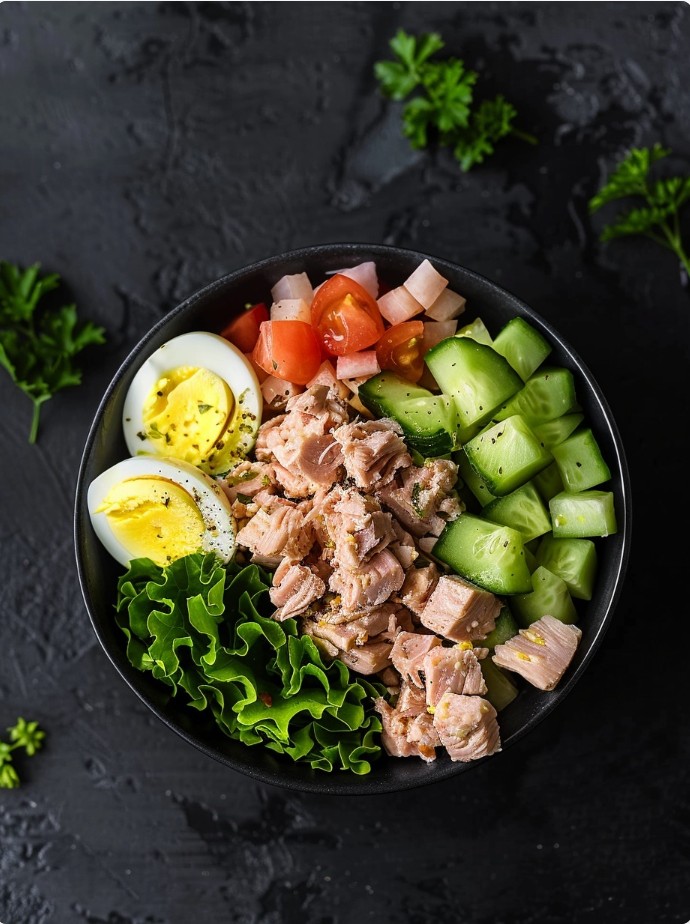
Tuna salad is my go-to safety net. It’s not about perfection and it’s definitely not about food rules. It’s just straightforward, satisfying food you can throw together fast—something that actually fills you up, doesn’t leave you feeling like you “ate air,” and doesn’t turn the kitchen into a battlefield of pots and pans.
I see people try to “eat clean” and burn out on the small stuff: no time, didn’t manage to buy the “right” groceries, kids want something else, work lunch is eaten standing up. That’s exactly where a salad you can build from what’s realistically in the fridge comes in—something that supports energy and recovery without stress and spreadsheets.
One more thing that matters: there’s no such thing as perfect nutrition. There are habits that work in your actual life. Tuna salad can be “fitness food” not because it’s magical, but because it’s practical: protein, vegetables, something satisfying—and you’re back on track.
Why tuna salad fits so well into a fitness routine
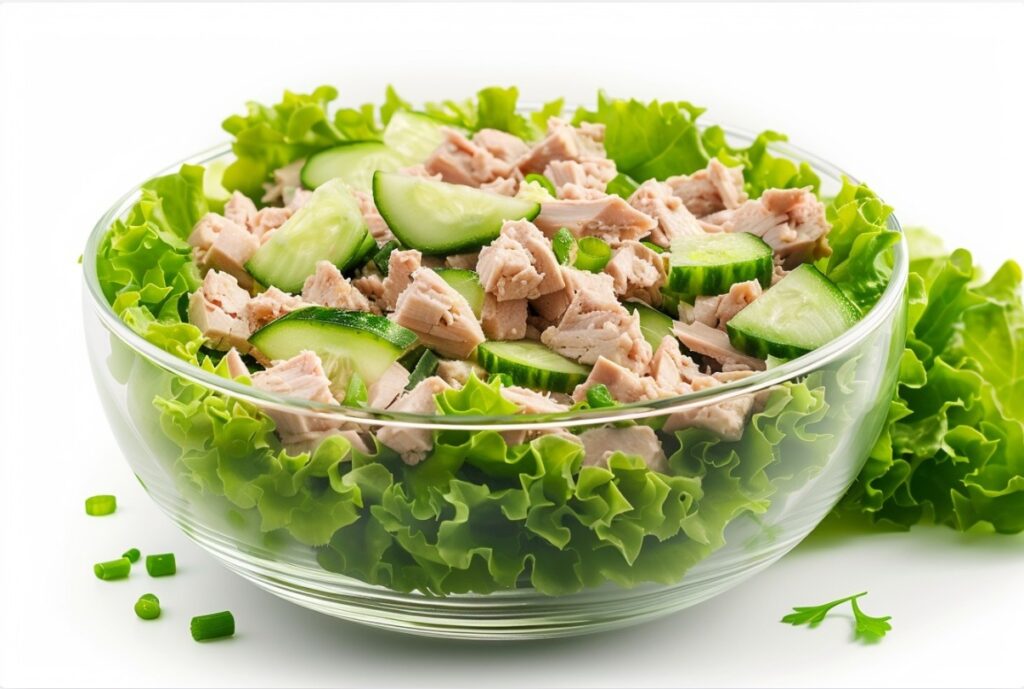
I’m not into turning food into a religion. I am into food that makes life easier. After a workout (or just a day when you’ve been on your feet a lot), your body usually wants two things: to feel satisfied and to feel better. Tuna delivers that “real meal” feeling—it gives the dish structure. And the salad part adds freshness, crunch, and volume, so the bowl looks and feels like proper food, not a sad little “snack.”
What I love most is how well it adapts to real life. Got a can of tuna? Great. Got cucumber and tomato? Perfect. No tomato? Use cabbage or carrots. Nothing fresh at all? Even frozen peas (quickly blanched with boiling water) can save the day. That’s not a “bad substitute.” That’s just normal life.
Another reason: speed. In a fitness routine, you often don’t want to stand at the stove. A salad is 10–15 minutes, tops. And if you make it tasty (not just “healthy,” but actually tasty), it stops feeling like punishment and starts feeling like a habit.
I always tell myself this: if a meal comes together faster than I can talk myself out of it, it has a real chance of becoming a regular.
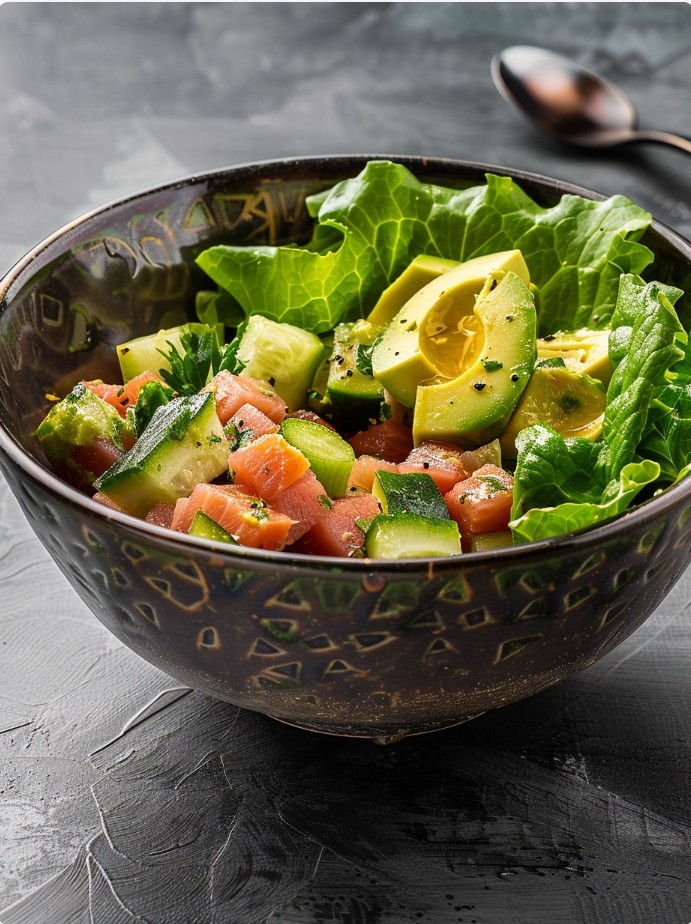
Tuna: what to buy and how to keep it from tasting dry
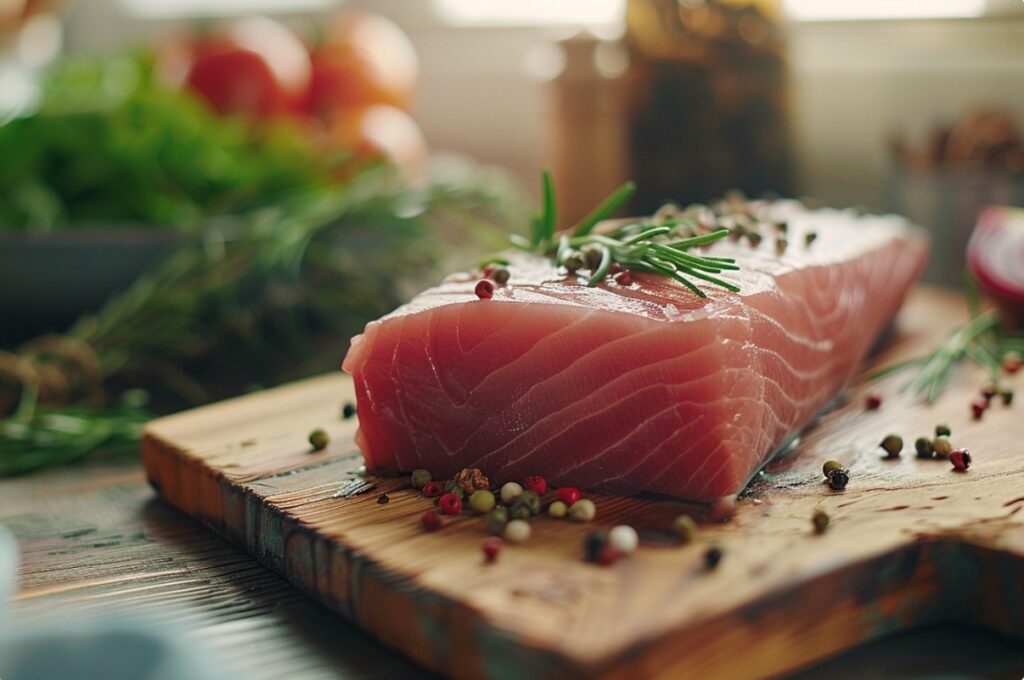
Most tuna salads don’t fail because of the vegetables—they fail because of the tuna. Not all canned tuna is the same, and honestly, it has moods.
In water or in oil
Tuna in water (or “in its own juice”) usually feels lighter, but it can turn dry if you drain it and toss it straight into the bowl. Tuna in oil tends to be more tender and “juicy,” but then you need to go easy on extra dressing so the salad doesn’t feel heavy.
Here’s what I do: if it’s tuna in water, I add something that brings creaminess or moisture (plain yogurt/Greek yogurt, avocado, a little olive oil, a spoon of hummus, or simply more juicy vegetables). If it’s tuna in oil, I might use a bit of that oil as the base of the dressing—just lightly, so it doesn’t bulldoze the flavor.
Chunks or flaked
Chunks are great when you want to really taste the fish in every bite. Flaked tuna mixes in better and makes the salad feel more cohesive. In “fitness mode,” when I’m eating quickly, I usually prefer flaked—less chance of getting a forkful that’s “all tuna” and then “all leaves.”
Hack: bring the juiciness back
If the tuna is dry, I don’t fight it. I do one simple thing: mash it with a fork and add something acidic (lemon juice or a splash of vinegar) + something soft (yogurt/avocado/finely grated cucumber). The acid wakes up the flavor, and the soft ingredient binds the texture. Suddenly the tuna stops tasting like sawdust.
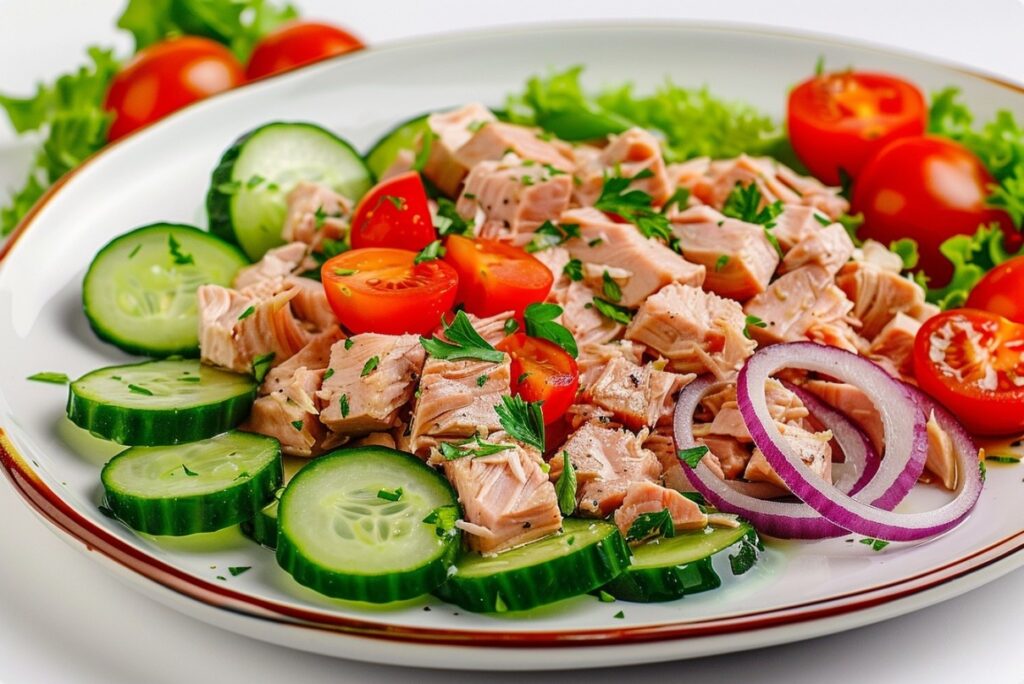
Building the base: how to make a bowl that actually holds your energy
A salad for a fitness diet (I think of “diet” as a routine, not restriction) needs one key quality: you shouldn’t be hunting for food again 40 minutes later. It’s not about giant portions—it’s about balance in the bowl.
I think of a good tuna salad in three “layers”:
- Something protein-rich — tuna, in this case.
- Something crunchy and voluminous — greens, cucumber, cabbage, bell pepper, radishes.
- Something satisfying — the part that makes you feel like you actually ate: beans, chickpeas, egg, potatoes, wholegrain croutons, cooked grains, or even a slice of decent bread on the side.
When a salad is only tuna and greens, it can look pretty—but in real life it often doesn’t do the job. Especially if you move a lot or you’re just having a demanding day. I don’t see the point in making “lightness” the goal. Better to make the salad a proper meal.
Quick kitchen story: I had a phase where I stubbornly ate a “little salad” after workouts—tuna, arugula, cucumber. An hour later I’d be standing at the pantry eating dry cookies because my brain was begging for “anything.” Once I started adding beans or a bit of potato, that whole cycle ended. Simple. No drama.
What to use as the “satisfying element”
These options pair beautifully with tuna and don’t require complicated cooking:
- Canned beans or chickpeas — rinse, drain well, toss into the bowl. A lifesaver on busy weekdays.
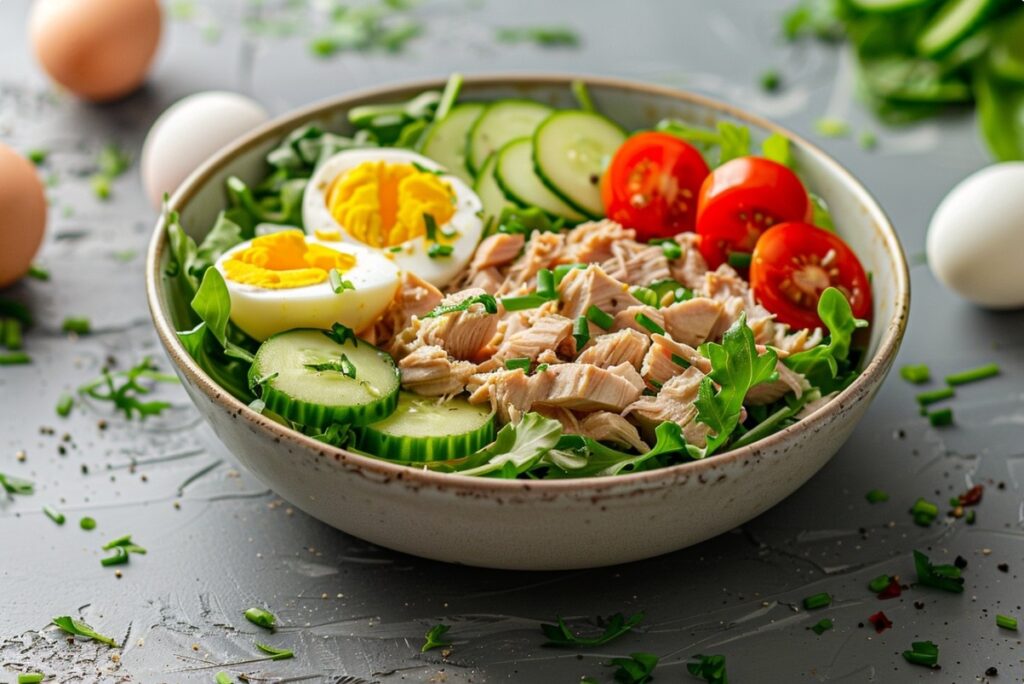
- Eggs — even 1–2, boiled ahead of time, instantly make the salad feel more substantial.
- Potatoes — boiled in their skins or leftover roasted potatoes from yesterday. Tuna + potato is classic for a reason.
- Cooked grains — leftover rice/bulgur/quinoa makes an ideal base. No need to cook grains “for the salad”—just use what you already have.
- Bread on the side — sometimes the most honest option. Salad in a bowl + a slice of bread = you’re full and not cranky.
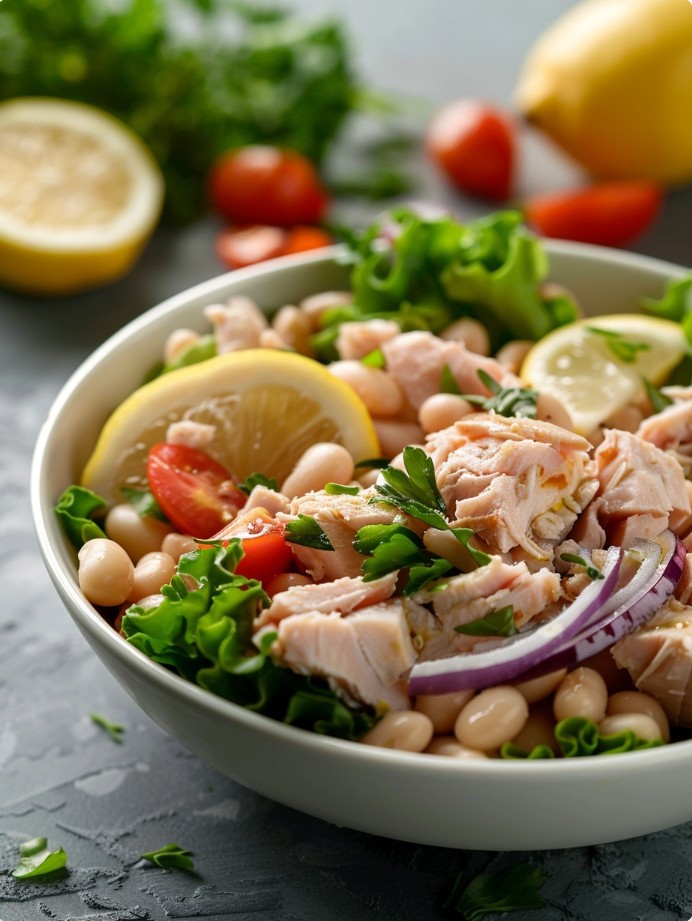
Dressing: the small detail that changes everything
Tuna salad usually gets ruined by one of two extremes: either there’s no dressing at all (“because fitness”), or there’s so much that everything swims and the tuna disappears. I’m firmly in the middle. Dressing should bring the ingredients together and make them appetizing.
I like to think of dressing as three buttons: acid, fat, and salt/heat. You don’t have to press all three every time, but hitting at least two is a good idea.
A few reliable combos (no moralizing)
- Lemon + olive oil + mustard — a classic that makes everything taste “pulled together.”
- Yogurt + lemon + black pepper — gentle, creamy, great for drier tuna.
- Avocado mashed with lime/lemon — dressing and “satisfying element” in one.
- Soy sauce + a little sesame oil + ginger — an easy Asian-leaning twist without a long ingredient list.
- Pesto loosened with lemon juice — super fast and seriously tasty, just go easy because it’s bold.
Tip: mix the dressing in a small cup first, then add it to the salad. You won’t end up with one “sour corner” and one “dry corner” in the same bowl.
Another trick I use a lot: a bit of tomato juice (from really ripe tomatoes) or grated cucumber adds natural moisture so the salad doesn’t feel dry—especially if you don’t want to use much oil.
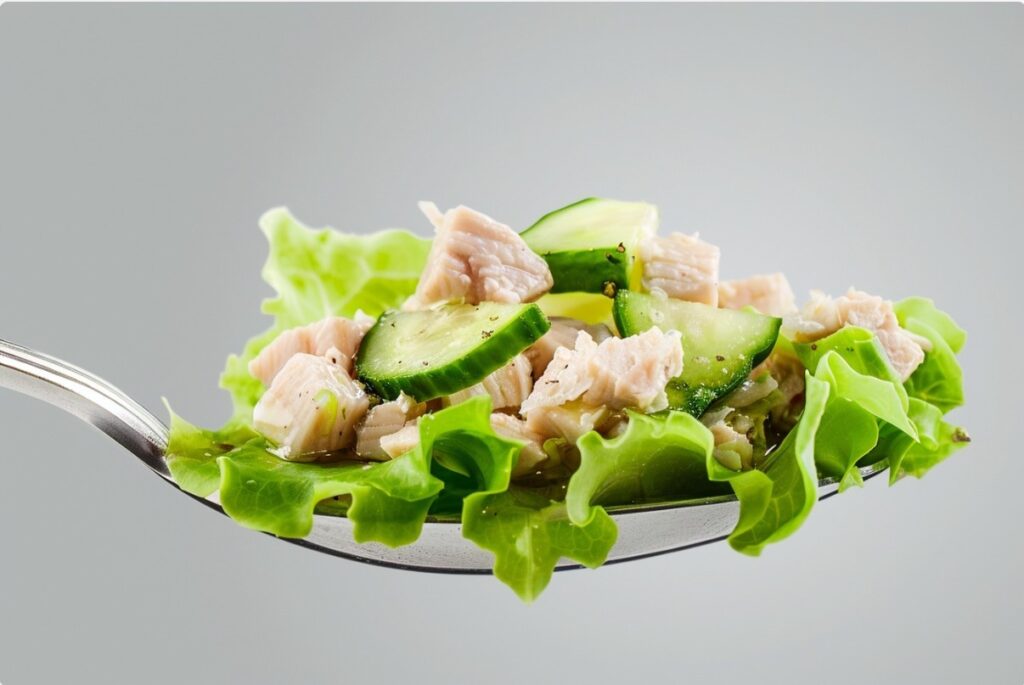
Tuna salad combos for different days: post-workout, travel, office lunch
I like having a few “scenarios” instead of one perfect salad. Life changes: today you’re home and can chop things nicely; tomorrow you’re packing a container one-handed while using the other to find your keys.
When you need to recover and eat properly
This is when I make it more substantial: tuna + something satisfying (beans/potatoes/grains) + juicy vegetables + a dressing with some acidity. The goal is that feeling where, with each forkful, you’re switching back on. Crunchy cucumber, sweet bell pepper aroma, tuna that doesn’t crumble into dust—and you’re no longer in survival mode.
When you want lighter, but not “empty”
Then I scale back the heavier part, but I don’t remove it completely. For example: tuna + lots of greens + cucumber + tomato + half an avocado or one egg. It’s the kind of meal that makes your head feel clearer, without hunger sneaking up right away.
When the salad travels (container, road, office)
The key here is keeping everything from turning into mush. This is my system:
- Dressing goes separately (a tiny jar—or even a little packet if it’s truly a field situation).
- Juicy ingredients (like tomatoes) go separately or in larger chunks.
- Greens go on top so they don’t “cook” in the moisture.
Quick story: once I took tuna salad to a shoot, threw everything together, and generously drenched it in lemon. Two hours later, the container held something that looked like seaweed salad with an attitude. Edible, sure—joyless, absolutely. Since then, dressing lives separately, and it genuinely makes a difference.
Common mistakes that make the salad feel ‘off’
Mistakes are normal. I’ve made all of these—especially back when I was trying to “eat right” and forgot that food still needs to taste good. Here’s what most often breaks a tuna salad.
1) Too dry
You drain the tuna, add greens and cucumber, and call it a day. The fork squeaks, and it feels like you’re chewing paper. Easy fix: add dressing or a juicy component (tomato, grated cucumber, a little yogurt, avocado). The salad shouldn’t be soggy, but it should feel alive.
2) Too sour
Lemon is great, but it’s easy to overdo. When it’s too much, the salad turns sharp and the tuna can taste a bit metallic. I balance it by adding something soft (yogurt/avocado) or something slightly sweet (corn, sweet bell pepper). And I always taste the dressing before it goes into the bowl.
3) “Fitness” wins over flavor
When people remove salt, fat, and any “tasty” details, the salad becomes a punishment. And punishments don’t last. I’m all for a delicious salad: a bit of salt, spices, a proper dressing, something crunchy. That’s not cheating—it’s a strategy for eating this way consistently.
4) Everything chopped too small
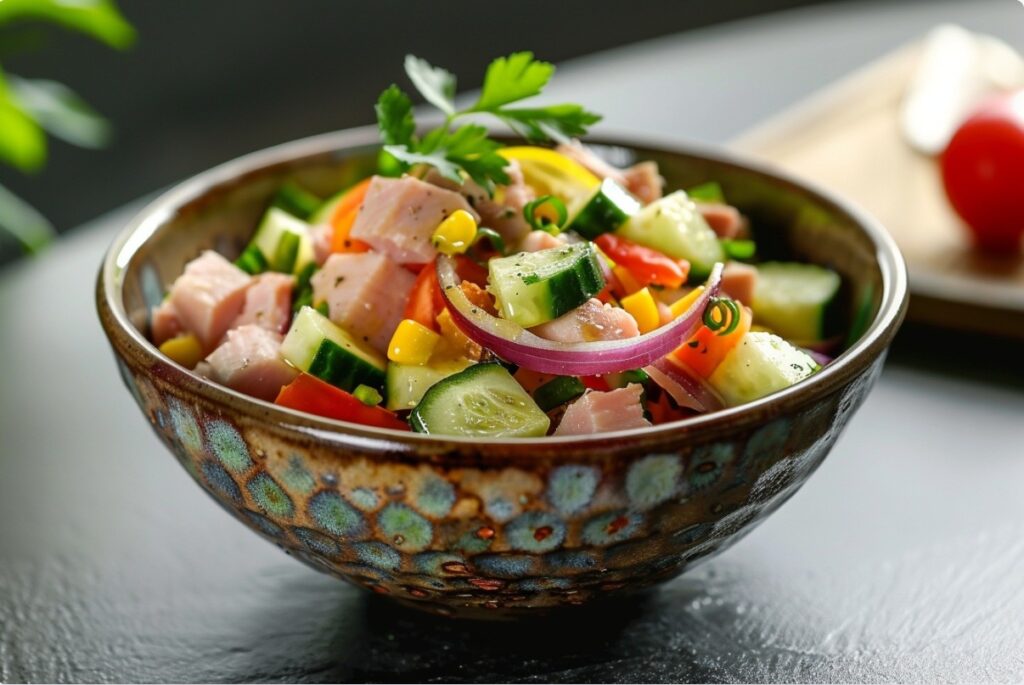
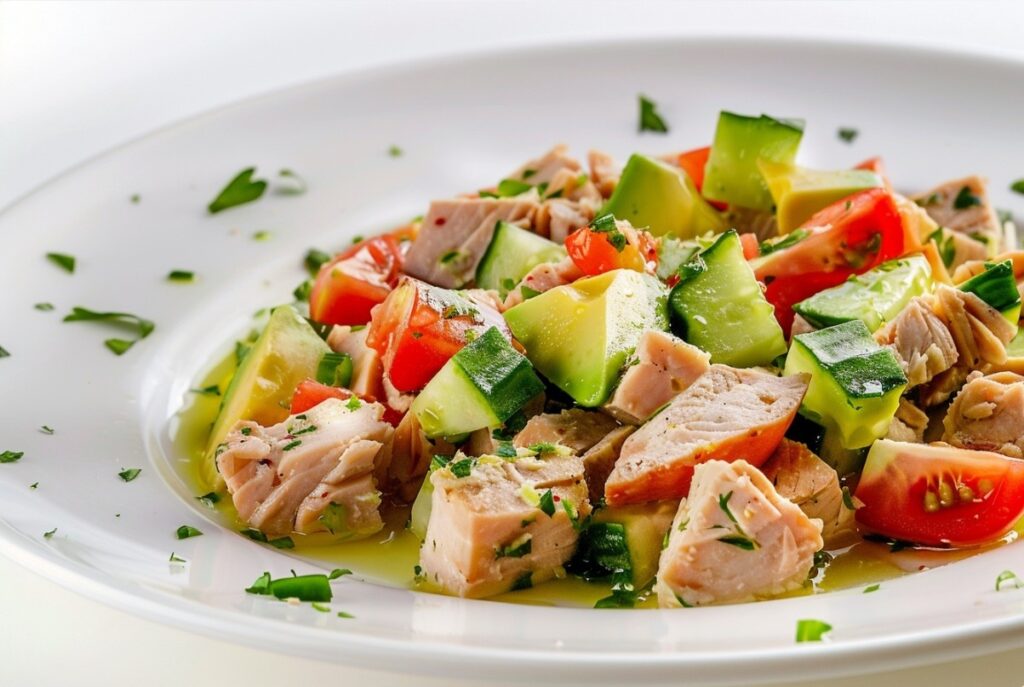
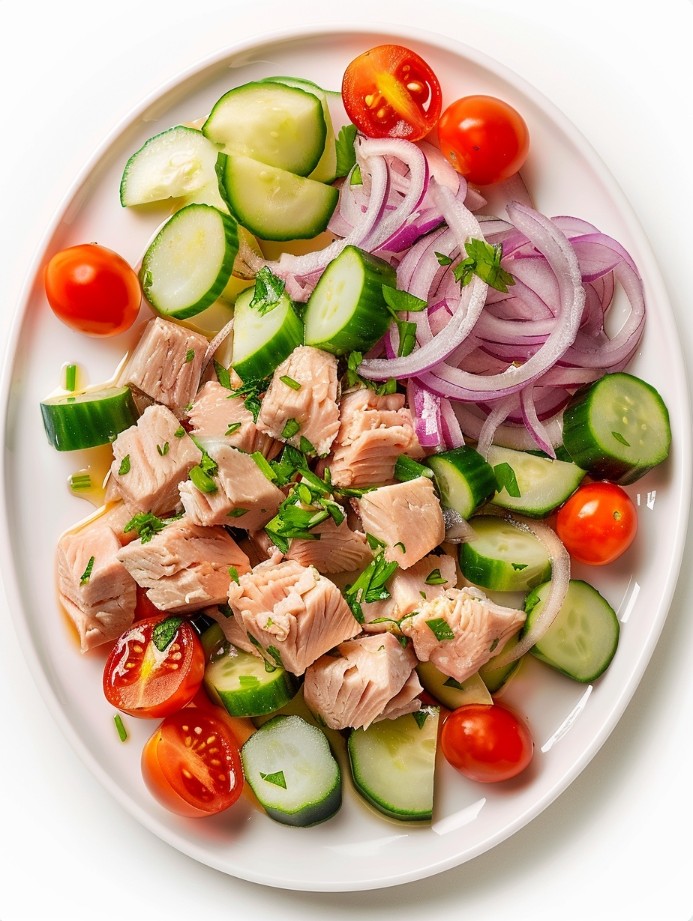
It sounds minor, but it’s not. When everything is minced into “dust,” the salad quickly turns into a paste. I like different sizes: tuna in flakes, cucumber in half-moons, tomato in wedges, onion sliced thin. That’s how you get texture, crunch, and the feeling of eating real food.
5) No “anchor”—just greens
This is the most common reason people end up snacking on random stuff later. A salad can be light, but if your days are active, it needs an anchor: legumes, egg, potatoes, grains, or bread on the side. No heroics required.
Little hacks that make tuna salad fast and actually tasty
I love hacks not for aesthetics, but to reduce friction. The fewer tiny decisions you have to make in the kitchen, the more likely you are to actually eat a proper meal.
- Keep 2–3 cans of tuna in the pantry. Not for “clean eating points”—for peace of mind. When there’s no plan, tuna + vegetables can save dinner.
- Boil a few eggs ahead of time. They upgrade any salad in 30 seconds: peel, slice, done.
- Rinse canned beans/chickpeas and drain them well. Your salad won’t get watery, and the flavor stays cleaner.
- Add something crunchy. Seeds, nuts, croutons, even thinly sliced cabbage—crunch makes a salad feel “alive” and more satisfying.
- Keep the dressing separate if you’re not eating right away. It’s basic, but the difference is huge.
- Salt and pepper at the end. Especially if you’re using soy sauce, olives, or other salty ingredients—this makes it easier not to overdo it.
My favorite flavor trick: a pinch of lemon zest over the top. The aroma instantly feels “grown-up,” like you tried harder than you actually did.
How not to ‘fall off’: flexibility over rules
Fitness eating usually doesn’t fall apart in the gym—it falls apart at home. A kid gets sick, work blows up, you get home late, you’re so tired that slicing a cucumber feels like a whole project. That’s when it’s easy to swing to extremes: either “that’s it, I failed again,” or “whatever, I’ll eat anything.”
What helps me is a different mindset: not perfect is still fine. Tuna and bread is still a meal. Tuna and frozen vegetables is still a meal. Tuna and leftover rice is honestly great. A “salad” doesn’t have to be a mountain of greens—it’s just a way to quickly build a balanced plate from what you have.
Quick story: I know someone who “fell off” every time the store didn’t have arugula. Seriously. He tied his “healthy eating” to one specific leaf. We made a simple agreement: any greens are fine, and if there are no greens—cabbage works, or even a chopped pickled cucumber. A month later he stopped stressing and started eating more consistently. Not because he became more disciplined, but because he stopped demanding perfection from himself.
Guidelines that keep you steady without obsessing
- Think less “what can’t I have?” and more “what can I add?” Add vegetables, add protein, add something satisfying—and it’s already better.
- Keep 2–3 backup combos. For example: tuna + beans; tuna + egg; tuna + potatoes. It removes decision stress.
- Don’t punish yourself for keeping it simple. A salad made from what you have isn’t a “compromise”—it’s a grown-up strategy.
And one more thing: if you love mayonnaise, sometimes you can add a little. Not a bucket, not “so it swims,” just enough to make it tasty. Because if you try to live on food you don’t enjoy, your body will get what it wants anyway—just later, and in a more chaotic way.
I love tuna salad for a fitness diet because it doesn’t ask you to be perfect. It asks for one thing: put together a proper meal that gives you energy and helps you recover. Tuna is the backbone, vegetables bring freshness and volume, and that “satisfying element” keeps you from living on snacks.
What about you—do you prefer your tuna salad “light and green,” or more substantial so it actually fills you up? And what do you add to make it genuinely delicious, not just “because you should”?
If you want more ideas and want to get better at mixing and matching ingredients for different goals (fat loss, muscle gain, or just lighter everyday eating), take a look at our roundup: Tuna salad recipes, tips, and cooking secrets. It includes everything from light veggie-forward bowls to more filling versions with eggs, rice, or avocado—so you can easily adapt tuna salad to your own fitness routine.
Questions & answers
Why is tuna salad good for a fitness diet?
Because it’s high in protein, satisfying, and easy to keep relatively low in calories. Paired with vegetables, it adds fiber and micronutrients without feeling heavy.
Can tuna salad help with weight loss?
Yes. The protein helps you stay full longer and can reduce snacking. Keep the add-ins light and avoid heavy sauces to stay in a calorie deficit.
What’s the best dressing for a fitness tuna salad?
Olive oil with lemon juice or a plain yogurt-based dressing are two reliable options. Use a moderate amount—healthy fats still add up.
Is there enough protein in tuna salad for a fitness routine?
Usually, yes. A typical portion of tuna can provide around 20–30 g of protein. Add eggs or legumes if you need more.
Which vegetables work best in a fitness tuna salad?
Cucumbers, leafy greens, tomatoes, bell peppers, and arugula are great choices. They add volume and crunch with minimal calories.
Can you eat tuna salad after a workout?
Yes. It’s a strong post-workout meal thanks to the protein. After intense training, add a small portion of complex carbs for extra energy.
Is tuna salad a good dinner option while dieting?
Yes. It’s light but filling, and the protein helps prevent late-night snacking. Just don’t overload it with heavy dressings.
How do you make tuna salad as diet-friendly as possible?
Choose tuna in water, add plenty of fresh vegetables, skip heavy sauces, control oil, and keep the ingredient list simple.
Why is tuna salad better than other diet meals?
It’s fast, affordable, and flexible. You get protein, fiber, and nutrients without complicated cooking or expensive ingredients.