Vegan Menu for 5 Days with Active Use of Chia

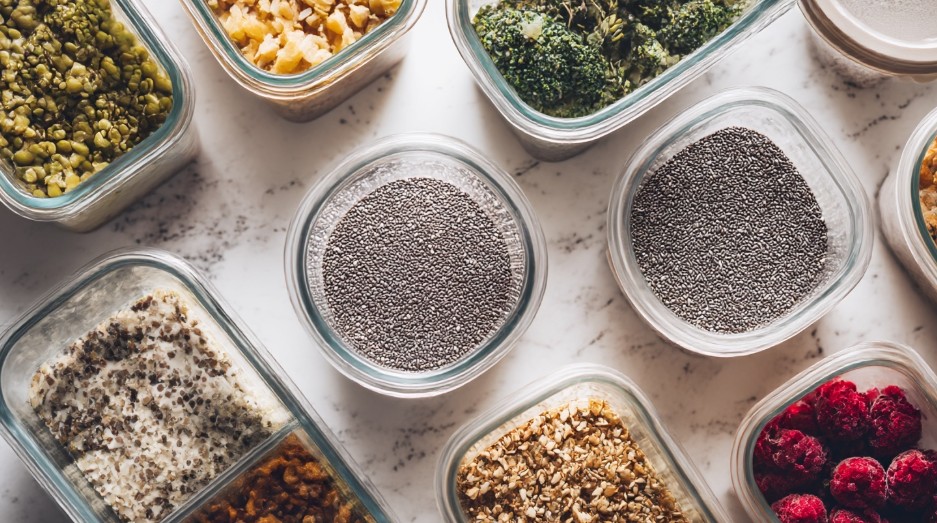
The feeling of novelty in the kitchen is not always about exotic or complex ingredients. Sometimes, a small detail is enough to make a familiar menu sound new. That’s how chia seeds appeared in my life. I once thought of them as something ‘trendy’ and unnecessary, but one day, while preparing breakfast for a vegan company, I tried adding chia to coconut yogurt. It was like a little miracle: the texture became more interesting, the taste deeper. That’s when I realized that chia is not just about ‘healthy food,’ but also about practicality.
A vegan menu often seems complicated, especially when planning ahead. But when the day starts with a light pudding and ends with a cream soup with a crunchy topping, you find pleasure in it. Many people face the question: how to create a menu that is both interesting and not too expensive, and that you can manage even on weekdays? This is where chia helps: it cooks quickly, stores for a long time, and pairs with almost everything. I’ll show you how to create a simple yet diverse 5-day menu where chia is not the main star but a reliable ‘friend on the plate.’
Why Add Chia to a Vegan Menu
When you start cooking vegan dishes regularly, you quickly notice a certain cycle: grains, vegetables, legumes, a bit of fruit. Over time, everything seems to blend into one. Once, I caught myself thinking that even my favorite breakfasts had become bland. That’s when I accidentally remembered chia — the small seeds that had been sitting on the shelf for two months. I added them to my morning porridge, and suddenly felt a different mood.
Chia doesn’t require complex manipulations. Just soak them in any liquid — water, plant milk, yogurt — and you get a ready base for breakfast, a snack, or even a dessert. Their texture is a story in itself: tender, slightly jelly-like, pleasantly crunchy on the teeth. Moreover, chia is neutral in taste, so it easily adapts to any dish: from sweet to savory.
Tip: If you want quick solutions, chia is the perfect ingredient for ‘overnight’ dishes. Just mix with the base, put it in the fridge, and in the morning, breakfast is waiting for you.
My experience shows that chia is also a hack for the busy: it cooks in five minutes and stores in the fridge for up to three days. In the season of vegetables and berries, I add fresh products to the dishes, and when time is short, I just mix with jam or banana.
Principles of Creating a 5-Day Vegan Menu
Planning a vegan menu so as not to get bored is helped by one simple thing — a variety of textures and flavors. I always divide the day into three main meals and two light snacks. Chia here is a universal player: they can be in breakfast, salad, and even in baking.
- Breakfast — something nutritious but not heavy (puddings, granola, smoothies with chia).
- Lunch — hearty, with vegetables, legumes, grains, sometimes with chia-based sauces.
- Dinner — lighter, often a salad or cream soup with chia topping.
- Snacks — nuts, fruits, bars, or energy balls with chia.
The main thing is not to complicate. If there is time, you can cook something more interesting (for example, homemade granola with chia). If time is short — a simple pudding or crunchy chia crackers. I often plan the menu so that part of the dishes can be made in advance: for example, breakfast bases for two days or soaked legumes for lunch and dinner.
Emphasis: the menu should be flexible. Not all dishes need to be made ‘on schedule’ — you can swap them or replace them depending on the products in the fridge.
How to Combine Chia with Other Products
Chia is neutral in taste, but they skillfully highlight other ingredients. I often use them where I want a bit of thickness, crunchiness, or an interesting look. There are countless ways to add them. Here are a few proven combinations:
- Plant yogurts or milk — an ideal base for pudding or smoothies.
- Fruits and berries — for light breakfasts and snacks.
- Vegetables (avocado, cucumber, tomato) — in salads or as a topping.
- Grains — in granola or porridge.
- Nuts, seeds — for extra nutrition and texture.
If I make cream soup, I add a spoonful of chia after blending — the soup becomes thicker and pleasantly stretchy. In salads, I use chia instead of sesame or flax: sprinkle on top, and the dish looks more interesting.
Tip: If you’re afraid that chia will clump, add them to the liquid gradually and mix immediately. In 5-10 minutes, they will start to ‘swell’ and create a uniform texture.
Common Mistakes in Using Chia
- Adding chia ‘by eye’ and getting too thick or too thin a dish. I always use the ratio: 1 part chia to 4 parts liquid.
- Not letting it sit long enough — the pudding will ‘crunch’ not always pleasantly.
- Forgetting about taste — chia itself is almost neutral, they need company: spices, fruits, chocolate, nuts.
Once I was in a hurry and made chia pudding with plant milk, throwing everything into a jar and eating it right away. The feelings were, to be honest, so-so. Since then, I always give chia at least 30 minutes, preferably overnight in the fridge.
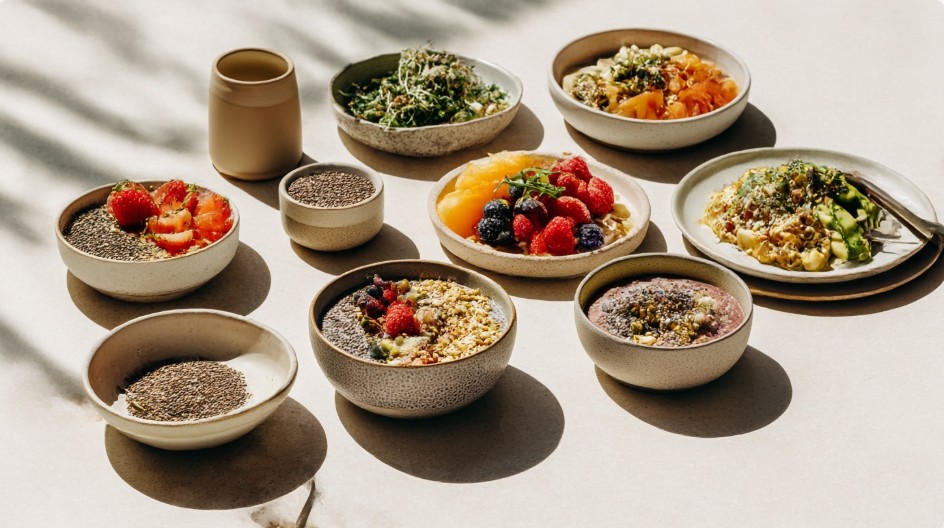
Five-Day Vegan Menu with Chia: Ideas for Each Day
I love when the menu doesn’t repeat day after day. Below is my working plan for 5 days, which can be adjusted to your taste. Each day is a new focus, but chia is present everywhere, not too intrusive. This is not a collection of recipes, but a practical scheme that can be adapted to yourself.
Day 1: Start with Lightness
- Breakfast: chia pudding with almond milk, banana, and berries.
- Lunch: bulgur with roasted vegetables, salad with avocado, tomato, and chia.
- Dinner: broccoli cream soup, chia croutons, green salad.
- Snack: apple, a few walnuts, lemon water.
Day 2: Add Asian Motifs
- Breakfast: granola with chia, plant yogurt, kiwi.
- Lunch: noodles with vegetables, ginger sauce with chia, microgreens.
- Dinner: chickpea salad, carrot, sesame, and chia, whole grain toast.
- Snack: chia and cranberry bar.
Day 3: Home Comfort
- Breakfast: oatmeal with chia, dates, pears, cinnamon.
- Lunch: lentil soup, beetroot, apple, and chia salad.
- Dinner: potato croquettes with chia, vegetable salad.
- Snack: energy balls with chia, nuts, cocoa.
Day 4: Freshness and Simplicity
- Breakfast: smoothie bowl with chia, mango, spinach, pumpkin seeds.
- Lunch: rice with vegetables, yogurt-based sauce with chia, mint.
- Dinner: light salad with cucumber, radish, greens, and chia, crackers.
- Snack: carrot sticks, hummus, chia sprinkle.
Day 5: Finish Brightly
- Breakfast: chia pudding with cocoa, coconut, orange zest.
- Lunch: beans in tomato sauce, salad with chia and arugula.
- Dinner: baked vegetables with chia, green sauce, buckwheat pancakes.
- Snack: berry smoothie with chia, almond flakes.
All these dishes are united by the simplicity of preparation and the ability to make part of them in advance — for example, store pudding or granola in a jar, and energy balls or bars in a container in the fridge.
Options for Different Budgets
From experience, I know: the menu can be made both as budget-friendly as possible and festive without going beyond vegan ingredients. Chia is a relatively inexpensive product if you buy a 200–300 g package. The rest is a matter of selecting seasonal vegetables and fruits.
- Budget option — grains (buckwheat, oatmeal, rice), simple vegetables (carrot, beetroot, cabbage), seasonal fruits, affordable nuts.
- Medium budget — add avocado, mango, more berries, plant yogurts, a mix of different seeds and nuts.
- Festive option — exotic fruits, quality chocolate, cashews, coconut flakes, out-of-season berries (frozen).
Tip: You can save by buying chia in bulk and storing it in an airtight jar. They don’t spoil for months and are always on hand.
I often do this: at the beginning of the week, I buy basic products, and add ‘highlights’ in the form of one or two more expensive ingredients. Everything else — I play by the situation and promotions in the store.
What Can Be Done in Advance
We all want to eat deliciously, but there’s not always time to stand by the stove. Over the years of working in the kitchen, I’ve realized: planning is not about control, but about simple habits. Here are a few things that really simplify life:
- Soak chia for pudding in advance (for 2–3 days ahead, store in a jar).
- Prepare granola or energy balls with chia for several days.
- Prepare vegetables for salads (wash, cut, store in a container with a napkin).
- Cook grains or legumes in advance (rice, bulgur, lentils). They won’t spoil in the fridge for 2–3 days.
- Make basic sauces (for example, yogurt or avocado and chia) — store in a jar, use as a dressing or dip.
There was a period when I only went into the kitchen in the morning and evening. At that time, these preparations saved me: in the morning, quickly assembled pudding and salad into a container — and off to work. In the evening — soup or salad with already prepared components.
Tip: Divide all products into ‘base’ (grains, vegetables, legumes) and ‘additions’ (chia, nuts, spices, fruits) — this way, it’s easier to compose a menu, and there’s always something to mix.
Practical Life Hacks for Daily Use of Chia
Over years of kitchen experiments, a few simple rules have formed that really make life easier:
- Chia loves time — if possible, soak them overnight. The texture will be more tender.
- Add chia to hot dishes just before serving — this way they won’t ‘over-thicken’ and won’t lose their appearance.
- Energy balls or bars with chia are the perfect snack for the road or for a work snack. They are prepared in 10 minutes, stored for a week.
- Chia can be ground in a blender and used as a thickener for sauces or soups.
- For children or those who don’t like ‘seeds on the teeth,’ it’s better to make puree with chia and fruits — the structure will be more uniform.
Once, I participated in a street food festival where it was necessary to quickly serve healthy vegan snacks. Chia saved the day: I made puddings of different flavors in small jars, and they sold out first because of their simplicity and bright appearance.
Emphasis: don’t be afraid to experiment — chia won’t ruin a dish, even if something goes wrong. The worst that can happen is the dish will be a bit thicker or thinner, but still tasty.
How to Diversify a Chia Menu for Different Needs
When cooking for different people — for example, in a family or a group of friends — you often encounter different preferences. Someone wants more sweet, someone loves spicy, someone doesn’t eat nuts. Here, chia is a real universal.
- For children: add chia to fruit purees, smoothies, baking (replaces egg), or make colorful puddings with berries.
- For those who don’t like sweet: chia dressings for salads or as a topping for soups.
- Gluten-free version: avoid regular oatmeal, use buckwheat, rice, or amaranth, chia always fits.
- For a ‘on-the-go’ snack: bars or balls with chia, dried fruits, nuts — convenient to take with you.
Tip: If someone is allergic to nuts — chia easily replaces part of the texture, and sunflower or pumpkin seeds add richness.
I had a story with a friend who doesn’t like nuts or sesame. It turned out that chia in salads and puddings is the perfect solution: interesting texture, no allergens, and everyone generally likes it.
Live Planning: How Not to Fall Off the Track
When planning a menu for several days, the main thing is not to chase the ideal. It’s very easy to burn out if you try to recreate an Instagram picture, and then find out that there’s not enough time and energy. I’ve long perceived menu planning as a living process: today I want something salty — I change the plan, tomorrow there are nice apples — I add them to the salad or pudding.
There were times when I made a perfect plan, and then only a lemon and a jar of chia were left in the fridge. On such days, a simple breakfast or snack saves the day, and then you can buy products and return to the plan.
- Always leave room for improvisation.
- Plan at least one universal dish a day — pudding, soup, or salad that can be changed according to mood.
- Add seasonal vegetables and fruits — it refreshes the menu and prevents boredom.
In fact, a menu with chia is not about strict boundaries, but about freedom and simplicity. Cook what your heart desires, and let chia be your backup ace.
To make planning a habit, place a jar of chia in a visible place. It’s a small detail, but it reminds you: healthy and interesting food is right around the corner, you just have to want it.
How do you use chia in your menu? Maybe you have your favorite combinations or life hacks? Share your experience in the comments — it’s always interesting to learn something new from others.