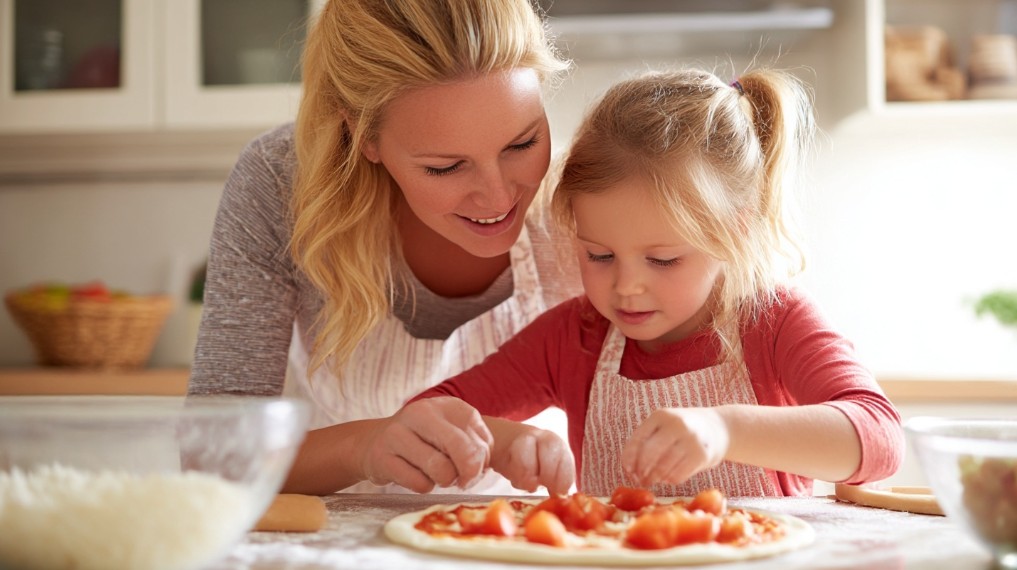
What to Feed the Family for Dinner on a Tight Budget

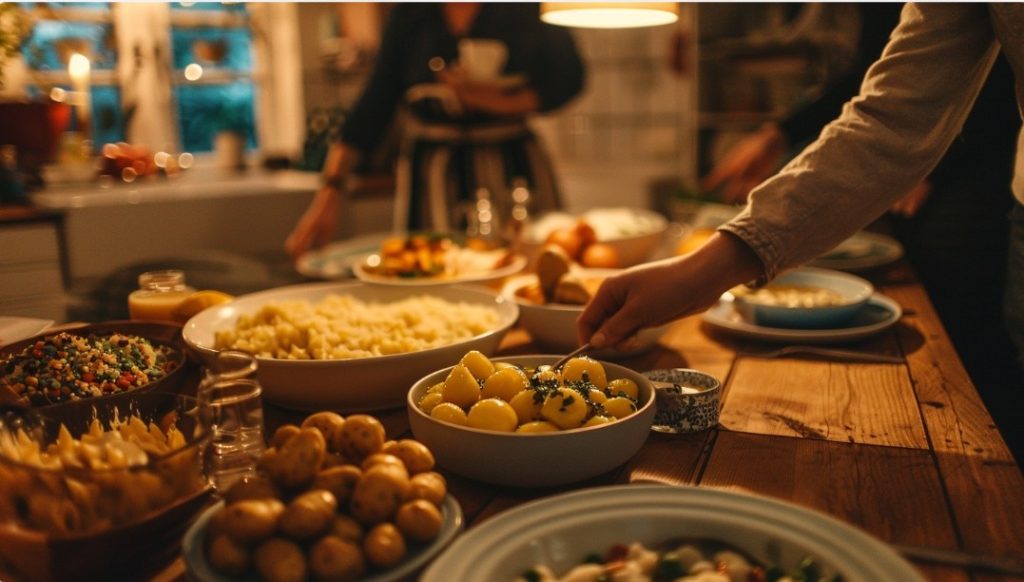
In the evening, when the air at home is filled with coziness and fatigue, the question “what’s for dinner tonight?” often becomes the main topic. Especially when the wallet asks for savings, and the family is waiting for something tasty and warm. In such moments, I catch myself thinking: it doesn’t matter what ends up in the pot, what’s important is how we prepare it together. Especially with the kids. It’s not about teaching them everything perfectly — it’s about a shared evening where hustle, laughter, spilled water, and even small quarrels become part of the memories. Where food is not only about satiety but also about trust, warmth, and small discoveries.
Budget Constraints Don’t Always Mean Bland Food
A hearty dinner doesn’t have to be expensive. Below is a selection of ideas “by character”: choose a block for your family and cook with simple ingredients (grains, potatoes, eggs, chicken, seasonal vegetables).
For a Large Family (4–6 servings)
- Potatoes with chicken, baked in the oven
- Pasta with minced meat sauce
- Buckwheat with stewed cabbage
- Pilaf with chicken or vegetables
- Soup with noodles and chicken
For a “Sweet” Dinner
- Cheesecakes in a pan
- Pancakes with apples or jam
- Cottage cheese casserole
- Oatmeal with apple
- Semolina porridge
For the Elderly (Light and Soft)
- Mashed potatoes with gravy
- Omelet (in a pan or steamed)
- Stewed vegetables with chicken
- Rice porridge
- Vegetable puree soup
For Children (Simple Tastes)
- Macaroni and cheese
- Chicken cutlets
- Potato pancakes with sour cream
- Rice with vegetables
- Soup with meatballs
Why Cooking with Kids in the Evening is More Than Just Dinner
I’ve noticed: when we cook together, time slows down. Adults feel a bit like kids, and kids feel like real chefs. The evening becomes not just about food, but about the feeling that at home you can make mistakes, joke, try. This also helps save the budget — because you’re not chasing complex dishes, but learning to find joy in simplicity.
Often, when money is tight, we fear we won’t be able to please the family. But honestly, the best evenings aren’t the ones with something luxurious on the table, but those with laughter, aromas, a bit of flour on the nose, and the feeling: “We did this together.”
My daughter once asked: “Dad, will we have an adventurous dinner tonight?” She meant — together. Now it’s our little tradition.
Age Capabilities: What Kids Can Do in the Kitchen
I’ve often seen adults either restrain kids too much (“you’re too young!”) or, conversely, burden them with tasks beyond their age. Every age has its curiosities. And it’s not about perfect movements or neatness, but about the child feeling needed and part of the process.
Children 3–4 Years Old: Space Explorers
At this age, the main thing is tactility. They love to pour grains, knead dough, wash vegetables, throw something into a bowl. Don’t expect precision. Let them feel textures, smells, even the coolness of water on their hands.
- Mix salad with hands
- Pour peas or pasta from jar to jar
- Wash vegetables with a small sponge
I had an instance: my son got so carried away with washing carrots that the whole floor around became a “river.” We then cleaned up together, and it was fun too.
Children 5–7 Years Old: Helpers and Creators
At this age, kids can already cut something (under supervision, of course), knead, measure ingredients. They are interested in seeing the result of their work.
- Measure water in a glass
- Mold simple figures from dough
- Arrange products on a plate
The main thing here is not to rush and not to correct every movement. This way they feel trust.
Children 8–12 Years Old: Junior Chefs
Here you can talk about more serious tasks: peeling potatoes, cracking an egg, cutting vegetables. But still — don’t turn it into an exam. My niece learned to peel carrots independently at 10 years old and was prouder of it than her own drawings.
- Crack an egg into a bowl
- Peel potatoes under supervision
- Cut vegetables with a simple knife
Tip: if you feel the child is scared or uncomfortable — don’t insist. Better to mix a salad together than argue over a carrot.
Safety Without Fear: Simple Rules
Often adults start with prohibitions: “don’t touch the knife!”, “don’t go near the stove!”. I’ve noticed that a calm, short comment works better than long lectures. It’s important for kids not to feel fear in the kitchen. It’s important to understand boundaries and know that mom or dad is nearby.
- Sharp knives — only together. I always keep my hand near the child’s hand — it makes them feel calmer.
- Hot — warn, but don’t scare. I explain: “It’s hot, let me hold it.”
- Dirt — not scary. Wear aprons, prepare a cloth, and go ahead.
Once my daughter spilled some cold water on herself while washing vegetables. Instead of “I told you so!”, I just changed her clothes, hugged her, and we continued. It’s important that the child doesn’t associate the kitchen with reproaches.
How to Involve, Not Control
I consciously avoid the word “control” when we cook together. Kids feel when you’re there not as a supervisor, but as a partner. They aren’t afraid of mistakes if they know: instead of yelling, there will be support.
One of my favorite moments is when a child asks: “What else can I do?”. It’s not about duties, but about curiosity.
- Give simple tasks and thank them — even if the result isn’t perfect.
- Listen to the child’s ideas. Once my son suggested adding greens to a dish, and it was delicious.
- Explain not “how to do it”, but “why we do it this way” — kids are interested in discovering the logic of actions.
I remember a situation when my daughter insisted on cracking an egg herself. Everything was in shells, but we picked out the pieces together and laughed. The main thing is not to spoil the moment with excessive control.
Practical life hack: Prepare everything you need in advance so you don’t have to run around the kitchen, leaving the child alone. This reduces chaos and adds calm.
What to Do with Mess, Noise, and Spilled Water
Mess is not the enemy. It’s part of the process, especially with kids. I’ve already come to terms with the fact that after evening cooking, the floor will be in drops, flour on the shirt, and spoons in unknown places.
- Make a “cleaning pause” — wipe the surface together, change the towel. It’s not a punishment, but a team effort.
- Noise is normal. The kitchen is alive when there is laughter, banging spoons, and discussions.
- Water and products spill? Immediately show how easy it is to clean up, rather than scold.
I have a favorite moment: when after everything, we gather scattered pasta with the kids and laugh about who finds the most. It’s already part of the evening, not a burden.
Life hack: Keep a cloth and a small dustpan in sight. Kids quickly learn to clean up after themselves if it’s not presented as punishment.
The Most Budget-Friendly Dinner: Minimum Cost — Maximum Benefit
This block is for situations when the budget is extremely tight, but you still need to feed the family. All options are made from the most accessible products that are usually already at home.
From Potatoes
- Fried potatoes with onions
- Mashed potatoes without butter
- Potatoes baked in wedges
- Potato pancakes with minimal flour
From Grains and Pasta
- Buckwheat with fried onions
- Rice with carrots and spices
- Pasta with oil and garlic
- Millet porridge on water
From Eggs
- Fried eggs with onions
- Omelet on water
- Boiled eggs with bread
- Homemade pancakes without milk
From Vegetables
- Stewed cabbage
- Carrots with onions in a pan
- Vegetable stew from seasonal vegetables
- Cabbage fritters
How to Plan a Budget Dinner Together
When money is tight, it seems like there’s no choice. But in fact, it’s a space for creativity. I often suggest to the kids to look at what’s in the fridge and together come up with what to make for dinner.
- Offer the child to choose an ingredient: “What do you want to add today?”
- Stick to simple products: grains, vegetables, eggs, bread. Kids are happy to invent “new” dishes from simple things.
- Introduce a game: who will find the most interesting combination. This develops imagination and relieves tension due to lack of products.
I remember an evening when we only had eggs, basic grains, and a few vegetables at home. We made a simple salad and porridge. The kids proudly said: “This is our meal!”. When they are involved in the choice, even the simplest food seems like a celebration.
Tip: Compile a “dinner menu” together from what you have. The child feels important, and you don’t feel alone in the search for ideas.
Emotional Outcome: Trust, Joy, Memories
I’ve seen how even the most ordinary evening can become a warm memory — if spent together. Kids don’t remember what exactly they ate, but they remember how they laughed, how something didn’t work out, how they were praised for their effort.
- Praise the child not for the result, but for the effort.
- Listen to how they tell grandma that they “cooked themselves” today.
- Create a small ritual: for example, sit together and taste the “first spoon”.
In our family, there’s a tradition — after dinner, we hug and thank each other for the company in the kitchen. Sometimes the kids ask when we’ll cook together again. For me, it’s an indicator: food is a reason for closeness, not just food.
Life hack: Don’t be afraid to repeat simple dishes. For kids, participation and atmosphere are more important than “something new” every time.
Common Mistakes Adults Make in the Kitchen with Kids
I’ve fallen into “classic” mistakes myself more than once, so I’m sharing with you — to avoid unnecessary nerves and disappointments.
- Perfectionism. Dinner doesn’t have to be perfect, the main thing is to be together.
- Criticism. The phrase “you spilled” is worse than “let’s wipe it together”.
- Impatience. Give the child time for their movements, don’t rush them.
- Fear of dirt. A cloth and humor are the best helpers.
- Too many tasks at once. The simpler, the better.
Once I hastily started correcting my daughter when she spilled soup. I saw how she lost interest. Later I learned: it’s better to take a deep breath and let her try again.
Tip: Even if everything didn’t go as planned, find something to praise the child for. It’s more important than neatness.
Life Hacks for a Calm Family Kitchen
Often small tricks make life easier for both adults and kids. Here are some of my favorites:
- Prepare everything before starting: cut vegetables, prepare bowls in advance.
- Use children’s knives or plastic ones — kids feel calmer this way.
- Create a “kitchen box” with cloths, spoons, gloves for kids.
- Take a break for tea or water during the process — it relieves tension.
- Arrange musical accompaniment: a favorite song can become a ritual for evening cooking.
I often place a small stool next to the child so they can reach the table. It’s a small thing, but it adds confidence and drive.
Life hack: Ask the child to hand something specific — a spoon, a napkin, salt. The feeling of usefulness lifts the mood.

When Everything Goes Wrong: How to React
There are evenings when nothing goes right. The products run out, the kids are tired, and the mood is zero. I know how it is. The main thing is not to demand perfection from yourself. It’s better to make a simple sandwich together and hug than to quarrel over a failed soup.
- Give yourself and the child the right to make mistakes. Laughter helps more than reproaches.
- Try to change the plan: if something didn’t work out, come up with something else together from what you have.
- Always end the evening cooking on a positive note — even with a joke or a hug.
I remember an evening when my daughter and I got so carried away that the dish burned. We just scraped the bottom together, laughed, and said: “This will be our special taste.”
Dinner as a Little Celebration — Even in Tough Times
When the family budget is tight, it seems like you’ll have to give up joy. But it’s in simple, shared evenings that true closeness is born. Kids won’t remember how much meat or sweets there were, but they will definitely remember how they kneaded dough together, laughed, painted their hands with beetroot, or argued about how much salt to add.
I’m sure: a shared dinner is not about the dish, but about the experience. About an evening when everyone feels like they belong, needed, loved. And even if the budget is very modest, these evenings remain warm and bright in memories.
Your dinner is not just about food. It’s about that very laughter, spilled milk, the first attempt to cut a cucumber, and the hugs when it’s all over. May there be more such evenings.
Do you have such memories of a family dinner “with adventures”? How do you handle mess and budget? Share your stories — it’s interesting to read how it all happens with you.