Why Pancakes Tear and How to Fix It

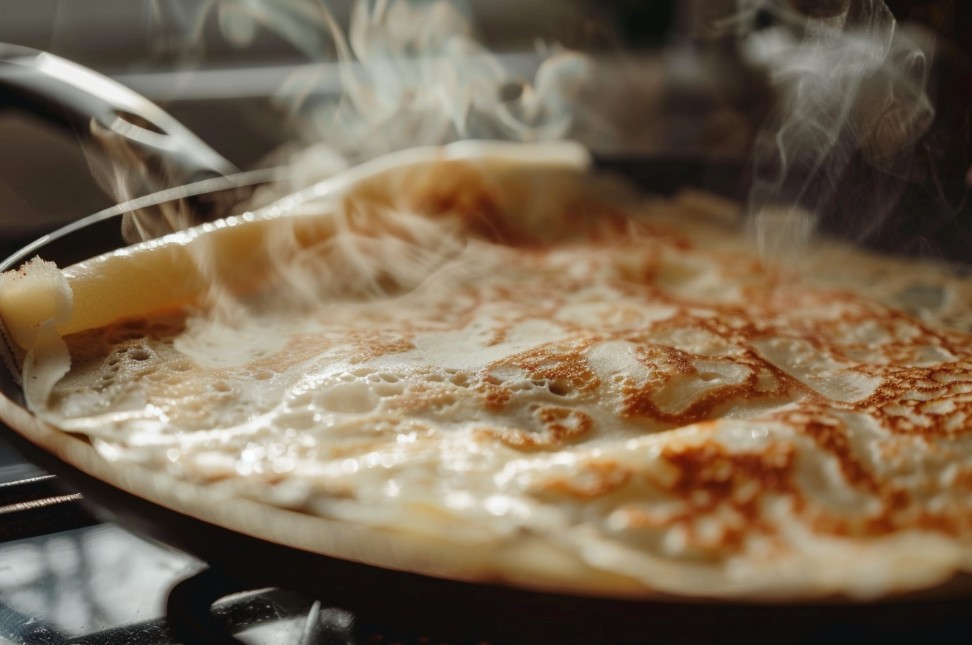
Who hasn’t stood over a frying pan at least once, trying to catch a pancake that stubbornly spreads under the spatula? Pancakes are not just about breakfast or Pancake Day; they are about mood and a small home celebration. But when they tear, stick, break, or come out with holes, it feels like everything around is going wrong. It often seems like something unknown is controlling the process, and you can’t influence it. I’ve felt this way more than once, especially at the beginning of my cooking journey. And I know how frustrating it is, especially when you’re cooking for someone close.
It’s not about having “two left hands.” The problem lies in the details: the texture of the batter, the temperature of the pan, even how you pour the batter or wait for the first flip. Once you understand why pancakes tear and the chemistry behind it, the fear disappears. You feel that the cooking process is under control, and even if it doesn’t work out the first time, you’ll know what to adjust next time.
I want to break everything down to the molecules and show how this process works. No moralizing or theories, just what really helps you cook with confidence—and enjoy it even when something goes wrong.
Why Pancakes Tear: Physics and Chemistry in the Kitchen
Pancakes seem simple, but in essence, they’re a small chemical laboratory on a frying pan. There’s gluten, eggs, fat, moisture, and temperature. How they interact determines whether the pancake forms a cohesive disk or spreads into pieces.
One of the most common reasons is batter that’s too runny. If it flows like water, the pancake doesn’t have time to set, and when you try to flip it, it tears. Another issue is insufficient gluten or protein. These components hold the batter together like a net. Without them, the pancake is as fragile as parchment.
I still remember once trying to make pancakes with water and almost no eggs because I had only one left in the fridge. I thought it would be lighter, more diet-friendly. But what I got was a collection of patches that couldn’t even be rolled. Only later did I realize that the egg isn’t about taste; it’s about binding.
Temperature also plays a role. A pan that’s too cold makes the pancake stick, not drying out from below, and it tears when flipped. Too hot, and it sets only from below, leaving a wet mass on top: try flipping it, and you’ll leave half the pancake on the pan.
When you understand that it’s not your “bad day” but the reaction of the batter and temperature, it becomes easier. You can fix it instead of getting angry.
Batter: Balance of Liquid, Flour, and Eggs
Pancake batter is all about balance. Too much liquid, and it won’t hold its shape. Too little, and the pancake is thick, heavy, and can also tear. The thing is, runny batter doesn’t allow proteins and starch to form a strong net that holds the pancake.
Flour is not just a filler. It contains gluten that binds everything together. There are flours with different protein contents. From my experience, pancakes made with low-protein flour tear more often. If you’re making batter with baby or expensive “fluffy” flour, you might be in for a surprise. I find a golden mean: simple flour, not the highest grade, but not the lowest either.
Eggs are the bridge. They bind proteins and starch, giving elasticity. When I make pancakes with only one egg per liter of liquid, they tear more often. Two eggs per liter hold better, but if I need it even stronger, I add another one. But it’s important not to overdo it: too many eggs, and the pancake becomes rubbery.
Another nuance: let the batter sit for at least 15-20 minutes before cooking. During this time, the starch in the flour absorbs the liquid, the batter becomes more homogeneous, and the pancakes stronger. Again, it’s not magic, just simple physics.
- Lifehack: If you see the batter is too runny, don’t be afraid to add another spoon or two of flour—even while frying. It’s better than struggling with torn pancakes.
Pan: Temperature and Material
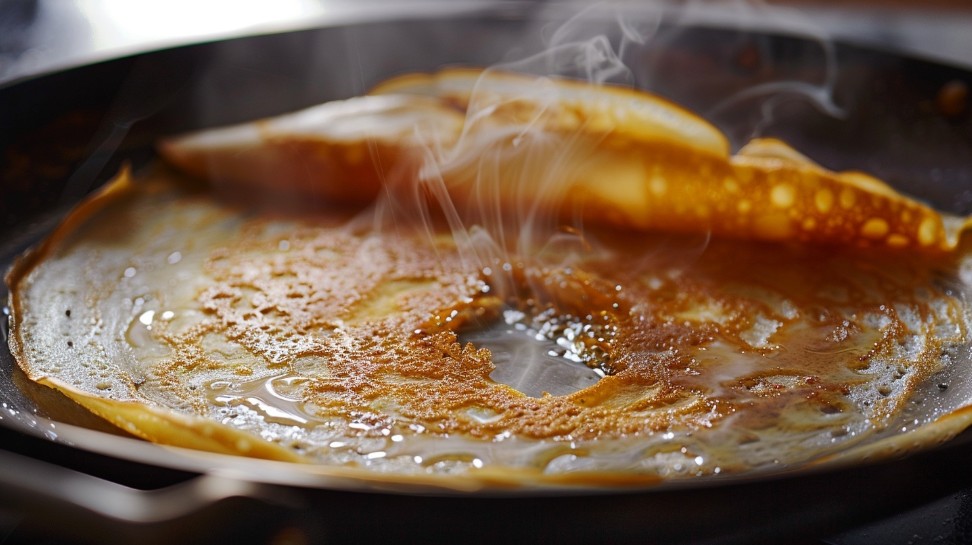
The pan is your partner in this endeavor. It determines whether the pancake sets, sticks, or stays neat.
I have a favorite old aluminum pan that has seen more pancakes than I have holidays. On it, pancakes always flip easier than on a new one, even though it doesn’t look perfect anymore. The reason is simple: over time, a layer forms on the surface, and the pancake doesn’t stick to it.
A pan that’s too thin overheats quickly, and pancakes can burn from below while remaining raw on top. A pan that’s too thick takes a long time to heat up, and the first few pancakes can be smeared. I usually heat the pan well, but not to the point of smoking. If a drop of water starts “running” instead of sizzling, that’s my starting point.
As for the material, non-stick coating is convenient, but even on it, pancakes sometimes tear if the temperature is wrong or the batter is unsuccessful. Cast iron is classic, but only if the pan is well-maintained, and you’re not afraid to add a little oil before each pancake.
- Lifehack: Before the first pancake, wipe the pan with a paper towel with a drop of oil—even if it’s a non-stick surface. This creates a thin protective film and helps remove the pancake whole.
The first batch of pancakes is always the riskiest. I treat it as a warm-up: if something’s wrong, I adjust the temperature or batter.
Time and Patience: When to Flip to Avoid Tearing
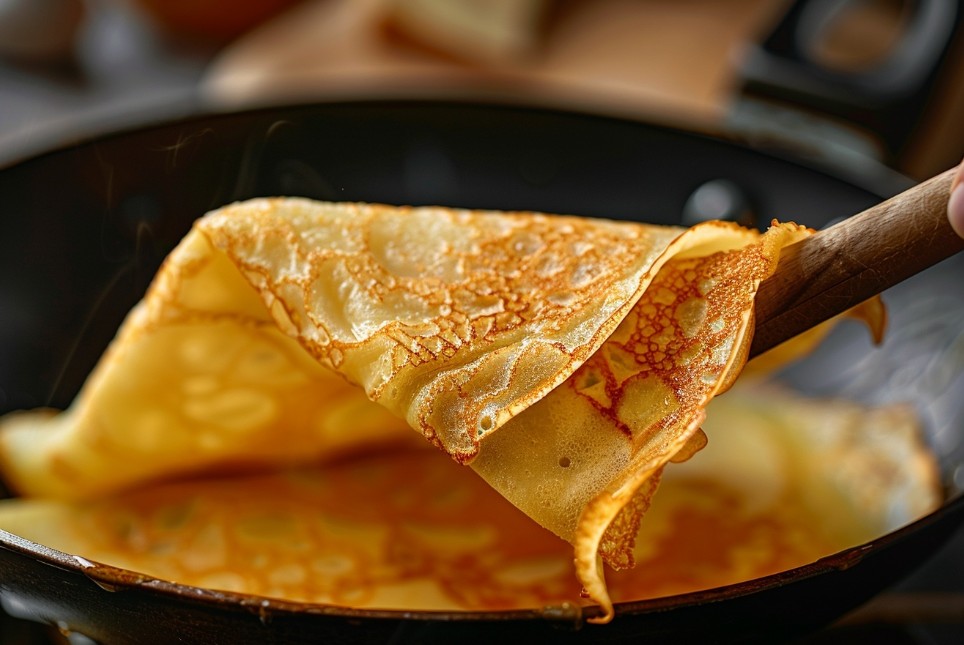
Pancakes love attention and patience. The main mistake I see in other people’s kitchens is trying to flip the pancake when it’s still “wet” on top. As a result, it sticks to the spatula and tears.
Signs of readiness are not time in minutes but changes on the surface. When the edges of the pancake start to dry and slightly pull away from the pan, and the entire surface becomes matte, that’s your moment. The spatula slides under the pancake easily, and it holds its shape. If the spatula stubbornly doesn’t go in, or the pancake stretches with it, it’s better to wait another 10-15 seconds.
I’ve noticed that when I make pancakes on a large pan, the center always cooks more slowly. Here, you can gently lift the edges and see if the color changes underneath. If it does, you can flip it.
Another tip from a friend who has been making pancakes at the market all his life: if the pancake is almost ready but still sticks a little, you can cover the pan with a lid for 10 seconds. The moisture will go away, and the pancake will come off more easily.
- Lifehack: When flipping a pancake, don’t make sudden movements. It’s better to lift the edges around, make sure it comes off, and only then catch it with a spatula and flip.
Texture and Appearance: How a ‘Proper’ Pancake Differs from a ‘Torn’ One
You can feel the difference between a pancake that holds together and one that tears even before frying. “Proper” batter is not quite water, but not thick sour cream either. It pours in a thin stream but doesn’t spread all over the pan like milk. When you scoop it with a ladle, you feel some resistance—not just liquid.
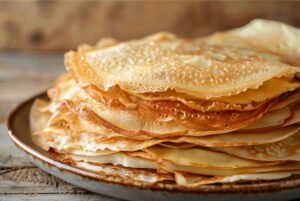
During frying, pay attention to the edges. They should be smooth, not torn, not bubbly. If the edges immediately spread, the batter is too runny. If the surface is all holes like lace, but the pancake tears when you try to roll it, there’s not enough gluten or eggs.
Smell is another marker. Pancakes that are well-cooked smell like a fried crust, slightly sweet. If there’s a smell of raw flour, the pancake is raw, and it’s better not to touch it for a few more seconds.
I remember my mom saying in childhood: “Don’t rush—the pancake will show itself.” And indeed, if you don’t force things, it will release the pan as soon as it’s ready.
Common Beginner Mistakes and How to Avoid Them
- Too runny batter: pancake doesn’t hold shape, tears when flipped.
- Too much oil in the batter: pancake becomes brittle like chips.
- Not enough eggs or flour: no “net” forms to hold the pancake.
- Cold pan: pancake sticks, tears when trying to remove.
- Trying to flip too early: pancake is still raw on top, breaks.
- Using an old or damaged non-stick pan: even perfect batter can stick.
Often beginners try to “save” the situation with extra oil—and end up with greasy but still torn pancakes. Others add sugar, thinking it will bind the batter. In fact, sugar makes the pancake more brittle and burns faster. It’s important not to chase perfection but to feel the moment when you need to adjust the batter or change the temperature.
- Lifehack: If you see pancakes starting to tear, add a spoonful of flour and one egg to the batter. Mix and let it sit for 10 minutes—this often saves the situation.
What to Do If Pancakes Are Already Tearing
Sometimes, no matter what, pancakes stubbornly tear. The worst thing is to despair and throw away the batter or pan. Here’s what really helps:
- Check the pan’s temperature. If the pancake sticks, increase the temperature and let the pan heat well before the next batch.
- Add a little more flour and an egg to the batter. Mix and leave for 10-15 minutes for the protein and starch to bind.
- Grease the pan with a minimal amount of oil—don’t pour, just wipe with a napkin.
- Try making the pancakes a bit thicker—pour less batter and rotate the pan more slowly.
- If they still tear, use the pancakes for crepes or casseroles: roll them into tubes, break into pieces, and bake with cheese or meat. It’s important not to lose heart—even a spoiled pancake can become part of a new dish.
I once had a case: cooking for a large company, the batter turned out too runny, and the pancakes tore one after another. Adding flour didn’t help. Then I gathered all the torn pancakes, cut them into strips, lightly fried them with cheese and greens, and served them as “pancake noodles.” Surprised everyone, and no one even guessed it was plan “B.”
Feeling in Control: How to Stop Fearing Pancakes
Most fears in the kitchen are fears of the unknown. If you understand why a pancake tears and know what to do about it, it’s not so scary anymore. For me, it’s a matter of practice and observation: trying different pans, adjusting the temperature, playing with the batter. A few times, the pancake spread right before my eyes, and I thought nothing would work. But from each mistake, I drew a new lesson.
It’s great when you’re not afraid to experiment. If the batter isn’t right, adjust it; if the pan fails, change it or adjust the temperature. It doesn’t work the first time—no big deal. I still sometimes get the first pancake “lumpy,” and that’s normal. What’s more important is not to stop and not to get angry at yourself or the food.
Pancakes are always a story about movement, warmth, and patience. If you feel the process, not just blindly repeat actions, it turns out both tasty and fun. And even “imperfect” pancakes are part of this experience.
How Pancakes Taught Me Patience
I remember the first time I made pancakes for guests. I wanted to impress, but they tore, stuck, broke. First anger, then confusion. But when one of the guests said, “Serve them as they are, they’re yours!”—the fear disappeared. From that time, I realized that in cooking, it’s not about perfection, but your attention and love for the process.
Once at a children’s party, a pancake tore right on the spatula, and my little brother was upset. I said it was a “superhero’s secret pancake” and wrapped it with filling. Everyone laughed, and from that day, even torn pancakes became part of our family culinary mythology.
And also, when I worked in a small café, I saw how new cooks were nervous about every torn pancake. Over time, they learned to see it not as a failure but as a chance to adjust something—and do better next time. This is true culinary growth.
See, every failure is just part of the path to confident movements and delicious results. If pancakes tear, you’re not alone. It’s important to keep going, trying, and trusting your hands. How do you deal with “unruly” pancakes? Share your experience in the comments—it’s always interesting to learn new “kitchen tricks” from real people.