Why Scandinavian Cuisine Has Become So Popular

There are things that remind you of home even when you’re far away. For some, it’s the smell of black bread, for others, the sound of a coffee grinder in the morning, or even the cold touch of tiles on the kitchen floor. For me, it’s also the rituals: slow broth cooking, Sunday family dinner when everyone gathers and each adds something to the communal dish. These little things make food not just a set of ingredients but a part of culture. In recent years, I’ve seen how Scandinavian cuisine is breaking out of the confines of Copenhagen or Oslo restaurants and appearing on the menus of even ordinary Ukrainian cafes. Ten years ago, it was talked about as something exotic, and now it’s a trendy topic in many circles. So why has the cuisine of the north become desirable for so many people in different countries?
Scandinavian Cuisine: From Poverty to Trend
Once, Scandinavian cuisine was associated with something simple and even harsh: fish, bread, roots, unpretentious vegetables. Most traditional dishes are not rich in spices or complex sauces. It’s a cuisine of a climate where winter is long and summer is short, and therefore everything that could be grown is valued. But this simplicity has now become its main advantage. Many people are tired of complex, overloaded dishes and want a return to the source — natural, pure flavors where the product is felt, not the technology.
I vividly remember being in Copenhagen at the end of autumn. I had a root vegetable soup there. It seemed simple, but it was so deep and rich that I wanted to understand why Scandinavians are so proud of their simple dishes. Later, I realized: their food is not just about taste, but also about respect for nature, the rhythm of the season, and how food connects people at the table.
Tradition and Modernity: The New Nordic Wave
Scandinavian cuisine is not just about the past. It knows how to change with new generations. Somewhere in the 2000s, the “New Nordic Cuisine” movement emerged, picked up by creative chefs, and it literally turned the perception of northern food upside down. They returned to local products but looked at them in a new way. Dishes appeared where fermentation, drying, and smoking became not a way of survival but an art.
I’ve met people who say: “Oh, it’s just a hipster trend.” But for many Scandinavians, it’s a return to roots. They remember childhood when grandma pickled cucumbers and grandpa fished on the lake. And there’s something universal in this: every cuisine has gone through a similar path, but the Scandinavians did it in their own way — thoughtfully, without unnecessary pomp.
Why Scandinavian Dishes Appeared This Way
It all starts with nature. The northern climate shapes not only the character of people but also what ends up on their plates. When most of the year is cold, food needed to be preserved for a long time. That’s why there are so many fermented, smoked, and salted products in Scandinavian cuisine. Herring under various marinades, pickled vegetables, turnips, beets — this is not from a good life but from the need to survive.
There’s another interesting point. In many families, rituals are still preserved: for example, baking bread together once a week. I witnessed how in a small town in Sweden, the whole family gathers and bakes bread as their great-grandparents did. There’s a special silence: you can hear the dough rustling under your hands, the fire crackling in the oven. It’s not just food — it’s a bridge between generations.
Table Rituals: Food as a Way to Be Together
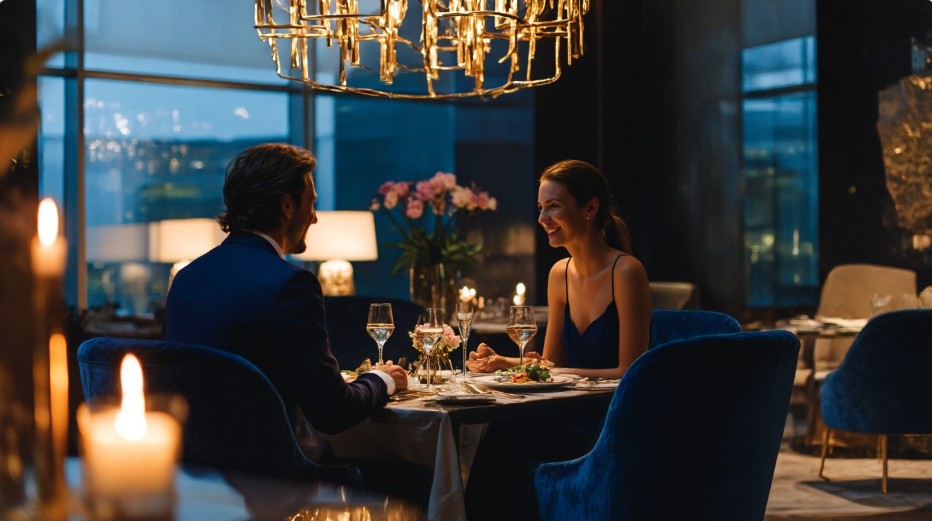
Scandinavians are not very talkative, but at the table, they have a special atmosphere. They value simplicity and time together. For many families, even in a big city, the evening dinner is a mandatory ritual. They light candles, even in summer when it’s still light outside. There’s a word — “hygge” (in Danish), which means coziness, calm, a sense of safety. This word can describe their meals.
I’ve had the chance to attend such evenings: minimal words, maximum warmth. On the table — a few simple dishes, but each made with soul. It’s not customary to rush here, they eat slowly, savoring every little thing. We, too, used to have such rituals, but sometimes we forget them in the hustle and bustle. Scandinavians seem to deliberately slow down time around food.
Approach Features: Simplicity, Seasonality, Locality
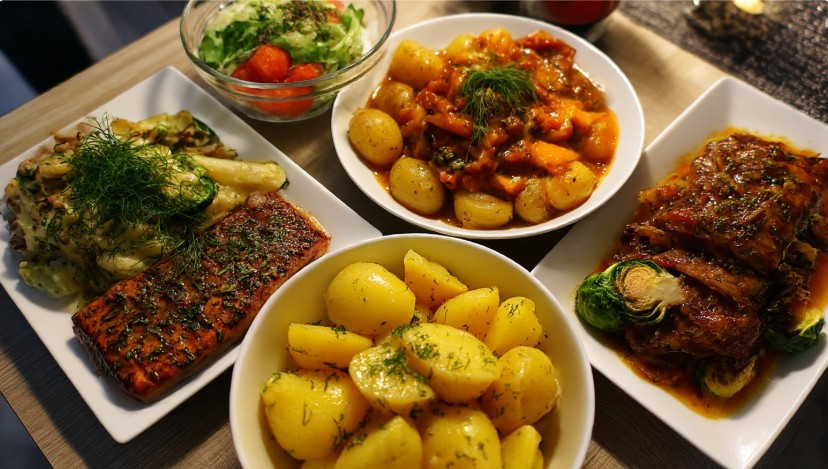
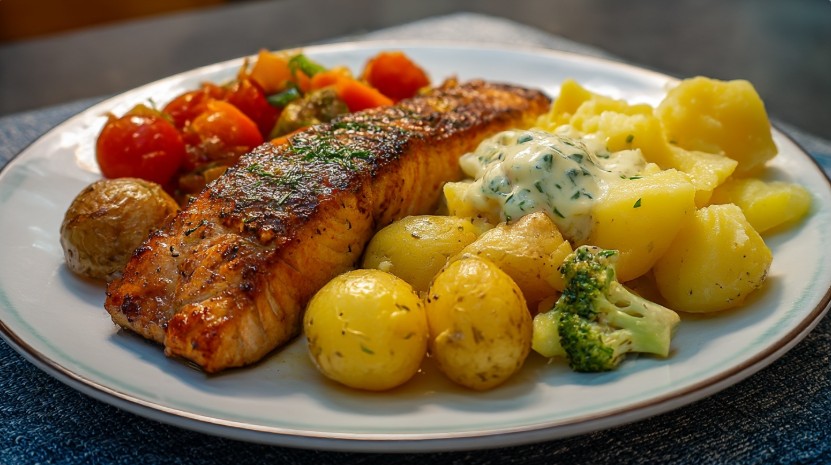
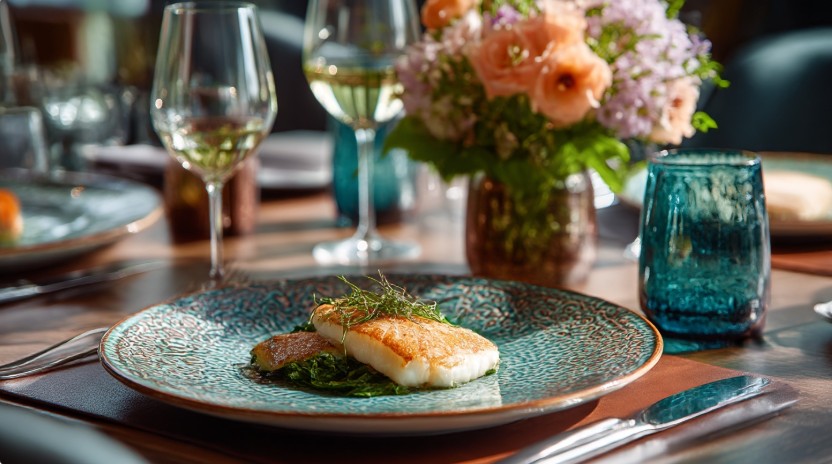
The main feature of Scandinavian cuisine is respect for simple things. They don’t chase after effect, don’t try to surprise with complexity. Better to make it simple but perfect. For example, a piece of baked fish with a few herbs and a bit of butter — that’s it. But this fish is fresh, caught today, the butter is homemade, and the greens are from their own garden.
- Seasonality — they eat what’s growing now. In summer — berries, greens, young potatoes. In winter — root vegetables, pickled vegetables, preserves.
- Locality — they buy and use local. Even in big cities, they look for farmers, familiar fishermen.
- Minimalism — few ingredients, but each in its place.
I’ve tried applying this approach in my work. Often it’s worth leaving a dish “bare” — without unnecessary decor or complex sauces. And then the true taste of the product is revealed. It’s not easy because you need to learn to trust simplicity.
What We Learn from Scandinavians: Balance and Respect for Food
Scandinavians have shown the world that food is not just about satiety. It’s about balance: between man and nature, between tradition and modernity, between taste and presentation. Their cuisine reminds us that even in the simplest potato or fish, beauty can be found if approached correctly.
I’ve observed how in famous Scandinavian restaurants, chefs almost religiously treat ingredients. They know the name of the farmer who grew the carrot or the fisherman who caught the salmon. This respect for the product is a very powerful thing. It changes the attitude towards one’s own work. You start valuing even the smallest piece of food, not wasting anything unnecessary.
Tip: Try cooking at home with what’s really grown nearby, and don’t be ashamed of simplicity. It will open up new shades of taste for you.
Culinary Identity: How Food Shapes People
In every country, food is a part of identity. For Scandinavians, it’s a memory of childhood, family evenings, winter that lasts six months. They have a special attitude towards traditions: they pass recipes from generation to generation but are not afraid to change something for themselves.
I heard a conversation between two chefs in Stockholm. One said: “My grandmother always made herring with vinegar, and I add a little apple juice — and that’s my touch.” They are not afraid to experiment but always remember their roots. That’s why Scandinavian cuisine seems so “alive” — it constantly moves but doesn’t lose its essence.
Comparison of Approaches: Scandinavian Minimalism and Our Habits
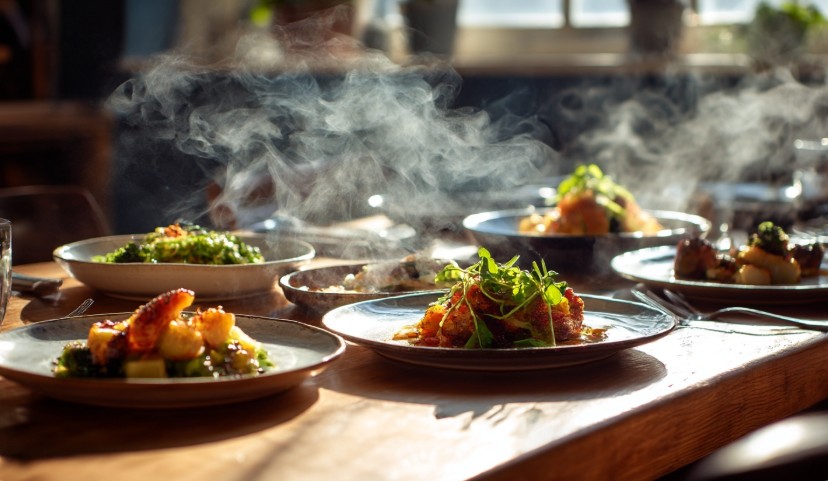
When you compare Scandinavian cuisine with ours, you see an interesting difference. We often like to cook “abundantly”: both meat and vegetables, and sauce, and something else for garnish. And there — one main dish, a maximum of two or three additions. They don’t need a large number of flavors at once, they value each product separately.
- We are about hospitality, generosity, large tables.
- They are about coziness, intimacy, simplicity.
- We have many spices, they have a minimum, emphasis on naturalness.
I’ve often caught myself trying to make a dish “prettier” than it is. But Scandinavians are not afraid to show food as it is. It’s very liberating.
Common Mistakes in Perceiving Scandinavian Cuisine
Often you hear: “Scandinavian cuisine is just salads with fish and bread.” This is an oversimplification. In reality, it is much deeper. There are entire layers — seasonal rituals, family traditions, genuine attention to detail. It would be a mistake to perceive it as a “fashion” that will soon pass. Behind it lies an entire philosophy — slowness, gratitude, locality.
Another common mistake is ignoring the context. For example, smoking or pickling is not just a way to add flavor but a story of survival in harsh winter conditions. If you perceive Scandinavian food only as a set of dishes, you lose the most important thing — the connection with life and nature.
It’s worth remembering the diversity: Denmark has its traditions, Norway has its own, Finland has completely different ones. Don’t generalize, because even within one city there can be different habits.
Life Hacks and Personal Observations
Over the years of working as a chef and observing my Scandinavian colleagues, I’ve come up with a few rules for myself:
- Don’t be afraid of simplicity: sometimes it’s better to leave a dish almost “bare”.
- Trust the product: if the potato or fish is good, don’t overshadow their taste with sauces.
- Seasonality is the key to true taste. Even familiar vegetables in autumn and spring are different stories.
- Add to your rituals: candles, communal cooking, slow dinner.
- Don’t perceive food only as fuel — it’s a way to be together, share stories.
One of the things that impressed me: even in very modern Scandinavian restaurants, there’s often no expensive tableware — everything is simple but with soul. What’s important is not how the table looks, but what’s on it and who’s next to you.
Connection with Modernity: Why Popularity Doesn’t Fade
Scandinavian cuisine has become popular not just because of fashion or famous chefs. It hit the nerve of the time: simplicity, eco-friendliness, respect for the product, locality. In a world where there’s too much information and choice, people want something real. That’s why people are looking not for new tastes but for a new attitude towards food.
I see this in my kitchen too: young people are interested in fermented vegetables, simple porridges, ancient rituals. It’s not a return back, but a search for balance. Scandinavian food philosophy reminds us: you can live simply and happily if you value the moment — and everything that’s in front of you on the table.
Scandinavian cuisine is not about exoticism, but about authenticity. Its popularity is a mirror of our time when we are finally learning to value simple things and find comfort in small details. What does simplicity in the kitchen mean to you? Share your stories in the comments, it’s interesting to hear different perspectives.