Why We Eat More on New Year’s and How to Avoid It Without Restrictions

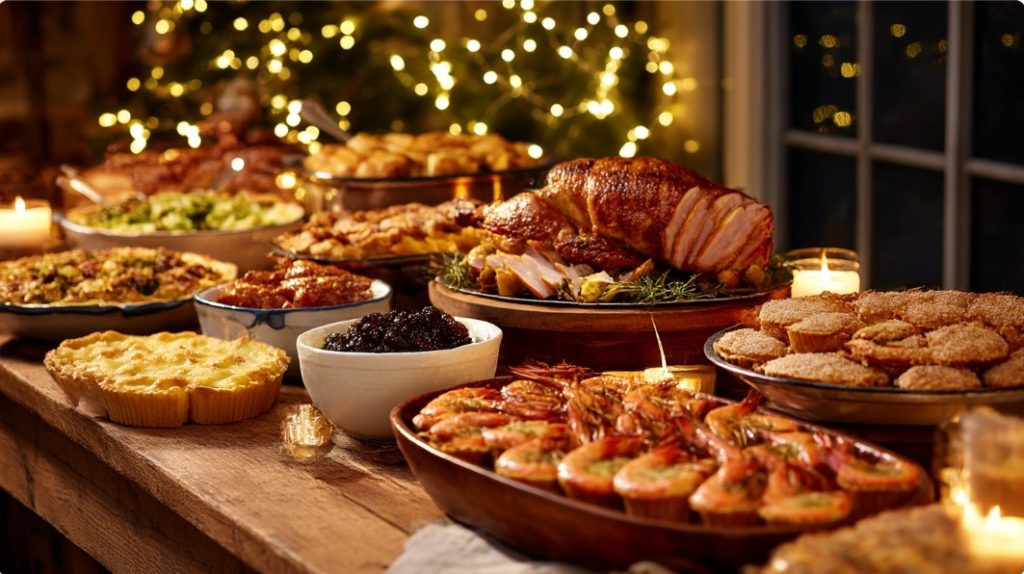
December always brings a special atmosphere. Snow, lights, the anticipation of holidays, and of course, tables bending under the weight of dishes. I’ve often caught myself thinking: why do even those who don’t particularly care about food all year forget about moderation on New Year’s? You sit with friends, cut the second slice of liver cake, and a slight sense of guilt flickers in your mind. Yet, it’s a holiday, so why not?
But along with this festive mood often comes confusion. On the morning of January 1st, you wake up with a heaviness in your stomach, and somewhere deep inside, the thought spins: “Why did I do it again?” This is familiar to many. And you want to understand if there’s a way to keep the joy of the festive table without turning it into a marathon of overeating and guilt.
I’m not fond of strict prohibitions. No “can’t” list has ever made anyone happier. But small changes in attitude towards food, mindfulness, and a few practical tricks can really help. Especially when everything around screams: “Holiday — time to eat!”
Why We Eat More on New Year’s: Not Just About Food
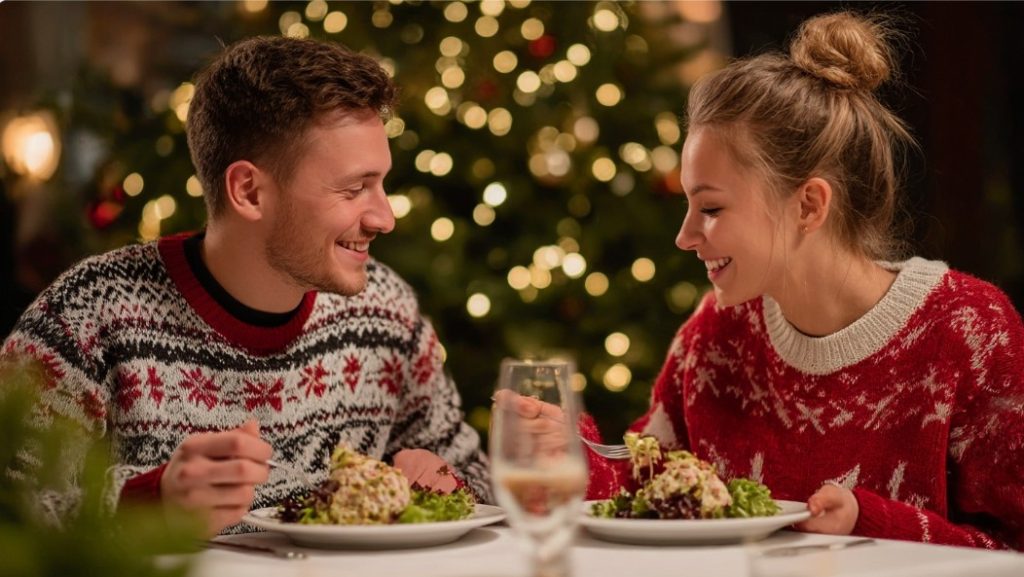
The festive table is not just about food. It’s about communication, the anticipation of magic, the desire to relax. When the whole family gathers together, and the kitchen smells of tangerines, your hand reaches for another dish. I’ve noticed: even those who eat modestly on weekdays are more willing to allow themselves “a little more” during holidays.
There are several reasons for this. First, tradition. We grew up in a world where the festive table is the main ritual. It’s hard to imagine New Year’s without Olivier salad, herring, sweet drinks. Second, emotions. When you’re tired after a year of work, you want to feel satisfaction — and food becomes the easiest way. Third, company. In the circle of loved ones, it’s easier to succumb to the general mood.
Once, I celebrated New Year’s in a small circle of friends. Everyone brought something: someone brought homemade bread, someone a pie and homemade cabbage rolls, someone — a whole pot of borscht. It was funny because there was three times more food than needed. But we sat until night, talked, listened to music, and each occasionally “joined” the table without even noticing. It’s not about hunger — it’s about the atmosphere.
Expectations and Holiday Stereotypes: How They Affect Appetite
Long before New Year’s, we already start thinking about the table and dishes. Advertising, social media, stores — everywhere there are hints: “Holiday means fullness and happiness.” Hence the internal justification: “New Year’s is coming, anything goes!”
From experience, I know: the more we restrict ourselves before the holidays, the more likely we are to “let loose” during the feast. The common psychology is: if something is forbidden, it becomes even more desirable. Especially if you “hold on” until the last day and then allow yourself everything at once.
Holiday stereotypes act subtly. All these phrases like “We don’t count calories on holidays, we eat everything!” or “It’s just once a year!” push the idea that moderation is unnecessary. And then there’s a sense of guilt, although nothing terrible has happened.
Tip: Instead of restrictions and “bans,” try allowing yourself festive food, but with attention to your state. It’s not about control, but about choice.
Why It’s Hard to Stop: Triggers and Everyday Traps
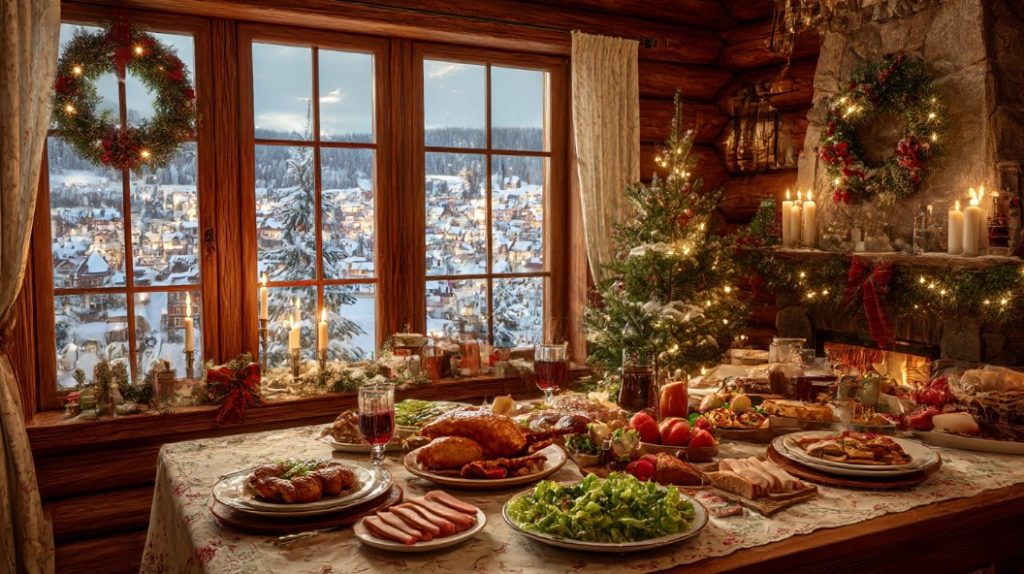
One common trap is food in plain sight. When the table is laden with variety, your hand reaches for something else, even if you’re already full. I’ve caught myself doing this several times: you sit, talk, and a piece of cheese or sausage is already in your mouth without even thinking.
The second trigger is “not to waste.” In many families, it’s customary to cook with a reserve and then “finish off” so as not to throw away. This is especially noticeable after the holidays when the fridge reminds you of the feast for several days. I’ve noticed that sometimes you eat not because you’re hungry, but to keep the “holiday magic” alive.
Another factor is the emotional background. Holidays are often accompanied by both joy and stress: preparation, shopping, guest expectations. Some relieve tension at the table. It’s normal, but it’s important to be able to stop when food no longer brings joy and becomes automatic.
Typical Mistakes During Holidays
- Sitting at the table hungry, “for reserve”
- Ignoring the feeling of fullness
- Finishing off for others or “not to waste”
- Viewing food as the only way to relax
- Confusing fatigue with hunger
How Not to “Break Down”: Guidelines Instead of Bans
I’ve realized: bans work only until you break them. And then everything goes haywire. So it’s better to set small guidelines instead of restrictions. For example, instead of aiming to “eat less,” pay attention to how you feel during and after the feast.
One of my favorite habits is to take breaks. Instead of hastily serving another portion, I just put down my fork and chat with friends. Strangely, but a few minutes without food often make you realize you’re already full.
Another useful habit is to choose what you really want. The festive table often has a lot of everything, but not everything is equally appealing. I’ve learned to honestly ask myself: “Do I really want this now? Or am I just taking it out of habit?”
Tip: Add light dishes you love to the festive table. It’s not “healthy food,” just another choice when you want a break from the heavy stuff.
Festive Food as Part of Life: Allow Yourself Enjoyment
Food is not the enemy. Festive dishes are meant to bring joy. I’ve often seen how strict rules lead to someone eating more than they wanted and then scolding themselves. Instead, it’s better to allow yourself enjoyment — but with presence here and now.
I love savoring food: feeling the texture, inhaling the aroma, observing how the mood changes from the first bite. I remember one year we played a little game with my family: we tried to describe each dish — how it feels, what aroma it has, what memories it evokes. It helped us eat more slowly and enjoy even a small portion more.
The holiday is not about quantity, but about feeling. If you manage to capture the taste and atmosphere, then the portion size doesn’t matter.
Children and the Festive Table: How Not to Create a Food Cult
In many families, the festive table is also about children. I’m a dad myself, and I’ve seen how easy it is to fall into the temptation: “Try this too, it’s a holiday!” But over time, I realized that children imitate adults not only in how we eat but also in our attitude towards food.
I try not to force children to finish or try everything. It’s better if they choose what they like. Once, my son categorically refused salad but eagerly ate tangerines and a bit of herring. I didn’t insist — and his mood remained festive, not a “battle for a portion.”
Holidays are a great opportunity to show children that food is a pleasure, not a test. There’s no need to turn the table into a testing ground for rules or bans. A calm attitude and attention to details are enough.
Returning to Routine: How Not to Drag the Holiday Further
After the holidays, there’s often a lot of food left, and the kitchen reminds you of the feast for a few more days. The main thing here is not to drag the holiday further just because “it’s a shame to throw away.” I’ve developed a simple habit: after the second day, I pack the leftovers into containers and freeze some. It not only saves time on weekdays but also doesn’t provoke mindless “finishing off.”
Another practical trick is to agree with the family that after New Year’s, we cook something simple and light. No restrictions, just a desire to rest from the festive heaviness. This way, returning to the usual rhythm is smoother.
Lifehacks for Weekdays After Holidays
- Don’t keep all the festive food in plain sight
- Freeze some dishes for later
- Plan light meals for the first days of January
- Involve children in preparing simple meals together
Flexibility and Common Sense: Why It Works Better Than Rules
We are all different. Some are comfortable eating very little, others want to try a bit of everything. The main thing is not to judge yourself harshly. I’ve learned to perceive festive food as part of life, not a challenge for willpower.
Flexibility in attitude towards food helps avoid extremes. Today you ate more — no problem. Tomorrow you’ll want something lighter — great. No guilt, no self-blame. Just try to listen to yourself, not external rules.
Tip: If you feel you’ve eaten more than planned, don’t rush to compensate with restrictions. Just return to your usual habits — and everything will balance out.
What helps me is a simple guideline: if after the feast there’s a pleasant feeling left, it means everything was right. And if it’s heavy and uncomfortable, next time you can adjust something in the approach — without reproaches, just calmly.
Festive Table Without Guilt: How to Maintain Balance
Balance is not about a perfect plate or a strict menu. It’s about a sense of moderation in every moment. I’m used to not forbidding myself anything, but also not rushing to eat everything at once. If I want something sweet, I take a small portion and savor it. If I’m full, I stop, even if there’s still something left on the table.
The main thing is not to carry guilt into the holidays. All these “I overate again,” “I should have eaten less,” “I’m weak” only spoil the mood. Food is just food. Try to perceive it as part of the holiday, not a test of willpower or character.
The smell of tangerines, the light crunch of a crust under a fork, children’s laughter, and conversations at the table — this is the real New Year. If you manage to keep a good mood and lightness in your body, then everything was successful.
A Few Practical Tips for a Holiday Without Excess
- Don’t come to the holiday hungry — a light snack before the feast helps maintain moderation
- Try filling your plate with everything you want first, but in small portions
- Take breaks between dishes — give yourself time to feel full
- Drink water between meals — it’s not only a fresh habit but also helps not to confuse thirst with hunger
- Don’t scold yourself for an extra piece — it’s not guilt, it’s experience
- Add your favorite vegetables or fruits to the table for variety
- Involve children in setting the table — it creates an atmosphere, not a food cult
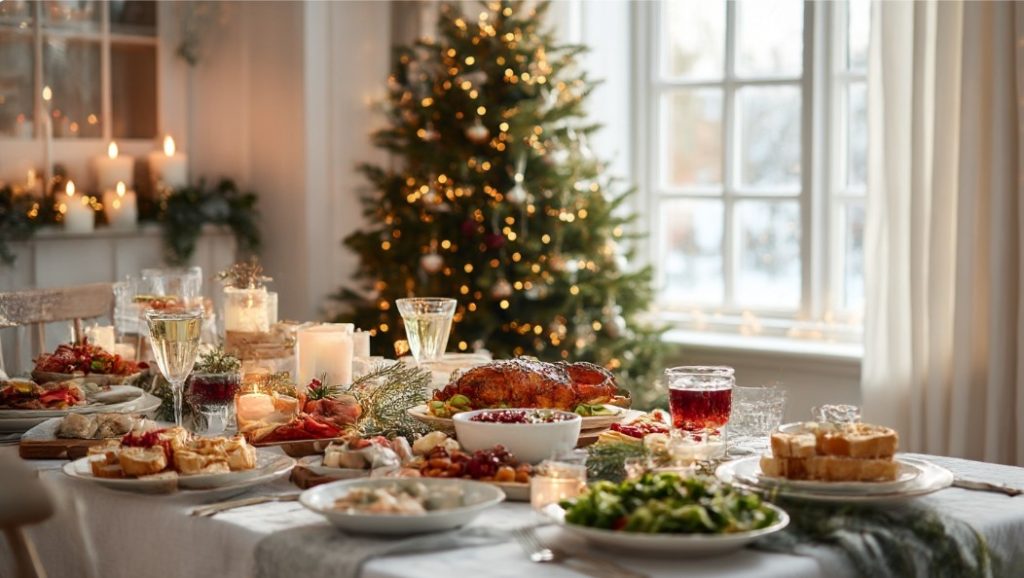
One of my favorite micro-stories is how we arranged a festive table with friends right in the living room, without unnecessary pomp and “mandatory” dishes. Everyone brought what they truly love, and it turned out to be a very soulful evening, without overeating and guilt. It turned out that the atmosphere is more important than the number of dishes.
Again: New Year’s is not about food, but about people and memories. And how and what to eat — only you decide.
What little tricks help you maintain moderation during the holidays? Share your thoughts in the comments — it’s always interesting to learn from others’ experiences.