

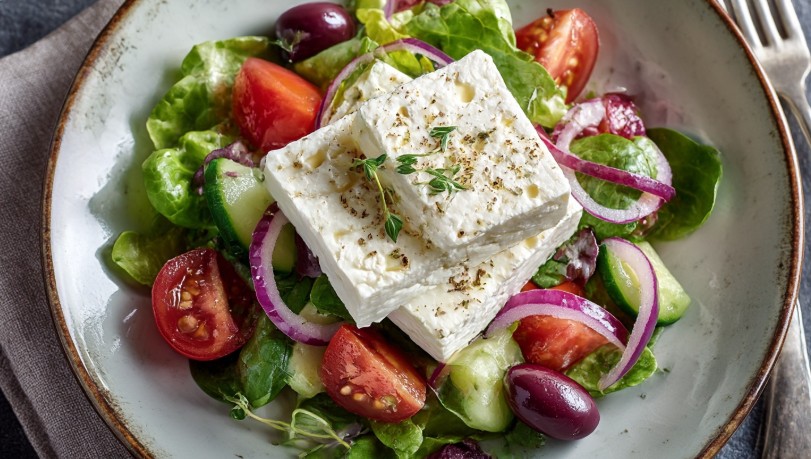
There’s really not much left to say about Greek salad that hasn’t already been said. Everyone knows it, everyone has seen it, and most have tasted it.
But here’s the thing: despite its familiarity, it never seems to get boring.
Maybe it’s because there’s nothing unnecessary in it. The cucumber crunches. The tomato gives juiciness. The olives add character. Feta brings it all together in that familiar yet delightful taste.
This isn’t a salad that wows you. It’s a salad that consistently satisfies. And honestly, that’s worth much more.
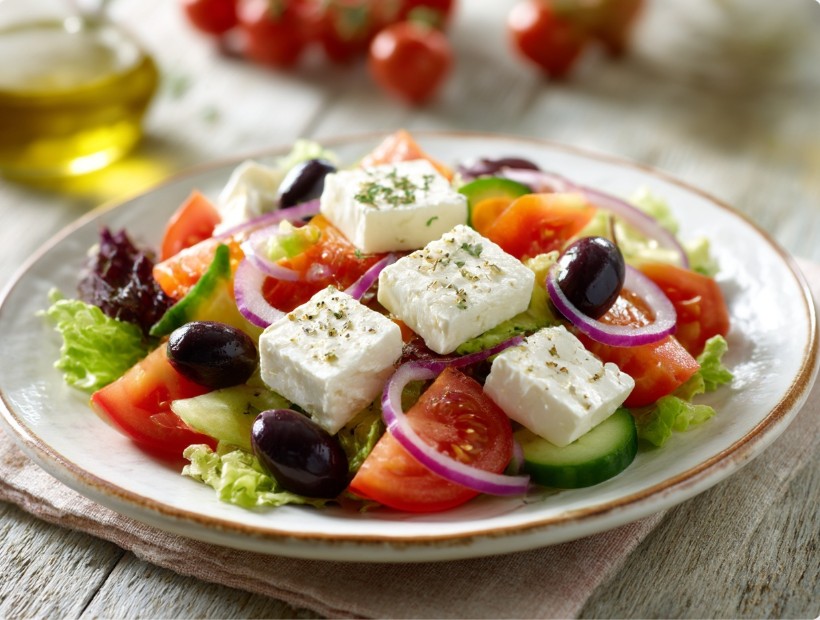
Greek Salad with Feta Cheese
Ingredients
- 2 pcs tomatoes Use ripe, firm tomatoes.
- 1 pcs cucumber You can use regular or Japanese cucumbers.
- 1 pcs red onion Best sliced into thin rings.
- 100 g olives You can use either black or green olives.
- 200 g Feta cheese Cut into cubes or crumbled, as you prefer.
- 3 tbsp olive oil Use quality oil for the best taste.
- 1 tbsp lemon juice Can be replaced with vinegar for acidity.
- to taste salt Add sparingly, the cheese is already quite salty.
- to taste pepper Freshly ground black pepper will enhance the flavor.
Method
- Wash and chop the tomatoes into medium-sized cubes.
- Slice the cucumber into thin slices or half-moons.
- Slice the red onion into thin rings and optionally soak in water for a few minutes.
- Mix all the chopped vegetables in a large bowl.
- Add the olives and Feta cheese cubes to the vegetables.
- Prepare the dressing by mixing olive oil, lemon juice, salt, and pepper.
- Pour the dressing over the salad and gently toss, being careful not to break the cheese.
- Serve the Greek Salad immediately, garnishing with extra olives or fresh herbs if desired.


Notes
Private Notes
Tried this recipe?
Let us know how it was!Leave Your Comment
Did you enjoy this recipe? Share your thoughts and tips in the comments!
Greek salad with feta cheese is an example of a simple yet balanced dish, where vegetables, healthy fats, and protein come together beautifully on one plate. This approach perfectly illustrates the “healthy plate” principle that works every day, helping to shape your daily menu without complicated calculations.
For me, Greek salad is all about lightness. It’s a dish that I crave in the summer, enjoyed on the balcony, on the terrace, or in the kitchen with an open window. It’s not heavy, it doesn’t tire you out, and it doesn’t weigh you down.
It’s perfect for when friends come over, when you want something quick, and when you don’t feel like standing by the stove but still want to serve something beautiful and tasty. This is a case where a simple dish looks impressive.

Frequently Asked Questions
What cheese is best to use for Greek salad?
The classic choice is feta cheese made from sheep’s or goat’s milk. It has a soft yet firm texture and a salty flavor. If feta is unavailable, you can use a feta-style cheese, but the taste will be slightly different.
Can feta be substituted with another cheese?
Yes, sometimes brine cheese or a soft salad cheese is used. It’s important to consider the saltiness and not to add extra salt to the salad.
What vegetables must be included in Greek salad?
A classic Greek salad is made with tomatoes, cucumbers, sweet peppers, red onions, and olives. The combination of fresh vegetables forms the basis of the dish.
What dressing is best to use?
Traditionally, the salad is dressed with olive oil. Optionally, you can add a little lemon juice or oregano, but avoid heavy sauces.
Is it necessary to salt Greek salad?
Often, salt isn’t needed since feta and olives already have a salty taste. It’s better to taste the salad before adding salt.
Is Greek salad suitable for healthy eating?
Yes, Greek salad fits well into a balanced diet. It contains plenty of vegetables, healthy fats from olive oil, and protein from cheese.
Can Greek salad be made in advance?
It’s best to prepare the salad just before serving. If you need to prepare it ahead of time, you can chop the vegetables in advance, but dress and add the feta just before serving.
What can be added to Greek salad?
Feel free to enhance the salad with fresh herbs or serve it with bread, pita, or croutons. It’s important not to overload the dish with too many ingredients.
Some recipes evolve with trends, while others remain timeless. Greek salad is one of those classics. It doesn’t need updating, doesn’t ask for complicated interpretations, and doesn’t require proof of its relevance.
It simply exists — like a fundamental joy. Like light in the morning. Like a glass of water when you crave freshness. And perhaps that’s why it’s so easy to return to it again and again.
Balanced nutrition is formed not from individual dishes but from daily choices and habits. If you want to gradually change your diet without strict restrictions, check out 5 tips from a dietitian that truly change eating habits — they help build a healthy menu for every day.



Responses