Homemade or Store-Bought Cheese: What to Choose for Syrniki

Here you are at the market. In your hands — a basket, in your mind — the desire to make those perfect syrniki that melt in your mouth. Nearby — a grandmother with a pot of homemade cheese, opposite — the shiny supermarket shelves with dozens of packages. Confusion in your eyes: what to choose? Everyone advises their own, every manufacturer promises the ‘ideal consistency’, but in reality, you want one thing — for the syrniki to turn out like in childhood, without excess water, lumps, and disappointments. There are nuances in this choice, and I know well how easy it is to step on the same rake. I share my experience — my own and others’, without unnecessary tricks, simply and honestly.
How to Distinguish Good Cheese at the Market or Store
Do you know what those who buy cheese for syrniki for the first time fear the most? Getting something wrong. It’s not just about taste — cheese can completely ‘ruin’ the dish. Not to mention the rubbery texture or sour taste.
The market situation is special. Sellers often let you try the cheese — and this is the first test that nothing can replace. In the store, you can’t do this, so you rely on your eyes, hands, and nose.
Color and Appearance
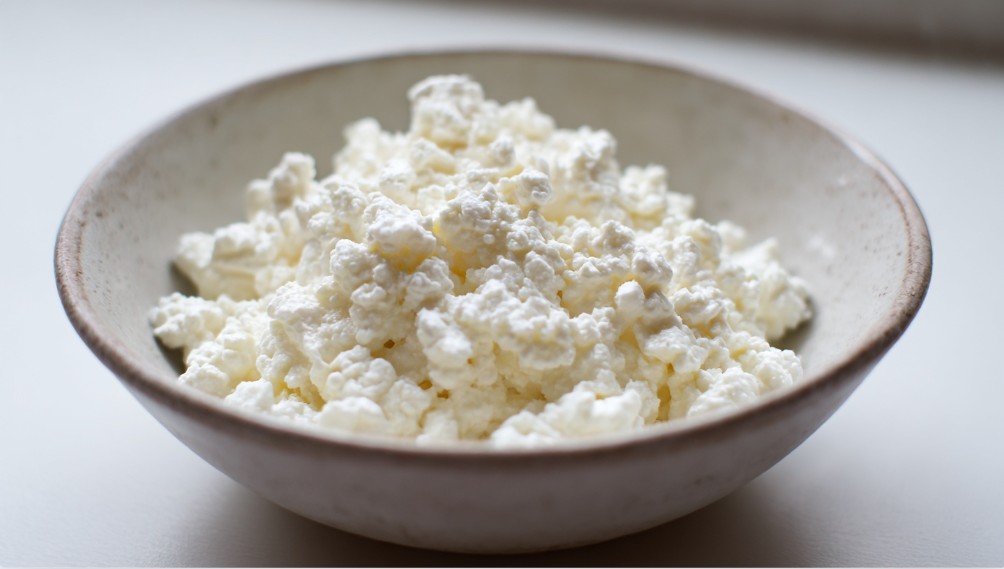
Good cheese is white or with a slight creamy tint. Yellowish or ‘dirty’ gray color is a signal that something went wrong: either too old or stored improperly. The piece should be uniform — without spots, dry crusts, slime, or crumbs that crumble at the touch.
Smell
Cheese should smell gently milky, with a barely noticeable sourness. A sharp, ‘old’ smell, or, conversely, an aroma that resembles a store-bought yogurt with flavoring — stop. Such cheese is either not fresh or contains additives.
Texture
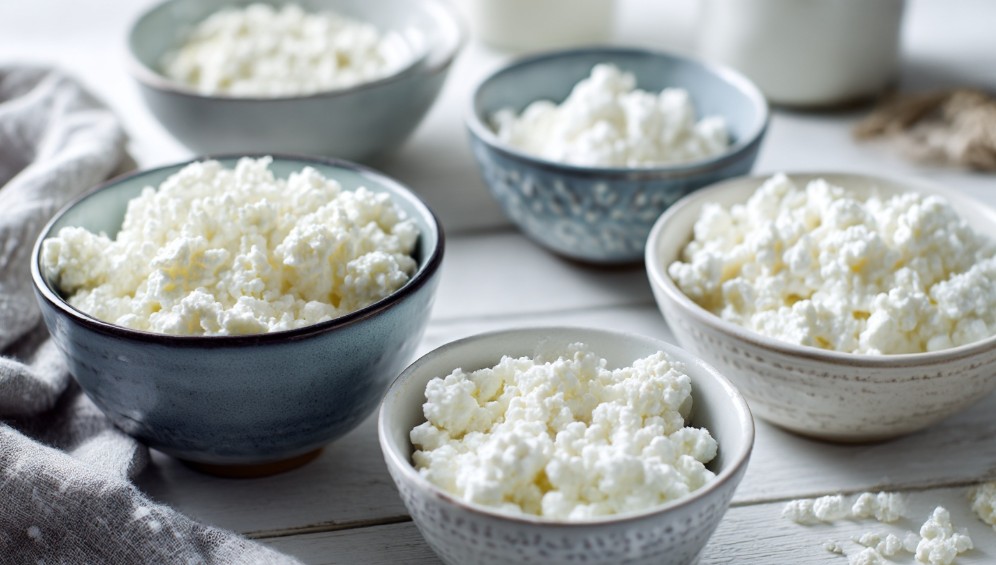
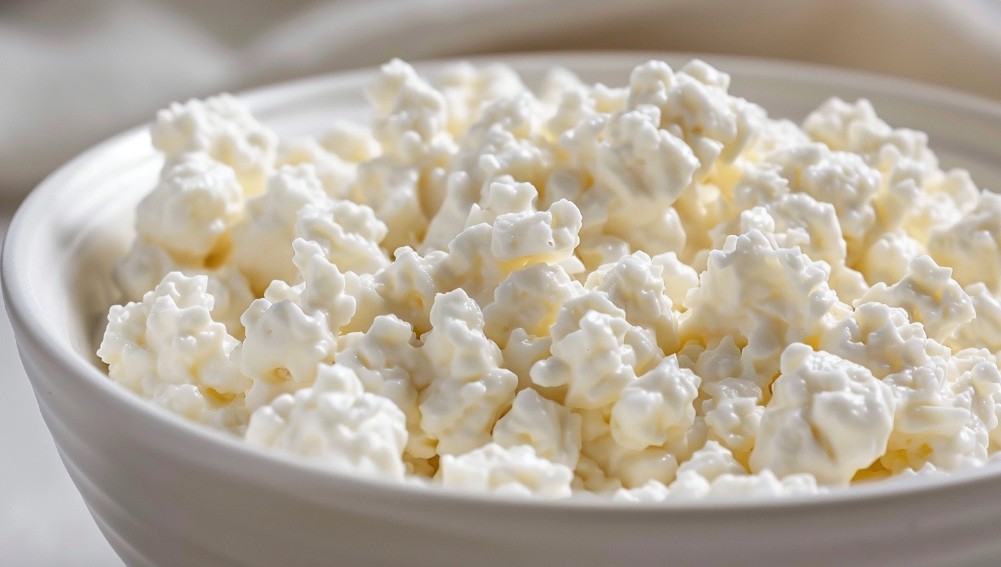
Try squeezing a piece with your fingers (at the market — don’t be shy, it’s normal). Cheese should not spread, but also not be hard like plasticine. Good cheese is tender, slightly grainy, neither wet nor dry. Too moist a mass — the syrniki will spread, too dry — they will crumble.
Packaging
In the store — look at the integrity of the packaging, production date, and composition. Minimum ingredients — that’s ideal. If there are ‘stabilizers’, ‘thickeners’, ‘flavorings’, or even ‘vegetable fat’ — don’t risk it.
Try cheese at the market — only then will you understand what you’re really buying.
Homemade Cheese: Pros and Cons for Syrniki
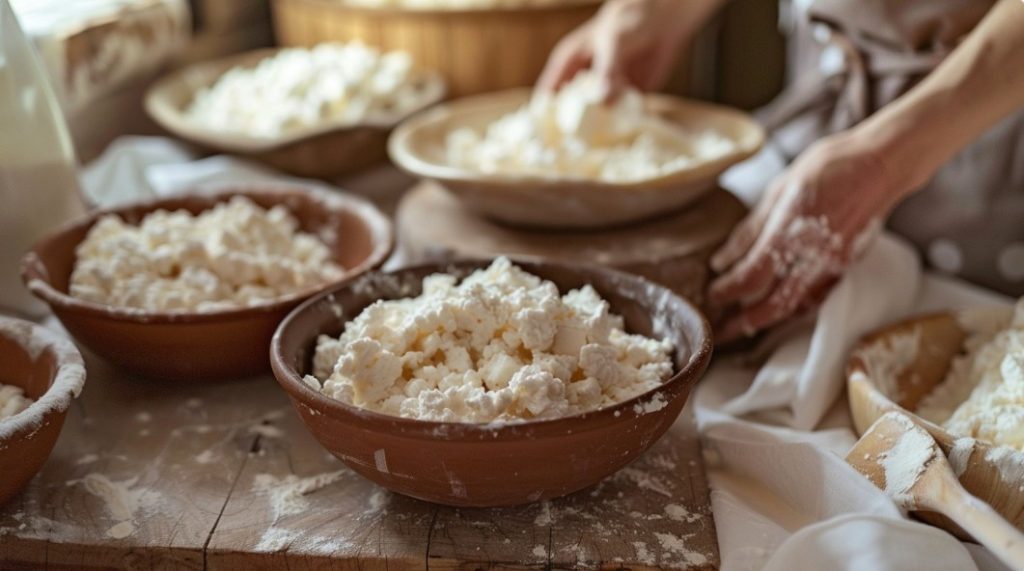
Homemade cheese from the market or acquaintances is always a lottery, but often a winning one. Why? Taste, smell, structure — everything can differ not only from the store but even from the neighbor across the table.
I’ve seen more than once how syrniki from homemade cheese get that same ‘childhood’ taste. Milky tenderness, pleasant graininess, and effortless lightness. But here’s the trap: quality fluctuates from batch to batch. One time the cheese will be perfect, another — too moist or sour.
When Homemade Cheese is Ideal
If you know the seller, trust the hostess, and have bought from her more than once — try it. Nothing compares to fresh homemade cheese that didn’t exist an hour ago. Especially if it’s from evening milk, not over-pressed or over-dried.
Typical Mistakes with Homemade Cheese
- Buying ‘by eye’, without tasting — you might end up with sour cheese
- Taking too moist cheese — the syrniki will flow and lose shape
- Ignoring the smell — spoiled cheese won’t be saved even by frying
Once I came across cheese that looked great, but at home, it had a barely noticeable bitterness. I had to save it with lemon zest, but it wasn’t the same. Conclusion — always smell and taste.
Store-Bought Cheese: How to Choose a Good Option
The supermarket is concrete stability. There is a choice here, but every manufacturer tries to keep the cheese in a ‘convenient’ form for transportation, often sacrificing taste.
The main advantage — you always know what you’ll get. But there’s a nuance: not every store-bought cheese is suitable for syrniki. Some are too dry, others resemble a paste you don’t even want to eat with a spoon.
What to Look for on the Label
- Ingredients: only milk and starter culture. No vegetable fats or additives
- Fat content: for syrniki, the best is 5–9% (less — dry, more — might flow)
- Production date: the fresher, the better
- No preservatives and stabilizers
Sometimes I take cheese in a classic package — from trusted brands that have saved me more than once when the market was closed. I open the package, smell it: if it smells neutral, without chemicals — you can take it.
Types of Store-Bought Cheese
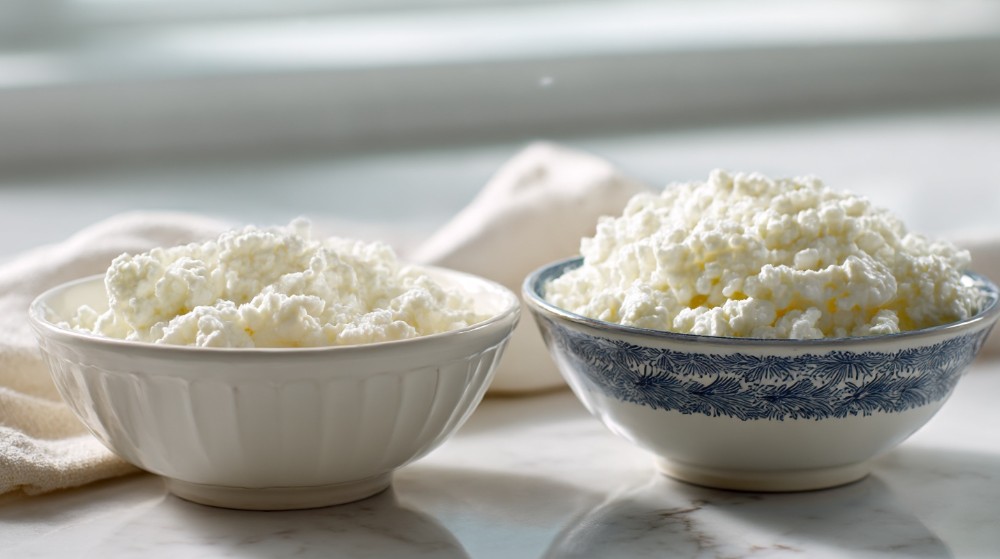
- Granular — sometimes good for syrniki if not too dry
- Paste-like — convenient, but may have additives
- Pressed — usually too dry for syrniki
Always choose the least ‘processed’ cheese — even in the store, there are honest manufacturers.
Marketing Traps and Typical Mistakes When Choosing
Syrniki are easy to spoil — just one wrong package is enough. Marketing here is often stronger than common sense. ‘Farm’, ‘homemade’, ‘extra’ — but you read the fine print, and there are whole paragraphs of strange words.
- Don’t fall for a beautiful wrapper or a photo of syrniki on the package — it’s advertising, not a guarantee
- ‘Homemade’ in the store — often just a production technology, not a real product
- ‘Children’s’ cheese — doesn’t necessarily mean it’s ideal for syrniki
- Cheap cheese — almost always with additives
Once I came across a promotional package with the word ‘homemade’ and a bright cow. At home, I opened it — and there was a mass with a sour smell and water that could be drained like yogurt. Had to send it to a cheese casserole, but wouldn’t buy it again.
Typical Mistakes When Buying
- Buying cheese without checking the composition
- Not paying attention to the production date
- Ignoring consistency — too soft or liquid cheese won’t work
- Falling for promotional prices and buying ‘to try’ everything
Always read the label — even a familiar brand can change the recipe.
Price and Common Sense: Is It Worth Paying More
Sometimes you stand and think: take the more expensive cheese, or the one on sale? I had such a situation before a holiday — syrniki were planned for guests, wanted to make the best. I’ll be honest: more expensive cheese isn’t always better. But the cheapest is almost always a compromise.
Cheese quality costs money, but there is a limit. Cheese from a farmer’s market is usually more expensive than store-bought, but the likelihood of hitting the real taste and texture is higher. In the store, the mid-price segment is often better than extremes. If the cheese is suspiciously cheap — it’s either discounts or a dubious composition.
When It’s Worth Paying More
- For special occasions when every detail of the dish is important
- When you know the seller and are confident in the product’s quality
- If the cheese perfectly suits your preferences
But if the budget is limited, don’t chase elite brands. It’s better to put effort into choosing a medium but proven cheese than to overpay for packaging.
Golden standard: check taste and texture, not price. Syrniki will appreciate the result, not the price tag.
Seasonality and Storage: How to Extend Cheese Freshness
Cheese is a delicate product and doesn’t like long storage. Especially homemade: buy today — cook tomorrow. Store-bought has a time reserve, but it shouldn’t be trusted for weeks either.
Where and How to Store Cheese
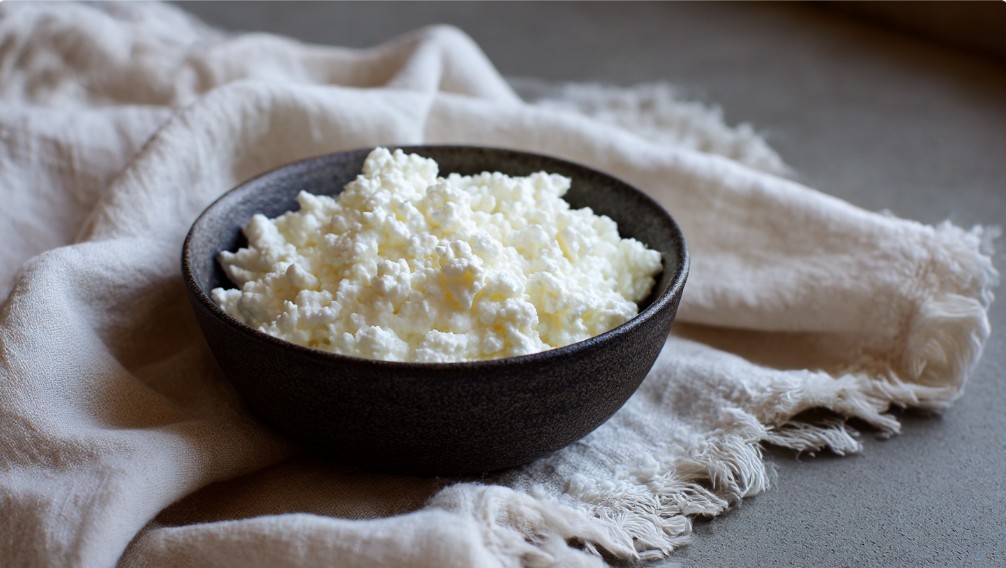
- Homemade cheese — in a glass or ceramic bowl, under a lid, in the fridge
- Store-bought — in its original packaging (if airtight), or transfer to a clean container
- Don’t keep cheese open — it quickly absorbs odors and starts to spoil
Cheese best retains freshness at a temperature of 0–4°C. If there’s moisture, you can line the bottom of the container with a paper towel — it will absorb excess water.
Shelf Life
- Homemade cheese — 2–3 days (maximum, if very fresh)
- Store-bought — up to 5–7 days (depending on the manufacturer and packaging)
I’ve stored homemade cheese longer, but by the fourth day, it becomes sourer and starts to smell different. For syrniki, the best is fresh. If you don’t have time to use it, it’s better to freeze it, but the taste and texture will change slightly.
Don’t risk with expired cheese — even for thermal processing.
How Cheese Behaves When Cooking Syrniki
Here’s where the magic begins — or disappointment. The right cheese turns into a tender, elastic mass that forms into neat balls or patties. Too wet — it spreads, too dry — it crumbles. Sometimes syrniki don’t even hold their shape in the pan.
Homemade Cheese in Syrniki
If the cheese is well-drained, with moderate moisture — the syrniki come out fluffy, with a distinct structure, slightly grainy. If the cheese has excess whey — more flour is added, and the taste becomes ‘dull’, heavy.
A bright story: once I took cheese from an acquaintance who had just made it. The syrniki were so light that they didn’t even have time to burn — they were eaten instantly. But once I didn’t wait, the cheese stood for another day — and the result was completely different, noticeably sourer taste.
Store-Bought Cheese in Syrniki
Here it all depends on the type. Granular store-bought cheese often needs to be ground so that lumps aren’t felt. Paste-like — saves when time is short, but can be too ‘smooth’. The main mistake — ignoring the texture before cooking: if the cheese is too liquid, add a little semolina or flour, but don’t overdo it, or you’ll get a ‘rubbery’ mass.
Always adjust the moisture of the cheese — this is the main secret of perfect syrniki.
Practical Tips for Choosing Cheese Specifically for Syrniki
- Try the cheese before buying — even in the store, you can ask to open the package if you’re buying cheese by weight
- Look at the structure — the cheese shouldn’t be a paste, but also not crumble like clay
- Drain excess moisture through cheesecloth if the cheese is too wet
- For fluffy syrniki, it’s better to take cheese of medium fat content
- Don’t skimp on quality — it’s better to make fewer syrniki but with good cheese
And one more piece of advice from years of practice: if you’re torn between two types of cheese — buy a little of both, mix, and make a test batch. Often the mix gives that ideal consistency that’s hard to find in one product.
Don’t hesitate to ask sellers: how they make the cheese, from what milk, if there are samples. Sometimes even in the store, you find someone who can advise better than any advertisement.
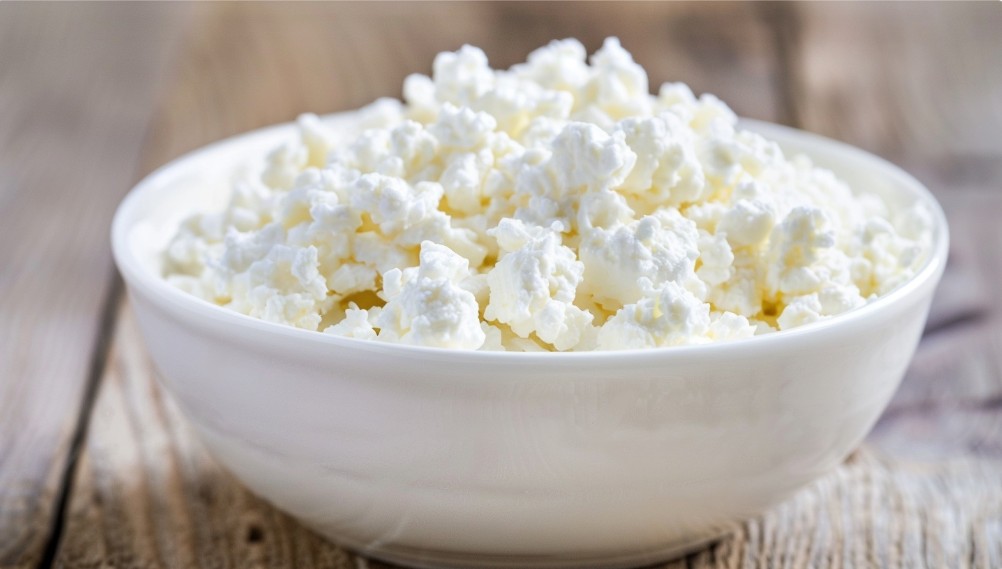
How Homemade Cheese Differs from Store-Bought in Practice
Between them — a whole world. Homemade cheese is always a bit unpredictable, but if you guessed right with the seller and batch — it’s almost always a win. The smell — fresh, milky, without extra notes. The texture — lively, grainy, you can feel it’s not mass-produced. But it can let you down if the hostess overdid the starter culture or didn’t guess the pressing time.
Store-bought cheese — is stability. Easier to control moisture, fat content, even taste. But sometimes it’s ‘plastic’ — too homogeneous, without a distinct smell. For making everyday syrniki — convenient and practical. For a special taste — you’ll have to search or combine.
I have a friend who categorically doesn’t buy store-bought cheese. He says real cheese can only be found at the grandmother’s market. I’m not that categorical, but he manages to catch the perfect taste every time. Another friend, on the contrary, after several failures with the market, switched to store-bought and doesn’t regret it: she says stability is more important than emotions.
Find your balance between taste, convenience, and stability. The perfect cheese for syrniki doesn’t exist — there’s the one that suits you best.
Syrniki are not just breakfast or dessert. It’s a small test of attention to detail. Found your cheese — and you get satisfaction every time. Don’t be afraid to experiment, combine, search. And if you have your proven life hack or failure story — share it in the comments. It’s always interesting to know how you find that very cheese for your syrniki.